
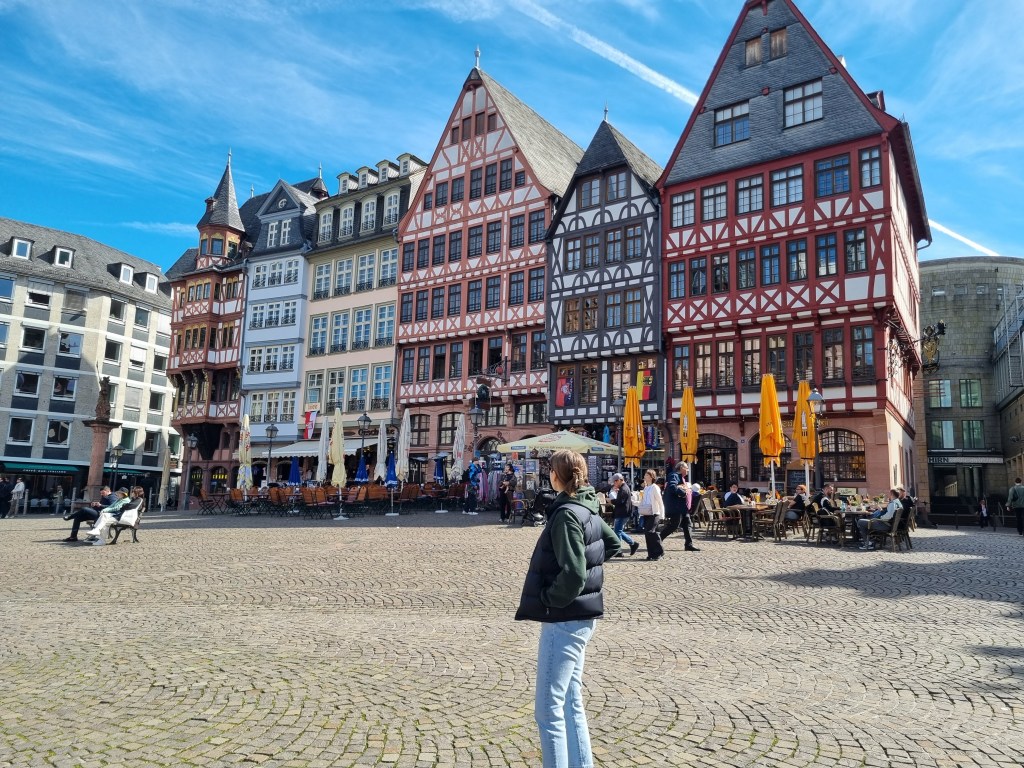
Frankfurt: famous, yet strangely unpopular — especially among Germans themselves. Often dismissed as grey, soulless, or simply “not worth visiting,” it’s a city that battles stubborn clichés. But are these harsh judgments fair? I decided to find out for myself and spent a full day exploring the heart of this financial powerhouse and I have to say, I was pleasantly surprised. Servus and welcome to my Frankfurt Blog, where I share what this underestimated city is really about.
From charming strolls through the reconstructed Old Town and scenic walks along the River Main, to a peaceful boat ride with views of the city’s skyline. Frankfurt revealed a side that’s often overlooked. It may not shout for attention, but if you take a closer look, you’ll find a city with depth, contrasts, and a charm all its own.
As always, I want to remind you, that this blog isn’t perfect because everyone travels differently, and all trips involve changes of plans. I want to let you know that everything on this website has been experienced, photographed, and written by me. Since I finance all of my travel expenses on my own, the stories and opinions given are truly my own. If you’re interested in seeing more travel pictures or videos, feel free to check out my Instagram @michellecacija or my Tik Tok @michellecacija.
Index
- The Basics about Frankfurt
- Things you need to be aware of
- Medical insurance
- Things to do
- Summary of things to do
- Where to eat
- Other Germany Blogs
The Basics about Frankfurt
When to visit
The best time to visit Frankfurt is probably late spring (May to June) or early autumn (September to early October), when the weather is mild, and the city isn’t overly crowded. During these months, temperatures range from around 15–25°C (59–77°F), perfect for exploring both the city and the riverside.
Time Period
For me, one full day in Frankfurt was definitely enough — especially if you’re just passing through. There isn’t an overwhelming amount to do, but it’s still a lovely place to spend one or two days. In that time, you can explore the reconstructed Old Town, enjoy a boat ride on the Main River, stroll along the riverside promenade, and visit one or two museums. It’s a compact city, so you can see a lot without feeling rushed. If you have more time, you could dive deeper into Frankfurt’s museum scene, relax in the city’s palm garden, or take a day trip to nearby towns like Mainz, Wiesbaden, or Marburg.
Getting there
Frankfurt is one of Europe’s major transport hubs, making it easy to reach from almost anywhere. Germany’s busiest airport — Frankfurt Airport — is just 15 minutes from the city center by suburban train (S-Bahn), making arrivals smooth whether you’re flying in from abroad or within Europe. The city is also well connected by high-speed trains (ICE), long-distance buses, and major highways, offering convenient access by rail or road.
Where to stay
The city center offers a wide range of accommodation, from luxury hotels to charming, more affordable options. For convenience, staying near the Hauptbahnhof (central station) offers quick access to public transport and is practical if you’re arriving or continuing your journey by train. However, based on my experience, the area around the station isn’t particularly pleasant or safe — especially in the evening, it can feel a bit dodgy. Unless you really need to be close for travel reasons, it’s probably best to avoid staying there. Instead, I’d recommend staying in or near the Old Town (Altstadt), where you’ll find not only a more charming atmosphere but also surprisingly affordable hotel options.
Getting around
Frankfurt’s public transport system is efficient and well-connected. With trams, buses, subways (U-Bahn), and suburban trains (S-Bahn), you can get almost anywhere without a car. Most major attractions are within walking distance or a short ride away — and don’t forget to enjoy a bike ride along the River Main!
What to pack
I would recommend to always pack layers, as the weather in Frankfurt can change quickly, especially in spring and autumn. While summer tends to be light and warm, and winter requires heavier clothing, layering is always the key to staying comfortable. Comfortable walking shoes are a must, as Frankfurt is best explored on foot. Don’t forget an umbrella just in case, and a light jacket for cooler evenings (especially from September onward).
Additionaly, consider bringing your own little medication bag, including Band-Aids, pain relief tablets, sleeping tablets or spray, bug spray, aftersun, etc. You never know what you might need it for, and you might feel more comfortable using medication from home rather than in a country where you don’t know the ingredients and languages. If you’re coming from outside Europe, don’t forget to bring a Type C power adapter.
Cost of traveling
Frankfurt isn’t the cheapest city in Germany, but it’s more affordable than other big cities like London or Paris. Expect to pay €15–20 for a meal at a mid-range restaurant, and around €3.50 to €4.50 for a coffee. Public transport can be a bit pricey, but the good news is: you won’t need it often. Most sights are within walking distance, and for a cheaper and fun alternative, consider renting a bike to explore the city or the river Main at your own pace. Many museums also offer discounted or even free entry on specific days.
Difference to other Germany cities
Frankfurt boasts a truly unique skyline which is a rare sight in Germany. The city’s skyline is filled with skyscrapers and modern architecture. It’s this contrast of old and new that earned it the nickname “Mainhattan,” blending financial power with cultural charm. Nowhere else in Germany feels quite like it.
Things you need to be aware of
Sundays. On Sundays, shops and supermarkets are closed, while restaurants and cafes usually remain open. Don’t worry if you forgot to buy something or you’re starving for a snack; the supermarkets at the train stations will be open. Also, if you think that there is nothing to do on a Sunday you are wrong; maybe it’s time to explore the museums and the nature in and around Frankfurt!
Water in Germany. You can safely drink tap water in Germany as it’s clean and meets the World Health Organization standards.
Toilet situation. Unfortunately, public restrooms typically cost around 50 Cent to a euro in Germany (and many other European countries). So, make sure to carry a few coins with you and always use the restroom before leaving your accommodation, a restaurant, or a café.
Tipping. In Germany, tipping is very common. It’s customary to leave a tip of around 5-10% in restaurants, cafes, and for taxi services.
Currency. The currency in Germany is the Euro. While a few years ago, Frankfurt was still very cash-oriented, they now accept cards almost everywhere. It’s still advisable, though, to bring some cash with you.
Medical insurance
I highly recommend getting travel medical insurance while you’re traveling. Hopefully, you’ll never need it, but it’s always better to be safe than sorry. SafetyWing offers two flexible plans tailored to your travel needs — whether you’re a short-term adventurer or a long-term expat, you’ll have reliable coverage anywhere in the world.
SafetyWing is especially great for remote workers and digital nomads, offering continuous global coverage even if you’re hopping between countries. Of course, it’s also a solid option for frequent travelers or those constantly on the go. But if you’re only traveling occasionally or just for a short holiday now and then, there might be better-suited alternatives.

Things to do
1. Römerberg Square
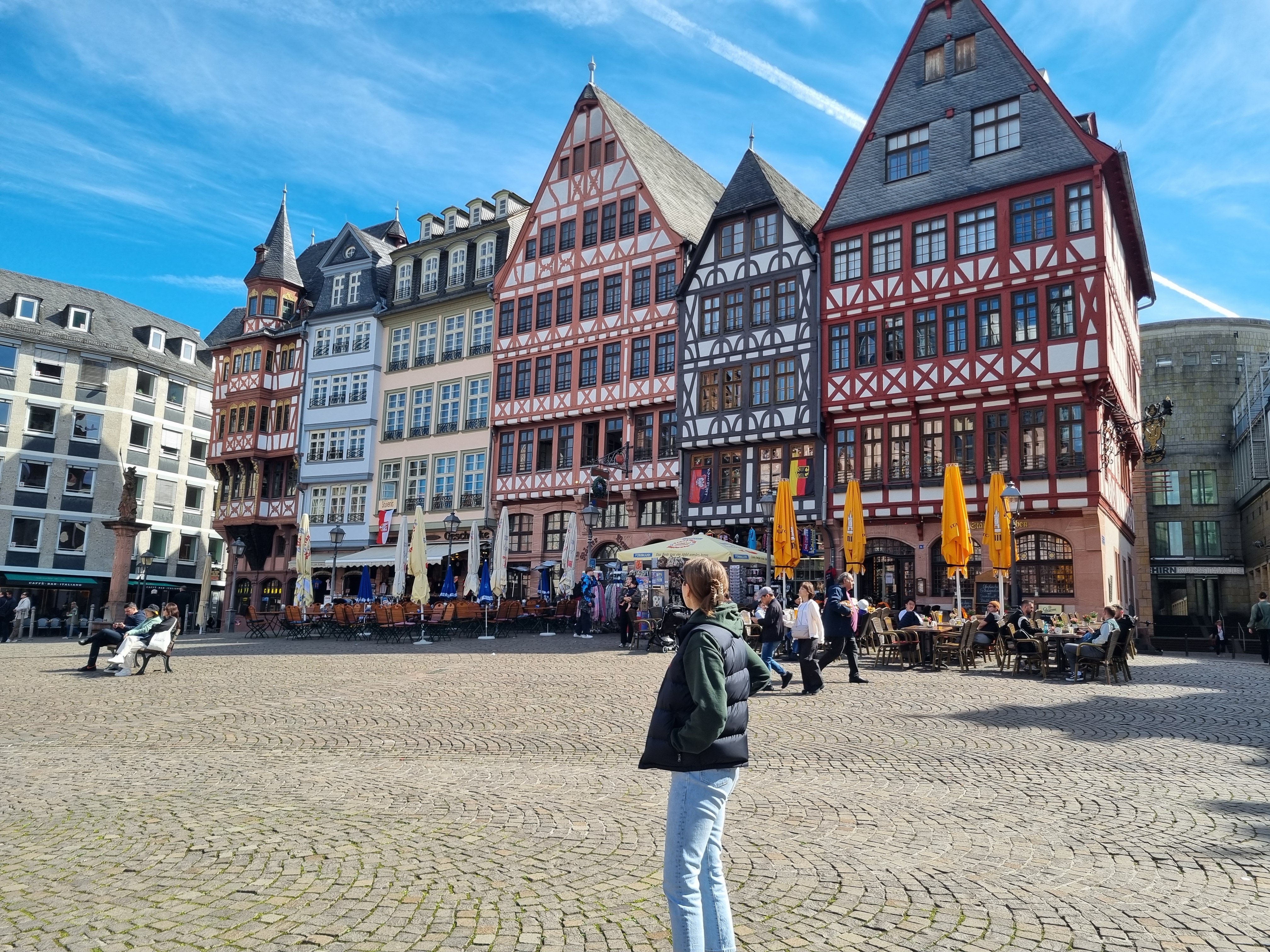
You’ll start your Frankfurt journey most likely at the picturesque Römerberg, the city’s medieval heart, home to the iconic Römer which is one of Germany’s oldest town halls, where local government has operated for over 600 years. Its ornate façade and grand balcony have seen emperors crowned and dignitaries wave to cheering crowds. This is your postcard moment: history, charm, and the heart of Frankfurt all in one perfect frame.
Surrounding the square, you’ll find charming cafés and cozy restaurants. Also, just a short walk away lies the River Main, where you can enjoy peaceful views, riverside walks, or even hop on a boat tour to see the city from the water.

2. Neue Altstadt
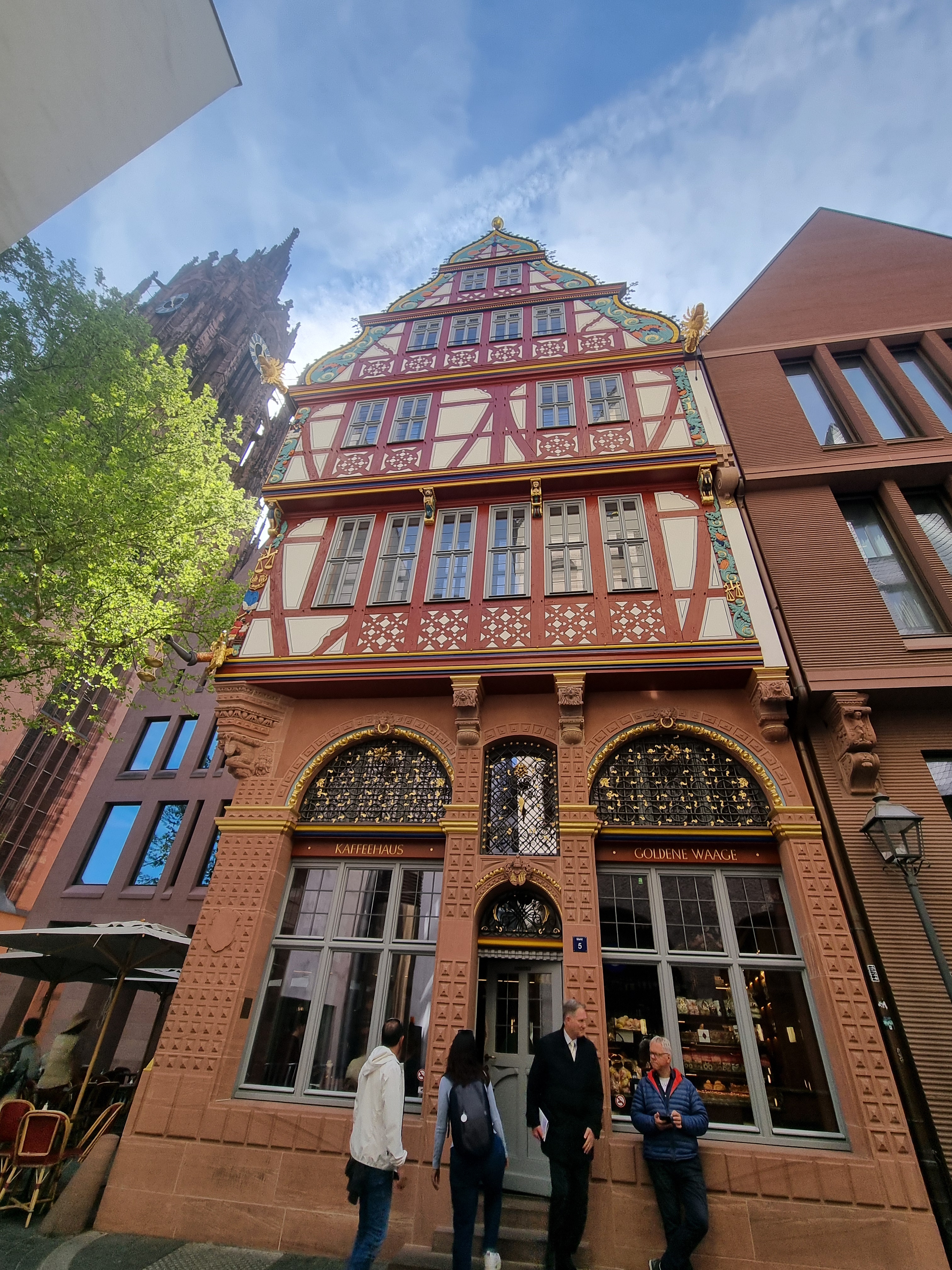
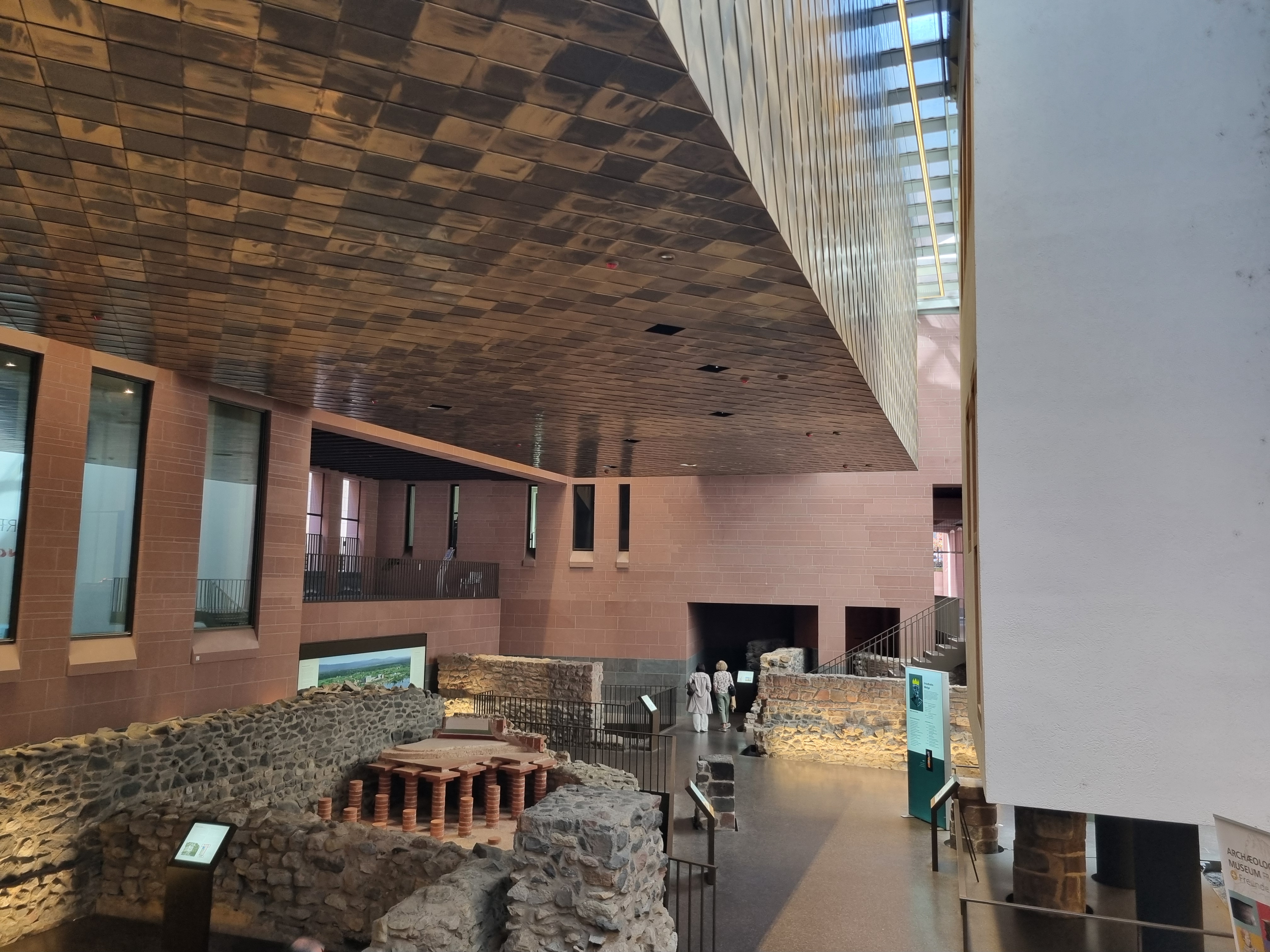
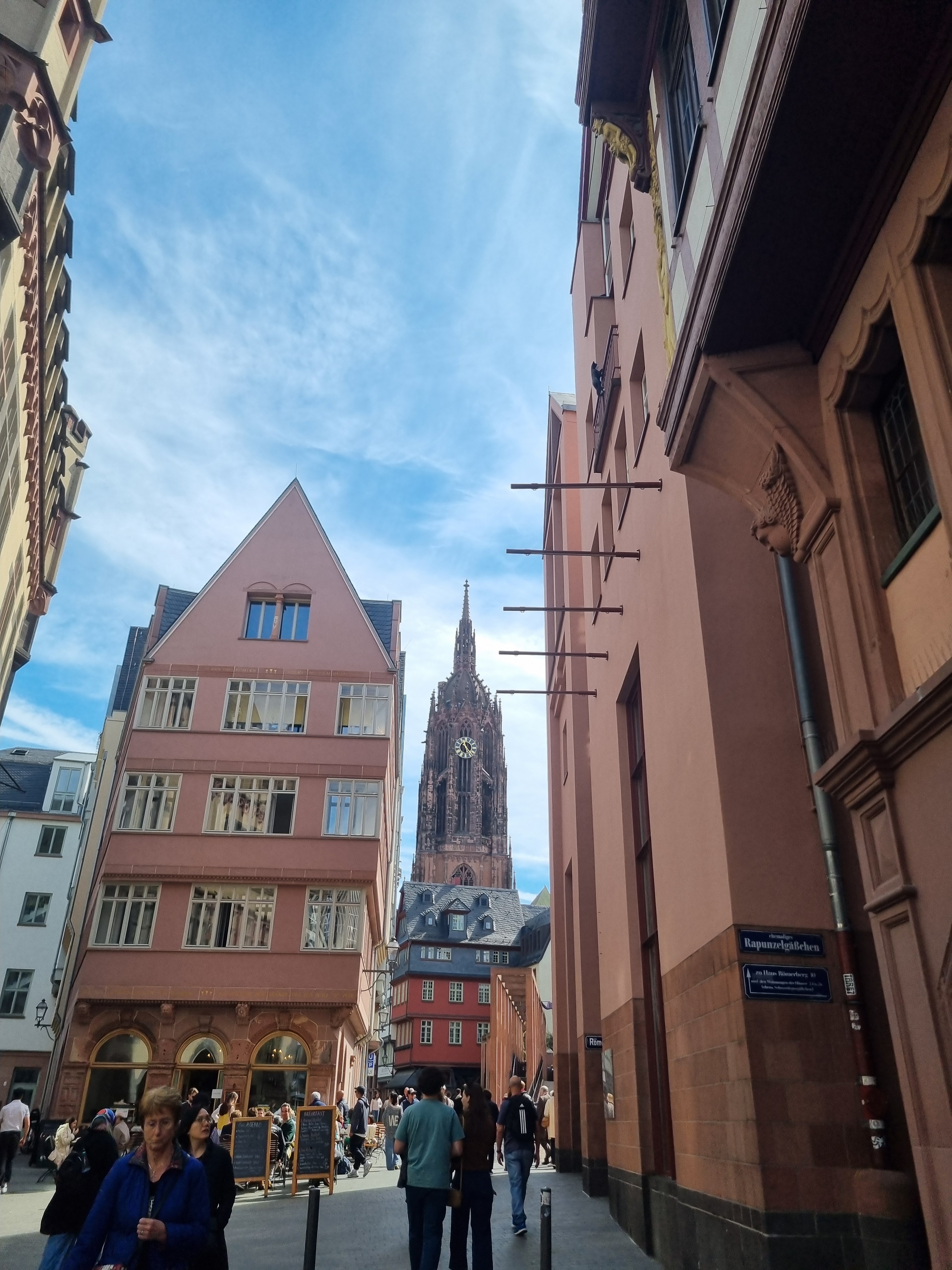
But there’s even more to discover in Frankfurt’s Old Town. Just a few steps away from the Römerberg, you’ll find even more of the Neue Altstadt, a reconstruction of the once-largest medieval old town in Germany. It features 35 houses, including 15 lovingly reconstructed originals and 20 thoughtfully designed new buildings. Right beneath your feet is the Archäologischer Garten, where ancient Roman ruins offer a glimpse into Frankfurt’s earliest days. Not far away rises the impressive Kaiserdom, where emperors of the Holy Roman Empire were crowned. And just a short walk away stands the Paulskirche with its green dome, the birthplace of German democracy in 1848.
Frankfurt’s Old Town may be small, but it’s full of charm. Or as we say in Germany: klein aber fein. It’s the kind of place where centuries-old history and vibrant modern life come together in the most fascinating way.


3. Paulskirche
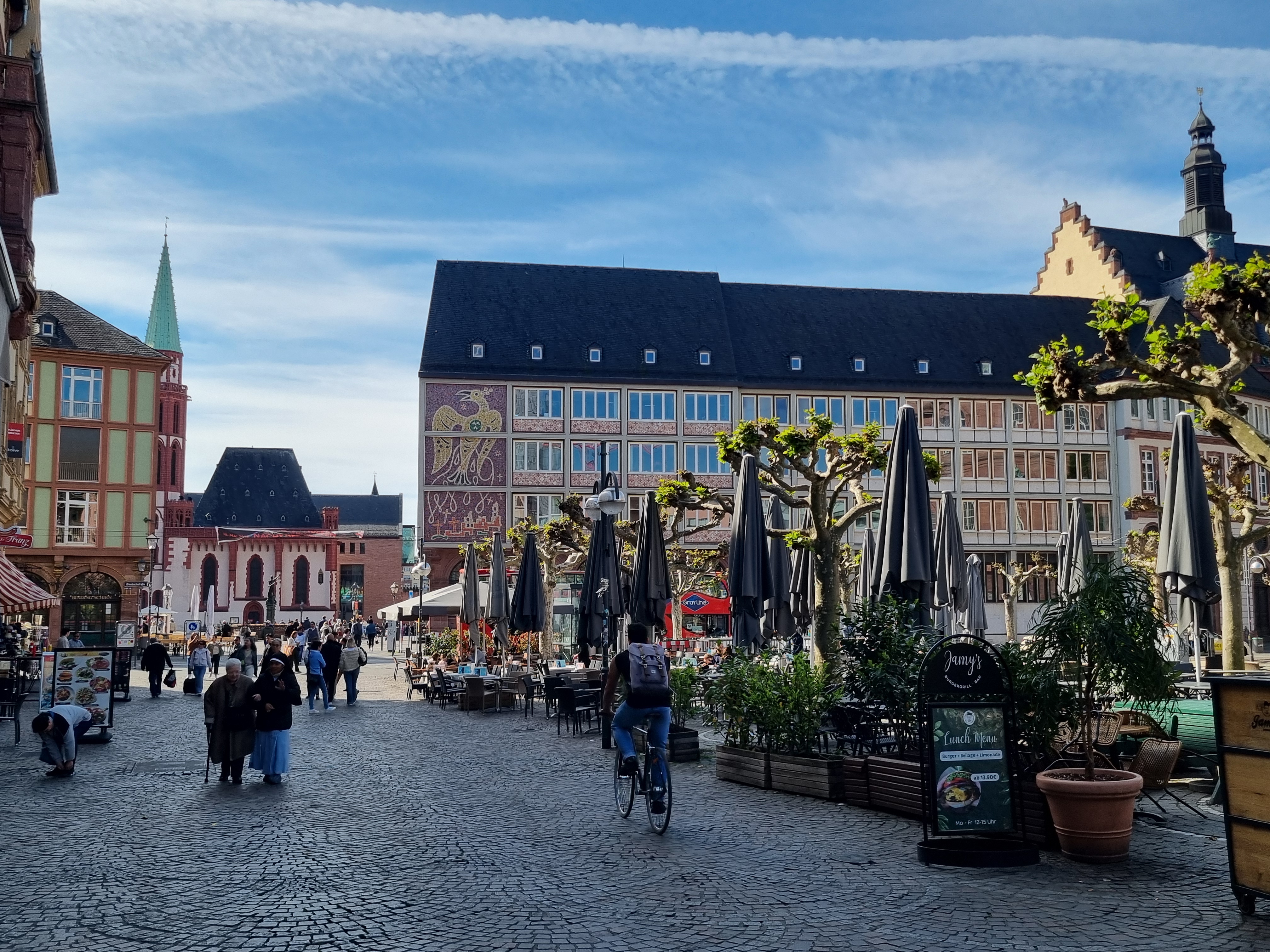
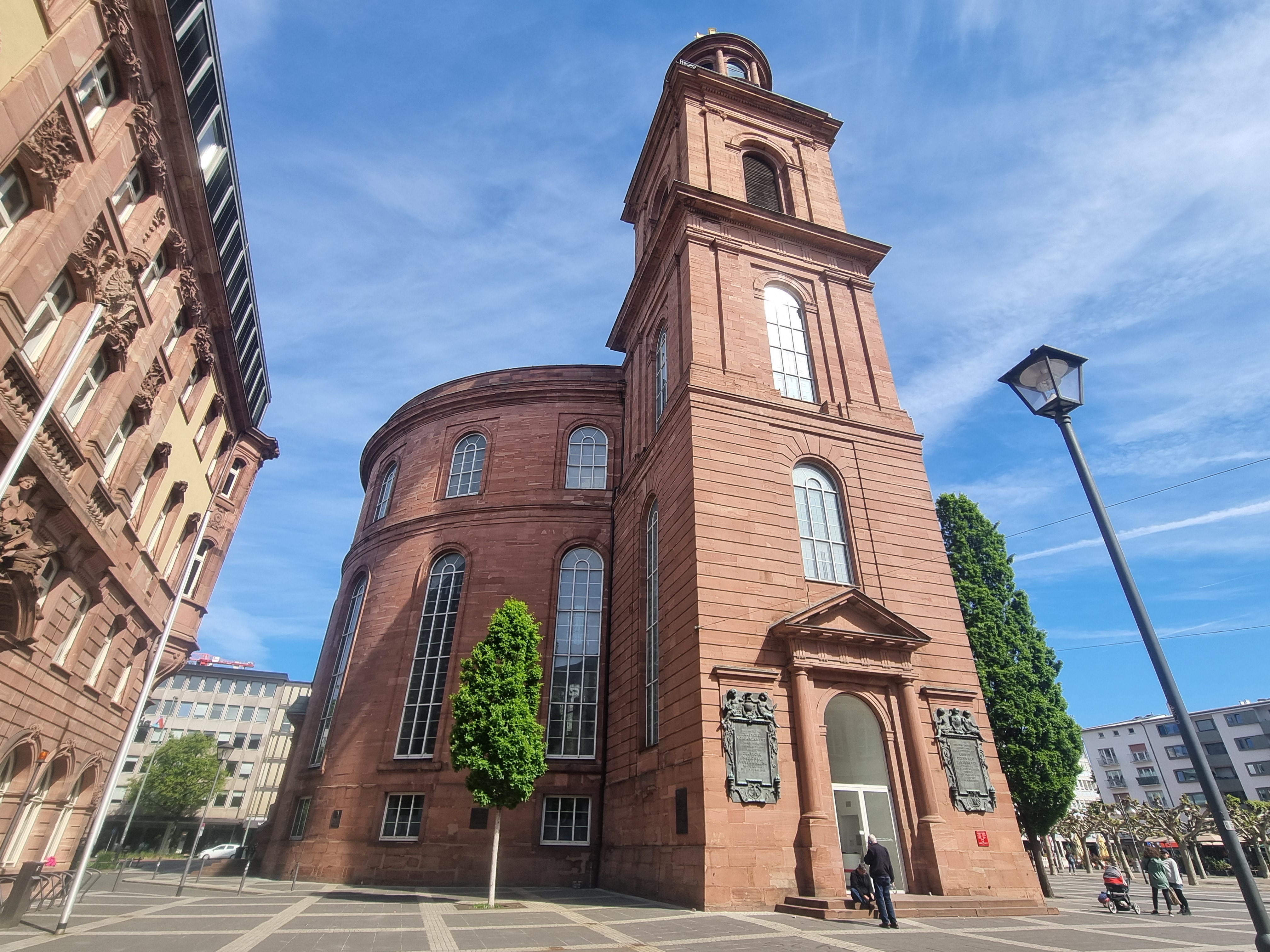
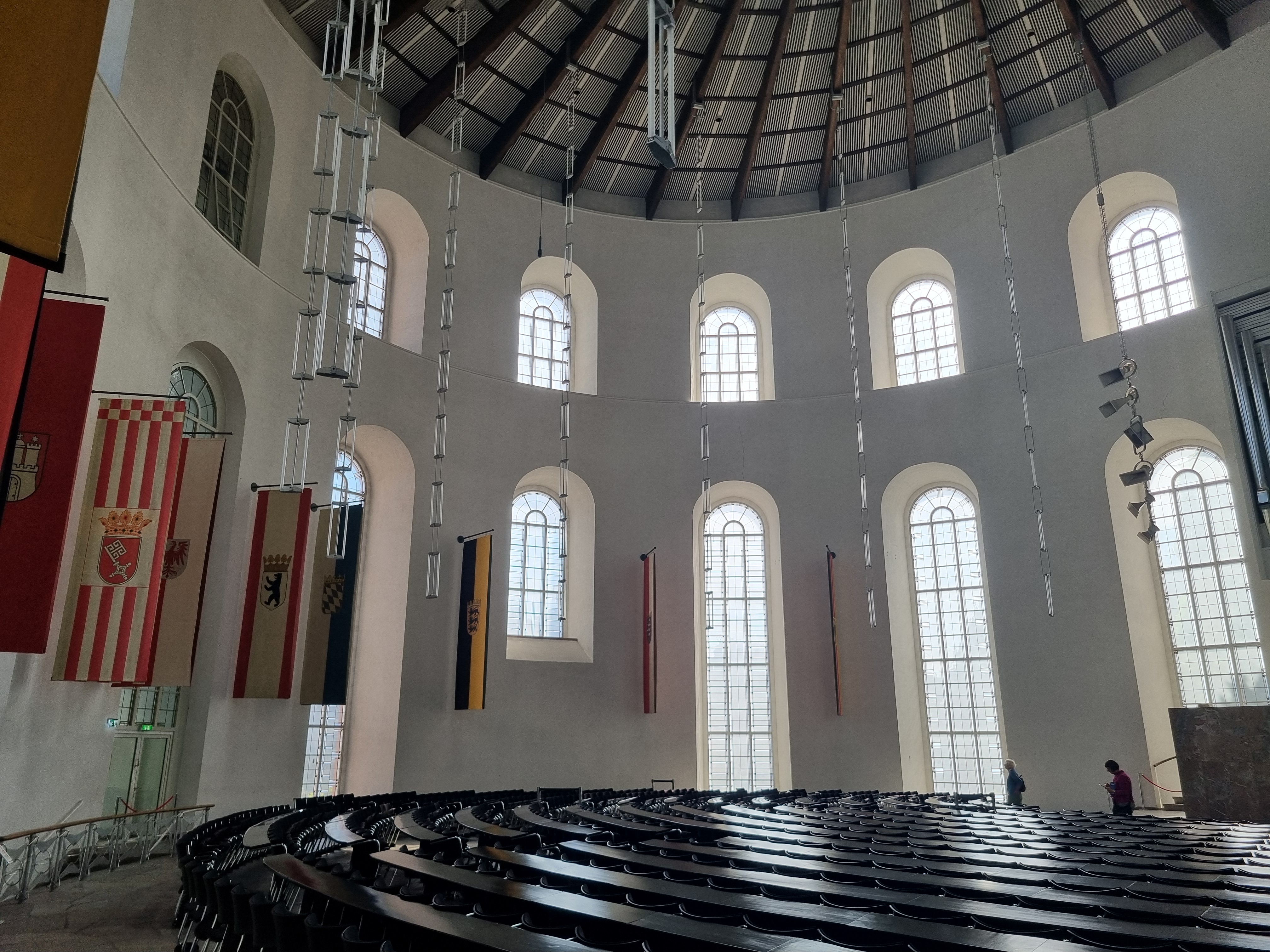
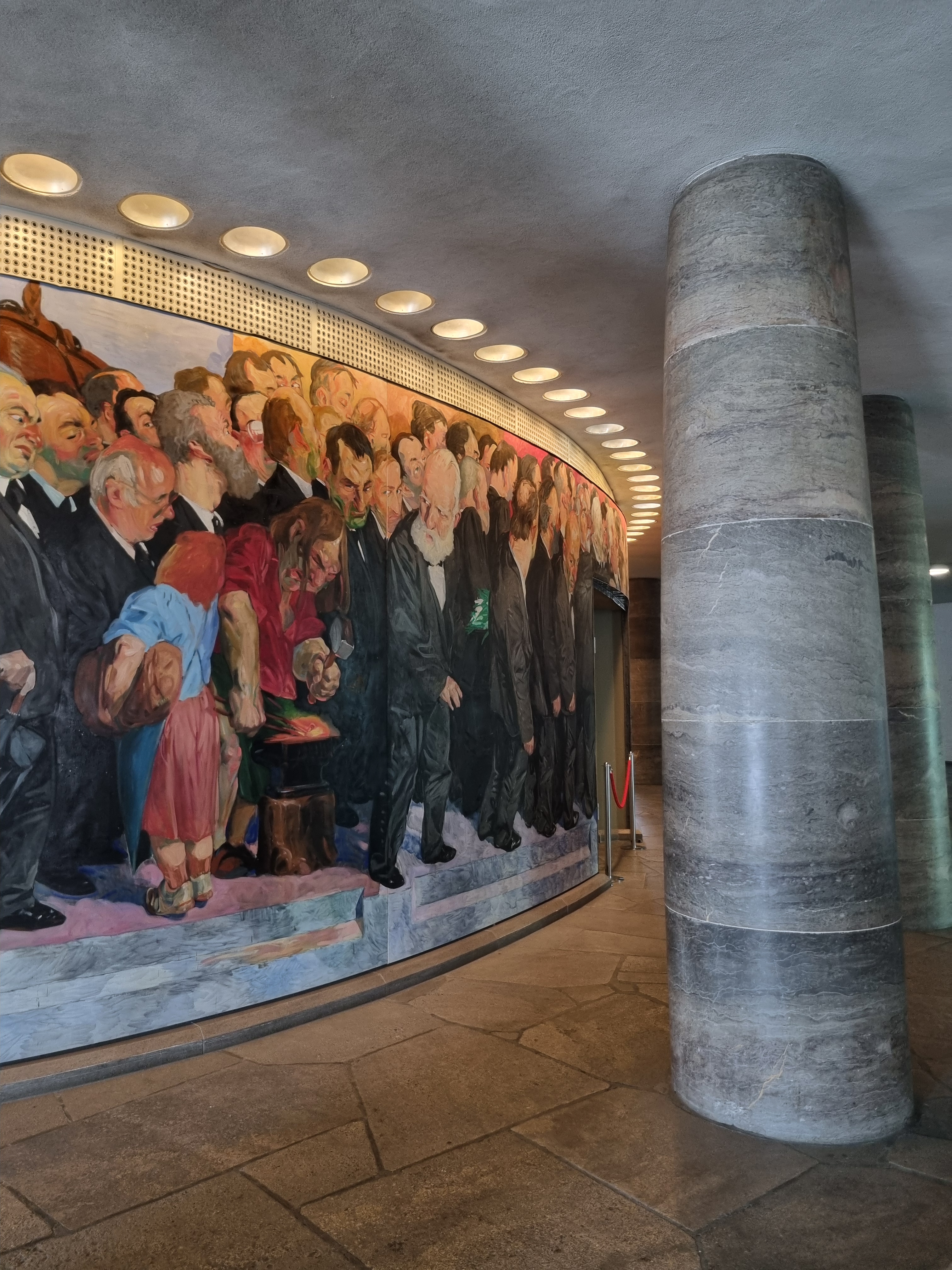
The Paulskirche (St. Paul’s Church) is more than just a pretty building with a green dome, it’s also the birthplace of German democracy. In 1848, Germany’s first freely elected parliament met here, setting the stage for democratic ideals in the country. Today, the church serves mostly as a memorial and event space. Admission is free, but don’t expect a traditional church interior. There’s not much to see inside in terms of original architecture. Instead, the focus is on exhibitions and the building’s powerful symbolic legacy.
4. Take a boat ride on the Main
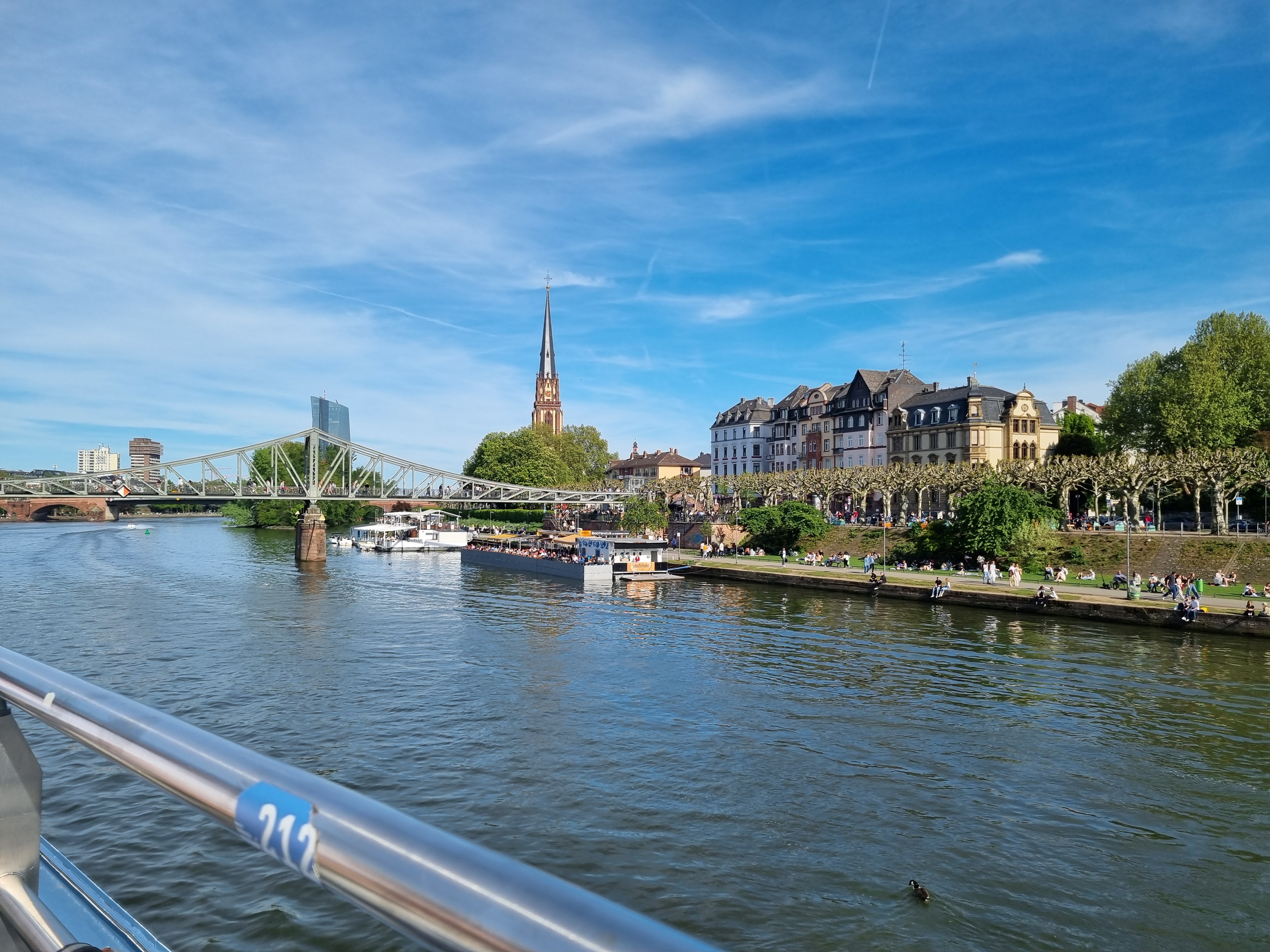
See Frankfurt from a whole new perspective with a relaxing boat ride on the River Main. As the skyline glides by, you’ll pass under historic bridges, admire riverside parks, and get stunning views of the Old Town, the harbor, and modern skyscrapers. Most boat providers offer three different tours: a full 100-minute round trip or two separate 50-minute routes. One of them is heading upriver, the other down. On board, you can enjoy drinks, snacks, or even a full meal, or simply sit back and take in the sights. To book your trip you can just head to the Eiserner Steg, where most tours depart.
5. Kaiserdom St. Bartholomäus
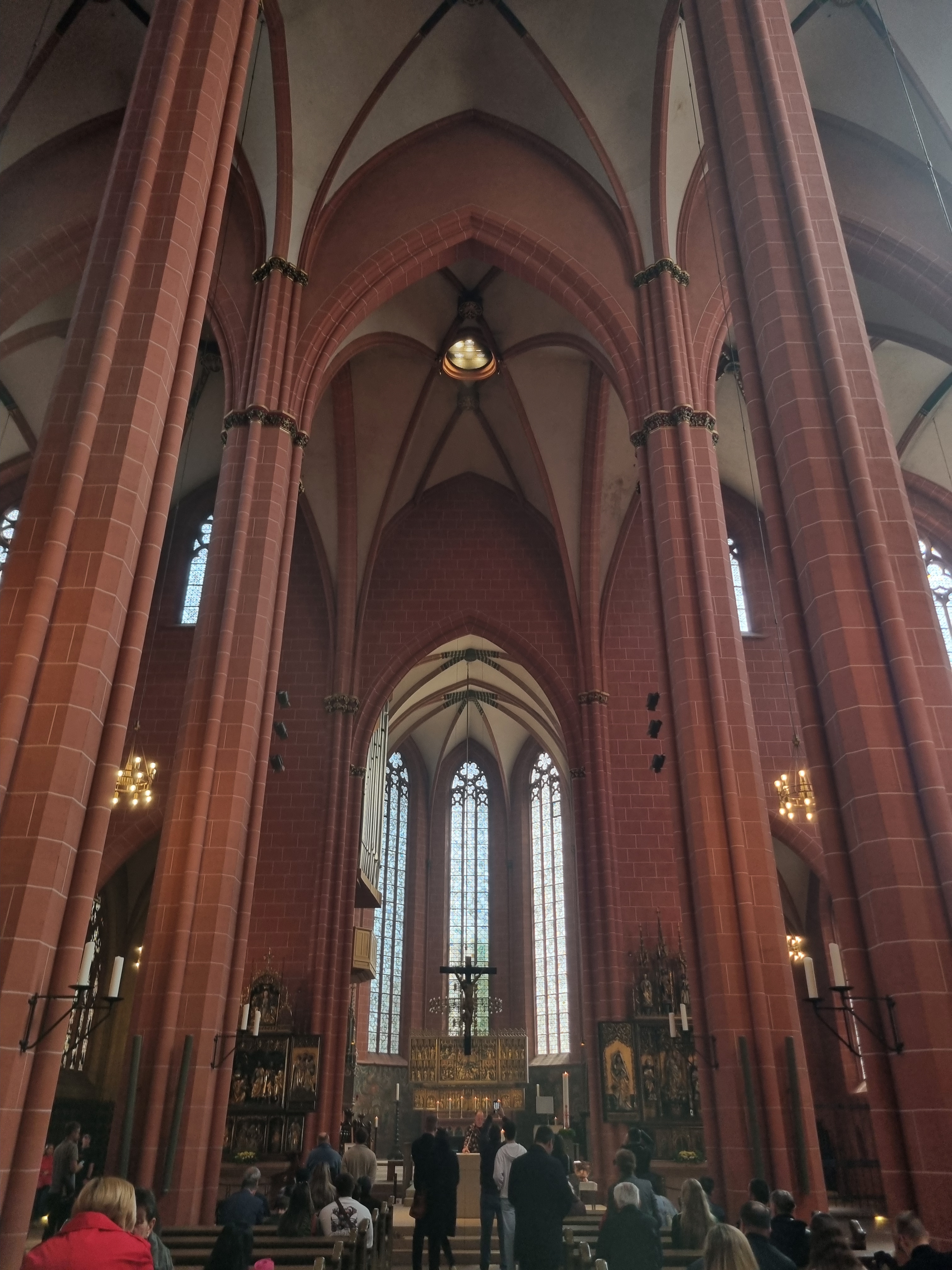
The Kaiserdom St. Bartholomäus is a symbol of imperial power. This Gothic giant once hosted the coronations of Holy Roman Emperors. Climb its 328 steps for panoramic views over the city, or simply marvel at its red sandstone walls and towering spire from below. You’ll find the dome in the Neue Altstadt, just a short walk from the Römerberg, and surrounded by charming cafés and restaurants.
6. Walk along the Main
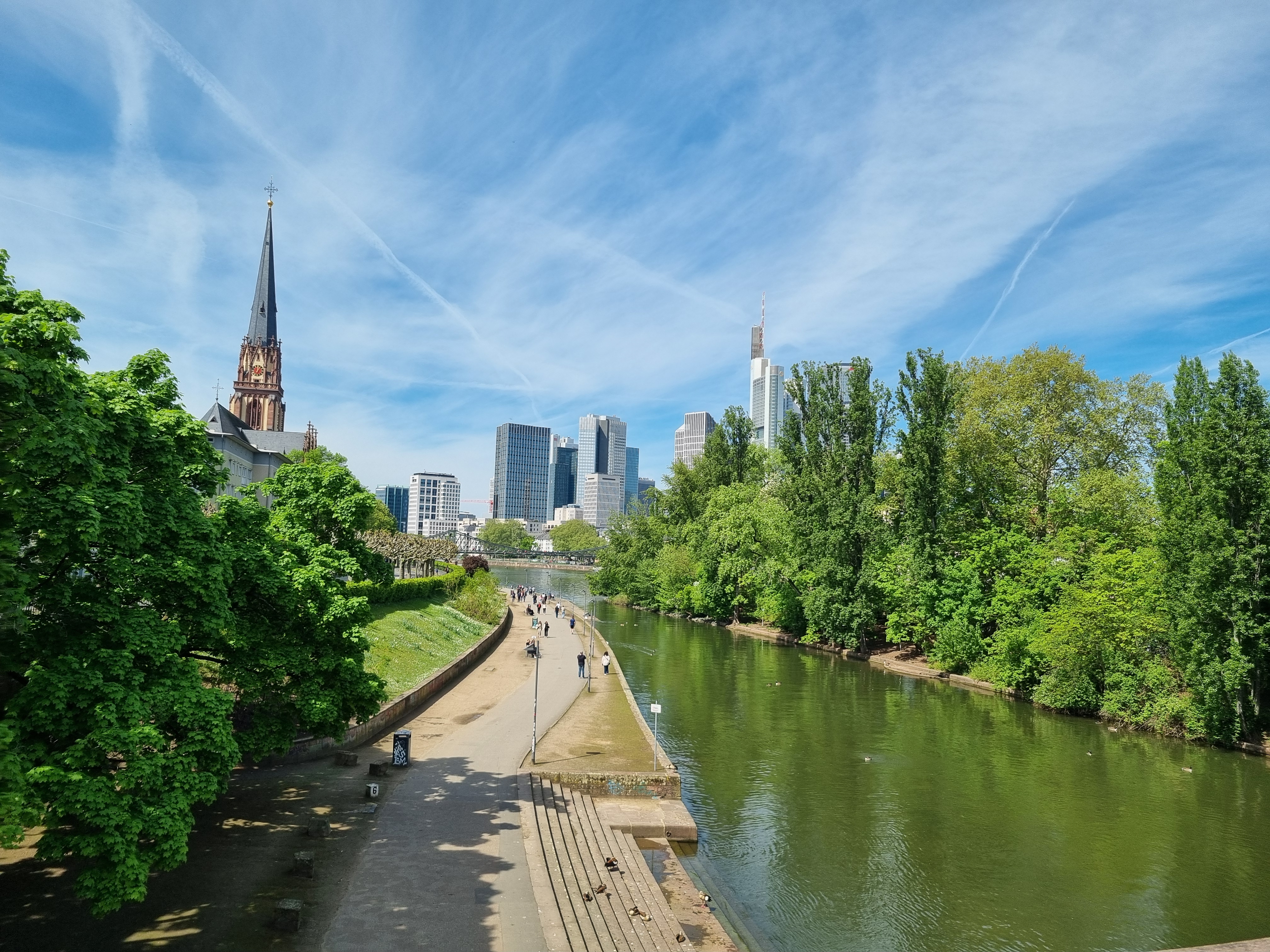
Probably one of the best ways to enjoy Frankfurt is simply to walk along the River Main. Wide paths on both sides of the river make it perfect for a leisurely stroll or bike ride. If you prefer to explore on two wheels, you can easily rent a bike and drive along the riverbank, taking in the stunning views at your own pace. Locals come here to unwind, picnic, or watch the boats and rowers glide by. With the skyline on one side and peaceful greenery on the other, it’s the city’s most beautiful blend of urban and nature.
7. Euro Sculpture
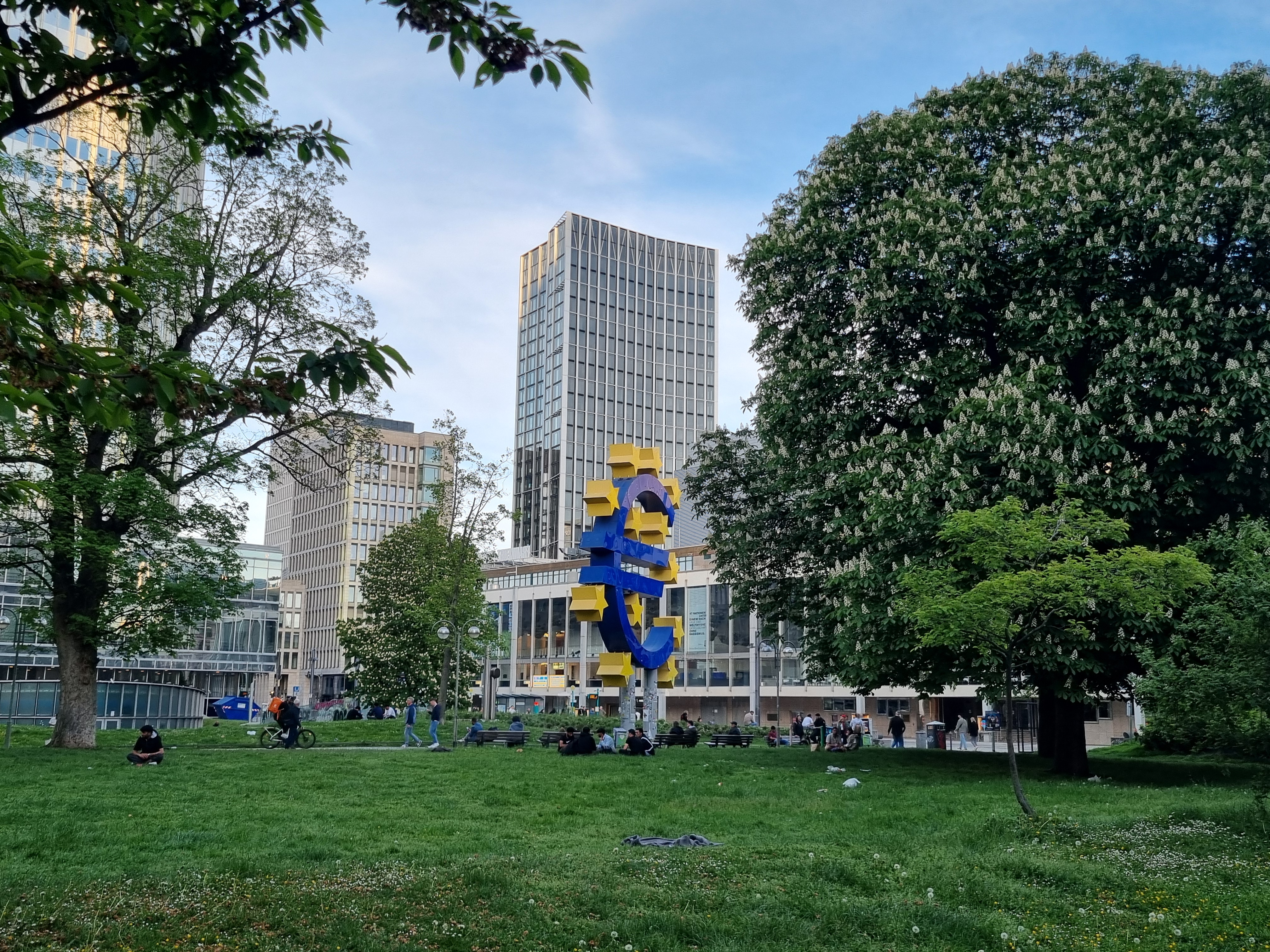
Just outside the former European Central Bank stands one of Frankfurt’s most iconic landmarks: the blue Euro Sculpture with it’s yellow stars. At 14 meters tall, it’s not only a popular photo spot but also beautifully framed by greenery. However, I’d advise against strolling through the area in the evening, as it’s close to the main train station, and the streets can sometimes feel a bit dodgy. For a safer and more pleasant visit, it’s best to explore this landmark during the day.
8. Eat German Food
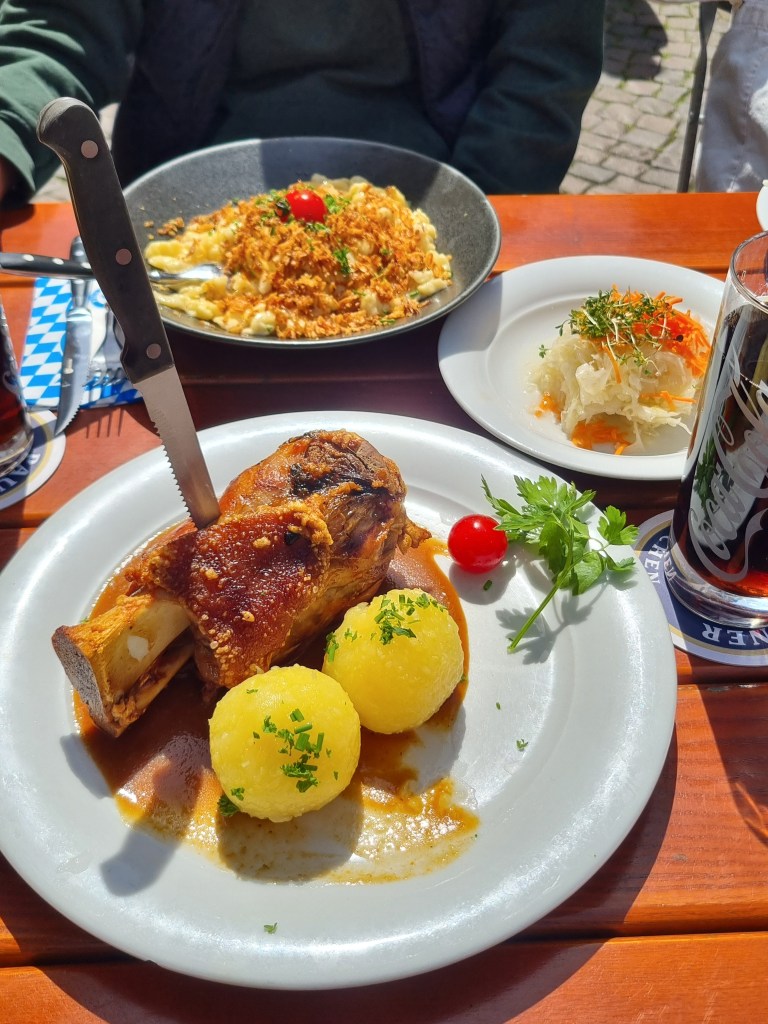
No visit to Frankfurt (or Germany) is complete without trying some hearty German cuisine. Tuck into regional specialties like Handkäs mit Musik, a marinated cheese dish that locals either love or love to debate, Grüne Soße (green sauce), or a crispy Schnitzel. Also, you should enjoy some Apfelwein, the local apple cider.
9. Goethe-Haus
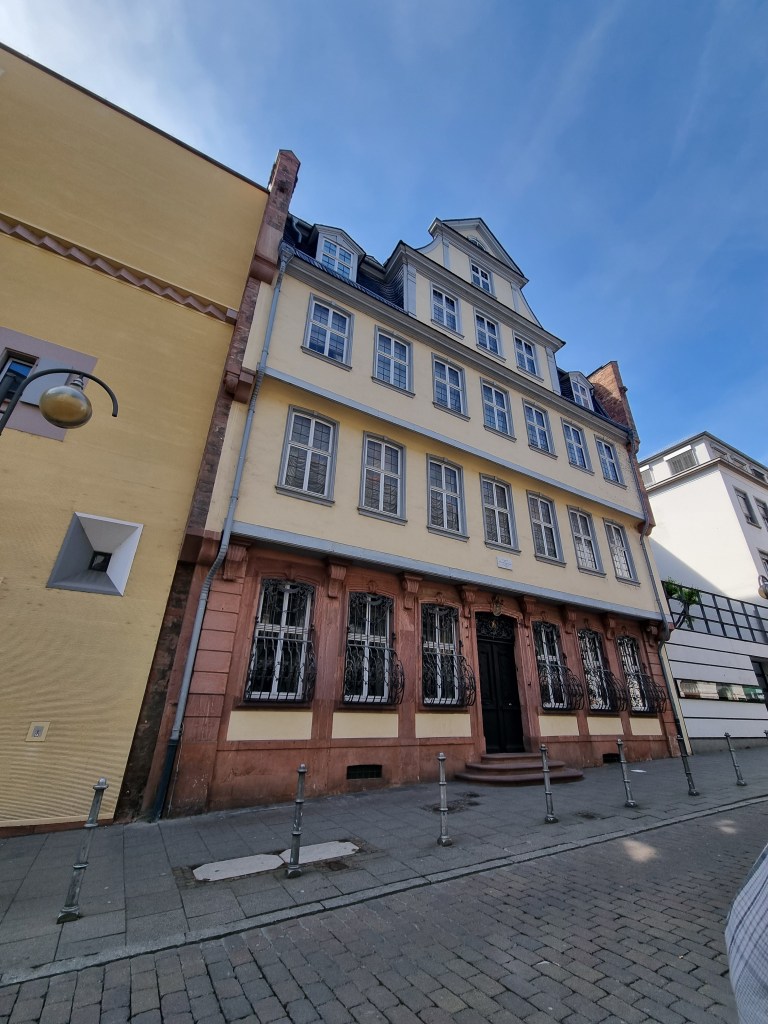
Step into the birthplace of one of Germany’s greatest minds at the Goethe-Haus. This lovingly restored home offers a glimpse into the early life of Johann Wolfgang von Goethe. Right next door, you’ll find the German Romanticism Museum, which explores the rich cultural movement that shaped much of Germany’s artistic and literary heritage.
10. Eiserner Steg
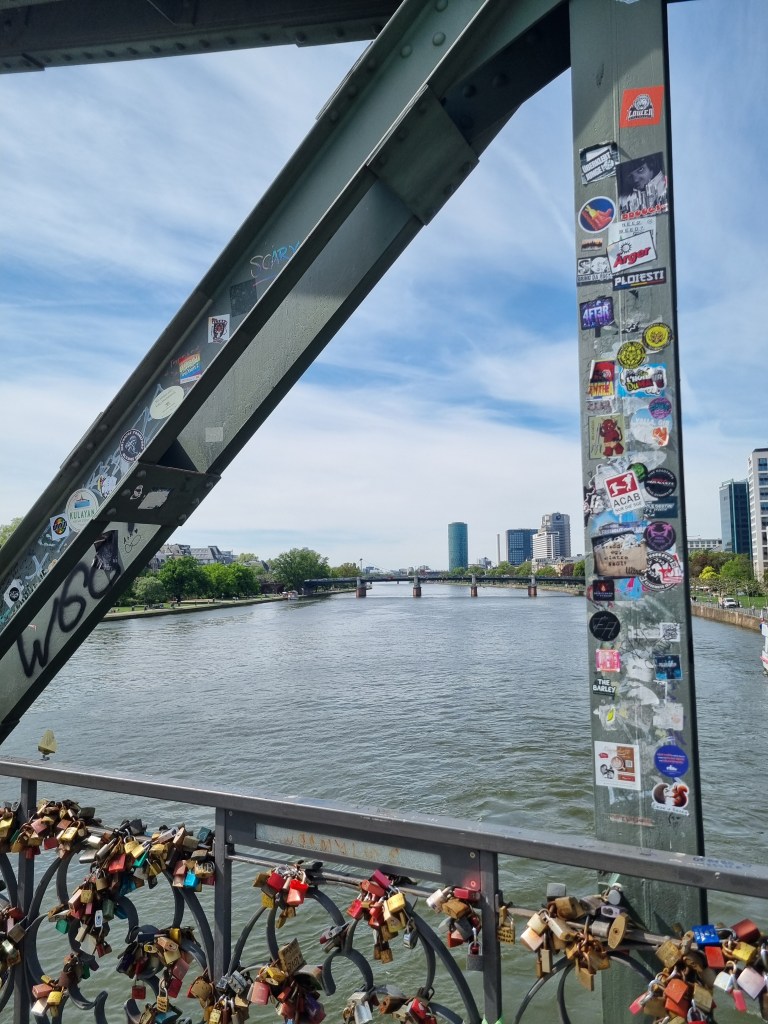
The Eiserner Steg (Iron Footbridge) is more than just a way to cross the Main. It’s one of Frankfurt’s most photographed spots. Built in 1868/1869, this bridge connects the Römerberg with the Sachsenhausen district. Covered in love locks and offering views of the river and skyline.
Just nearby, you can also easily purchase boat tickets to explore the Main from the water, and afterward, enjoy a relaxing walk along the riverbank, taking in the peaceful atmosphere and beautiful views of the city.
11. Day Trip to Mainz
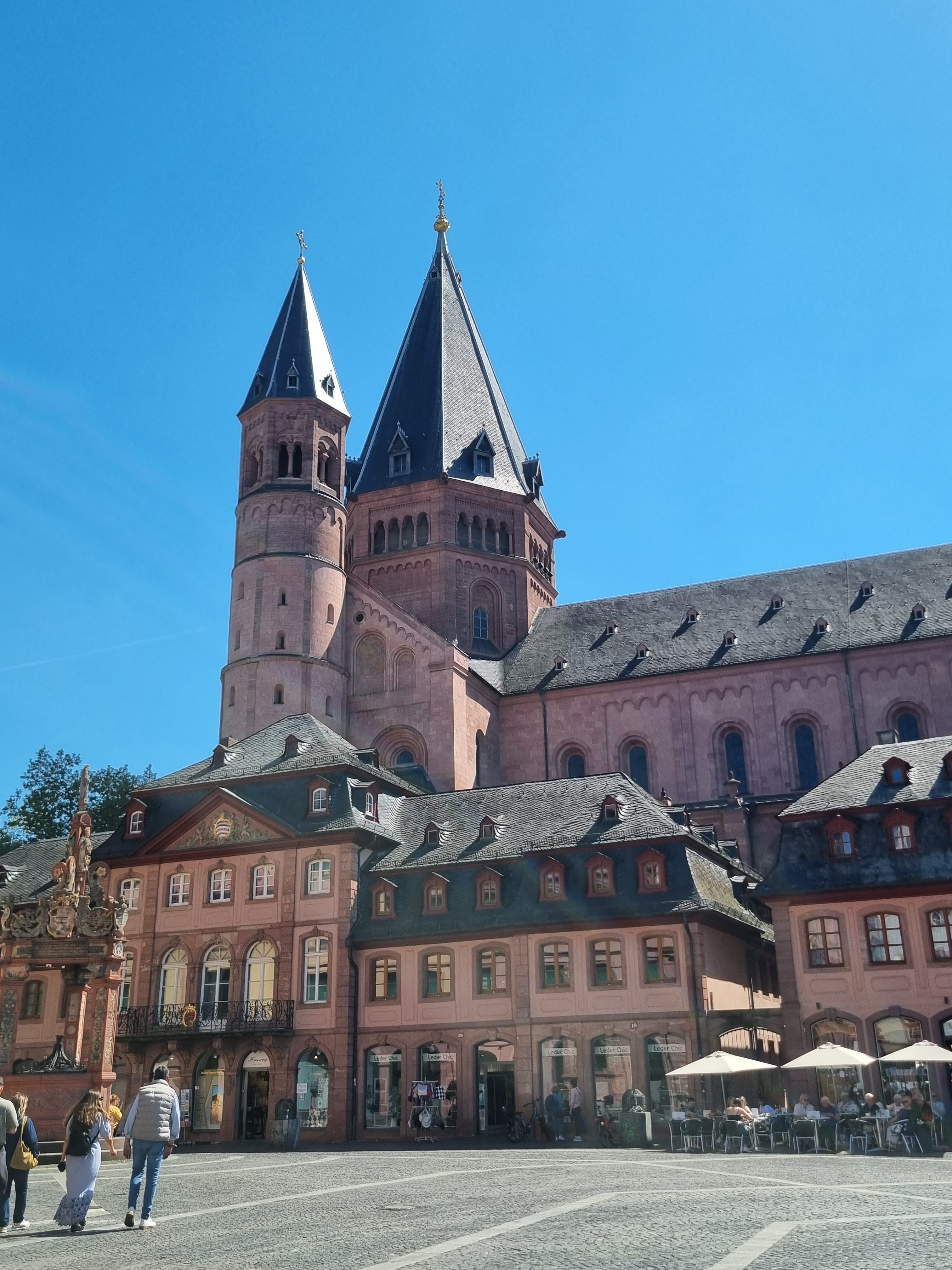
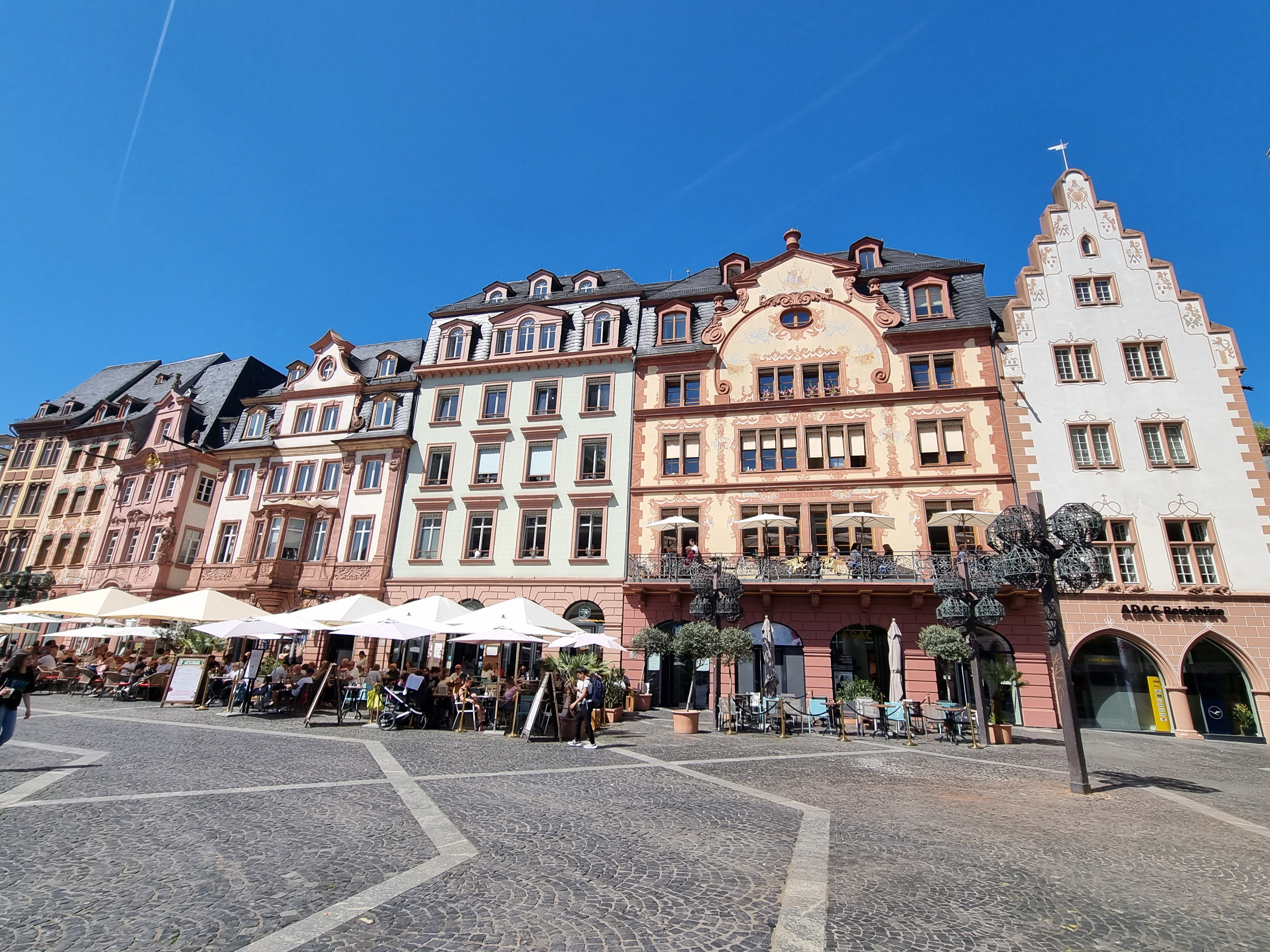
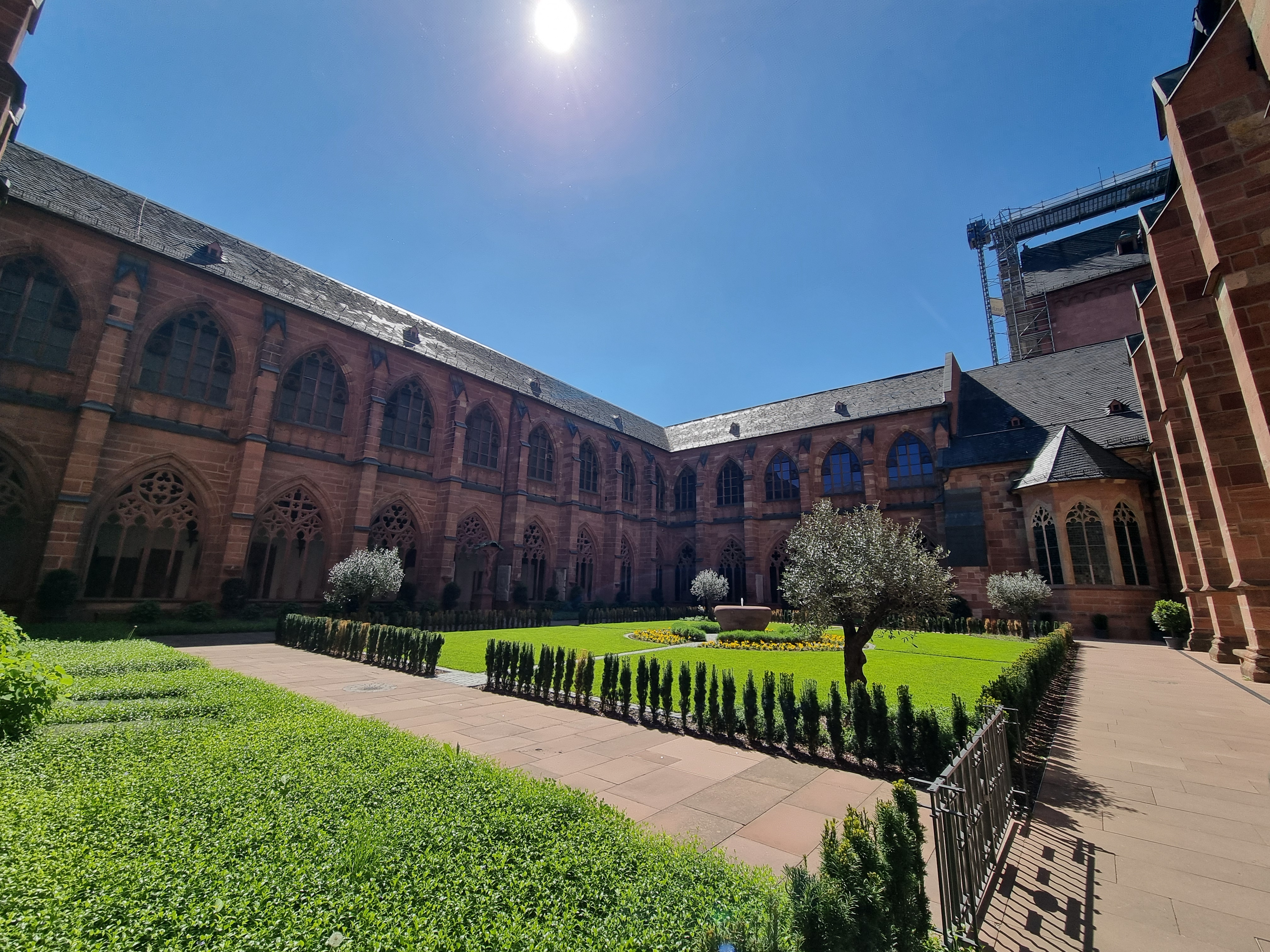
Just 30 minutes by train from Frankfurt, Mainz is a charming city full of half-timbered houses, Roman ruins, and the Mainz Cathedral. It’s also the hometown of Johannes Gutenberg, the inventor of the printing press and the first printed books. Be sure to visit the Gutenberg Museum, where you can see the world’s earliest printed books up close! As you explore, keep an eye out for the Mainzelmännchen on the traffic lights, a beloved symbol of the city. Stroll through the picturesque Old Town, and enjoy a peaceful walk along both the Rhine and the Main rivers. With its laid-back atmosphere and riverside charm, Mainz is the perfect escape from the hustle and bustle of Frankfurt.

12. Day Trip to Marburg
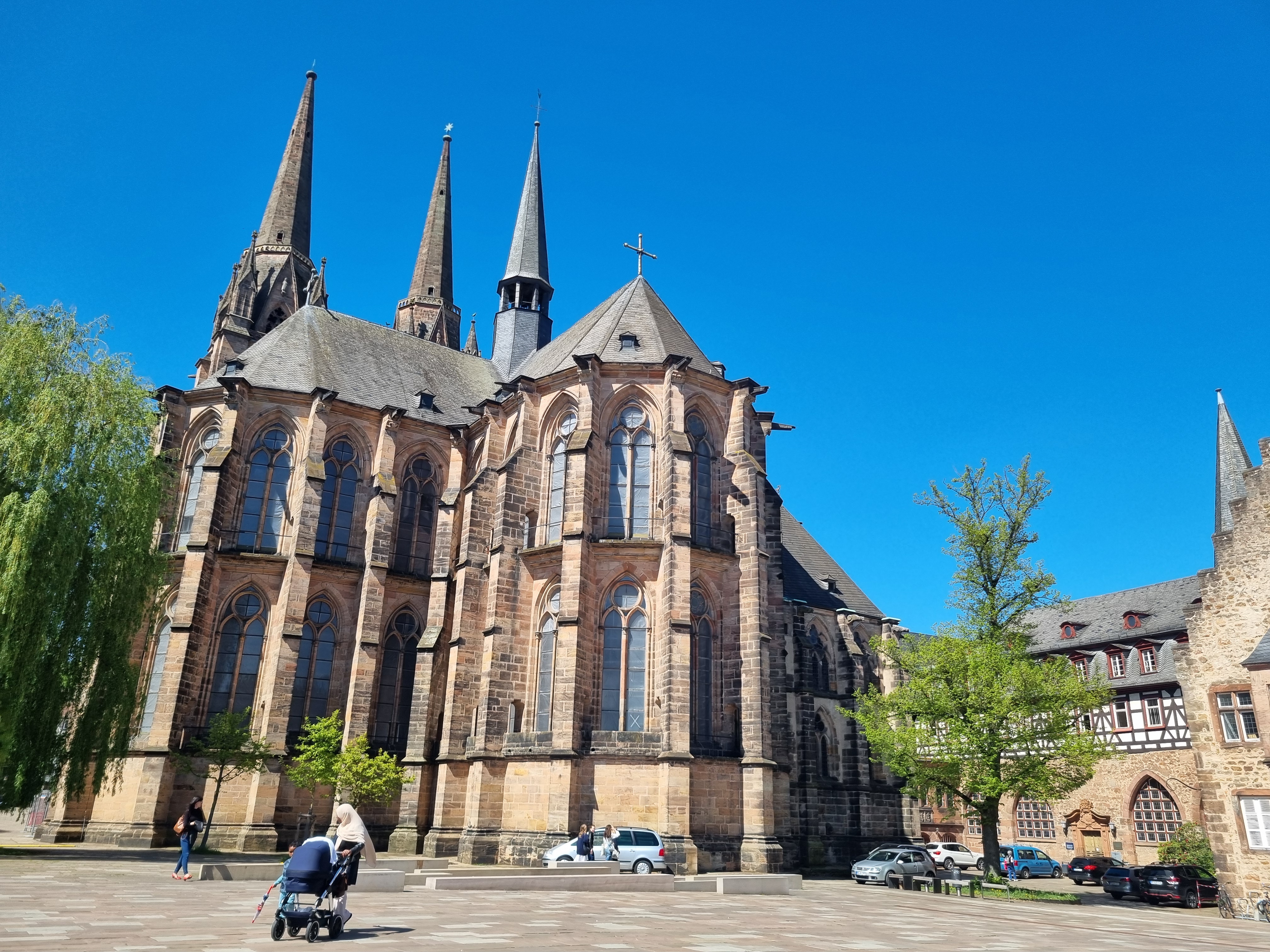
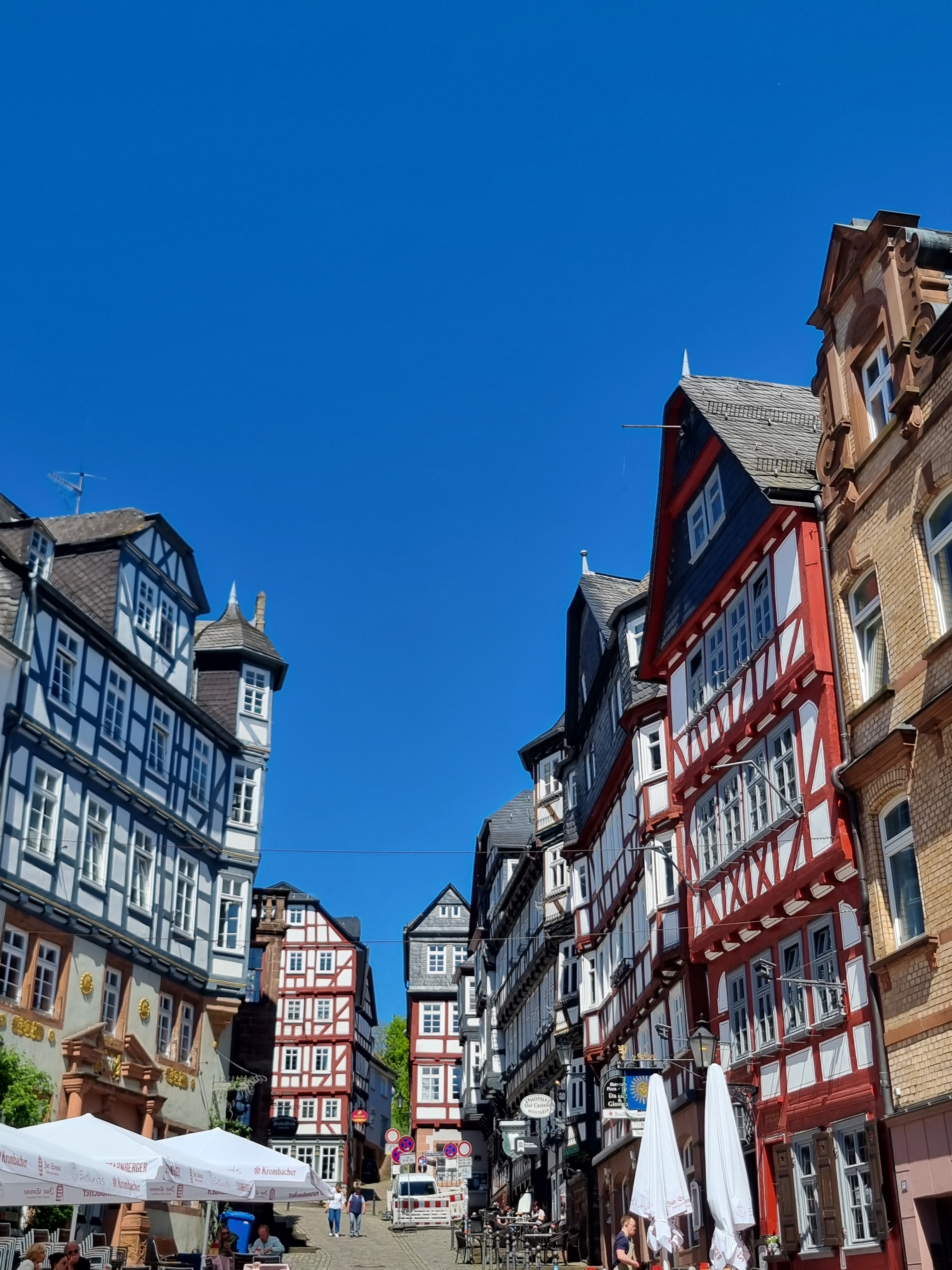
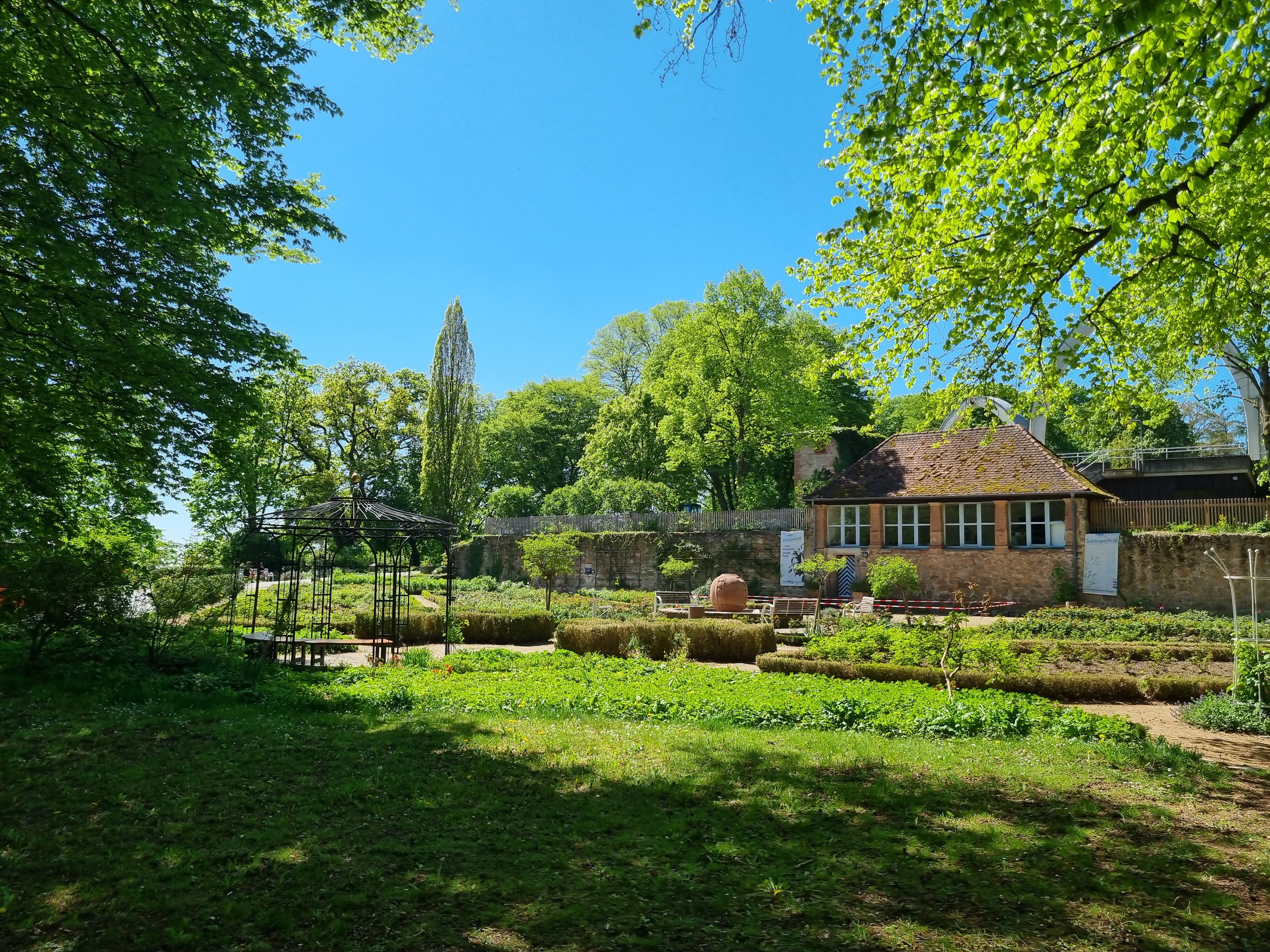
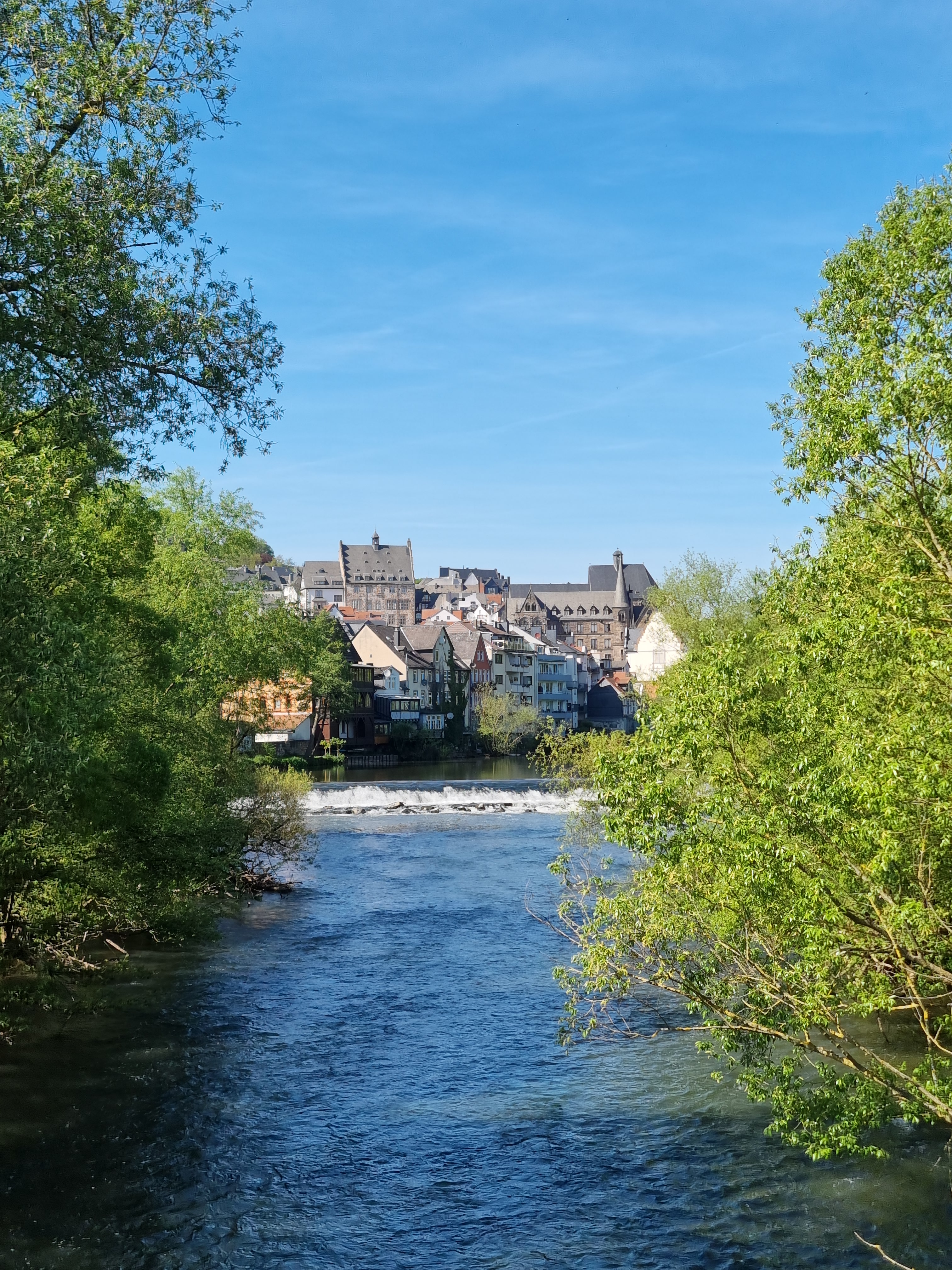
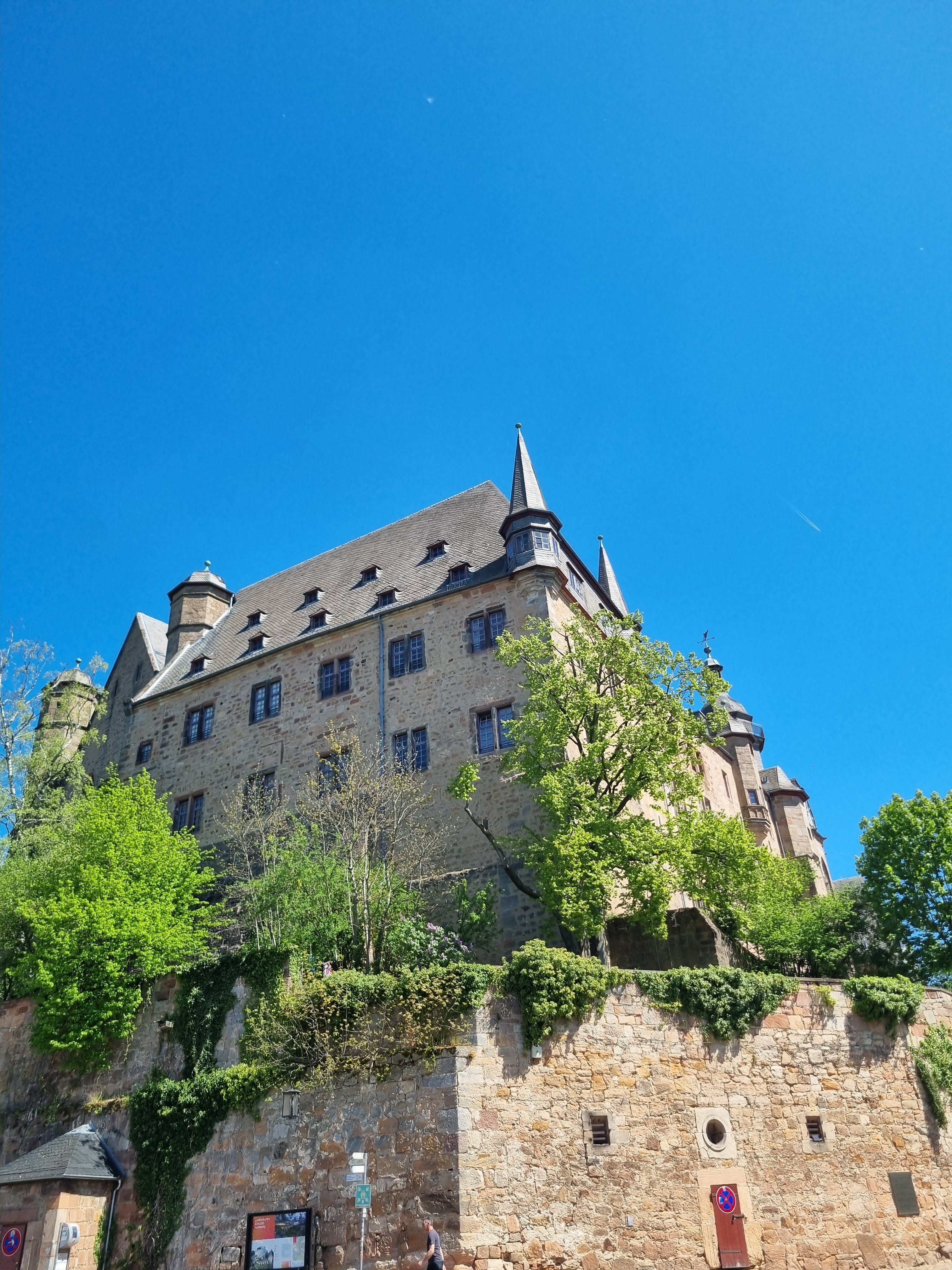
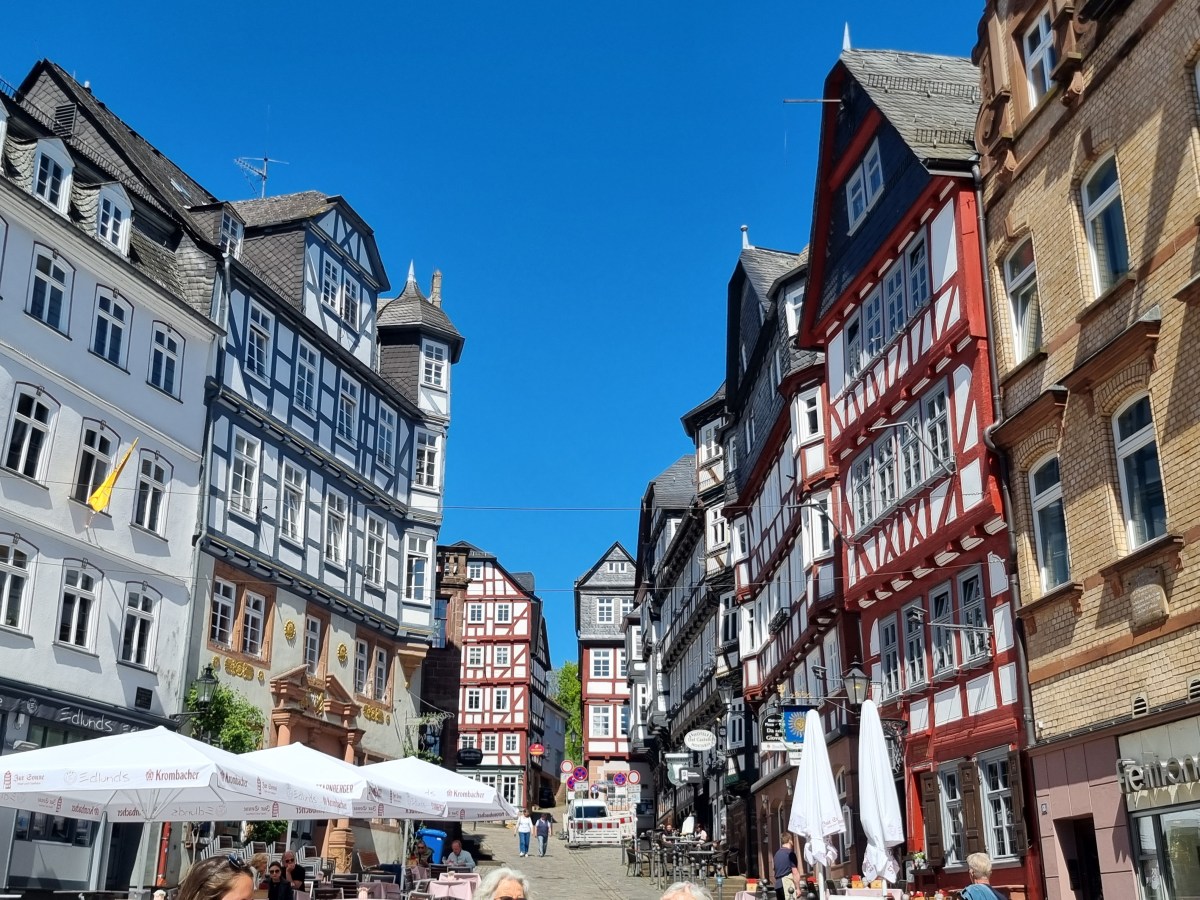
If you’re craving fairytale vibes, head to Marburg, about an hour from Frankfurt. I recently visited a friend there, and it truly felt like stepping into a storybook. This university town is perched on a hill, with winding cobblestone streets, colorful half-timbered houses, and a little castle towering above it all. The castle also houses an interesting museum where you can learn more about its history and discover a stunning collection of crystals from all around the world.
Also, don’t miss the Grimm Trail, a route inspired by the fairy tales of the Brothers Grimm, where you can immerse yourself in local legends. After a day of exploring, enjoy a classic Auflauf (a traditional German casserole) in one of the charming restaurants in the old town.
Summary of things to do
- Römberberg Square
- Neue Altstadt
- Paulskirche
- Kaiserdom St. Bartholomäus
- Walk along the Main
- Take a boat ride on the Main
- Euro Sculpture
- Eiserner Steg
- Goethe-Haus
- German Romanticism Museum
- Alte Oper
- Eat German food
- Palmengarten Frankfurt
- Städel Museum
- Senckenberg Naturmuseum
- Main Tower
- Kleinmarkthalle
- Day Trip to Mainz
- Day Trip to Marburg
Where to eat
- Restaurant Paulaner am Dom – German cuisine (unpaid ad)
- Dey Altstadtmetzgerei Wurstbraterei – Sausage stand (unpaid ad)
- Wiener Feinbäckerei – bakery (unpaid ad)
Other Germany Blogs

Discover Munich: A Local’s 5-Day Itinerary
Are you looking for an authentic German experience or simply planning a nice city getaway? Then consider Munich, the heart of Bavaria! Whether you’re a local or a visitor, Munich has so much to offer. I realized I couldn’t run a travel blog without featuring a post about my favorite city, so I had to…

30 Must-Do Experiences in Hamburg
Are you ready for your next trip? Discover the magic of Hamburg with its unique blend of history, culture, and modern wonders. Start your day at the bustling harbour with a traditional German Fischbrötchen, soaking in the maritime atmosphere. Next, lose yourself in the intricate details of Miniatur Wunderland, home to the world’s largest model…
5 Days in Berlin: Your Ultimate Travel Guide
Imagine waking up to the aroma of fresh coffee, planning your day around world-class museums, bustling markets, and delicious street food in a city that pulses with energy and creativity. Welcome to Berlin, the capital of Germany — a vibrant metropolis where every street tells a story and every corner invites exploration. From the iconic…
Travel Guide: Three-Days in Cologne
Discover the best of Cologne in just three days! Walk across the iconic Hohenzollern Bridge, famous for its love locks and stunning views of the Rhine. Marvel at the towering Cologne Cathedral, a UNESCO World Heritage Site and architectural masterpiece. Glide over the Rhine in the Cologne Cable Car, offering breathtaking views of the city…
24 Hours in Nuremberg: Must-See Attractions
Step into the heart of Nuremberg, a city where the magic of the past meets the vibrancy of today. Wander through the narrow, cobblestone streets of the medieval Old Town, where half-timbered houses and ancient walls whisper stories of centuries gone by. Let the mouthwatering aroma of sizzling Nürnberger Bratwurst and freshly cooked sauerkraut fill…
Explore Marburg: A Fairytale City Guide
Nestled in the scenic Lahn Valley of northern Hesse, the picturesque town of Marburg stretches across the slopes of the Lahn Hills which is a place where crooked half-timbered houses, winding old town alleys, and a hilltop castle set the scene for a fairytale come to life. With a population of around 80,000, this charming…





 Michelle Cacija
Leave a comment