
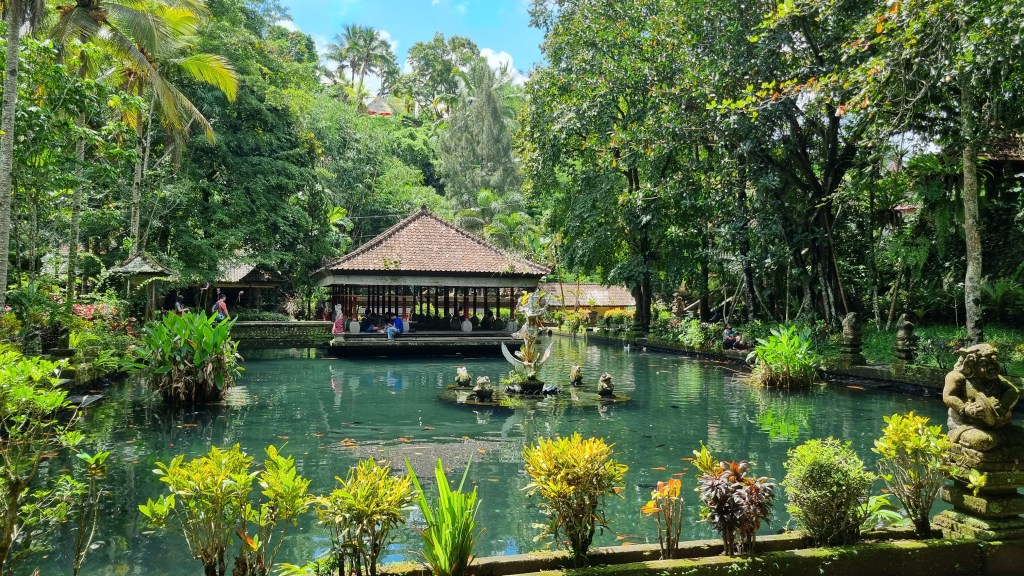
Imagine palm trees swaying gently in the breeze, the scent of incense and frangipani flowers in the air, and the soft sound of waves lapping against pristine shores. Bali, often called the Island of the Gods, beckons adventurers, soul-seekers, and beach lovers alike.
For my partner and me, it was our very first visit to this enchanting destination, and the experience was nothing short of magical. Ten days felt like just the right amount of time to dive deep into Bali’s charm: its warm-hearted locals, tasty cuisine, captivating traditions, stunning temples, and laid-back coastal vibes.
But let’s be honest: Bali is vast, and every corner has its own story to tell. Could we have stayed longer? Absolutely. Two extra days would’ve been perfect to uncover even more of this paradise. Still, in the time we had, we managed to pack in a whirlwind of unforgettable moments. Let me take you through our 10-day journey, filled with the best of what Bali has to offer — and a few tips to make your trip as magical as ours.
Servus and welcome to my first blog post! Today, I want to share an overview of our ten-day Bali itinerary. Obviously, it’s not a perfect itinerary because everyone travels different, and all travels always include changes of plans. I want to let you know that everything on this website has been experienced, photographed and written by myself. Since I finance all of my travel expenses on my own, the stories and opinions given are truly my own. And if you’re interested in seeing more travel pictures or videos feel free to check out my Instagram @michellecacija or my Tik Tok @michellecacija for more.
Index
- The Basics about Bali
- Things you need to be aware of
- Itinerary
- Summary of activities in Canggu
- Where to eat in Canggu
- Summary of activities in Seminyak
- Summary of activities in Ubud
- Where to eat in Ubud
- Booking Checklist
The Basics about Bali
When to Visit
Since Bali is in Southeast Asia, it has just two seasons: wet and dry. The dry season runs from April to September, which is also the peak tourist season, offering sunny days and pleasant conditions with temperatures ranging from 27°C to 32°C (81°F to 90°F). The rainy season occurs from October to March, bringing higher humidity and frequent downpours, though temperatures remain warm, between 25°C and 30°C (77°F to 86°F). We visited in late March and were super lucky — it barely rained, except for one night and a few hours in the afternoon, making it feel more like the dry season!
Getting There
Bali can be reached by ferry, cruise, or plane, depending on your starting point. We flew from the West Coast of Australia, which took about three hours. If you’re flying from the East Coast, it’s around six hours. Travelers from outside Australia or Asia will likely have longer flight times. Major airlines fly directly to Bali’s Ngurah Rai International Airport (Denpasar), making it easy to get to this island paradise.
Where to stay
Bali offers a variety of neighborhoods to stay in, each with its own unique vibe. The areas we considered were Canggu, Ubud, Seminyak, Denpasar, Uluwatu, and Sanur. After some research, we chose to split our stay between two locations, which turned out to be a great decision. We spent our first four nights in Canggu, about a 35-minute drive from the airport (depending on traffic), and our remaining five nights in Ubud, located in the center of the island. Ubud is about a 55-minute drive from the airport, again depending on traffic.
On Arrival
Most visitors arrive at Denpasar International Airport, in the south of the island. Before our trip, we heard that arrivals could be a bit chaotic, with crowds and many drivers offering rides to your accommodation. To avoid any hassle, we pre-arranged a taxi with our accommodation, which was an easy, quick, and safe option. Alternatively, there’s a taxi rank at the airport, or you can use Grab (similar to Uber), which might be a cheaper option.
Getting Around
Although Bali appears small, getting around can take time, especially if you’re walking. The island is packed with motorbikes and cars, and pedestrian paths aren’t always available. Renting a motorbike is a popular and easy option for getting around. While we considered renting one — since it’s a must-do Bali experience — we ultimately decided against it due to the chaotic traffic and less-than-ideal road conditions. Instead, we mostly used Grab (unpaid ad), Southeast Asia’s equivalent to Uber, which worked well for us. Gojek (unpaid ad) is another similar service. On some days, we booked half- or full-day tours via GetYourGuide.com (unpaid ad), which included a local driver to take us to various attractions.
What to pack
Bali’s tropical climate means it’s humid year-round, especially during the wet season, so pack light, breathable clothing. Be sure to bring beachwear, along with comfortable, closed-toe shoes if you plan on walking around. While touristy areas are well-developed, many streets are rough and dirty, so we preferred enclosed shoes over sandals.
If you plan to visit temples or other religious sites, bring a few pieces of clothing that cover your shoulders and knees. Don’t worry if you forget, though — most temples lend sarongs as part of the entrance fee. You can also purchase sarongs from vendors outside temples if you want your own.
It’s a good idea to pack a small first-aid kit with essentials like Band-Aids, pain relievers, bug spray, aftersun lotion, and any other medications you might need. You’ll feel more comfortable using products from home, and while Bali has pharmacies, it’s easier to be prepared. Additionally, if you’re coming from outside Indonesia or Europe, don’t forget to bring a Type C or F power adapter.
Cost of Travel
Bali can be an affordable destination, depending on your preferences. The cost of accommodations, meals, and activities will vary. Hostels and guesthouses are generally cheaper than hotels, and booking group tours can be more economical than hiring a private driver. For food, local markets are cheap, though imported products at supermarkets can be quite pricey.
Things you need to be aware of
Water in Bali. Avoid drinking tap water or consuming ice in drinks to prevent “Bali Belly.” We were fortunate that our accommodations offered free refillable water stations with safe drinking water. This saved us money, reduced plastic waste, and kept us healthy.
Traffic in Bali can be chaotic, especially in busy areas. Imagine the bustling streets of Vietnam — Bali’s traffic is similar, with motorbikes weaving in and out and frequent traffic jams. If you’re driving or on a motorbike, expect travel times to take longer than anticipated.
Toilet situation. Public restrooms in Bali vary in quality and cleanliness. In some tourist spots, you may be charged a small fee to use them. It’s a good idea to carry tissues or toilet paper with you, as many restrooms don’t provide any.
Learn to haggle. Don’t be afraid to haggle at markets or street vendors. It’s part of the shopping culture in Bali, and locals often start with a high price. Negotiating is expected and can be fun. We managed to get two sarongs for the price of one!
Tipping isn’t mandatory in Bali, but it’s always appreciated for good service. Some may accept tips, while others might politely decline, so feel free to offer, but don’t be surprised if they refuse.
Sim card. I recommend getting a SIM card in Bali for internet access. You’ll need it for directions and to book rides with Grab. When we visited, we bought one SIM card and shared the hotspot, which worked perfectly. The prices are reasonable, especially if you share the cost.
I’ve also heard that the SIM card provider Balisim is quite good, and it’s an eSIM, which makes it super convenient. Unfortunately, we didn’t know about this provider when we went, but it would have saved us a lot of time going through all the providers at the airport. You can sort out your SIM card situation before you even go or easily purchase it once you’re there. Plus, with the code MICHELLE10, you can save 10% on your first purchase. Click here to go directly to the website and use my code (ad).
Vaccination. While not required for entry, it’s a good idea to consider a rabies vaccination, as there are many stray dogs and cats in Bali. Always be cautious around stray animals.
Currency. The local currency is the Indonesian Rupiah (IDR). Cash is essential, especially for smaller shops, markets, and temples. Larger establishments and restaurants often accept cards, but always have some cash on hand.
Language. The official language in Bali is Balinese, but English is widely spoken in tourist areas. Most restaurants will have English menus, so language barriers are minimal.
Itinerary
Day 1 – Canggu
Our adventure began at Perth Airport, with a direct flight to the enchanting island of Bali. As our plane touched down at Denpasar Airport around 6 p.m., the warm, humid air carried a hint of adventure. The terminal buzzed with energy, a mix of excited travelers and locals going about their day.
Before stepping out into the tropical night, we decided to pick up a SIM card. There were a few different providers offering similar prices, so it was quick and convenient. Outside, the arrival area was a chaotic symphony of sights and sounds. Crowds of drivers and eager men waving placards or offering rides filled the space, their voices blending into a steady hum. It was a little overwhelming at first, but soon enough, we spotted our pre-booked driver — a smiling face in the crowd, arranged by our accommodation in advance.
As we left the airport behind, the bustling streets of Bali greeted us with their own rhythm. Motorbikes weaved through traffic, neon-lit signs glowed against the evening sky, and the scent of street food wafted through the air. The journey to Canggu, our first destination, was supposed to be a quick 35 minutes. However, Bali’s notorious traffic stretched it to over an hour. Still, the ride gave us a glimpse of local life. The drive from the airport to our accommodation cost 350,000 IDR (around 22€ and $23 USD).
By the time we arrived at our accommodation, the world outside had gone dark, the only sound the distant hum of cicadas. Tired but excited, we settled into our new home: a cozy retreat where we would spend the next five nights, dreaming of all the adventures that awaited us on this magical island.

Day 2 – Canggu and Pura Tanah Lot
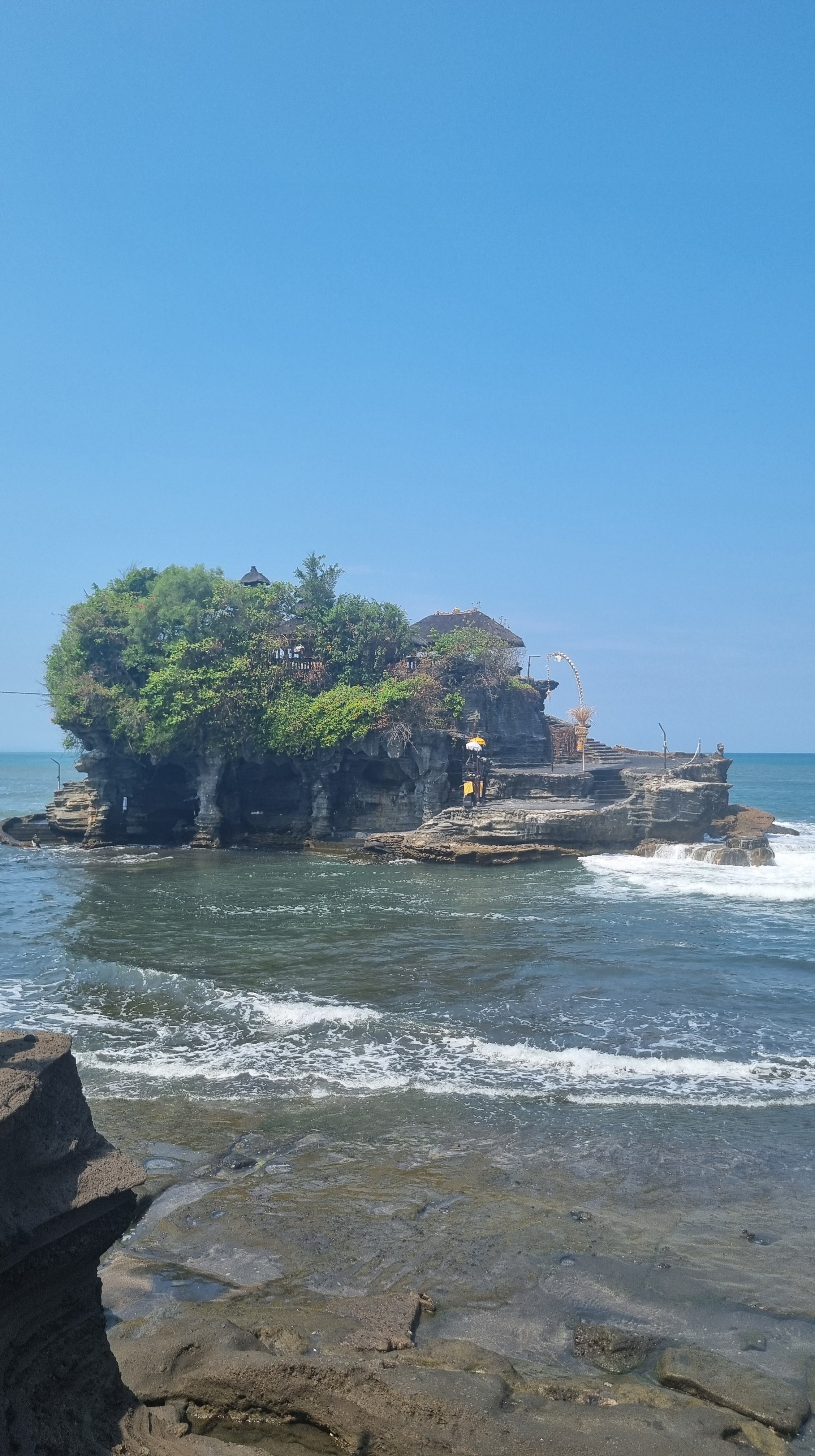
Early the next morning, the soft glow of dawn painted the sky as we set out to explore one of Bali’s most iconic landmarks: Pura Tanah Lot. Nestled on a rocky outcrop surrounded by the ocean, this ancient sea temple is a place of mystique and beauty. From our base in Canggu, the journey took about 30 minutes — though in Bali, traffic can always add a twist to your plans, so be mentally prepared.
While most travelers go to Tanah Lot for its legendary sunsets, we chose the quiet allure of the morning. The world was still waking up as we arrived, and to our surprise, the nearby markets were completely empty. Wandering through the quiet stalls felt like stepping into a private gallery.
As we approached the temple, the sound of waves crashing against the rocks grew louder, blending harmoniously with the soft chatter of early visitors. The crowds were minimal, allowing us to soak in the tranquil atmosphere and marvel at the temple’s timeless architecture. Surrounded by the ocean at high tide, the temple seemed almost otherworldly — a sacred sanctuary rising from the sea. It was the perfect way to begin our day, exploring not only the beauty of Bali but also the serenity it has to offer when you find a quiet moment amid its bustling charm.
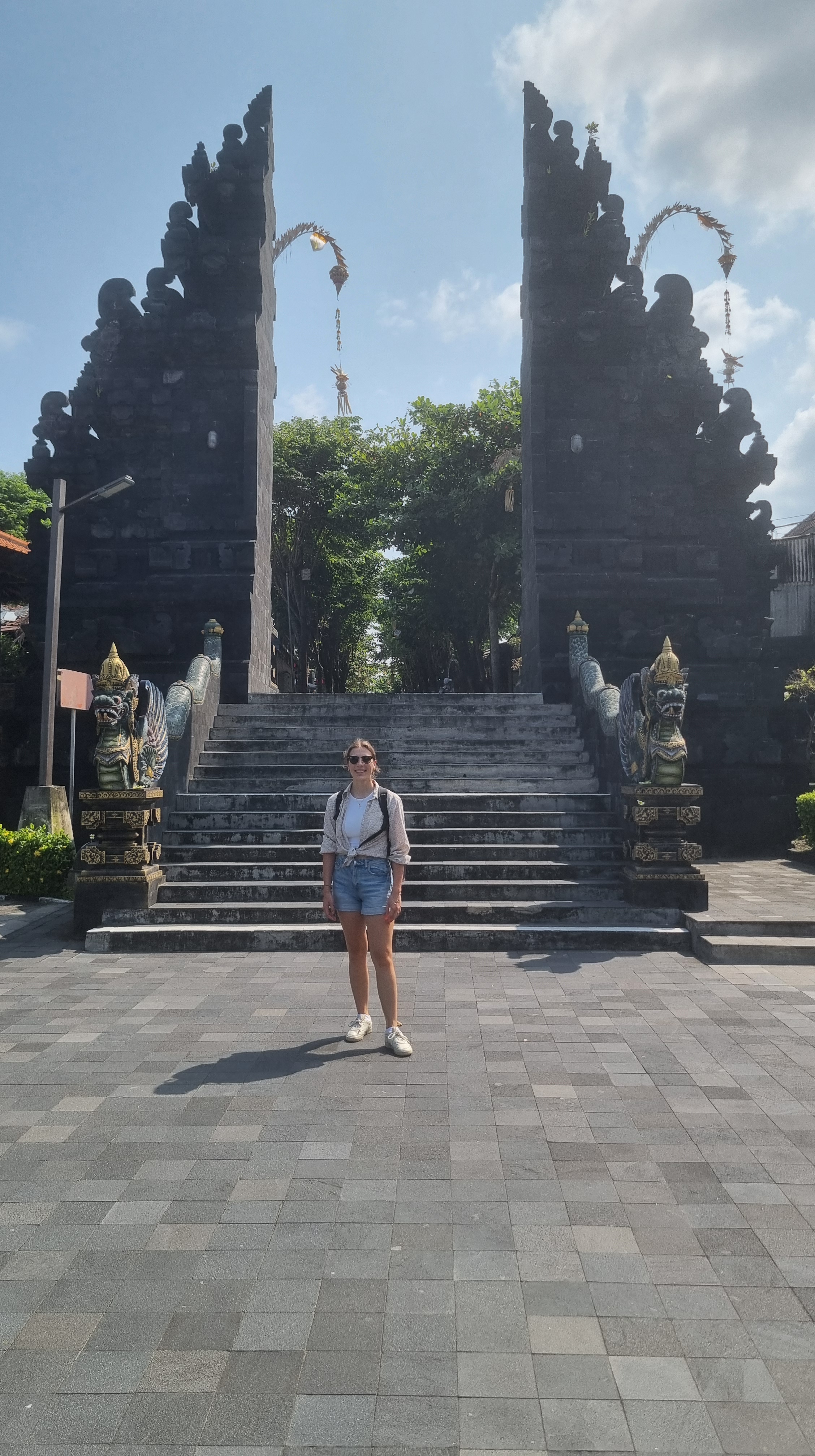
That afternoon, we let ourselves drift through the laid-back charm of Canggu, a town that feels like a perfect blend of nature and modern indulgence. As we wandered the streets, the lush green of surrounding rice paddies stretched out like a living postcard, their serenity contrasting beautifully with the buzzing energy of the town. Boutique shops displayed unique, handcrafted treasures, and cozy cafés invited us in with the rich aroma of freshly brewed coffee. Canggu’s vibe is unmistakably special: effortlessly chic yet rooted in its natural beauty.
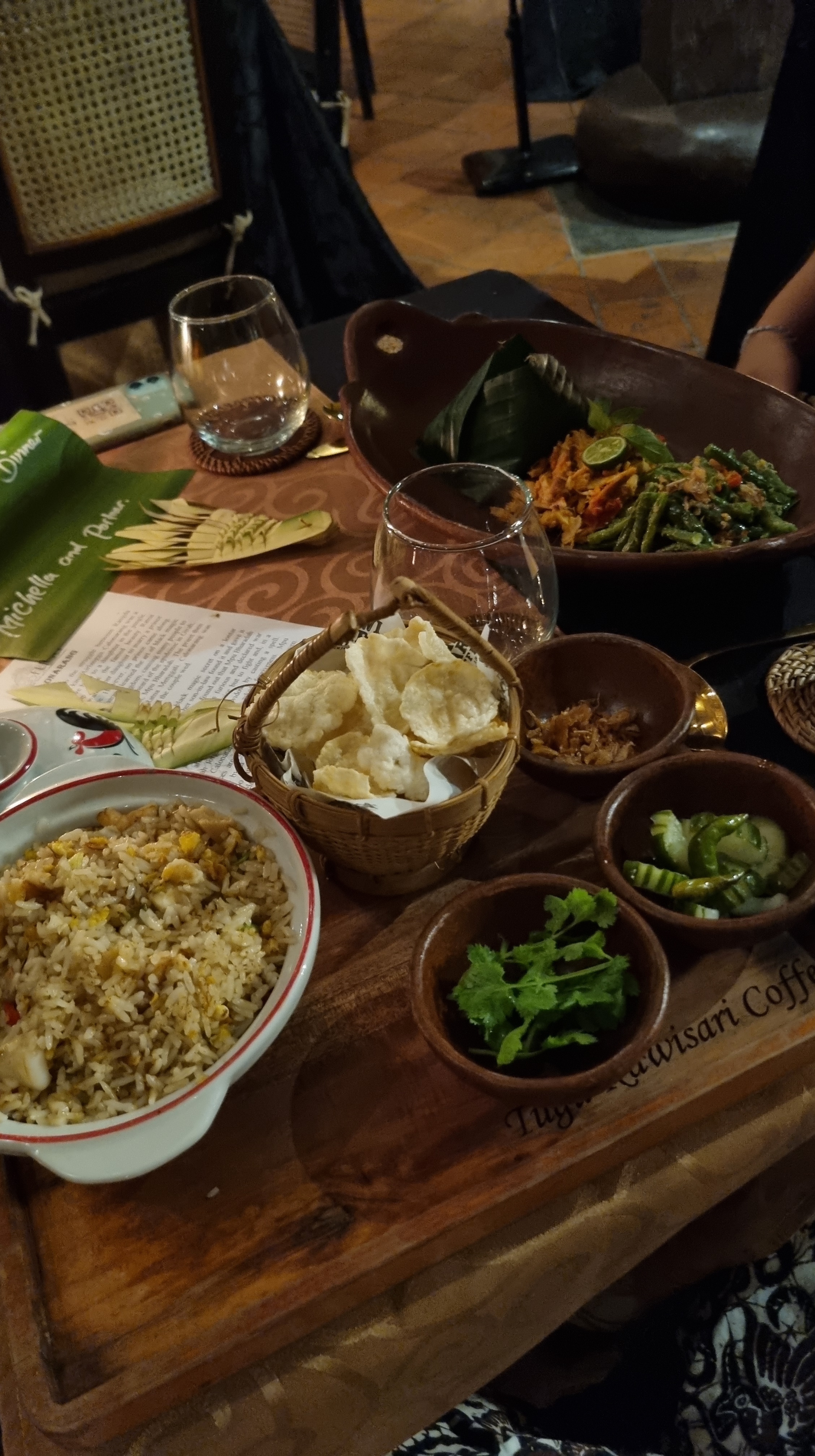
As the sun dipped below the horizon, we had something extraordinary planned for the evening: a dinner and cultural dance performance at the stunning 5-star Tugu Hotel (unpaid ad). The dinner was truly magical. Beneath intricately carved wooden ceilings and surrounded by soft, ambient lighting, we enjoyed a meal that felt both luxurious and intimate. Surprisingly, the experience wasn’t only extraordinary but also affordable. For around €30, we savored two main courses, three delicious drinks, and a dessert to share, all while being treated to a mesmerizing two-hour cultural dance show.
The performance brought Bali’s rich heritage to life, with dancers moving gracefully to the rhythm of traditional music. Their colorful costumes, intricate hand gestures, and expressive storytelling held us spellbound.

Day 3 – Nusa Penida Island
On the third day of our Bali adventure, we embarked on an unforgettable full day journey to Nusa Penida, a jewel of an island just off Bali’s coast. This rugged paradise, with its dramatic cliffs, turquoise waters, and pristine beaches, is the stuff of postcards—and we couldn’t wait to experience it for ourselves.
The day began early, as we were picked up at dawn from our accommodation. After an hour’s drive to Sanur Beach, the sun was just starting to rise, casting a golden hue over the bustling harbor. Travelers from all over the world were gathering, their excitement in the air. Thankfully, our driver swiftly secured our speedboat tickets, and we breezed through the check-in process. Boarding the boat, we found every seat filled — proof of just how popular this destination is. The 45-minute ride across the shimmering ocean passed quickly, with the anticipation of reaching Nusa Penida keeping us wide awake.
Upon arrival, the island’s beauty immediately took our breath away. Towering cliffs embraced the harbor, and the sound of waves crashing against the rocks set the tone for the adventure ahead. At the pier, we met our friendly tour guide, ready to lead us to some of Nusa Penida’s most iconic spots. For those traveling solo, motorbike rentals are available nearby, offering an alternative for exploring at your own pace.
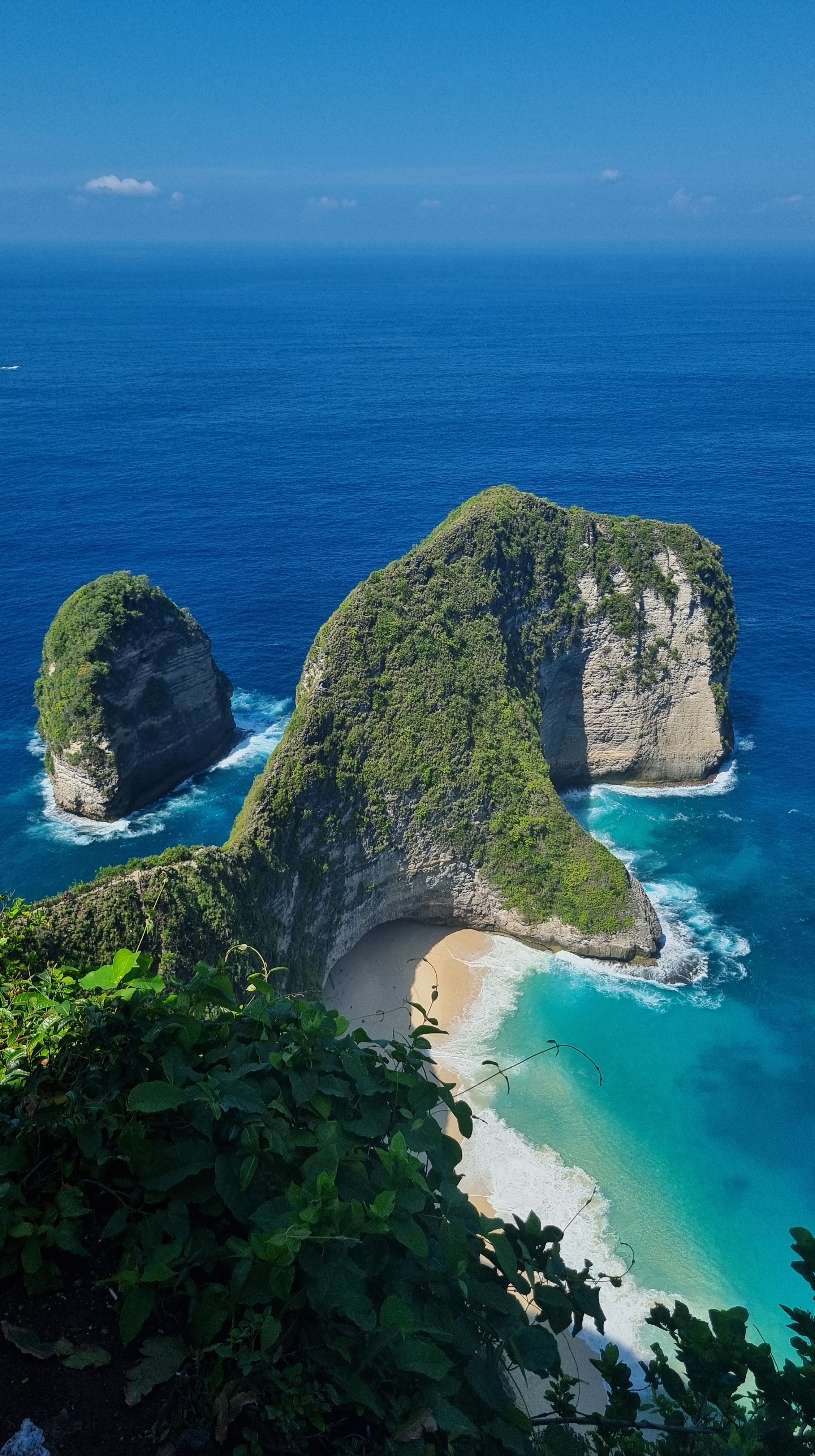
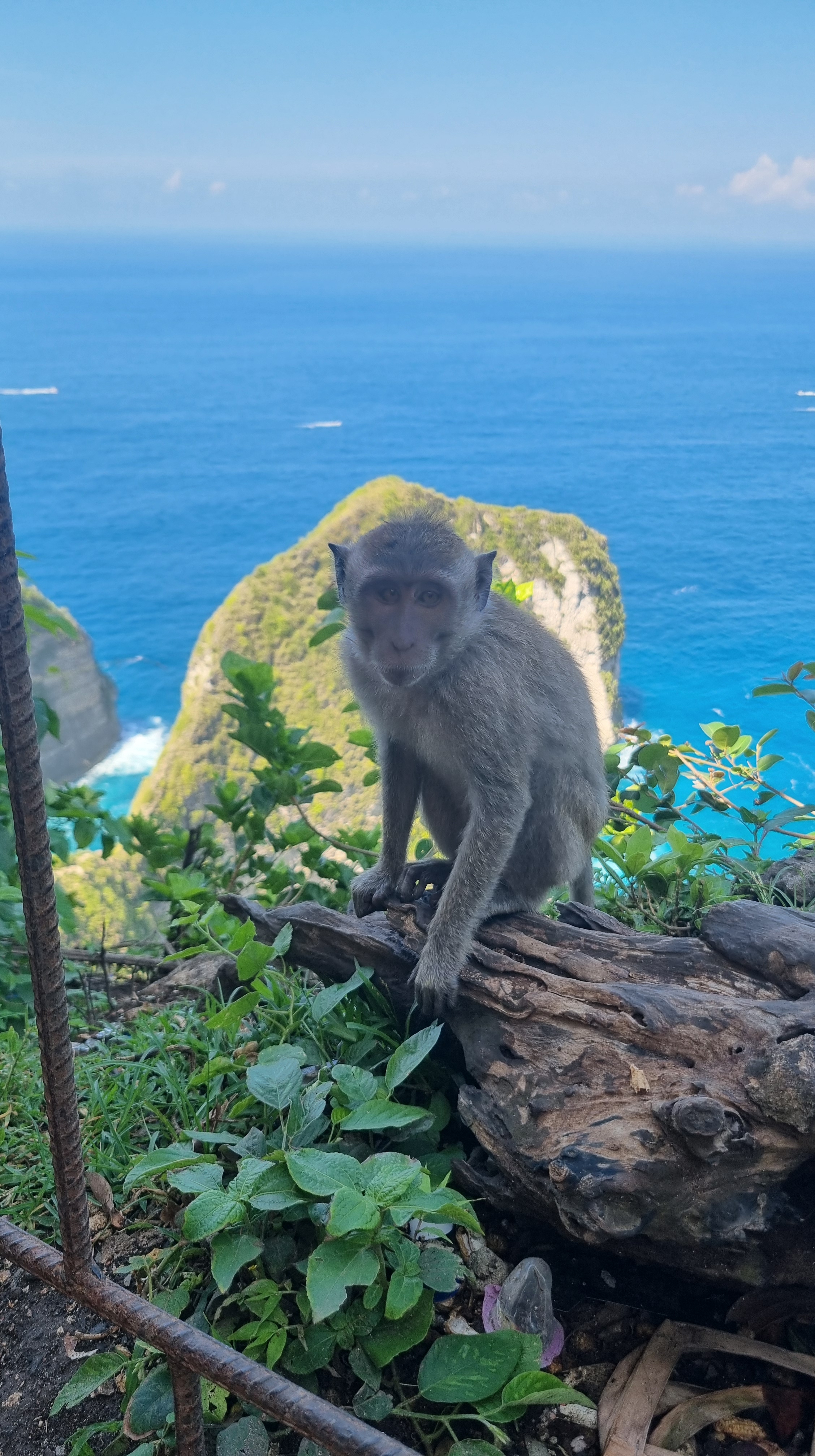
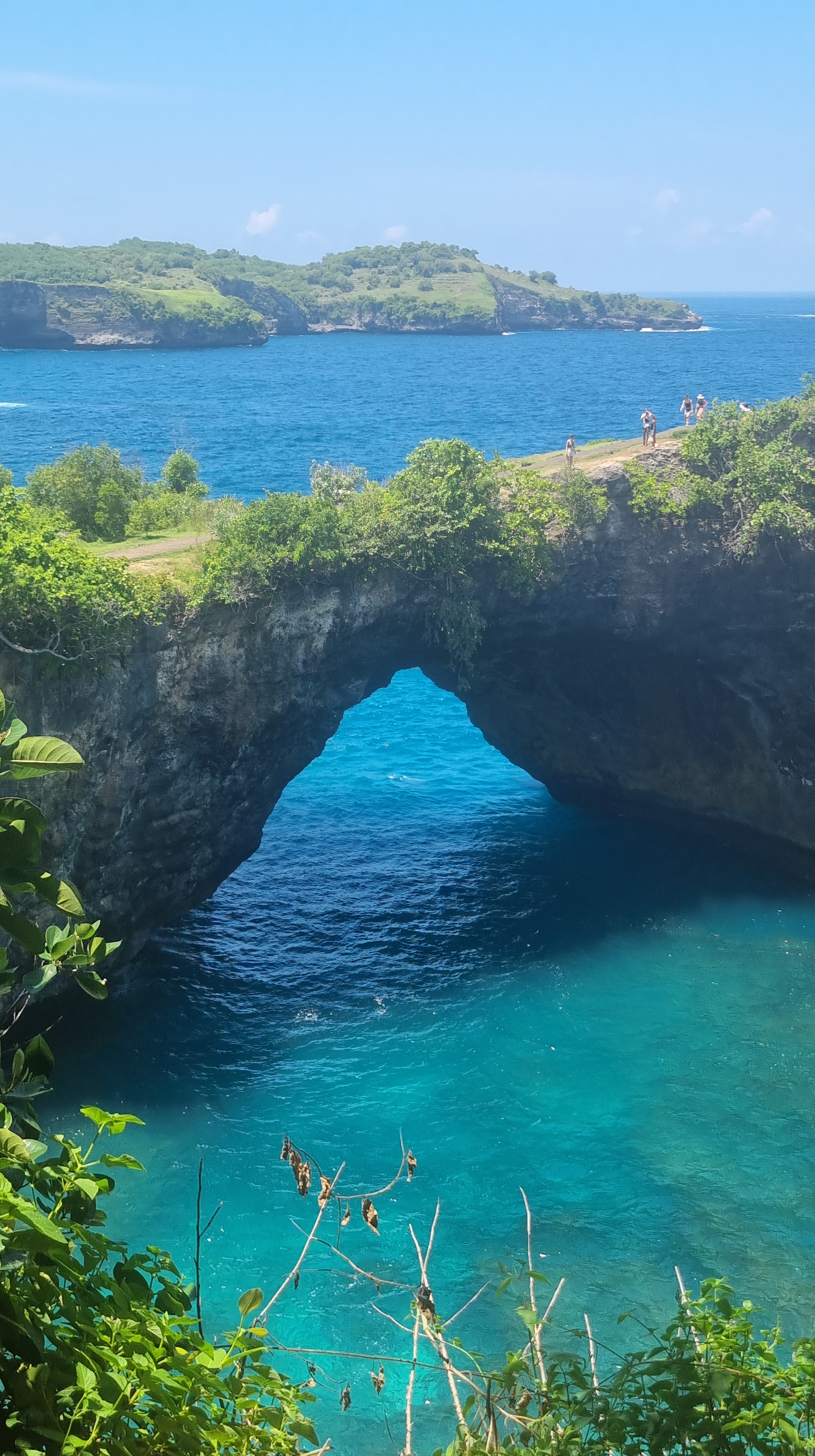
Our tour began with a visit to Kelingking Beach, famously nicknamed “Dinosaur Beach” for its T-rex-shaped cliff formation. Standing at the edge of the viewpoint, the sheer beauty was overwhelming — a surreal blend of azure waters, lush greenery, and golden sands far below. Next, we visited Broken Beach, a natural archway carved by the sea, and the shimmering tide pool of Angel’s Billabong, where the crystal-clear water glistened in the sunlight.
After a busy morning of sightseeing, we stopped at a local restaurant for lunch. With renewed energy, we continued to Crystal Beach, a peaceful spot where time seemed to slow down. While some travelers went for a swim, we opted to relax on the shore, dipping our feet into the refreshing waves.
Though Nusa Penida is undeniably stunning, it’s not without its quirks. The island’s winding, bumpy roads and the crowds at popular spots can make the experience feel rushed on a one-day tour. If you truly want to savor its magic, staying overnight is probably a great option to explore at a more leisurely pace.
Despite the challenges, this day trip was an adventure we’ll never forget. Nusa Penida’s raw beauty, dramatic landscapes, and serene beaches left an indelible mark on our hearts — a vivid reminder of why Bali is called the Island of the Gods.
Our tour guide ensured that we made it back to the ferry on time. Once back on Bali’s shores, we reunited with our morning driver, a familiar and friendly face in the bustling chaos of the harbor. However, this time the journey took longer than expected — over two hours — due to the notoriously heavy traffic. Still, it’s hard to be frustrated when surrounded by Bali’s vibrant life—scooters zigzagging through narrow streets, markets buzzing with activity, and the occasional serene glimpse of rice paddies tucked between villages. Traveling in Bali may not always be smooth sailing, but the journey itself is part of the adventure.
Day 4 – Canggu and Danau Beratan Bedugul
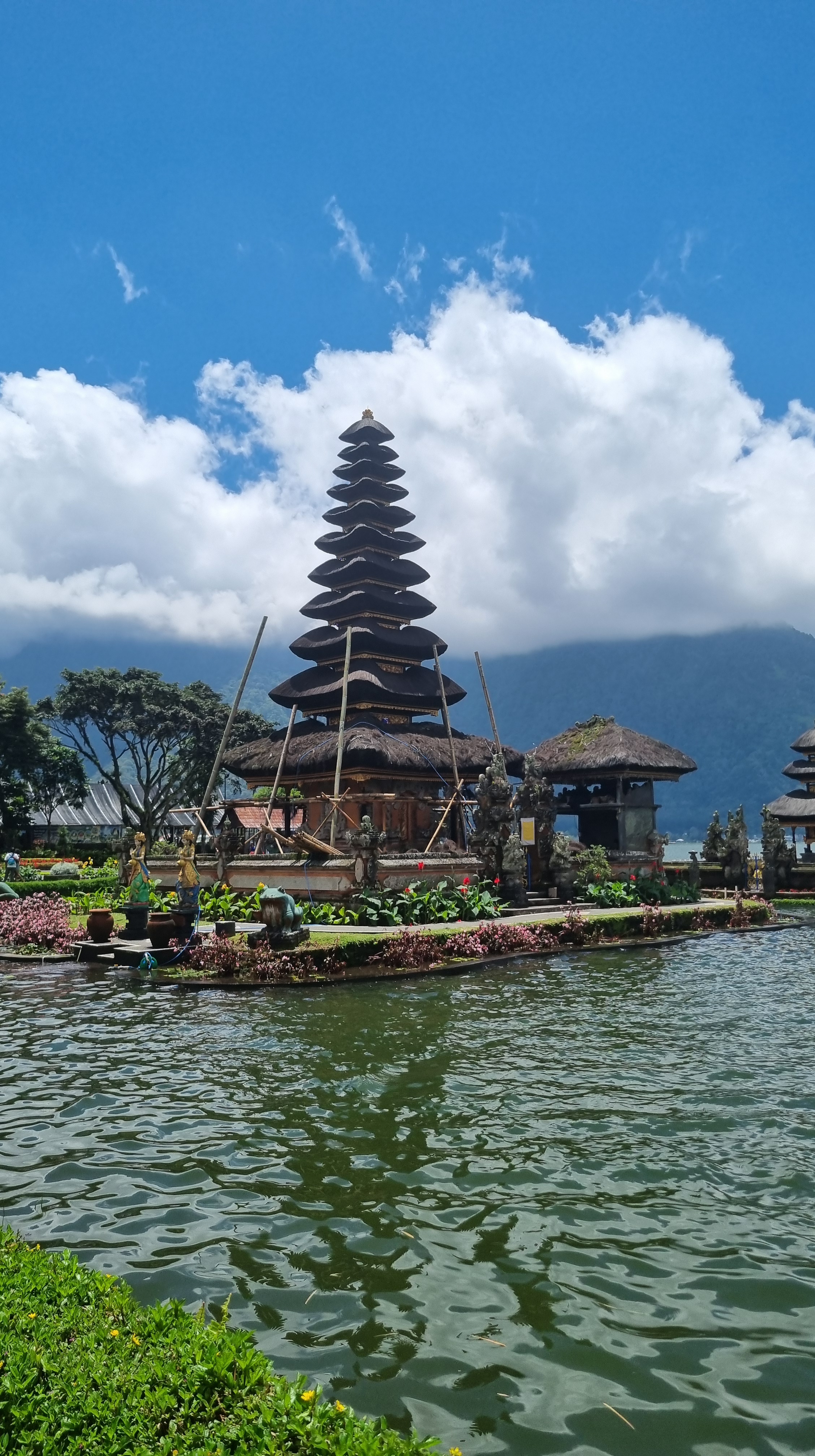
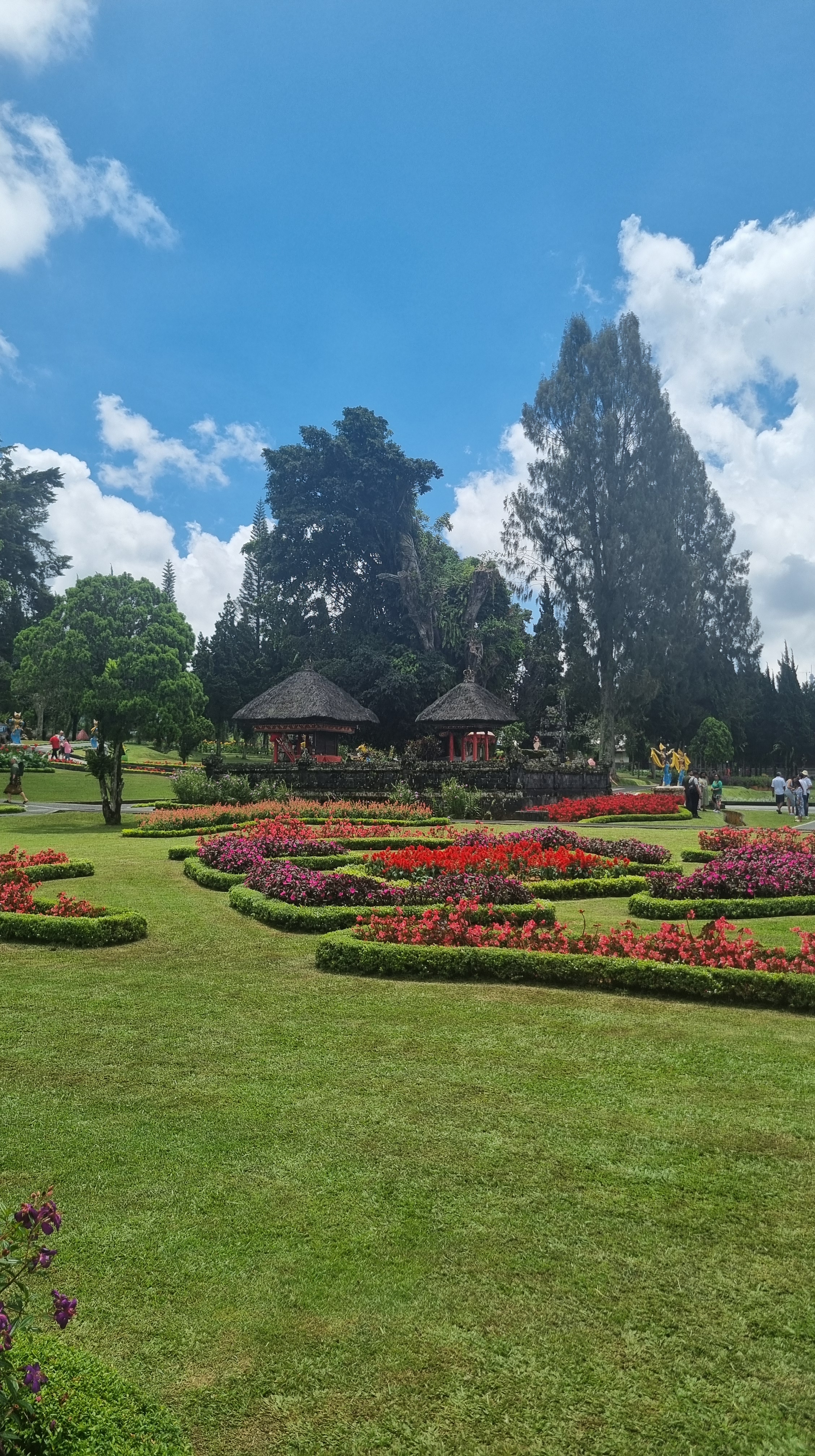
The next morning, we visited Danau Beratan Bedugul, a significant Hindu temple located in the northern part of Bali. The temple complex is beautifully situated on the shores of Lake Beratan, surrounded by lush mountains and dense jungle. We booked a ride through Grab, and while the app made logistics easy, the journey itself was a commitment. Winding roads carried us through Bali’s scenic countryside, where emerald-green mountains rose against the horizon, and the dense jungle occasionally parted to reveal sleepy villages. The round trip took over three hours, but every mile felt like a step closer to serenity.
As we approached, the temple’s iconic silhouette emerged through a gentle mist, standing gracefully at the water’s edge. The atmosphere was almost otherworldly — cool mountain air mingled with the earthy scent of the lake and surrounding foliage. We spent three peaceful hours exploring the temple grounds, marveling at the intricate carvings and soaking in the spiritual ambiance.
Despite the long drive, this visit was one of the highlights of our trip. If you find yourself with a free day in Bali, I highly recommend making the journey. Danau Beratan Bedugul isn’t just a temple; it’s a window into Bali’s soul!
Day 5 – Seminyak
On our fifth day, we decided to explore the nearby suburb of Seminyak, a chic and lively area just a short 15-minute drive from Canggu. Getting there was effortless — simply book a ride through Grab or Gojek. The streets of Seminyak welcomed us with their vibrant energy. Boutiques showcasing trendy apparel, quirky souvenirs, and artisan goods lined the sidewalks.
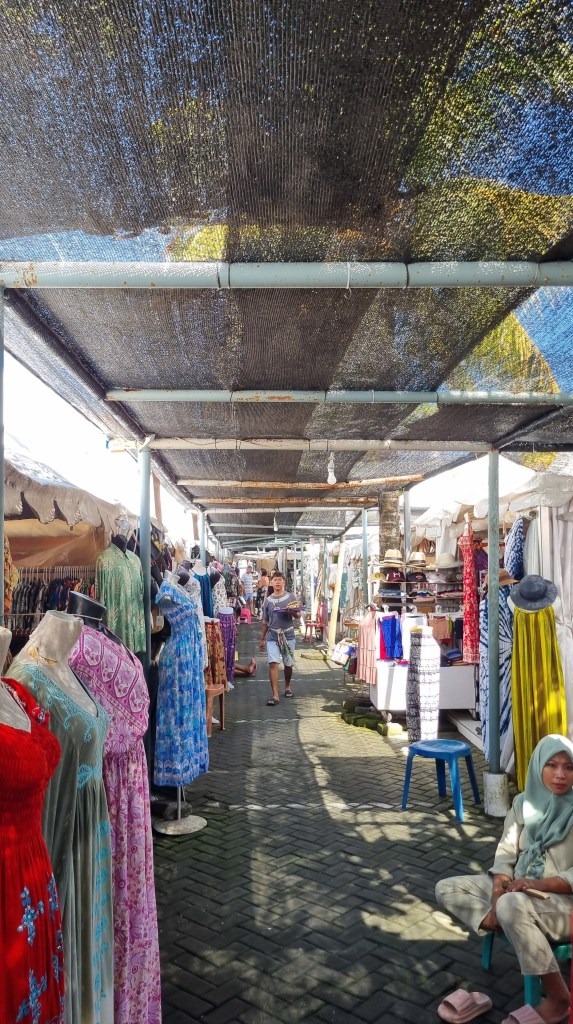
First, we explored the local flea market. Here you can find everything from handcrafted jewelry, clothing, and home decor to unique souvenirs and locally made art. The market is a popular spot for both tourists and locals.
Then, we made our way to the beach, where golden sands stretched endlessly and the gentle crash of waves offered a soothing soundtrack to our afternoon. Enjoying a light snack we brought with us, we let the salty sea breeze work its magic, pausing to watch surfers carve through the waves and families stroll along the shore.
As the midday humidity began to rise, we visited Seminyak Village, a compact yet modern shopping center conveniently located right in front of the local flea market. Inside, the cool air and elegant décor provided the perfect escape. After, we walked through Seminyak’s streets before heading back to Canggu.
After a few hours, we returned to Canggu and enjoyed a refreshing dip in the pool to beat the heat. The streets were alive with the sound of scooters and the voices of travelers and locals, yet the town still kept its relaxed, easygoing vibe. We were lucky to catch a free demonstration of the Hindu story at the beach, which we had actually seen before at the 5-star hotel.
Day 6 – Ubud
The next morning, our adventure took us inland to Ubud, a vibrant cultural hub nestled in the heart of Bali. Known for its art, spirituality, and lush greenery, Ubud promised a completely different side of the island. We booked a Grab (unpaid ad) for the one-hour journey, which cost around 120,000 IDR (about €7.50 or $7.80 USD) — a small price for a trip to one of Bali’s most beloved destinations.
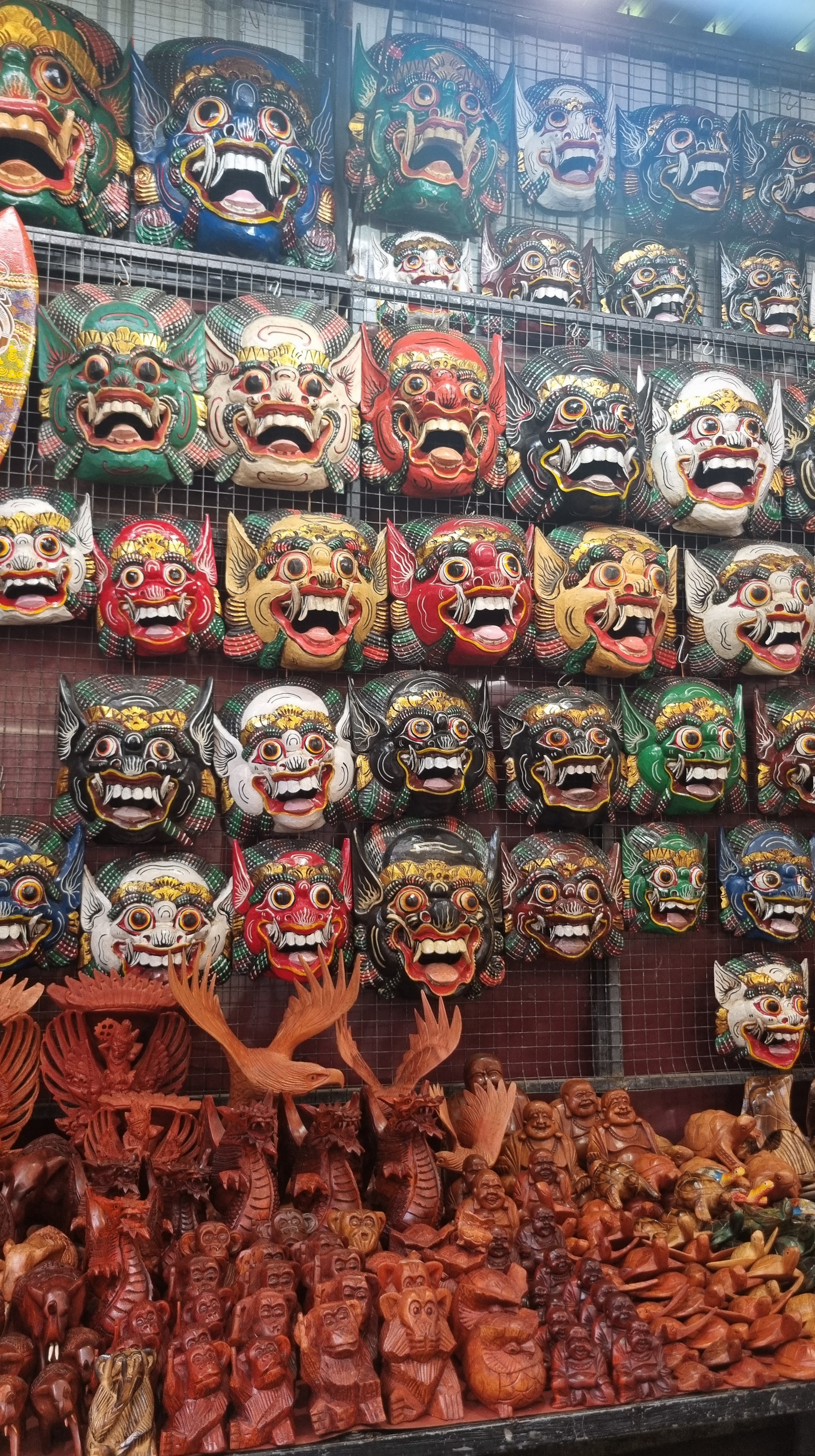
Upon arriving at our charming new accommodation, we wasted no time and set out to explore Ubud’s lively streets. Our first stop was the Ubud Market, a bustling maze of stalls overflowing with colorful Balinese artisanal goods. Handwoven textiles, intricate wood carvings, and beautiful souvenirs called out to us at every turn. Beyond the shopping, the market offered a glimpse into the creativity and craftsmanship that are central to Balinese culture.
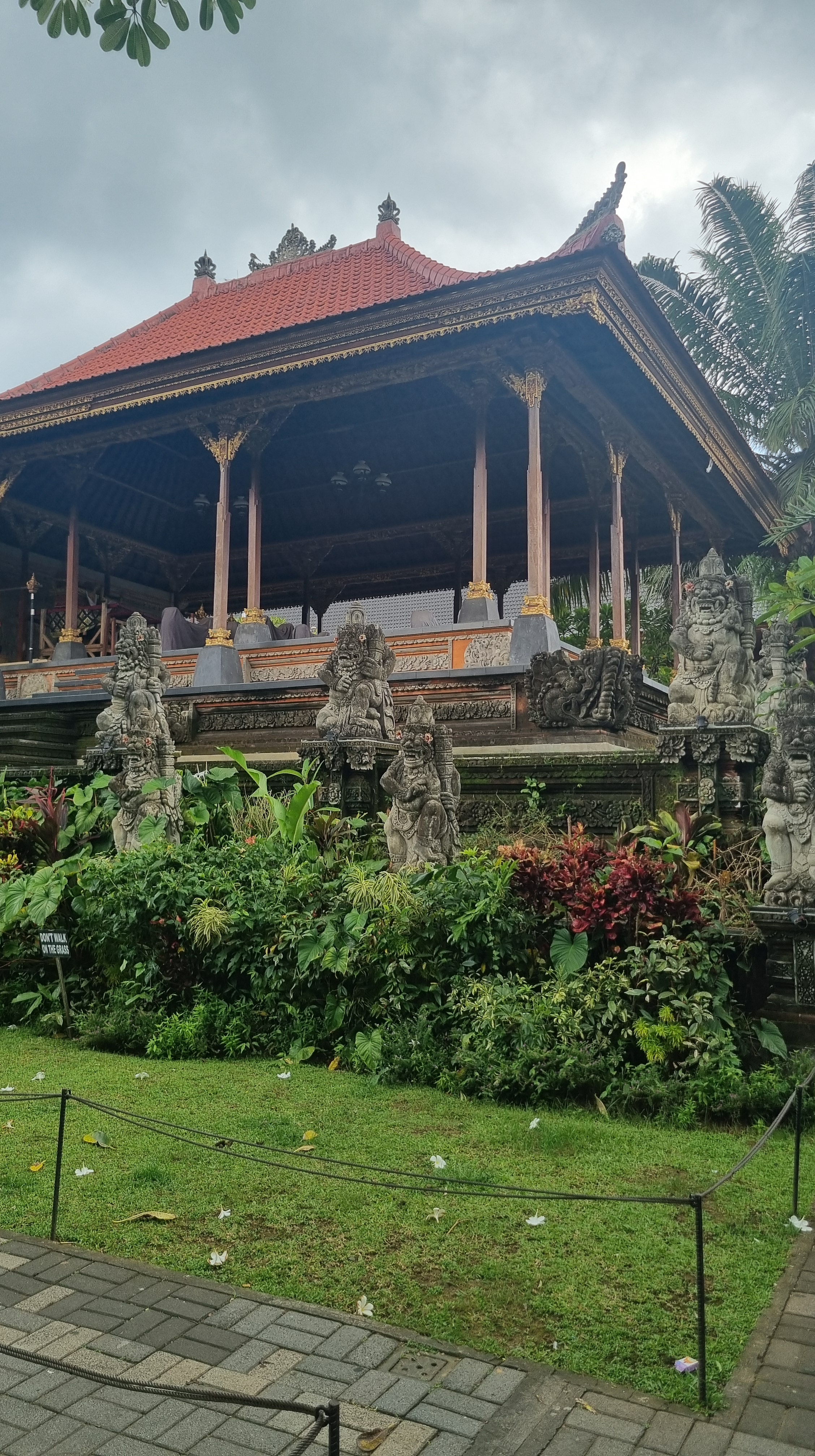
Just across the street is Ubud Palace (Puri Saren Agung), a serene sanctuary steeped in history. The palace’s traditional Balinese architecture — ornate carvings, grand courtyards, and intricate gates —transported us to another time. The atmosphere was calm and reflective, a welcome contrast to the vibrant energy of the market. Both the Ubud Market and the palace are free to enter, making them the perfect places to begin your Ubud adventure.
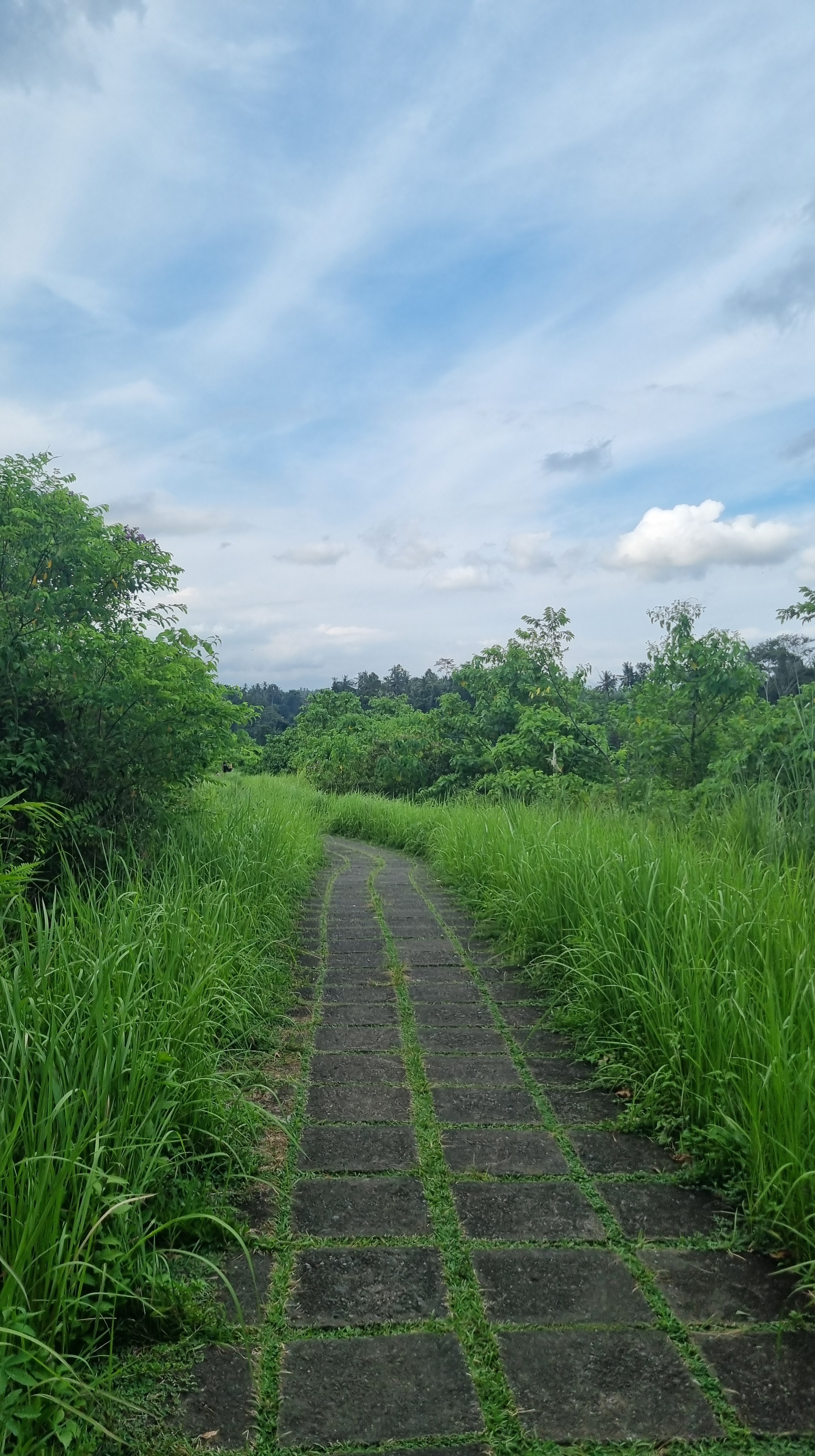
Spontaneously, we decided to do the Campuhan Ridge Walk, a scenic 2-kilometer trail that winds through Bali’s lush landscapes. As we stepped onto the path, we were immediately enveloped by the vibrant greens of towering palm trees and the soft sway of tropical plants. The air was thick with the scent of earth and foliage, and every step seemed to lead us deeper into a paradise untouched by time. The walk was peaceful, taking us on a gentle ascent over rolling hills and through expansive rice fields that stretched as far as the eye could see. At a leisurely pace, the journey took us about an hour.
At the end of the trail, we stumbled upon a small market tucked away from the main hustle and bustle. Local vendors offered handmade Balinese treasures — delicate fabrics, intricate accessories, and beautiful pieces of art. Then, you can either retrace your steps back along the trail, as we did, or continue exploring the area further.
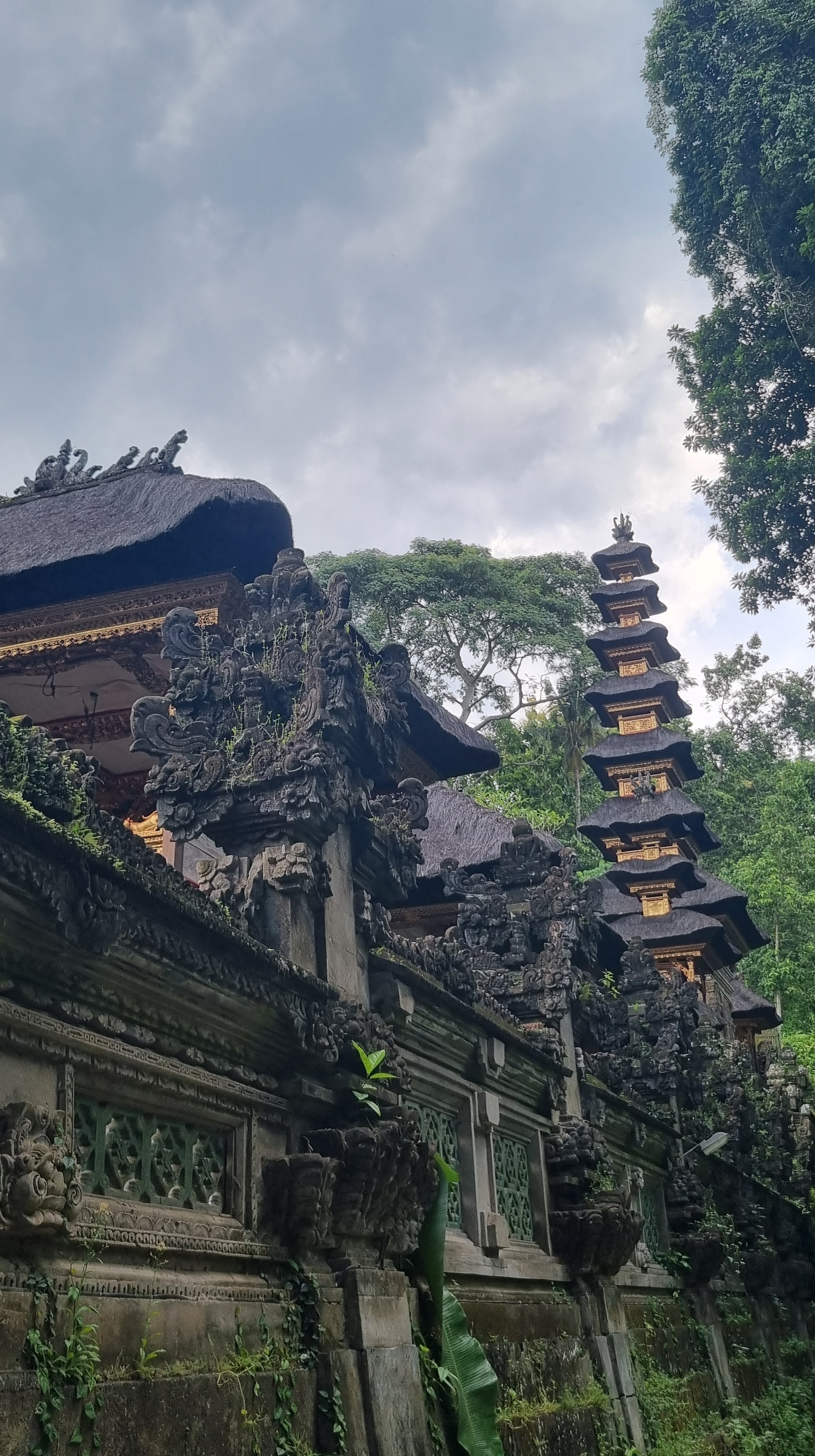
In the evening, we attended another traditional dance show, which was held directly in the middle of the Ubud Palace that we had visited earlier in the day. The performance lasted about an hour and a half, and while the artistry and costumes were nothing short of mesmerizing, the pacing of the show occasionally felt a bit monotonous. Still, the cultural immersion was undeniable. It was a chance to witness the storytelling through movement and music that has been passed down through generations in Bali. The tickets were reasonably priced at around 100,000 IDR (roughly 6 EUR or 6.50 USD), and there was no pressure to stay for the entire show. You were free to leave whenever you wished, making it an accessible and enjoyable way to experience Balinese culture.
Day 7 – Ubud, Rice terraces and Monkey Forest
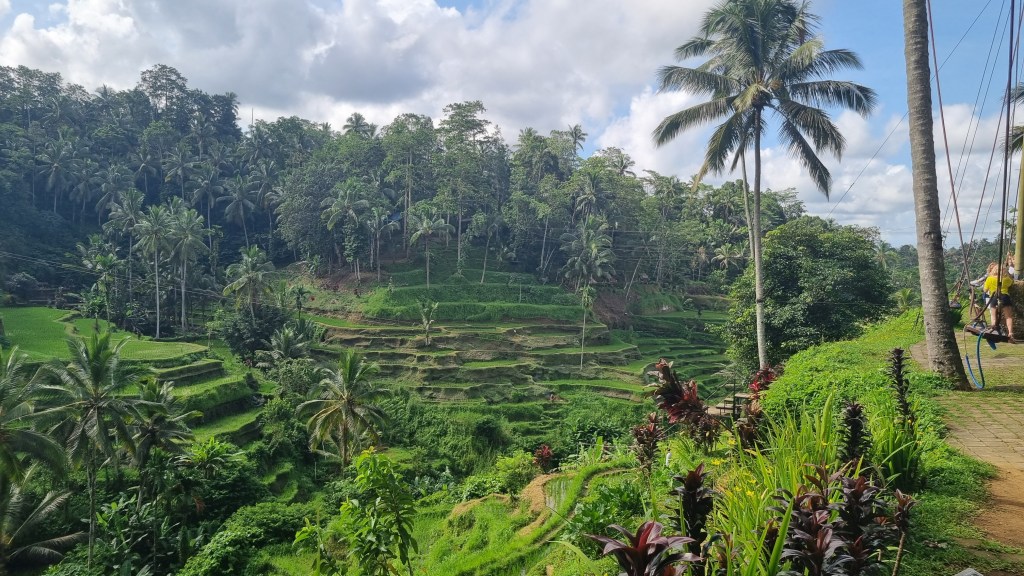
On our first full day in Ubud, we booked a “Highlights Tour of Ubud” that turned out to be one of the best tours I’ve ever taken. Our first stop was the world-renowned Tegallalang Rice Terraces, where nature and culture intertwined in a breathtaking display. It was that magical time of year when the fields were lush, and the entire scene seemed alive with color and texture. There were swings and wooden seats placed strategically within the terraces, offering excellent photo opportunities for tourists. We spent about an hour and a half exploring the area while our tour guide explained the intricacies of Balinese rice cultivation. It was a perfect introduction to Ubud, a place where nature, tradition, and spirituality all come together in an unforgettable way.
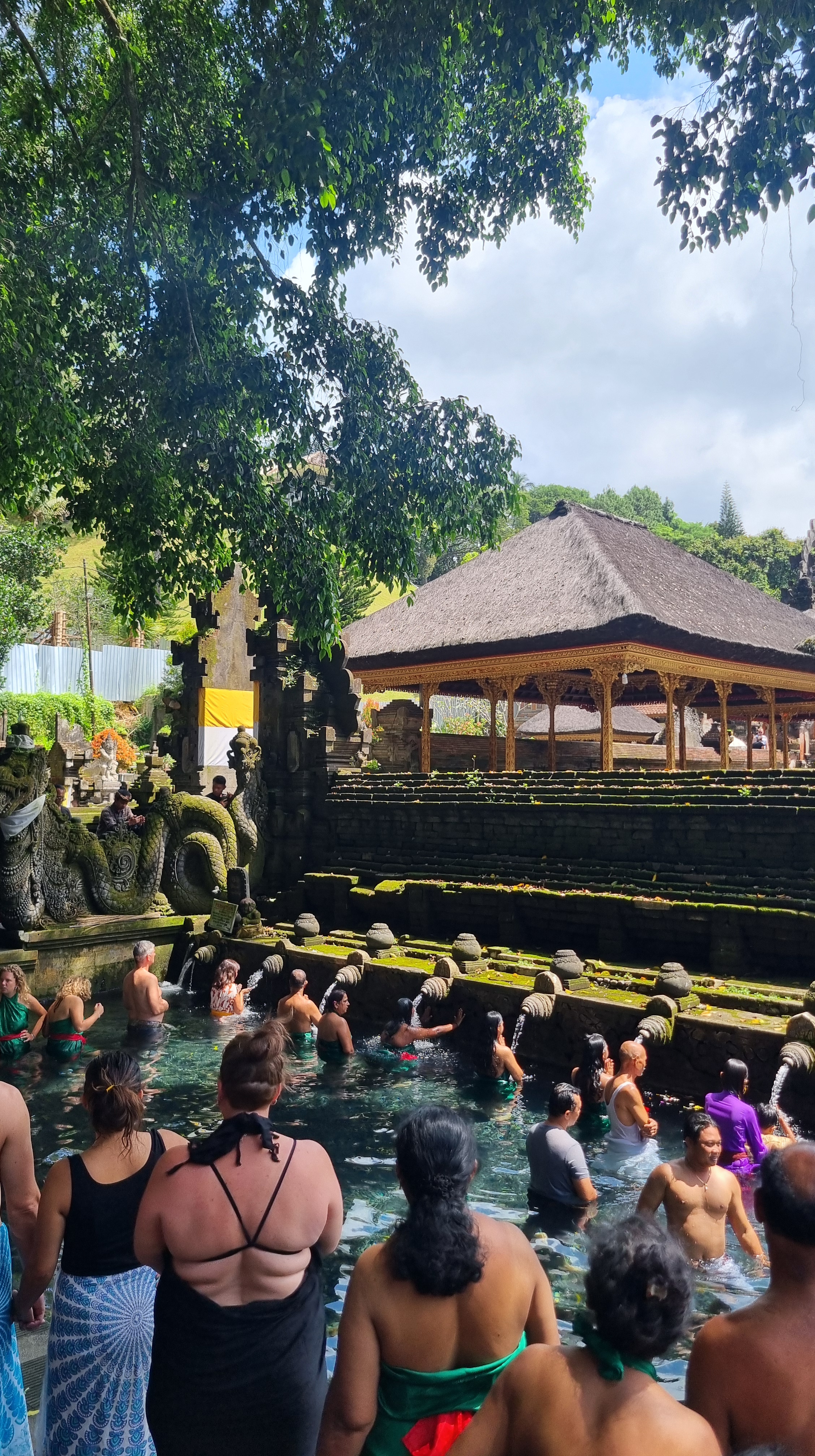
Our next stop was Tirta Empul, a sacred Hindu Balinese water temple located just a short 15-minute drive from the lush rice terraces. The temple is known for its pools of holy water, where visitors can participate in a cleansing ritual for self-purification. We initially planned to take part in the ritual ourselves, but it was too crowded, so we decided to just observe the ceremony.
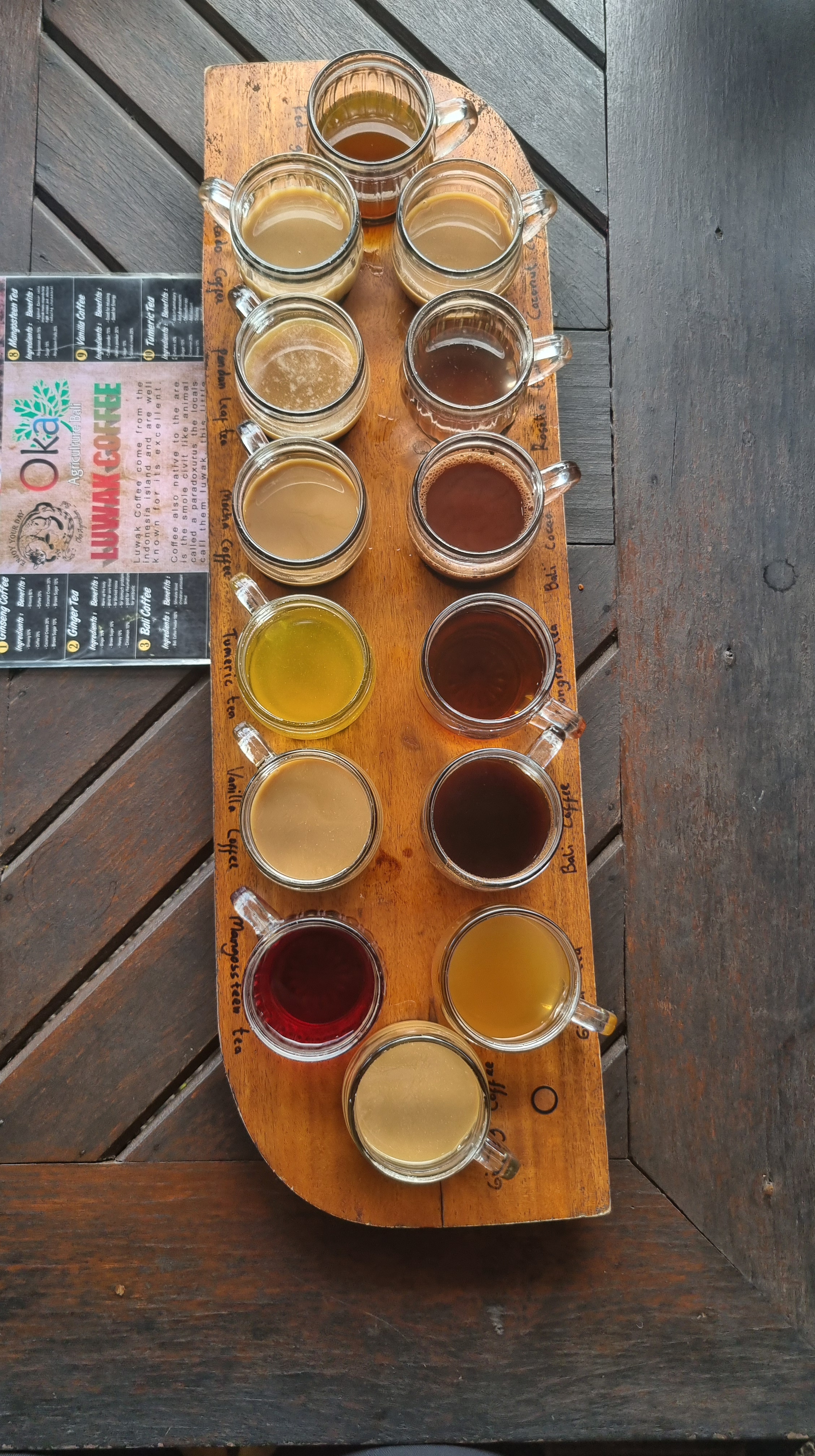
After leaving Tirta Empul, we made our way to a nearby plantation, where we were treated to a sensory feast. The air was filled with the scent of freshly ground coffee, as we sampled a variety of Indonesian coffees and teas, each one rich and aromatic. We wandered through the plantation, learning about the local coffee-growing process and savoring the natural sweetness of fresh tropical fruits that we had never tasted before — each bite a burst of vibrant flavor.
Our next stop was Tegenungan Waterfall, a stunning natural wonder not far from the plantation. The roar of the waterfall filled the air as we approached, its cascade of water tumbling down into a crystal-clear pool. Though swimming beneath the falls is no longer permitted, the spot still offered a refreshing respite, where we dipped our feet into the cool water, letting the soothing sound of the falls wash over us.

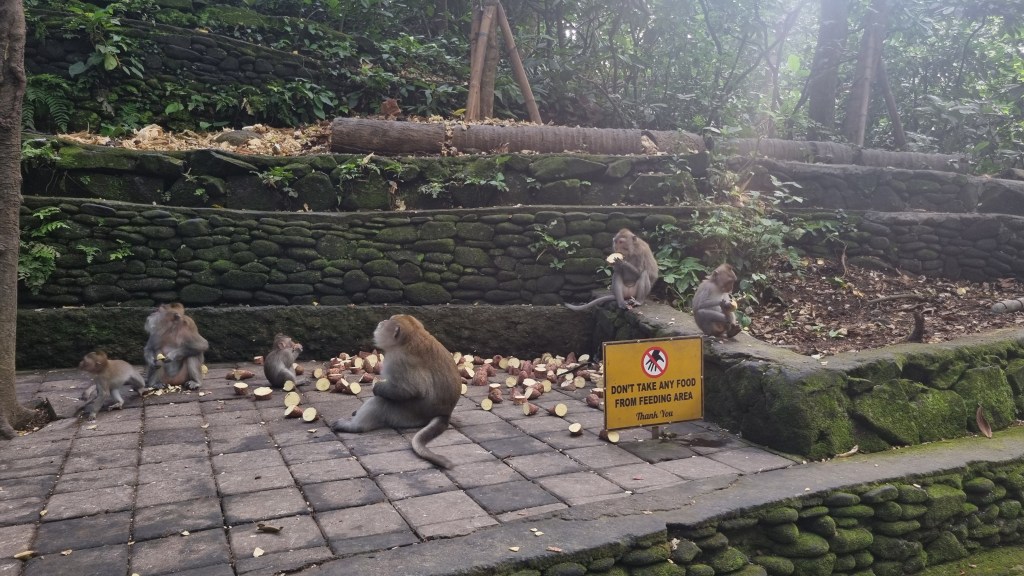
Our final destination for the day was the Ubud Monkey Forest, a wildlife sanctuary home to hundreds of macaques. As we entered, we were immediately captivated by the sight of the monkeys swinging through the trees, playing, and interacting with visitors.
Make sure to keep a safe distance from the monkeys and leave all your belongings in the car or at your accommodation, as the monkeys are notorious for stealing items. We witnessed several incidents, including one where a man purposefully ate fruit to attract monkeys, which resulted in them jumping on him. Another instance involved a monkey snatching a lady’s water bottle. As we wandered deeper into the forest, we observed a guard interacting with one of the monkeys. He playfully invited a lady from our group to let the monkey sit on her lap. At first, everything seemed calm and fine, but when she made a sudden movement, the monkey was startled and bit her. Luckily, it was just a minor bite, but the shock was certainly enough to make everyone realize that you should keep your distance.
Day 8 – Ubud and ATV
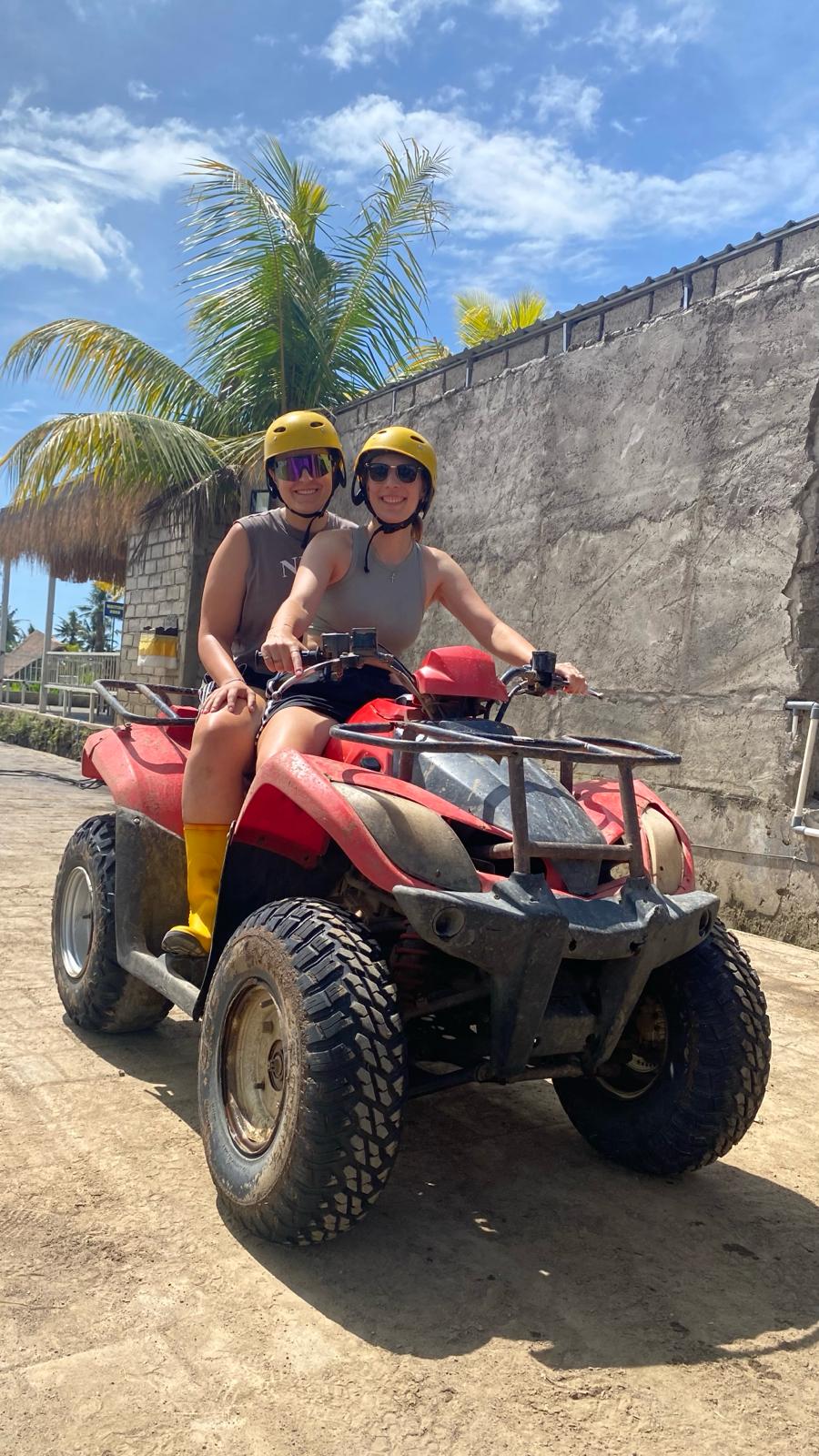
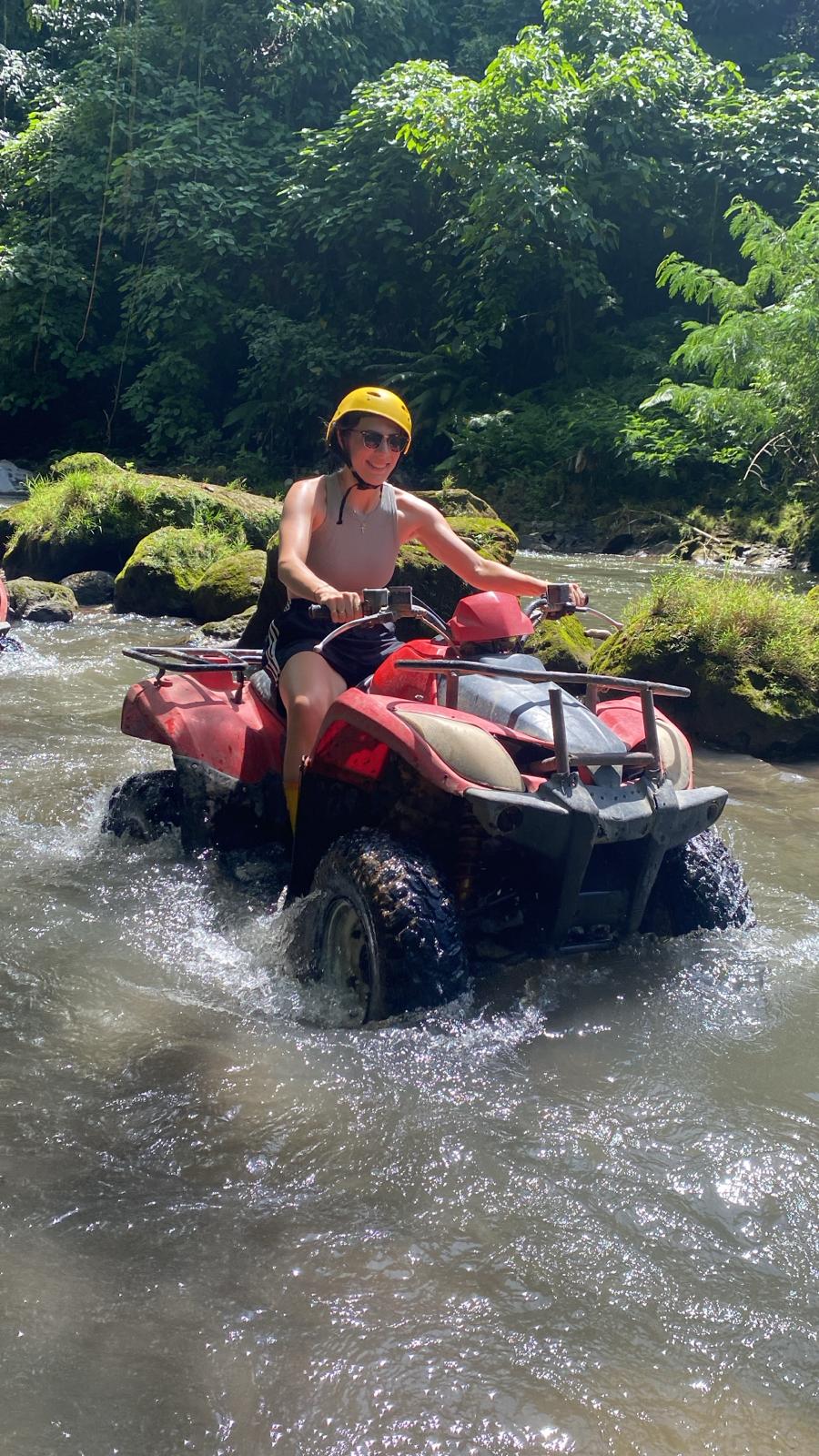
For those with a craving for adventure, there’s no better way to explore Bali’s rugged terrain than on an ATV Quad Bike Tour. It’s an experience that promises thrills and challenges at every turn. The track, depending on where you’re riding, can be a real test of your skills. We zoomed through thick jungle foliage, bounced over rocky paths, skidded through rice paddies, splashed through rivers, and even navigated a dark, mysterious tunnel. Every twist and turn brought its own adrenaline rush.
Before booking, we had read a few reviews twarning that the track could be quite challenging for beginners. As it turns out, those reviews were right. I found myself stuck twice and even took a tumble off the bike at one point. Thankfully, it was just a minor scratch, but the experience left me with a newfound respect for the ruggedness of Bali’s natural landscape. The guides were incredibly supportive, always there to lend a hand when anyone faced difficulties, ensuring everyone felt safe despite the tough conditions.
Maneuvering the ATV through sharp turns and uneven terrain required a lot of strength, and by the end of the ride, my arms were sore for days. But the exhaustion was well worth it. As we reached the finish line, we were treated to a well-deserved, hearty meal that was included in the package — perfect fuel for a day full of adventure. Despite the challenges, it was an exhilarating journey, and I couldn’t help but feel proud of having pushed through it all.
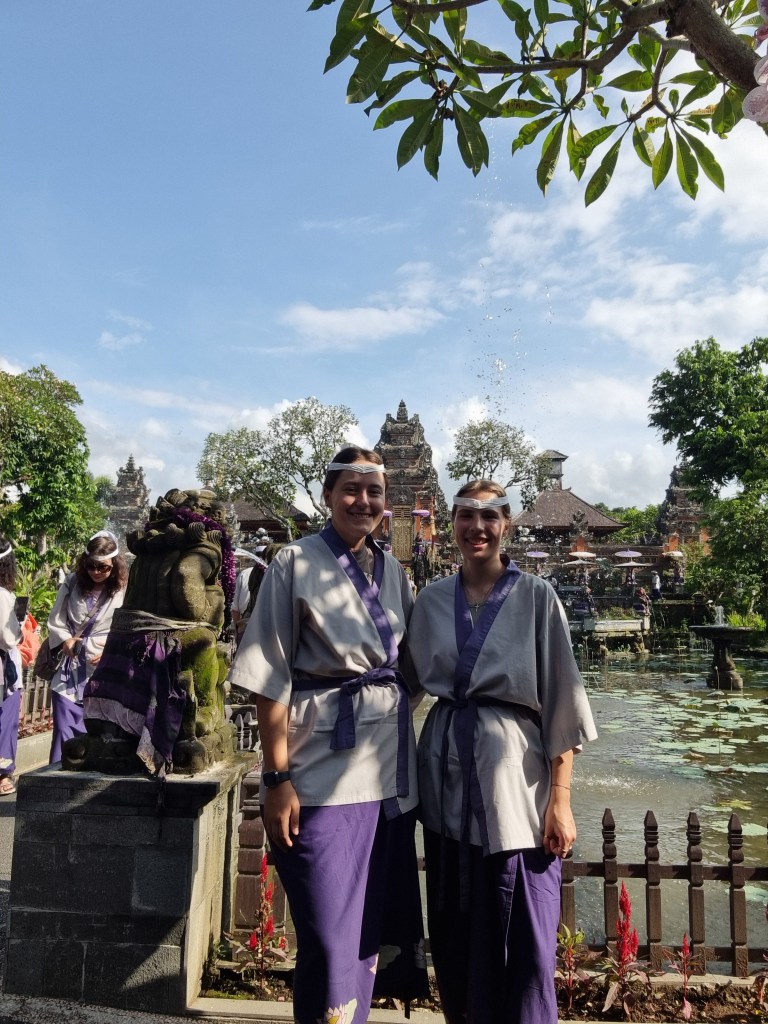
After a much needed rest at our accommodation, we visited the Ubud Water Palace. There’s often debate about whether it’s truly worth the visit, especially given its modest size, but we found ourselves enchanted by its peaceful ambiance. The entry fee, 80,000 IDR (around 5 EUR or 5.20 USD), seemed steep at first for such a small temple, but it was worth it for the unique experience.
Unlike most temples where visitors are given sarongs to wear, the Water Palace offers a completely different experience. Instead of the usual attire, you are provided with a beautifully crafted outfit resembling a Japanese kimono, adding an unexpected touch of elegance and cultural fusion to the visit. Although small, the palace provided a peaceful contrast to the adventure-filled day we had just experienced.
Day 9 – Ubud, Water Palace, Gates of Heaven and Besakih Temple
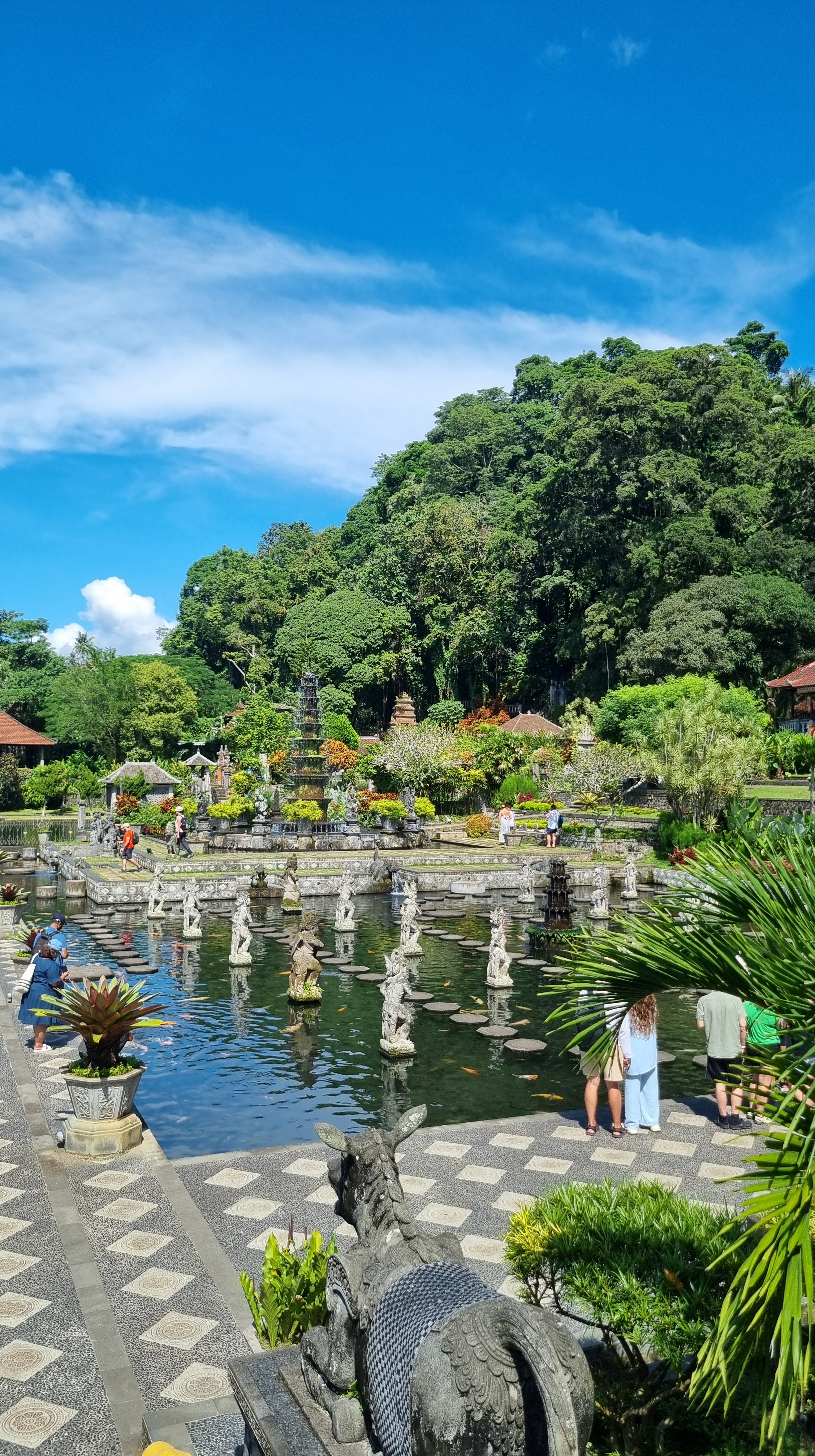
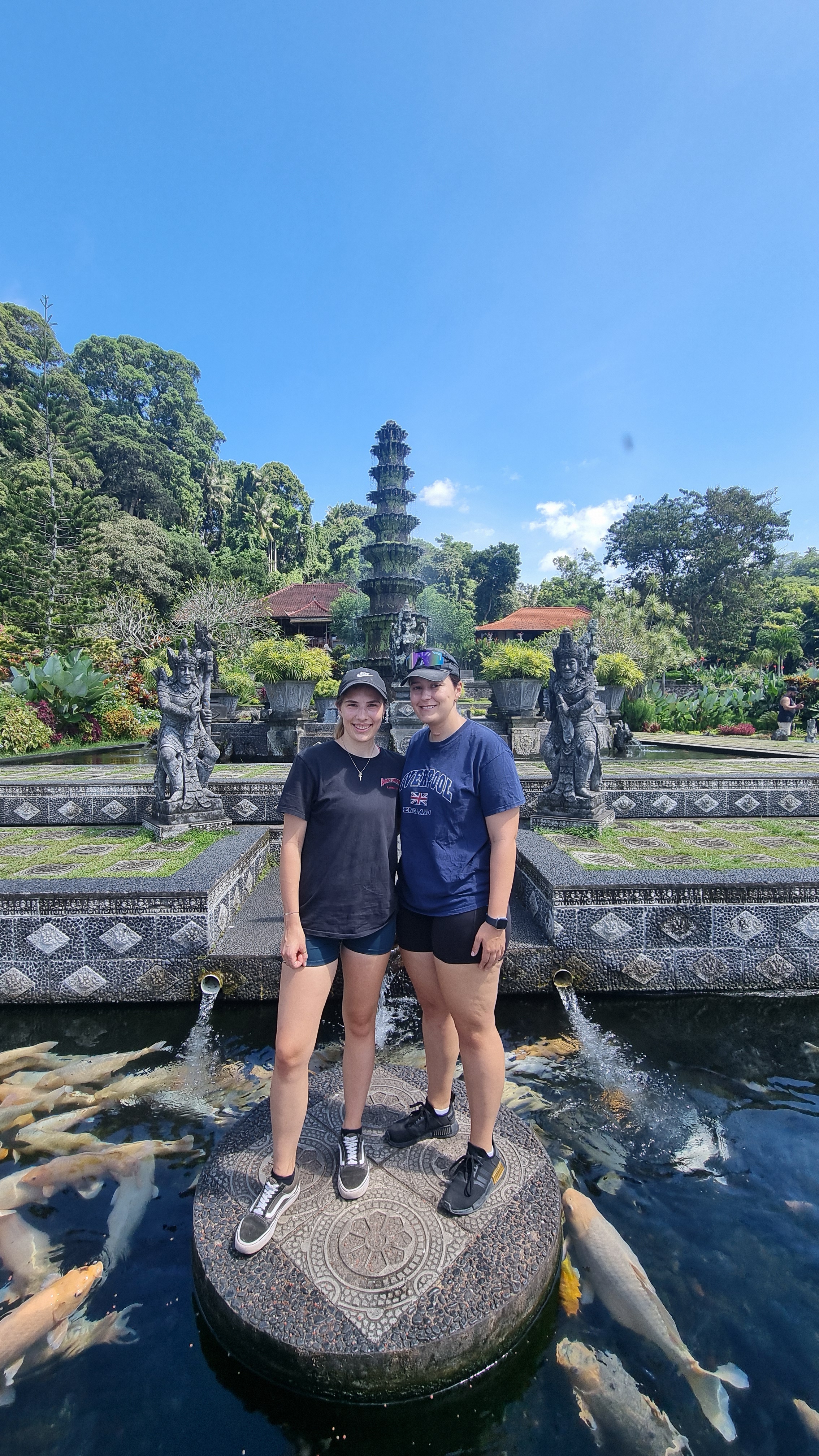
Today’s tour featured three significant Balinese Hindu sites, all located on the eastern side of the island. Our first stop was the Tirta Gangga Water Palace and its gardens, which were absolutely stunning. Our tour guide helped us capture some fantastic photos and videos. Based on our experience, tour guides in Bali are excellent at photography — they often take your phone themselves and snap pictures for you.
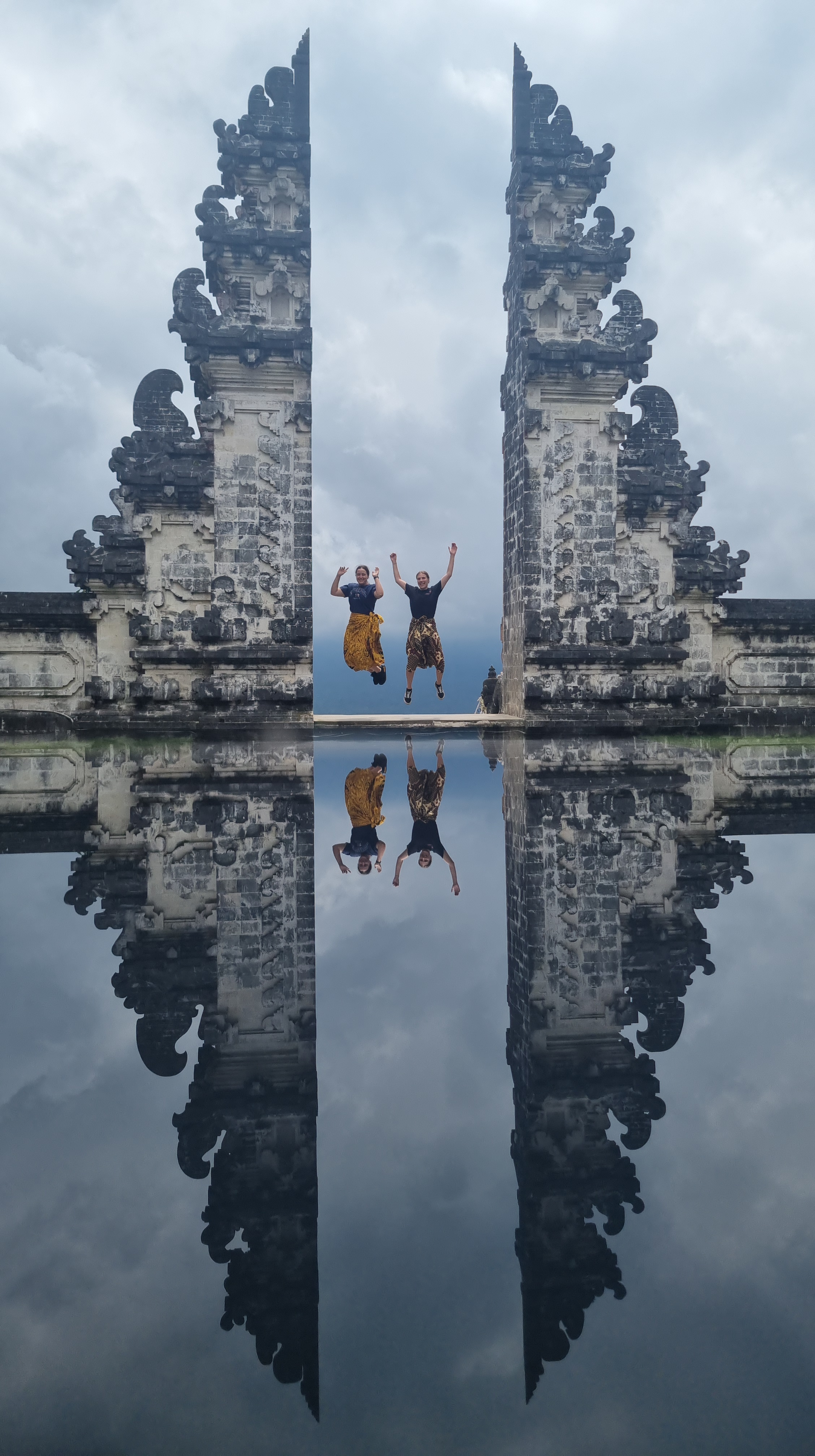
Our next destination was Pura Lempuyang, also known as “Gates of Heaven”. This site, perched high in the mountains, is one of the most photographed locations on the island and has become extremely popular among tourists. You don’t have to worry about hiking up, as a shuttle service is included in the entry ticket. If you choose to walk, the climb is about 40 minutes uphill. After getting off the shuttle, you will be given a sarong to wear, but you can also use your own, as we did.
On a clear day, you can see Mount Agung framed by the gate. Unfortunately, it was cloudy when we visited, but we still managed to take amazing pictures. If you plan to take a photo at the Gates of Heaven, be ready for a bit of patience. Each person receives a waiting number to join the queue, and when it’s your turn, a local photographer will take four pictures for you using a mirror trick to create the illusion of reflective water. While the wait of about two hours felt long, it was nothing compared to the five-hour waits that our guide had witnessed in the past.
After our time at the gates, we were ready for a break and stopped for lunch at a restaurant with an incredible view of Mount Agung and its surrounding rice terraces. Unfortunately, rain clouds rolled in, hiding the mountain from view, but the surrounding landscape was still awe-inspiring.
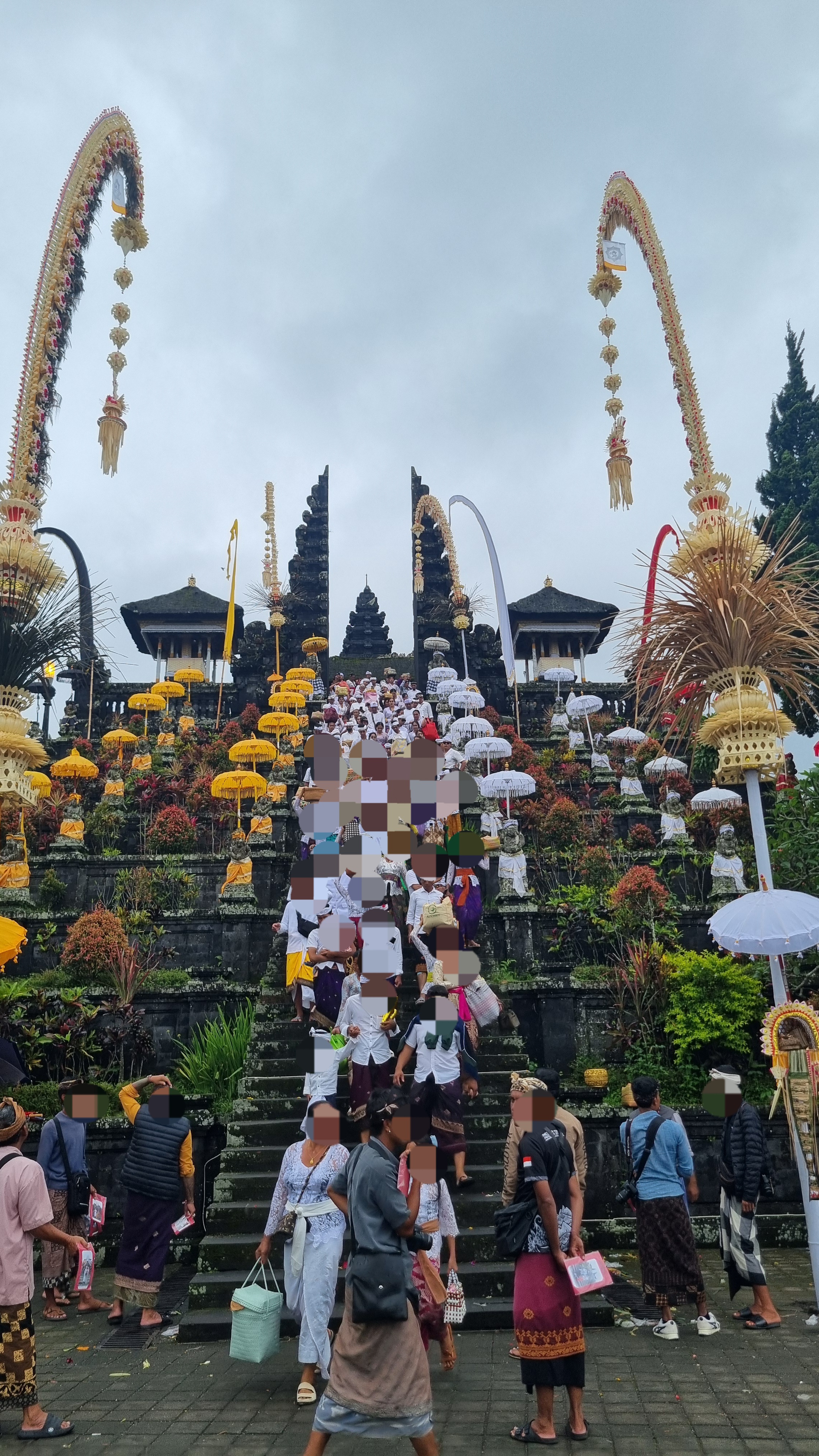
Our final stop was the Besakih Temple, Bali’s largest, oldest, and holiest Hindu temple, often referred to as the “Mother Temple.” While we were visiting, the temple was at its busiest because of the Balinese celebration of the biggest ceremony, “Galungan and Kuningan.” The ceremony, held every 210 days, lasts for ten days, and the temple was packed with Balinese people carrying offerings. We barely saw any other tourists. Our guide mentioned that it’s uncommon for tourists to visit during the ceremony, so we felt extremely fortunate to witness it firsthand.
Day 10 – Pura Gunung Temple
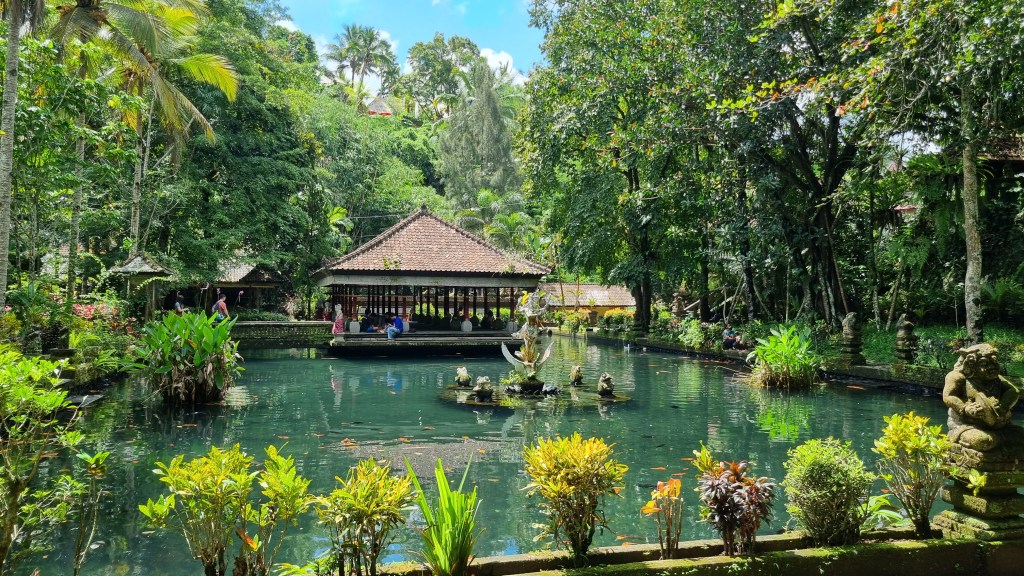
Since our flight to Sydney was in the evening, we decided to visit the Pura Gunung Temple, a peaceful water palace just a short 20-minute drive from Ubud. Though not as well-known as the other temples we visited, it was a perfect place to unwind and reflect on the day’s experiences. The entry fee was modest at 50,000 IDR (roughly 3 EUR), and though the website mentioned card payments, we were advised to bring cash as cards weren’t accepted during our visit.
After a beautiful morning, it was time to head to the airport. Our driver, arranged through our accommodation, charged us 300,000 IDR (about 19 EUR). Check-in at the airport was smooth, marking the end of an unforgettable journey. Bali had left its mark on us, and we couldn’t help but feel certain that this wouldn’t be our last visit to this magical island.
Summary of activities in Canggu
- Day Trip to Tanah Lot
- Visit the beach
- Stroll through the streets
- Learn to surf
- Visit the rice paddies
- Cultural Dance Show
Where to eat in Canggu
- Burgreens – Indonesia’s plant-based chain (unpaid ad)
- Milk & Madu – mixed cuisine; offer vegan, vegetarian and gluten-free options (unpaid ad)
- Shady Shack – vegetarian restaurant (unpaid ad)
- Oka’s Bakery & Café – gluten free pastries and meals (unpaid ad)
- Tugu Hotel – dinner with show; offer vegan, vegetarian and gluten-free options (unpaid ad)
Summary of activities in Seminyak
- The flea market
- Visit the beach
- Seminyak village
Summary of activities in Ubud
- Rice paddies
- Monkey forest
- ATV Quadbike
- Ubud water palace
- Ubud palace
- Cultural Dance show
- Campuhan ridge walk
- Ubud markets
- Besakih temple
- Lempuyang temple
- Tirta Gangga
- Tegenungan Waterfall
- Tirta Empul
- Rafting
- Day trip to Mount Batur
Where to eat in Ubud
- Milk & Madu – mixed cuisine; offer vegan, vegetarian and gluten-free options (unpaid ad)
- Gluten free on bisma – Indonesian cuisine (unpaid ad)
Booking Checklist
Travel Insurance
I highly recommend getting travel medical insurance while you’re traveling. Hopefully, you’ll never need it, but it’s always better to be safe than sorry. SafetyWing offers two flexible plans tailored to your travel needs. Whether you’re a short-term adventurer or a long-term expat, you’ll have reliable coverage anywhere in the world.
SafetyWing is especially great for remote workers and digital nomads, offering continuous global coverage even if you’re hopping between countries. Of course, it’s also a solid option for frequent travelers or those constantly on the go. But if you’re only traveling occasionally or just for a short holiday now and then, there might be better-suited alternatives.
Accommodations
I usually rely on Booking.com for hotels and Airbnb for vacation rentals. They both have the largest selection and tend to offer the most reliable prices.
Data for your Trip
I use Saily for international cell data. They offer a variety of eSIM options depending on the country and their eSIMs are easy to install, activate instantly upon arrival, and let you skip buying local SIM cards or paying expensive roaming fees.
Tours and Experiences
I always use GetYourGuide to find the best tours and experiences in a city or country. It’s my go-to platform for planning activities, and I’ve always been very satisfied with the experiences I booked through them.
Rental Car
I’ve rented at least six cars and always booked them through check24 (ad), which I can highly recommend. The website offers good deals, the insurance is quite cheap and provides good coverage, and the customer service is very efficient and accommodating. However, Check24 currently only offers its website in German. So it’s mandatory to speak the language.




 Michelle Cacija
Leave a reply to Michelle Cacija Cancel reply