
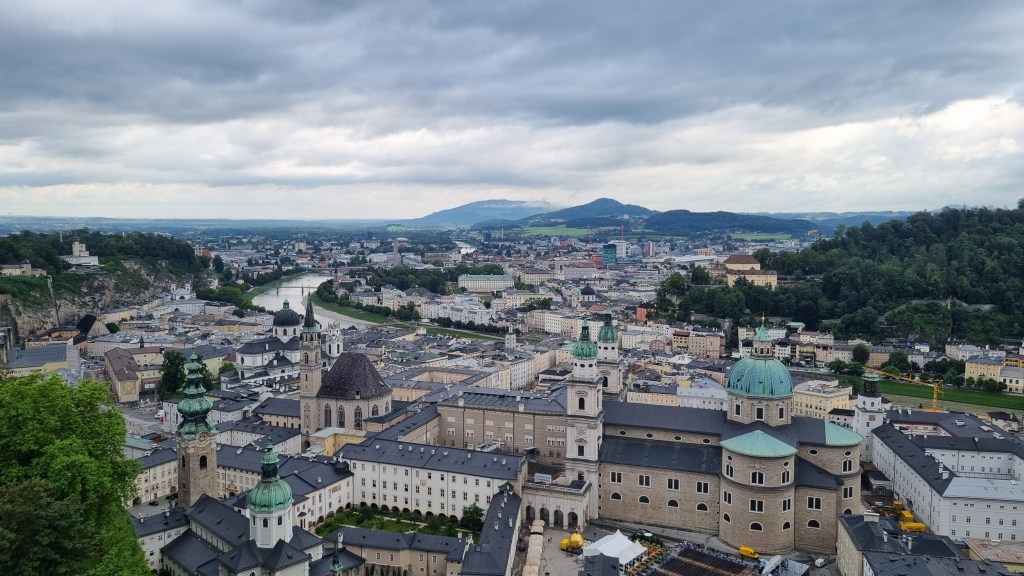
Planning a trip to Austria? You can’t miss out on Salzburg. The city, known as the birthplace of Mozart and the backdrop for the iconic film The Sound of Music, offers a perfect blend of history, culture, and stunning Alpine scenery. Over the course of three days, you’ll immerse yourself in the city’s rich musical heritage, explore its charming old town, and enjoy a day trip to the fairy-tale village of Hallstatt to take in its breathtaking landscapes. Servus, and welcome to my four-day itinerary for Salzburg! Whether you’re a music enthusiast, a history buff, or simply in search of picturesque views, this itinerary has something for everyone!
As always, I want to remind you, that this blog isn’t perfect because everyone travels differently, and all trips involve changes of plans. I want to let you know that everything on this website has been experienced, photographed, and written by me. Since I finance all of my travel expenses on my own, the stories and opinions given are truly my own. If you’re interested in seeing more travel pictures or videos, feel free to check out my Instagram @michellecacija or my Tik Tok @michellecacija.
Index
- The Basics about Salzburg
- Salzburg Card
- Things you need to be aware of
- Itinerary
- Summary of activities
- Where to eat
- Booking Checklist
- Other Austria Blogs
The Basics about Salzburg
When to visit
Salzburg is a charming city to visit year-round, but the best times are usually in the spring (April and May) and the fall (September and October) when the weather is pleasant for exploring, with temperatures averaging around 10°C to 20°C (50°F to 68°F). Due to the mountains surrounding Salzburg, the weather can be a bit unpredictable, with cooler temperatures and a high possibility of rain, especially in the summer months, when highs can reach 25°C to 30°C (77°F to 86°F).
Time period
If you’re planning a trip to Salzburg, I’d recommend spending at least two to three days to fully explore the city’s rich history and its picturesque surroundings. This timeframe allows you to visit iconic sites like the Hohensalzburg Fortress, Mirabell Palace, the charming Old Town, and enjoy a boat ride on the Salzach River.
Getting There
You can reach the Austrian city by car, bus, train, or plane, depending on where you’re coming from. Salzburg is located about 300 kilometers (around 185 miles) west of Vienna, and it’s very easy to get there by train. The high-speed Railjet service connects Vienna and Salzburg in just about 2.5 hours, making it a comfortable and scenic option. Driving or taking a long-distance bus is also possible, with well-maintained highways and regular coach services linking major Austrian and European cities to Salzburg.
While Salzburg does have its own airport (Salzburg Airport W. A. Mozart), it is relatively small. Most international travelers fly into Vienna International Airport and then continue their journey to Salzburg by train or car.
Where to stay
Salzburg offers a range of accommodation options, from luxury hotels to charming guesthouses, all set against the backdrop of the city’s historical charm. The best areas to stay at are probably the Altstadt (Old Town) or the Neustadt (New Town) across the river.
Getting around
When it comes to getting around, Salzburg is a very walkable city. You can easily walk to all the major sights. If you’re staying further from the city center, you can use the buses, which are very convenient.
What to pack
What to pack largely depends on when you’re visiting. If you’re going in late July like we did, be sure to pack lightweight and breathable clothing for warm weather, but also bring layers since the weather can change quickly due to the surrounding mountains. Comfortable walking shoes are essential for exploring the city’s streets and hiking trails. Don’t forget sun protection essentials like sunglasses, a hat, and sunscreen. I also recommend packing a rain jacket or umbrella for unexpected showers.
Additionaly, consider bringing your own little medication bag, including Band-Aids, pain relief tablets, sleeping tablets or spray, bug spray, aftersun, etc. You never know what you might need it for, and you might feel more comfortable using medication from home rather than in a country where you don’t know the ingredients and languages. If you’re coming from outside Europe, don’t forget to bring a Type C power adapter.
Cost of Traveling
As for the expenses, the amount you’re going to spend depends on several factors, including your choice of accommodation, your travel style, and the activities you’ll be doing. In general, Salzburg is one of the more expensive cities to travel to in Europe, and the possibility of spending a fortune is quite high but nevertheless you can save lots of money when you plan ahead!
Salzburg Card
The Salzburg Card is a valuable pass for tourists, offering inclusive entry to many of the city’s top attractions, including the Hohensalzburg Fortress, Mozart’s Birthplace, and Hellbrunn Palace. It also provides unlimited use of public transportation, including buses and some cable cars. Available for 24, 48, or 72 hours, the card can save you money if you’re planning to visit multiple sites. Additionally, it offers discounts on select tours and experiences.
We purchased the 48-hour card, and it really paid off for us. Be sure to check in advance which attractions you want to visit, and compare the Salzburg Card with individual entry prices to ensure you’re getting the best deal. The Salzburg Card is particularly worthwhile for those staying a few days and looking to experience the city’s rich cultural and historical sights to the fullest.
Things you need to be aware of
Sundays. On Sundays, shops and supermarkets are closed, while restaurants and cafes usually remain open. If you think there’s nothing to do on a Sunday you are wrong; maybe it’s time to explore the castles, museums, and nature in and around Salzburg!
Water in Austria. You can safely drink tap water in Austria as it’s clean and meets the World Health Organization standards.
Toilet situation. Unfortunately, public restrooms typically cost around 50 cents to a euro in Austria (and many other European countries). So, make sure to carry a few coins with you and always use the restroom before leaving your accommodation, a restaurant, or a café.
Tipping. In Austria, tipping is very common. It’s customary to leave a tip of around 5-10% in restaurants, cafes, and for taxi services.
Currency. The currency in Austria is the Euro. While a few years ago, Salzburg was still very cash-oriented, cards are now accepted almost everywhere. However, it’s still advisable to carry some cash with you, just in case.
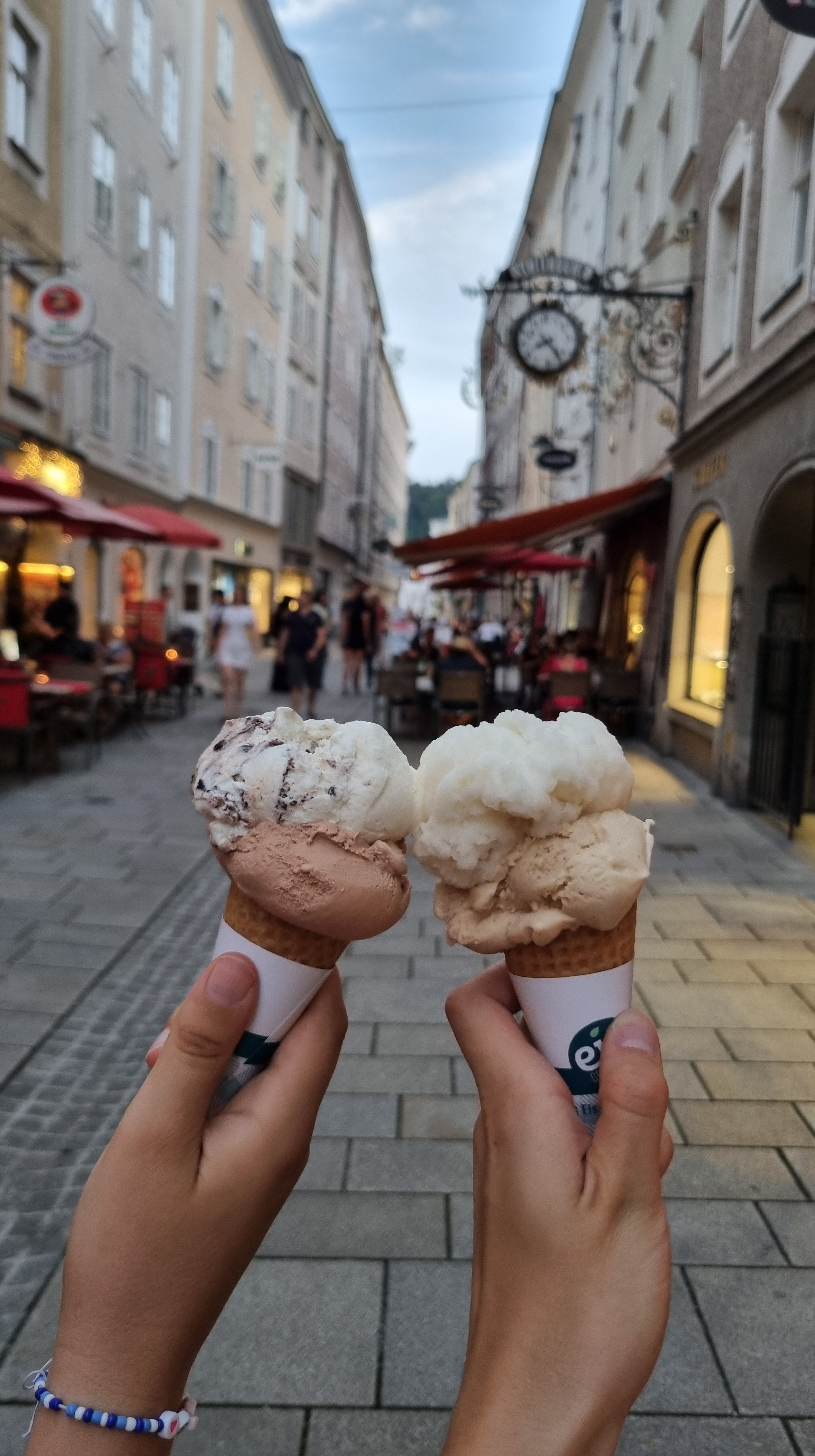
Things you should try. Make sure to taste some Schnitzel with fries or Tafelspitz, try the famous Salzburger Nockerl, buy a Mozartkugel, and enjoy Apfelstrudel or Kaiserschmarrn.
Itinerary
Day 1 – Hallstatt
We started our trip with a day excursion to Hallstatt. Although we typically start by exploring the city we’re staying in, we made an exception this time. The weather forecast predicted rain in Salzburg, but clear skies in Hallstatt, so we decided to take advantage of the good weather and visit Hallstatt first.
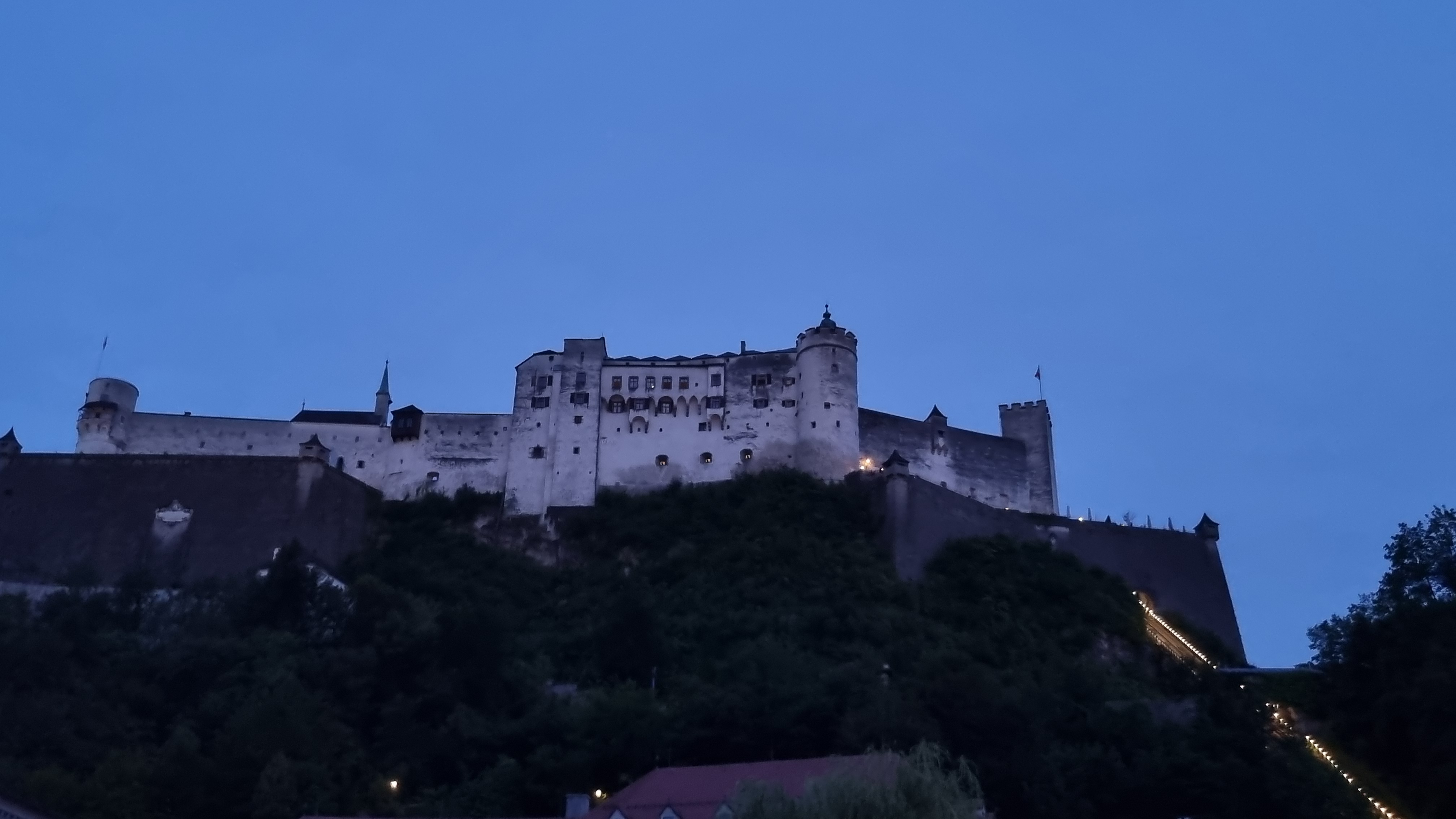
We actually had arrived the evening before, checked in at our accommodation in the New Town area, and spent a few hours wandering around to get a feel for the neighborhood. Eventually, we found ourselves in Old Town, where we passed by several of Salzburg’s major landmarks, noting them for a more detailed visit later in our trip.

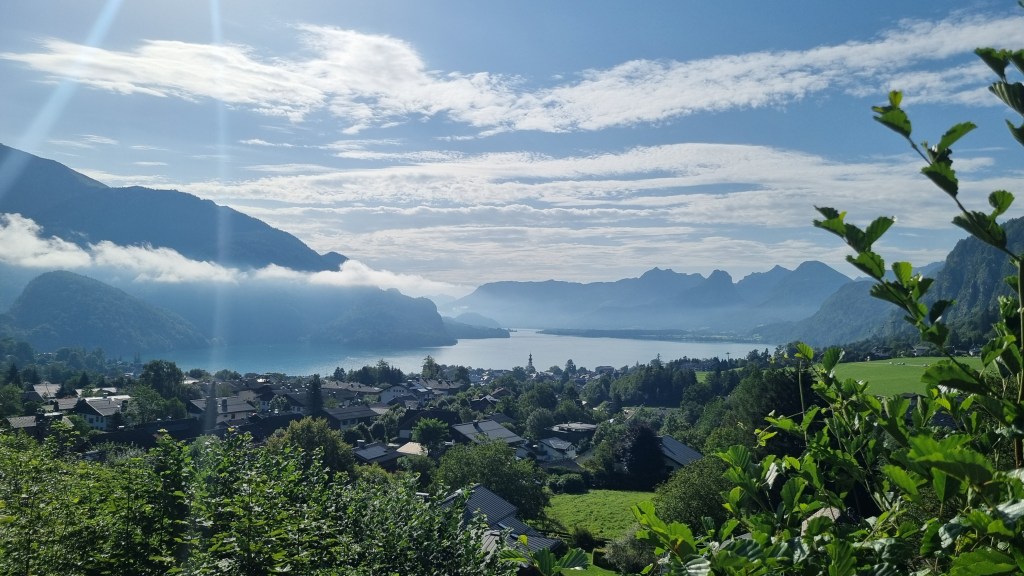
For our day trip to Hallstatt, we booked a convenient transfer through GetYourGuide (unpaid ad), which included round-trip transportation. On our way to Hallstatt, we stopped at a view point of the Wolfgangsee a picturesque lake in the Salzkammergut region. If you find yourself in the area definitely stop here and take the beautiful views in!
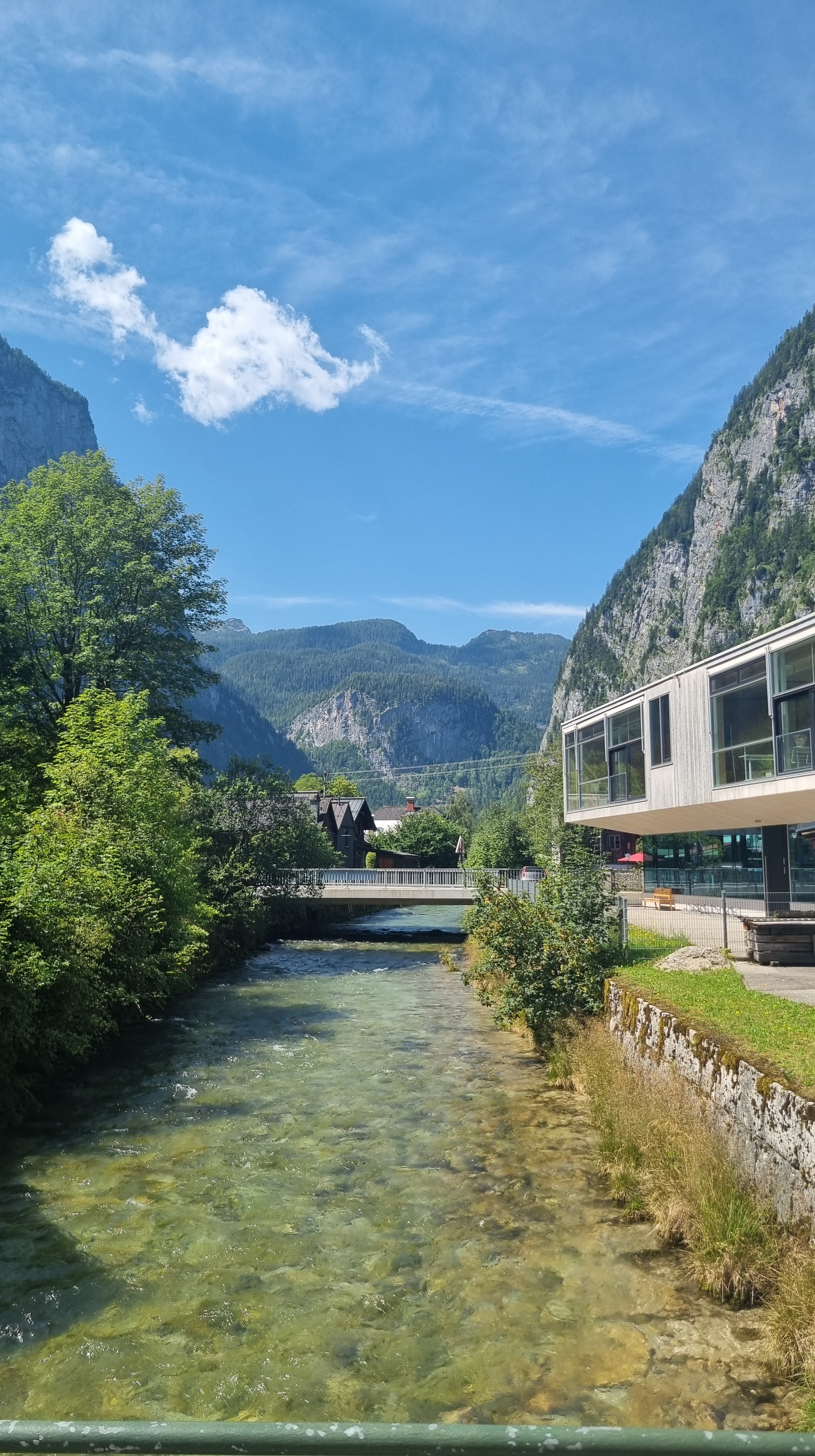
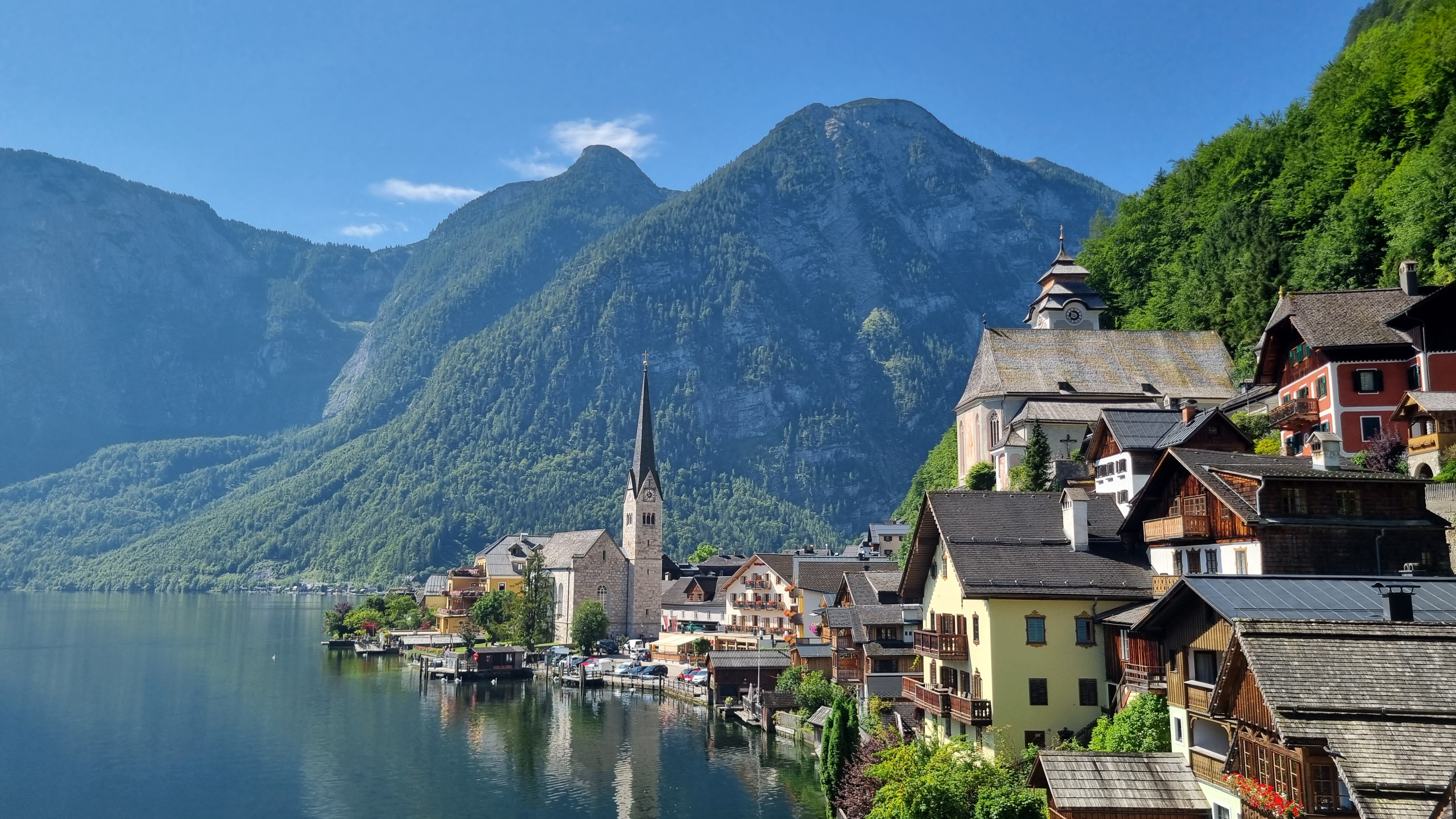
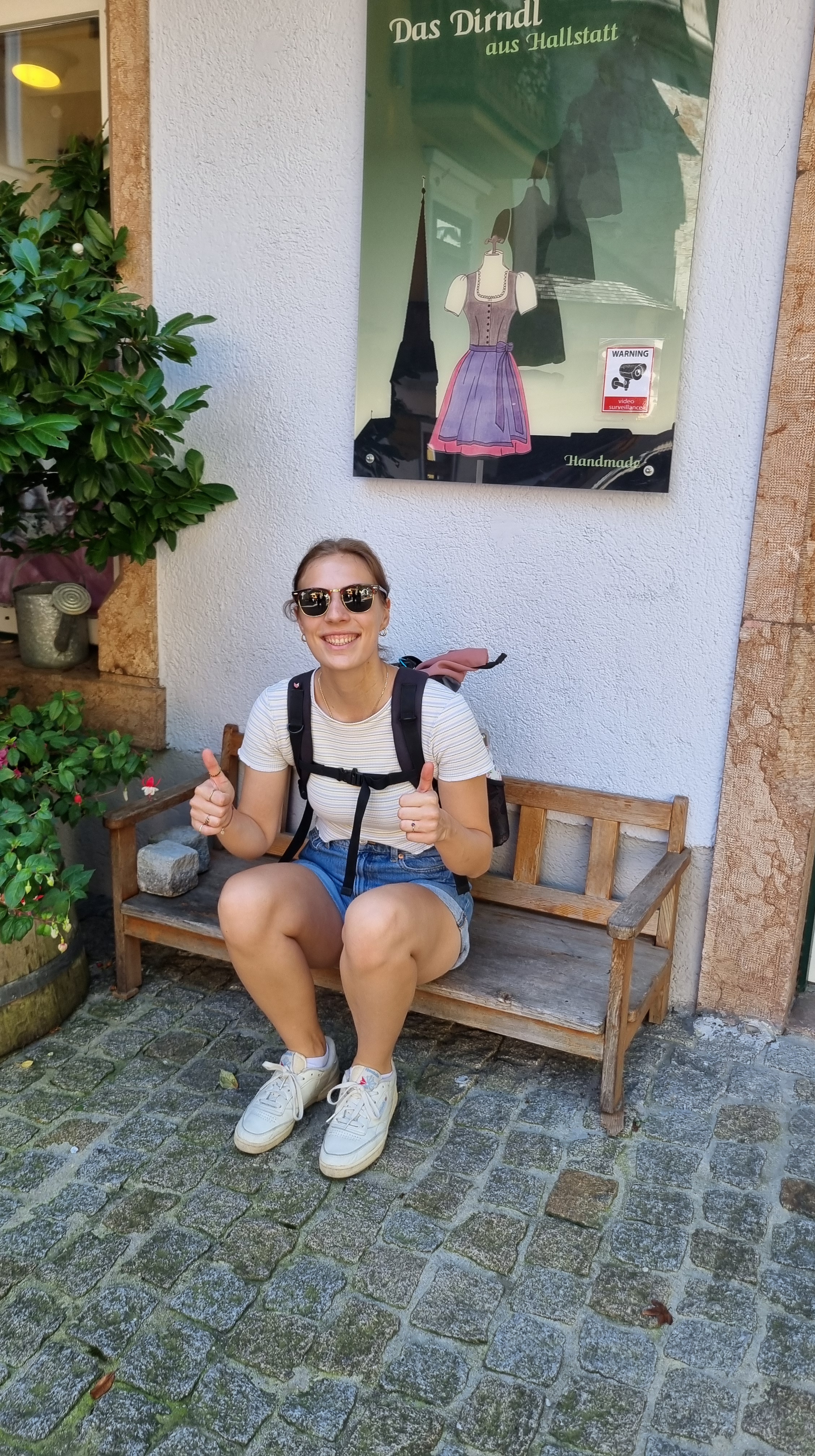
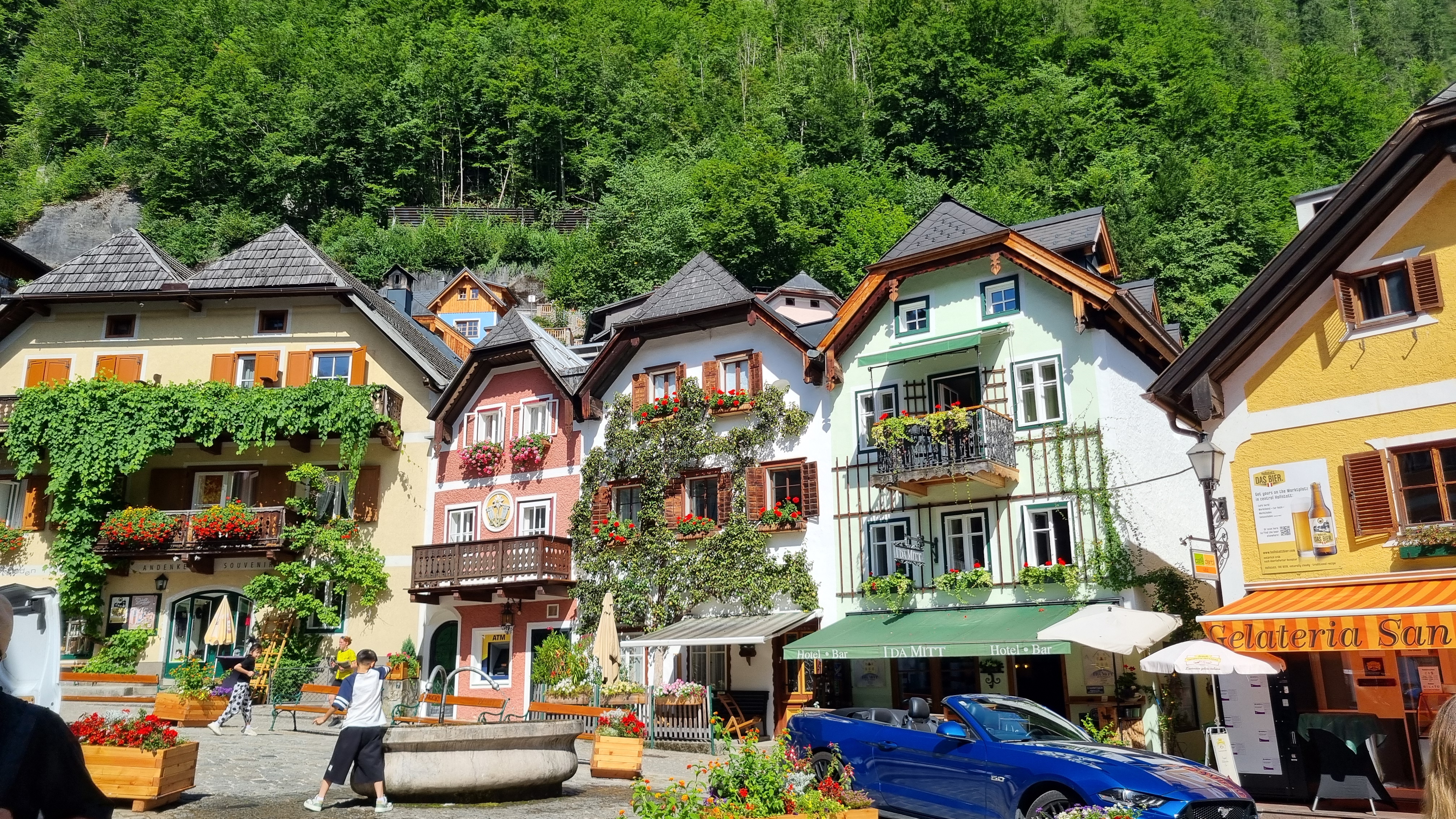
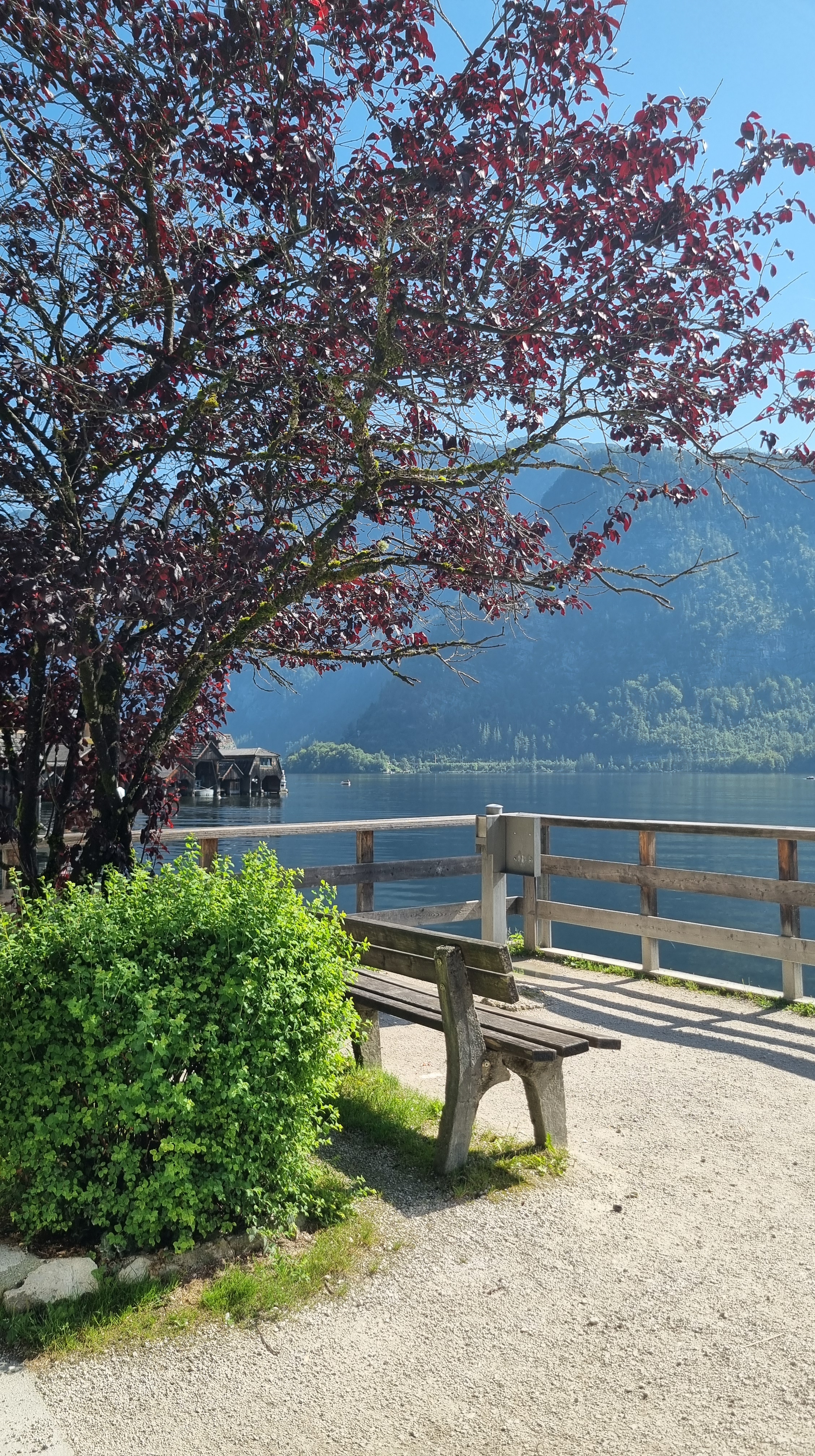
After continuing through the breathtaking scenery, we arrived in Hallstatt and spent around four hours exploring the village. This time was sufficient to take in the beautiful lake views and immerse ourselves in the charm of this fairy-tale destination. Hallstatt is a picturesque village in Austria’s Salzkammergut region, renowned for its stunning location between the towering Dachstein Alps and the crystal-clear Hallstätter See (Lake Hallstatt). With its mesmerizing lakeside views, charming traditional Austrian houses, and rich cultural history, Hallstatt is one of Austria’s most beloved destinations and definitely worth a visit!
The distance from Salzburg is approximately 70 kilometers (43 miles), the actual travel route though is longer due to the mountainous terrain. By car or bus, it takes about 1.5 to two hours. If traveling by train and ferry, the journey typically takes around 2.5 to three hours. The distance from Vienna to Hallstatt is about 290 kilometers (180 miles). By car, the drive takes around three to four hours, and by train, the journey usually takes 3.5 to 4 hours.
Day 2 – Sound of Music Tour
For our second day, we booked the “Sound of Music Tour.” If you’re not from Australia or America, you might be asking yourself, “Sound of Music? What’s that?” That was exactly my reaction. Before meeting my partner, I had never heard of the movie or that it was filmed in Austria.
The Sound of Music is surprisingly less popular in German-speaking countries, particularly in Austria and Germany, for several reasons. One of the main reasons is that the film touches on a sensitive period in Austrian history — World War II. The story is set in Salzburg, Austria, and follows Maria, a young aspiring nun (played by Julie Andrews), who becomes the governess to the seven children of widower Captain Georg von Trapp (played by Christopher Plummer). As Maria brings joy and music back into the von Trapp household, she and the Captain develop a romantic bond. The movie is inspired by the real-life von Trapp family singers, although many aspects and scenes are fictionalized.
Since it’s one of my partner’s favorite movies, we booked the tour, which took us to many of the filming locations and taught us more about the movie. Even if you’re not a fan or have never heard of it, it’s a lovely trip through Salzburg and its surroundings. The movie was filmed in stunning locations around Salzburg, including Mirabell Gardens, Nonnberg Abbey, and the nearby hills.
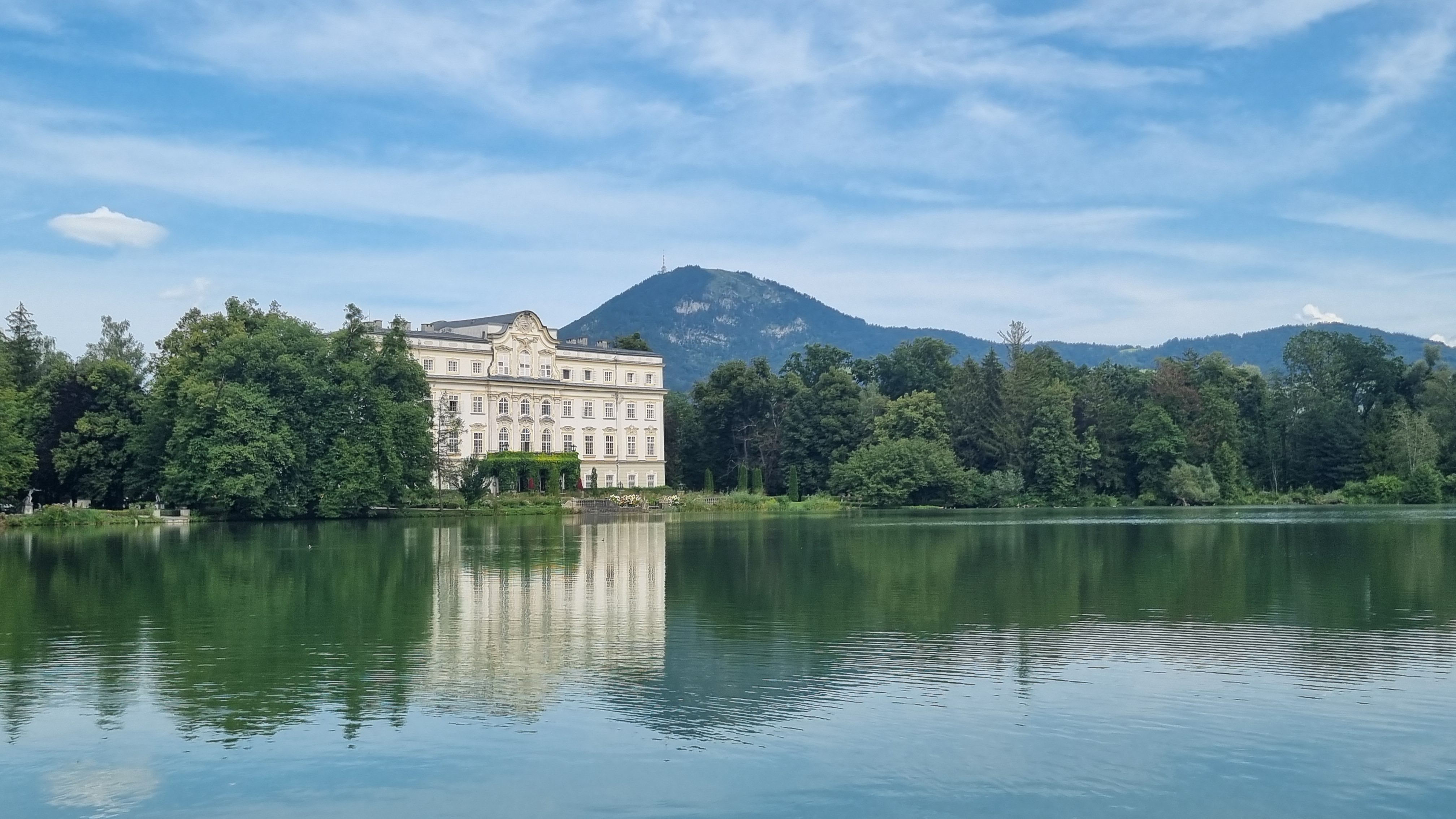
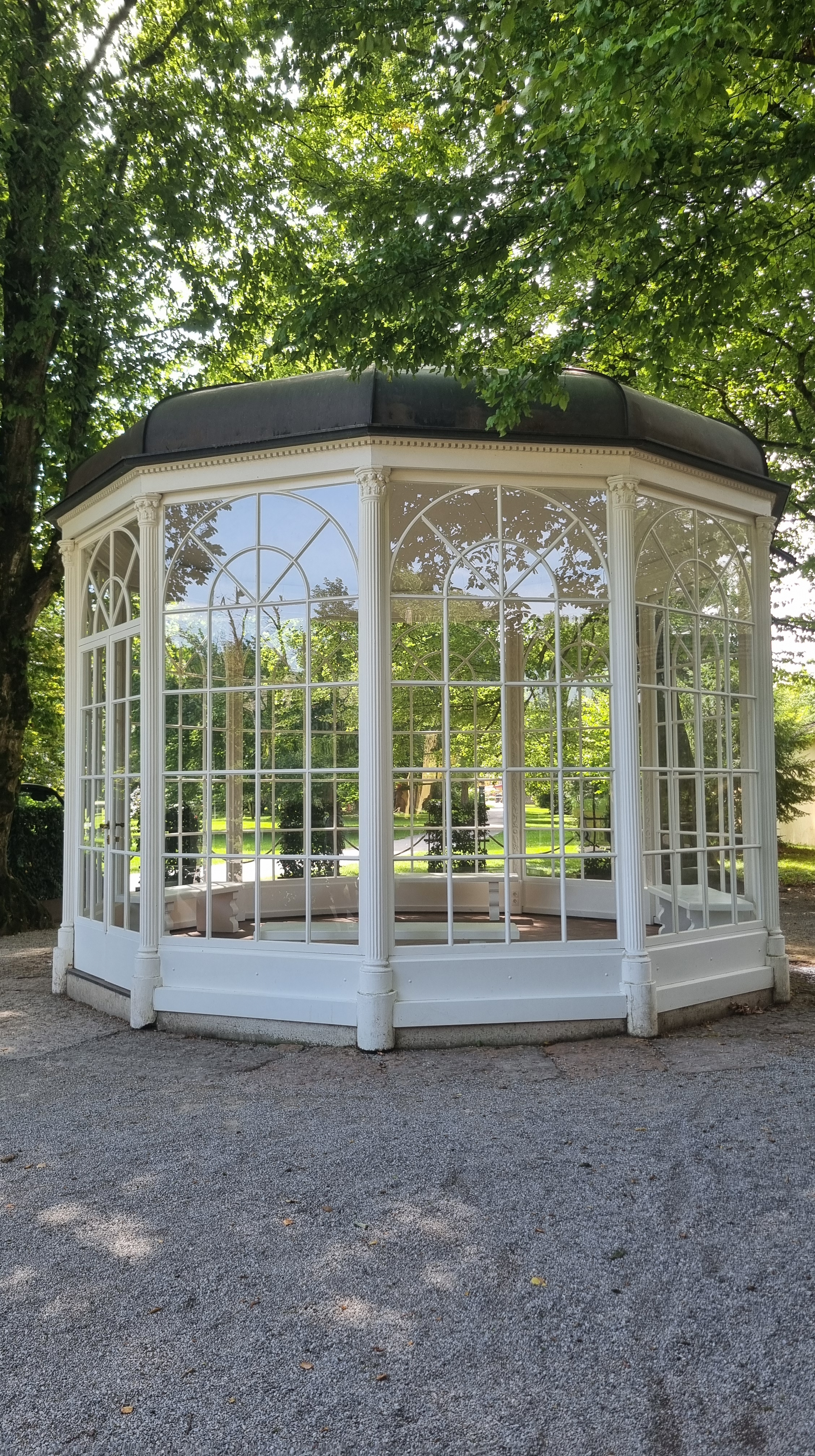
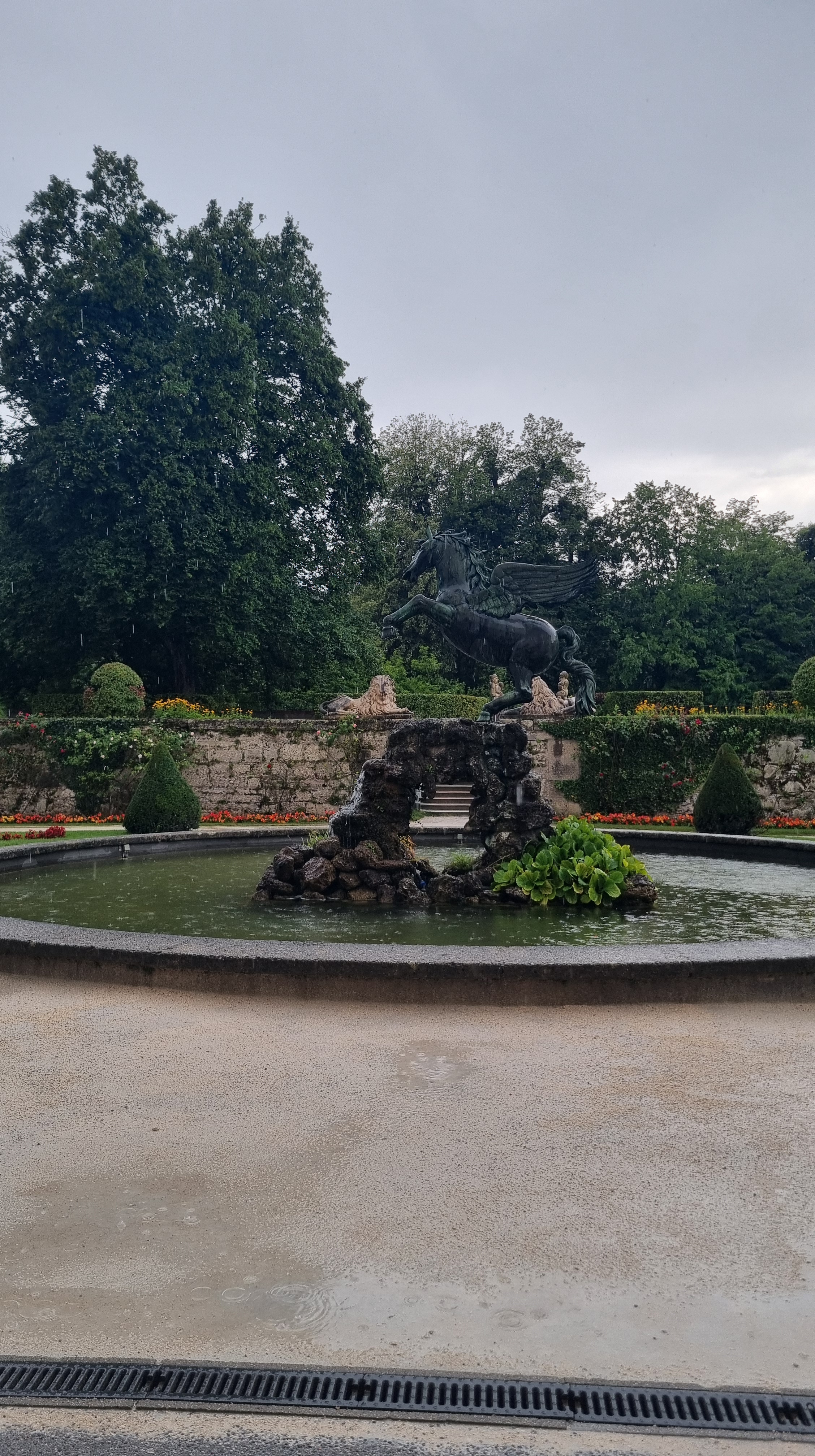
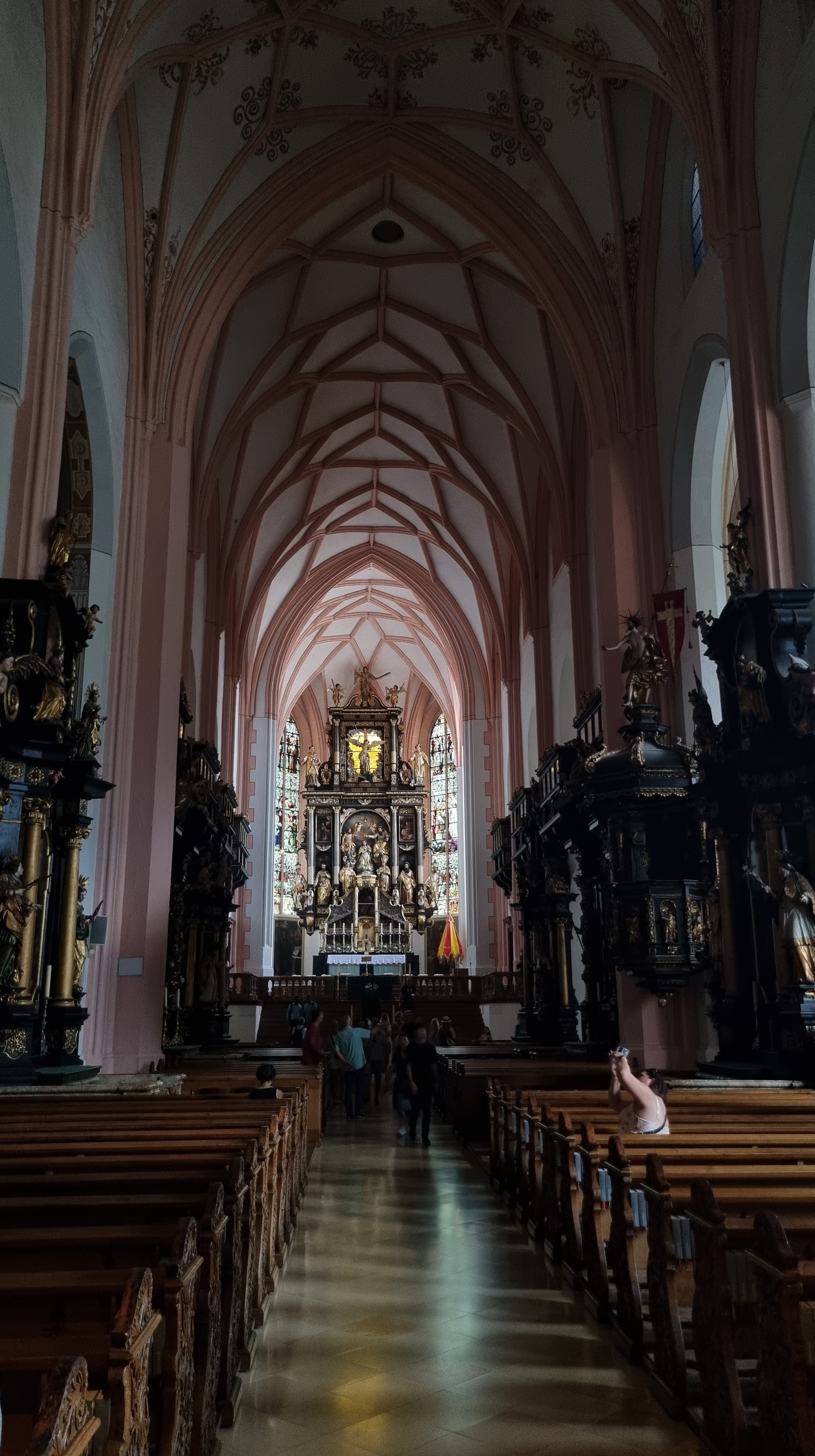
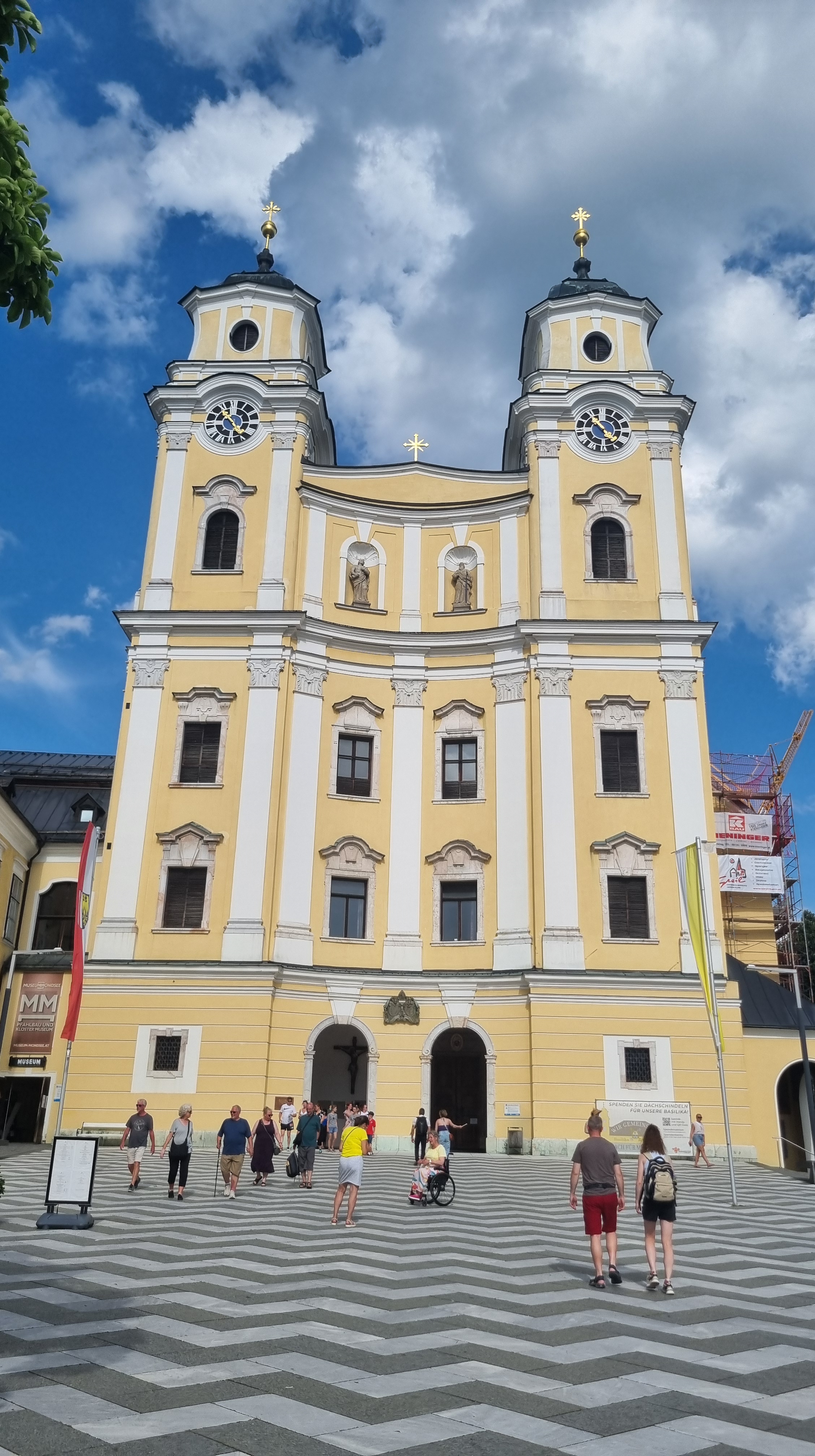
After the tour, which ended at Mirabell Palace, we decided to linger and stroll through its beautiful gardens. The palace is one of Salzburg’s most iconic landmarks, renowned for its elegant Baroque architecture and stunning grounds. Built in 1606 by Prince-Archbishop Wolf Dietrich von Raitenau for his mistress, Salome Alt, Mirabell Palace has a fascinating history that adds to its charm.
Day 3 – Salzburg
On our third day, we finally set out to explore the heart of Salzburg. To make the most of it, we decided to get the Salzburg Card (unpaid ad), which turned out to be a great investment for our plans. The card is available for 24, 48, or 72 hours and offers numerous perks, making it a convenient and affordable way to discover the city. With the Salzburg Card, you enjoy free admission to various attractions and museums, unlimited use of public transportation, and several additional discounts. Since we had nearly two full days left in the city, we opted for the 48-hour card, which costs €40. Before purchasing, it’s a good idea to check the entry fees for the attractions you want to visit and calculate if the card will save you money. We always try to maximize its value by visiting as many sites as possible.
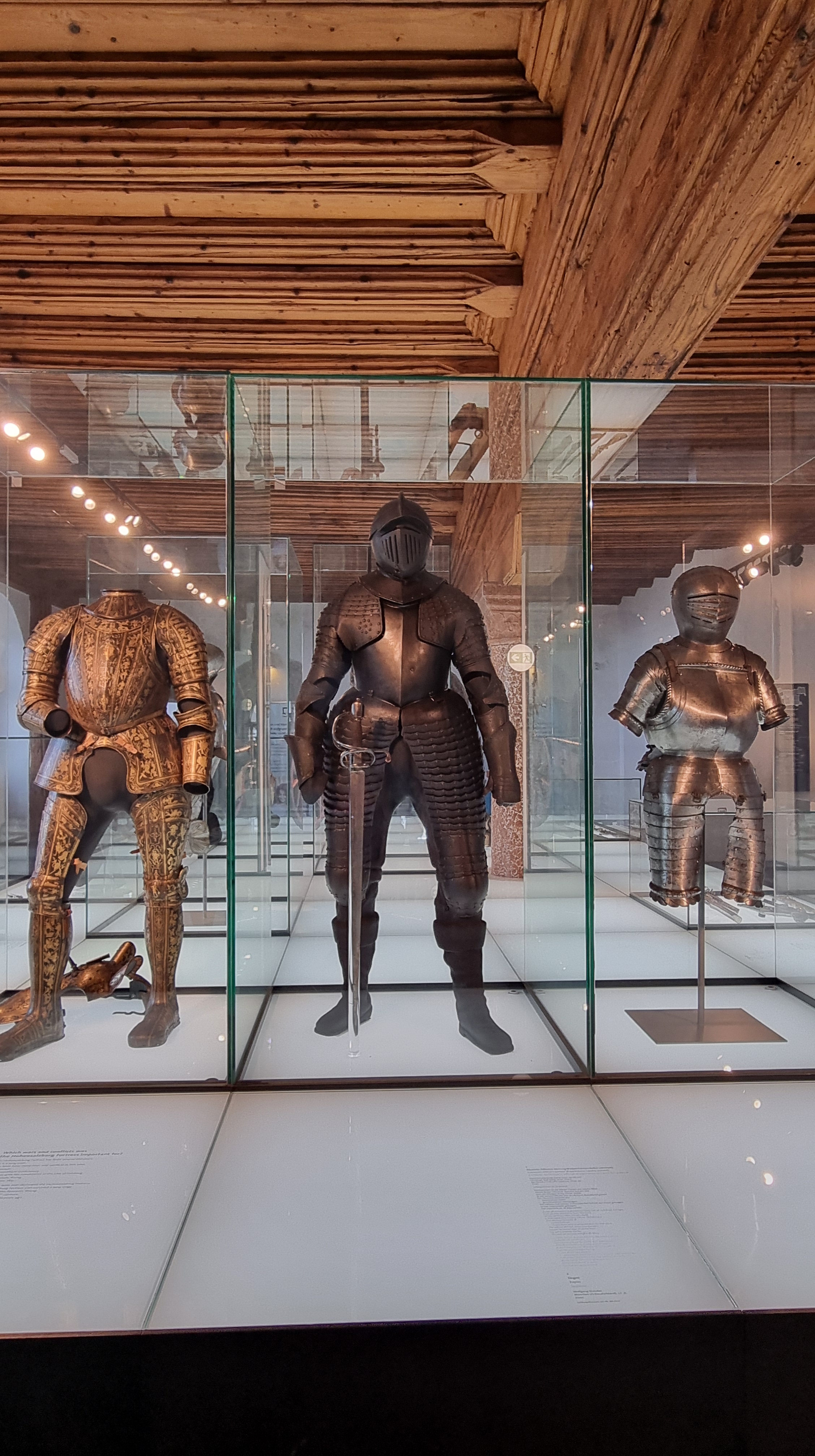
We started our day by visiting Fortress Hohensalzburg. With the Salzburg Card, the cable car and entry to the fortress are included. The fortress is on the Festungsberg hill and is one of the largest and best-preserved medieval castles in Europe. It’s an iconic symbol of the city and offers stunning panoramic views of Salzburg and the surrounding Alps.
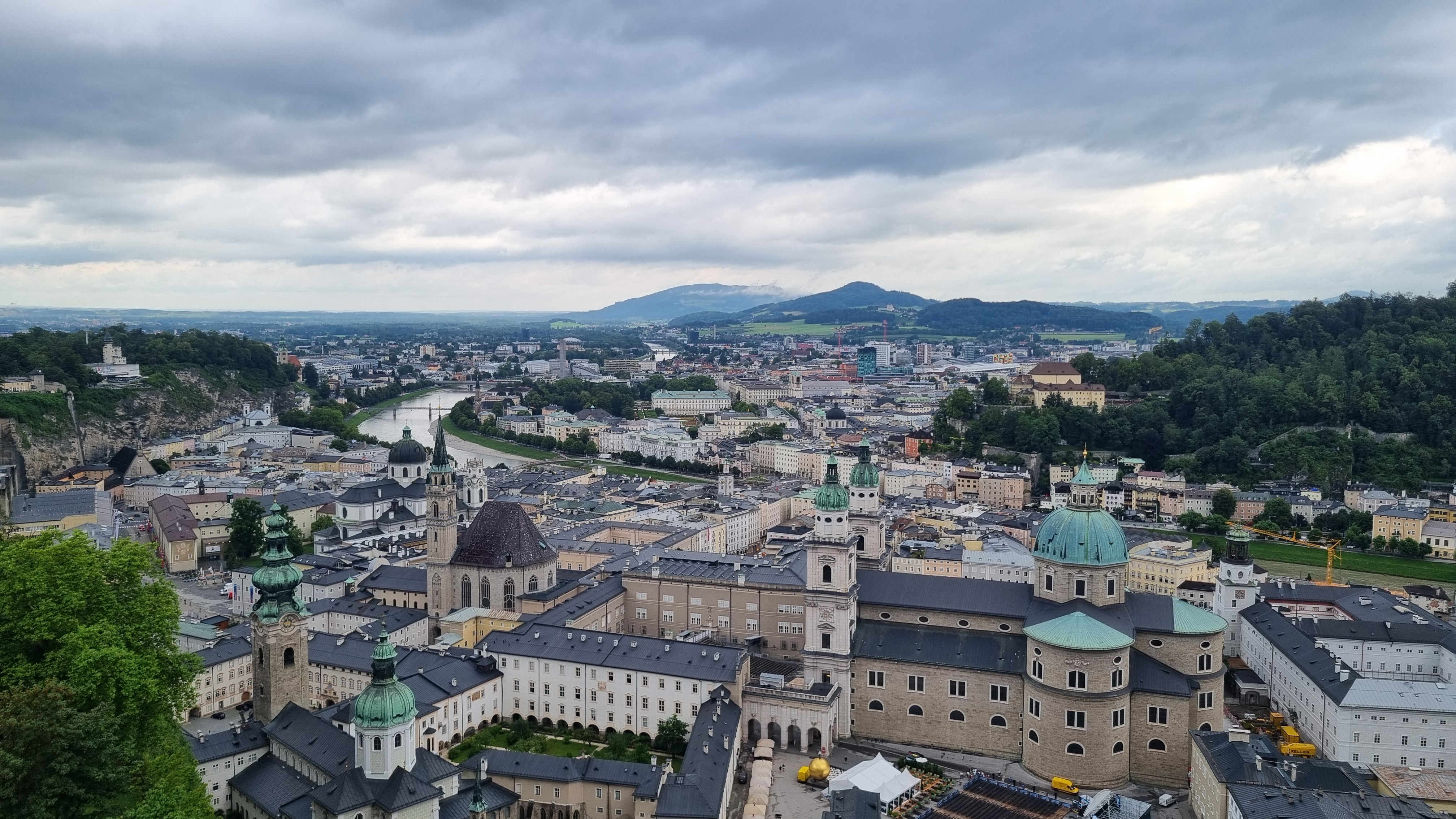
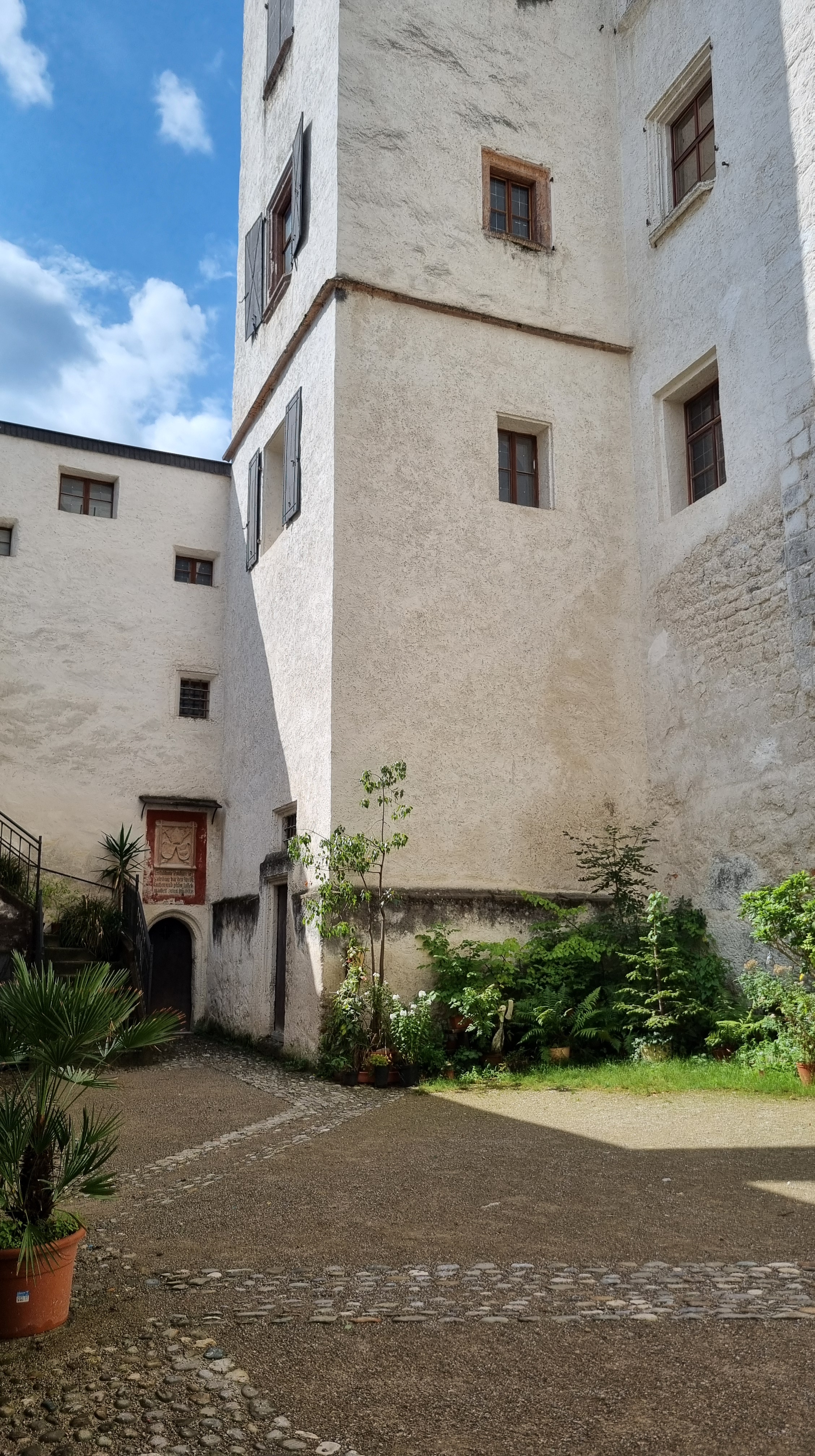
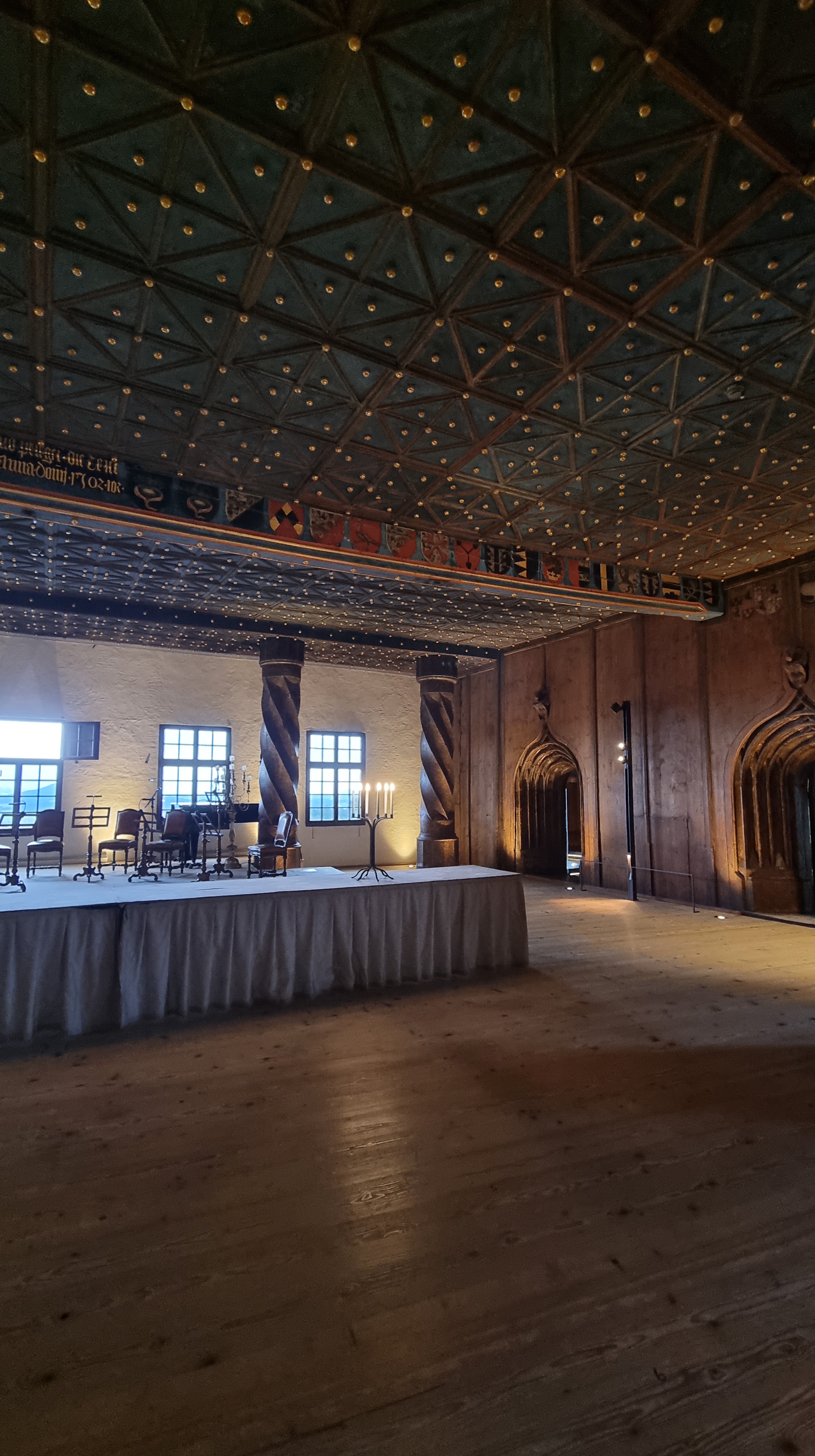

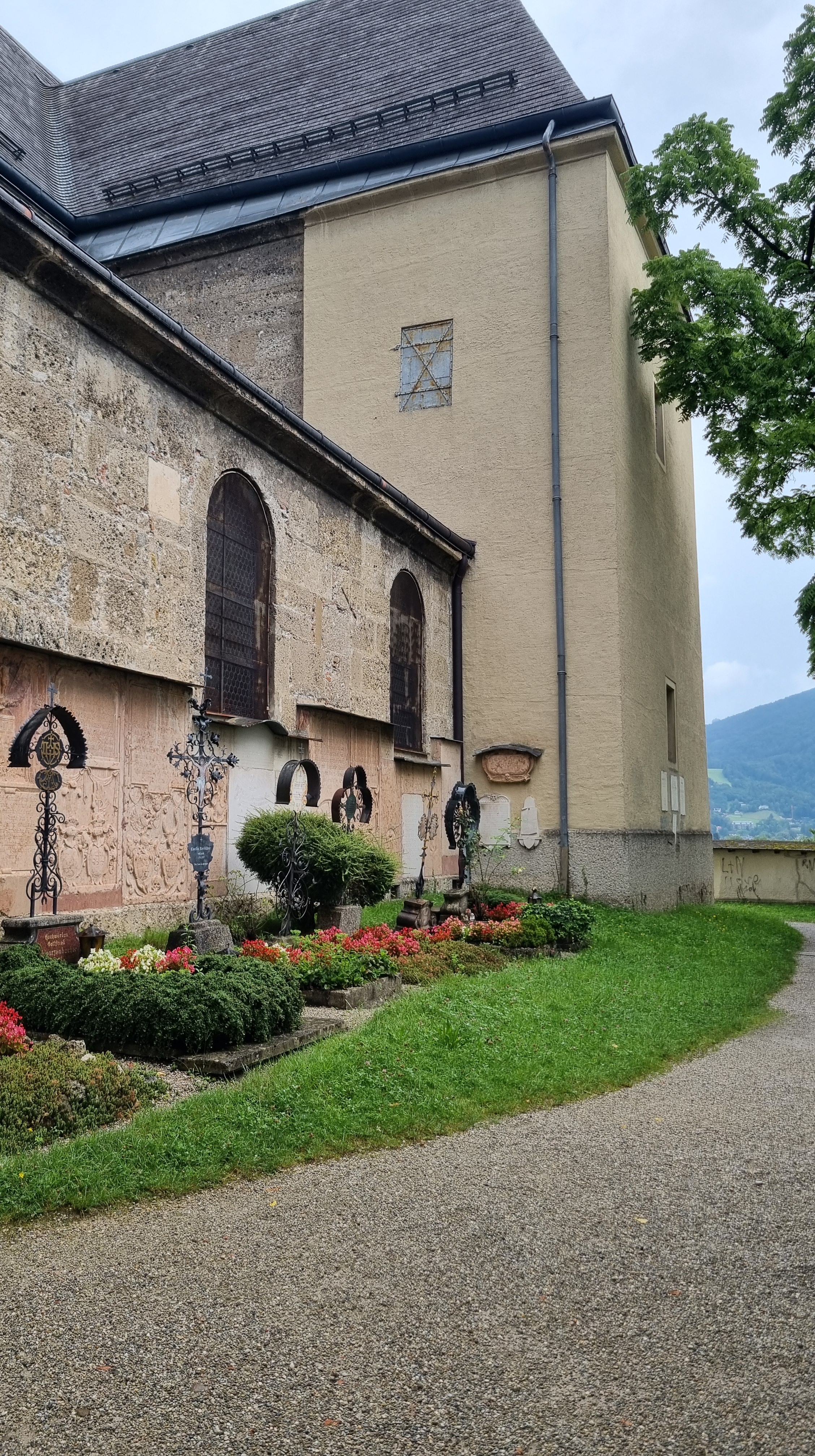
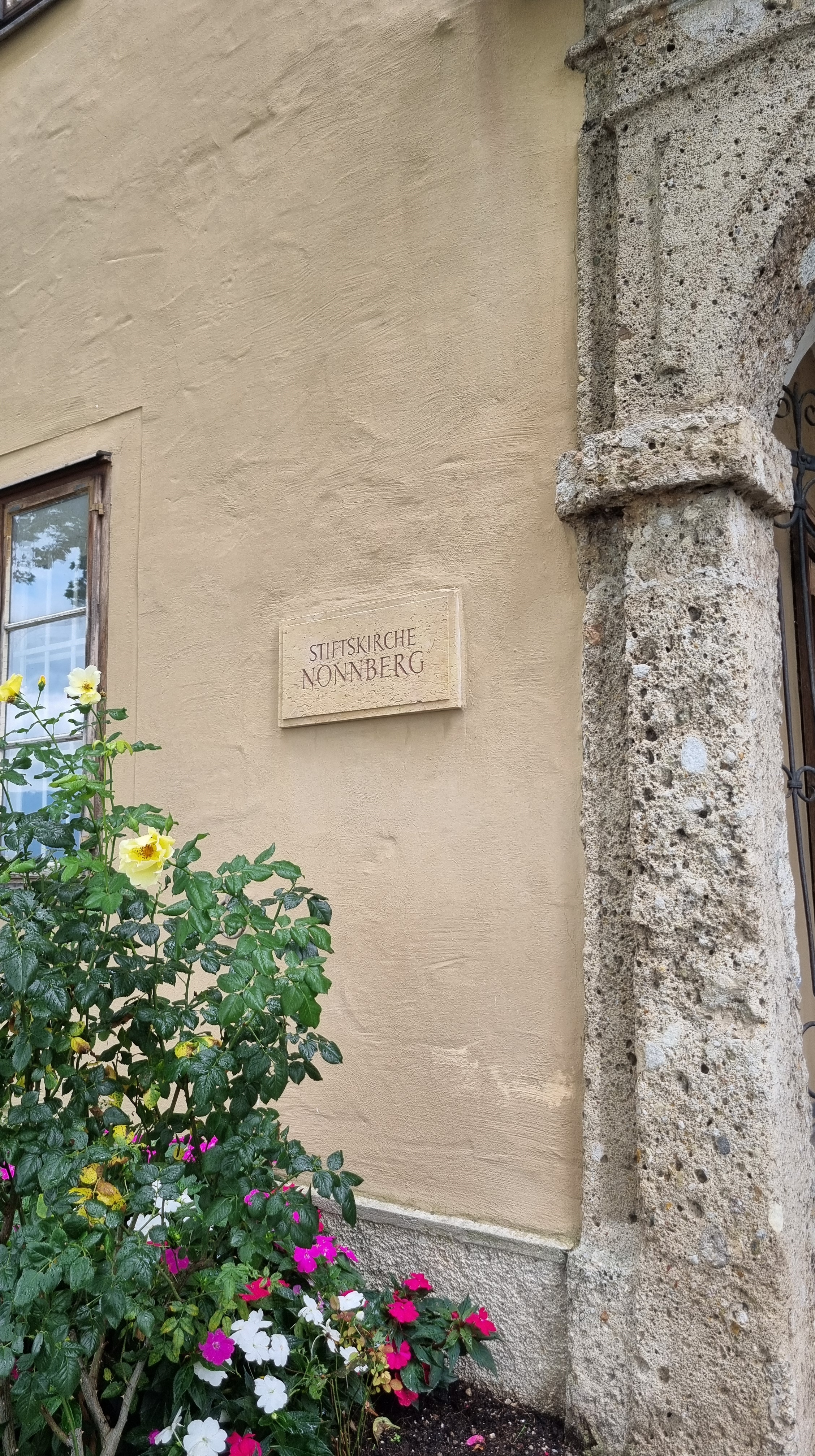
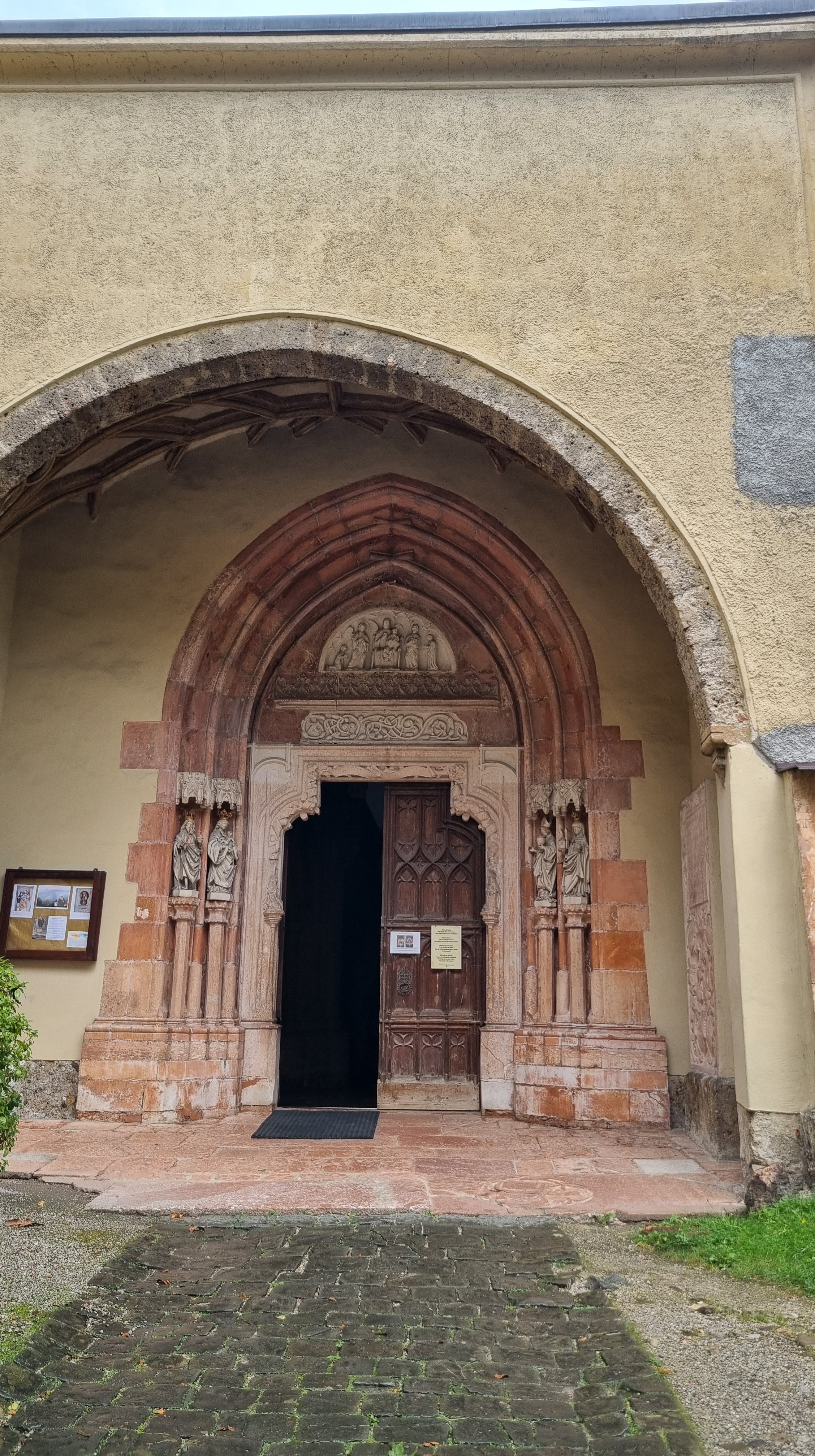
Afterward, we headed to Nonnberg Abbey (Stift Nonnberg), a Benedictine monastery and one of the oldest continuously active convents in the world. The abbey is most closely associated with the von Trapp family story, which inspired the famous musical The Sound of Music.
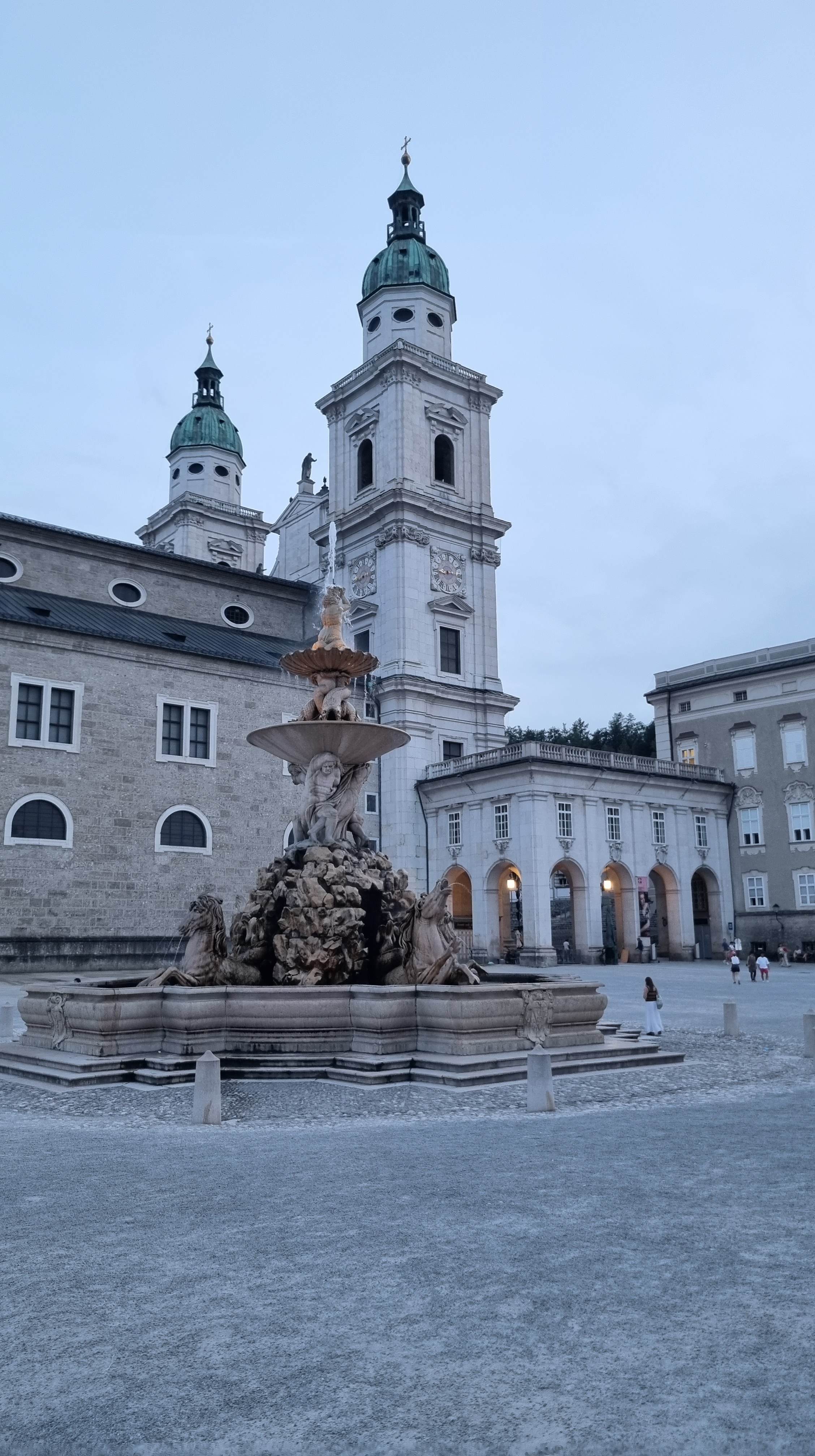
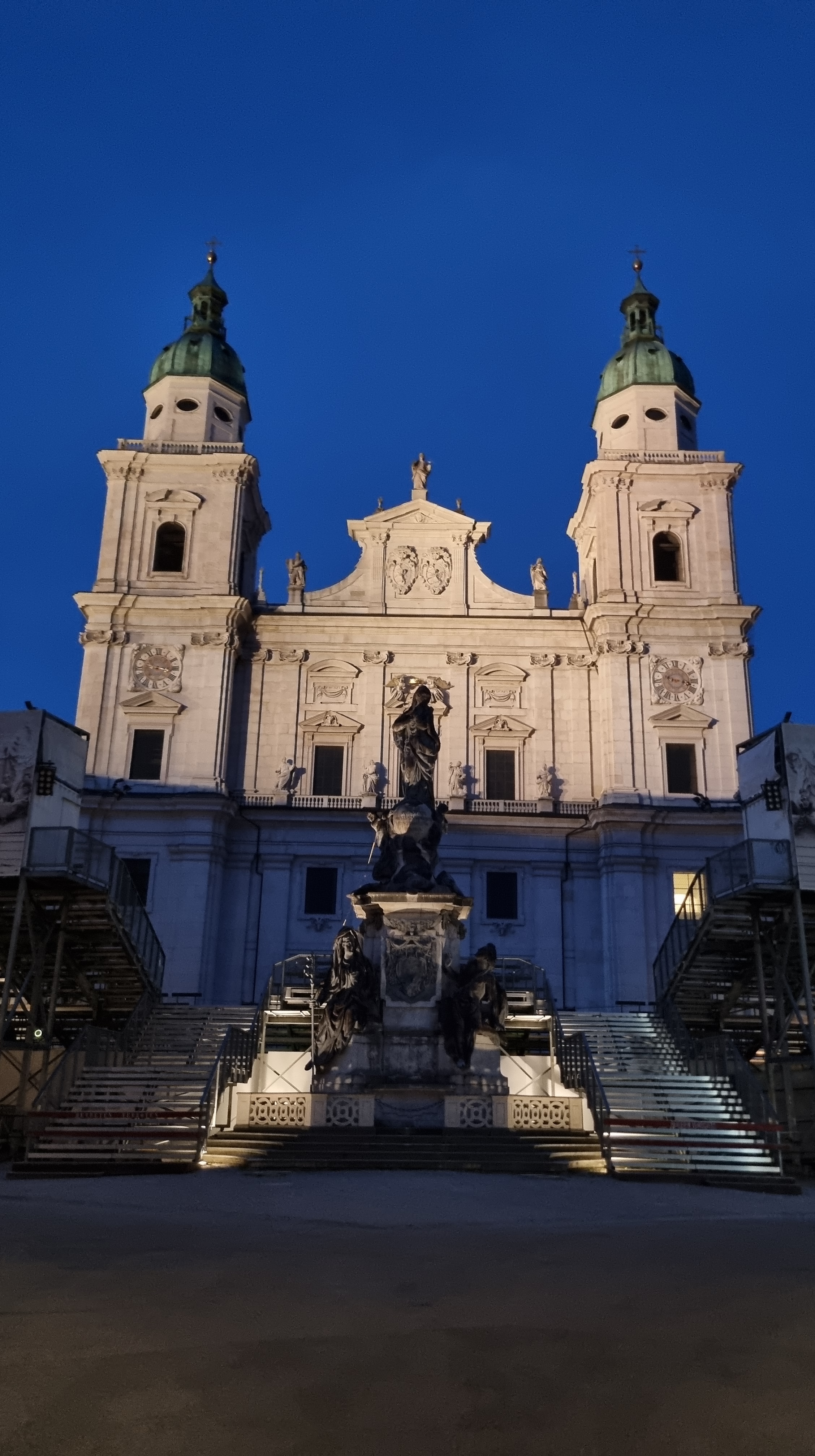
Next, we headed to the DomQuartier, a unique cultural complex that unites several historic buildings and museums in the heart of Salzburg’s Old Town. It offers visitors a rich journey through the city’s architectural and religious heritage, centered around the Salzburg Cathedral (Dom). Entry to the DomQuartier is included with the Salzburg Card, and you also receive a discount for entering the cathedral through the main entrance.
Tip: When visiting the DomQuartier, you’ll walk along an elevated path that gives you a great view of the cathedral from above, allowing you to save on the entry fee unless you also want to explore the church from the ground through the main entrance. Overall, I highly recommend visiting the DomQuartier—it’s one of my favorite sights in Salzburg.
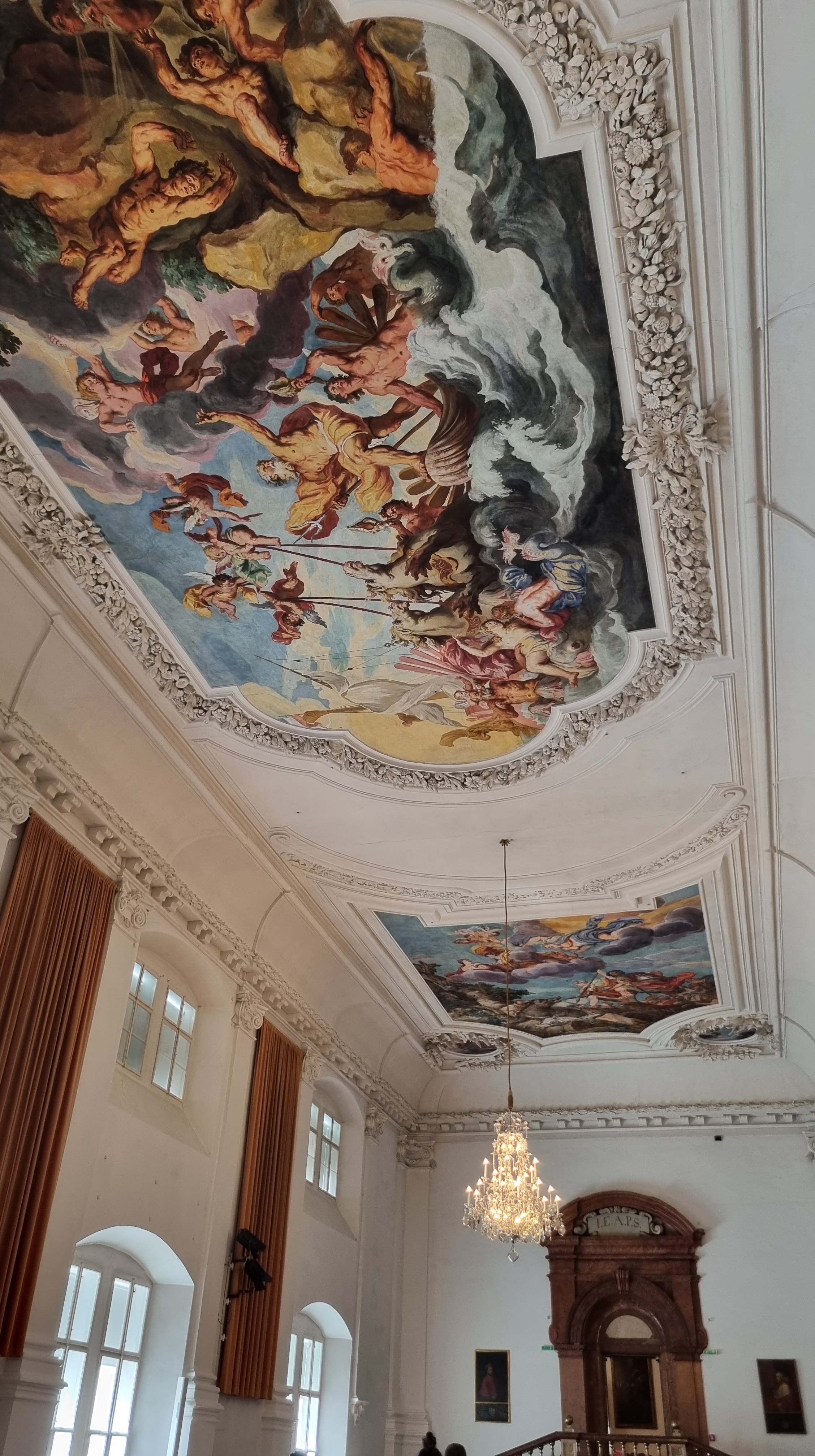
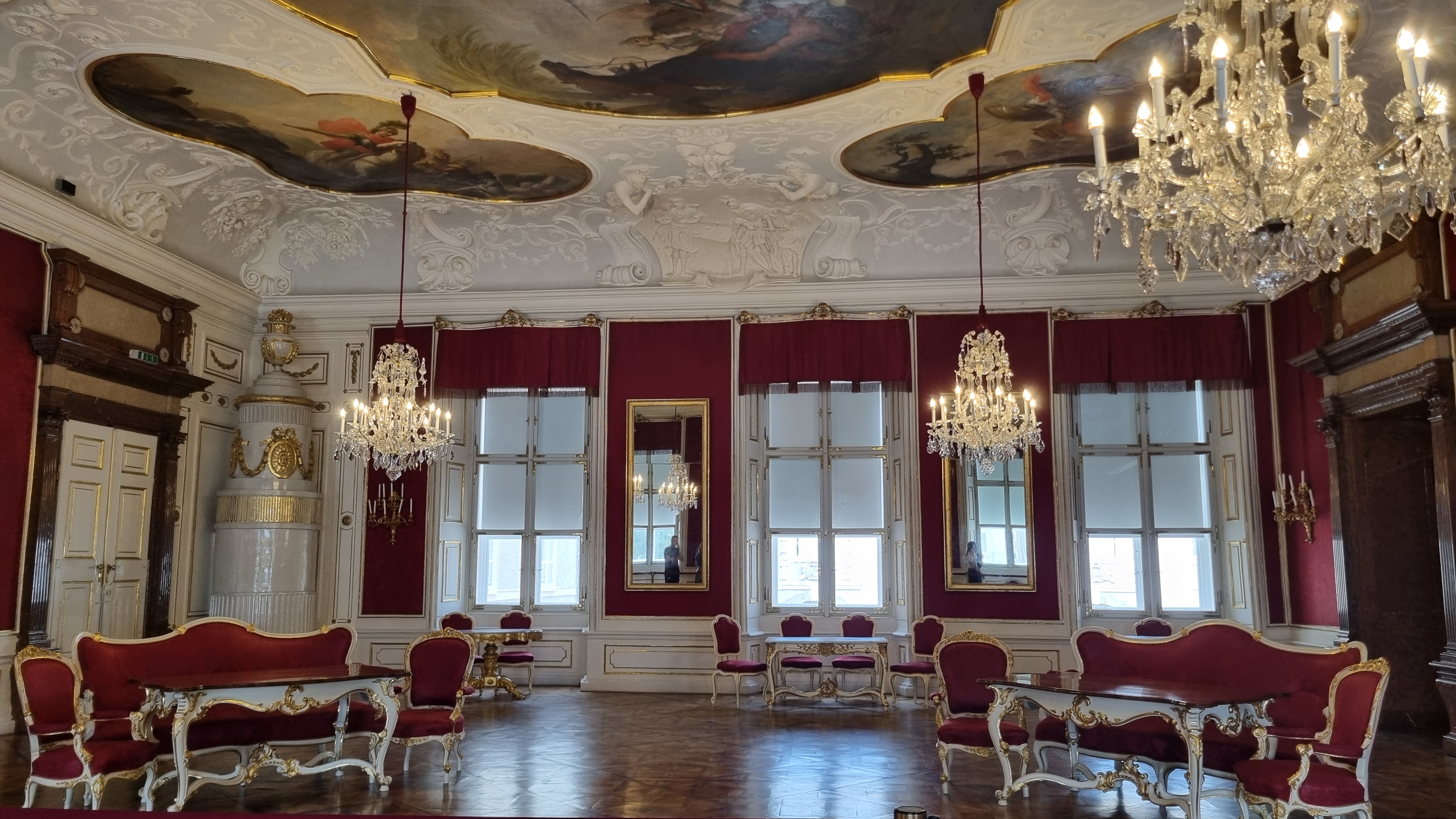
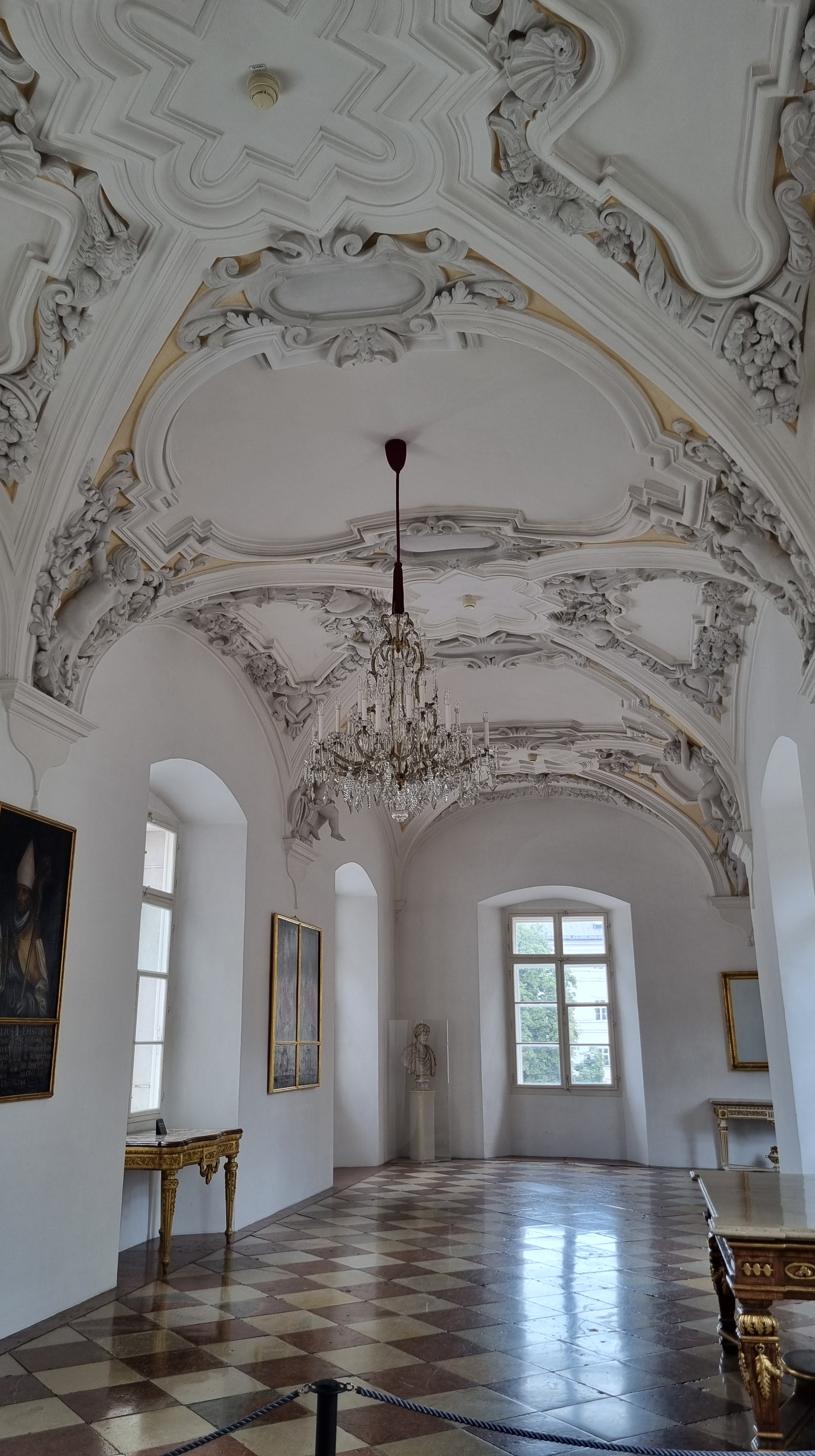
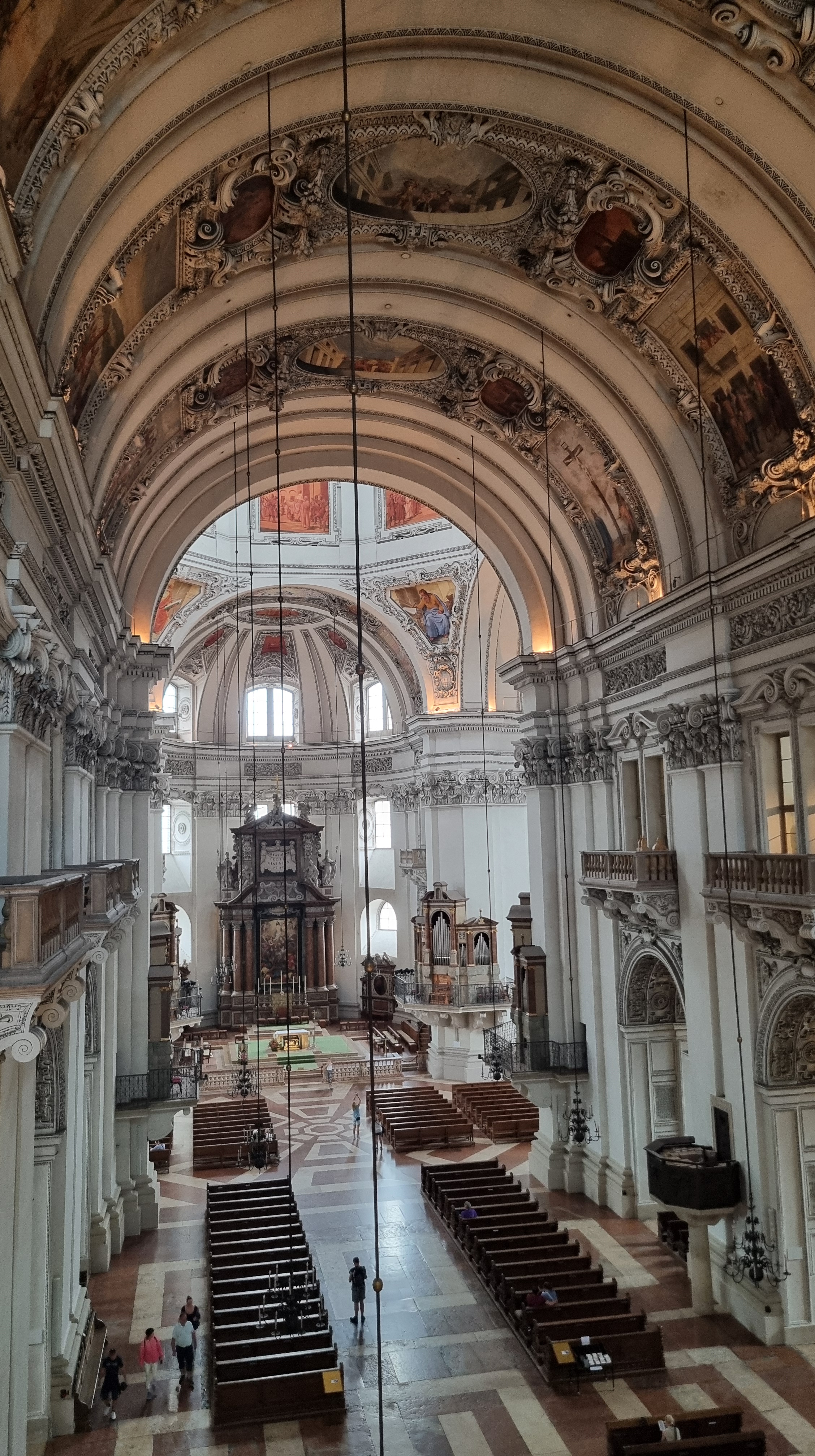
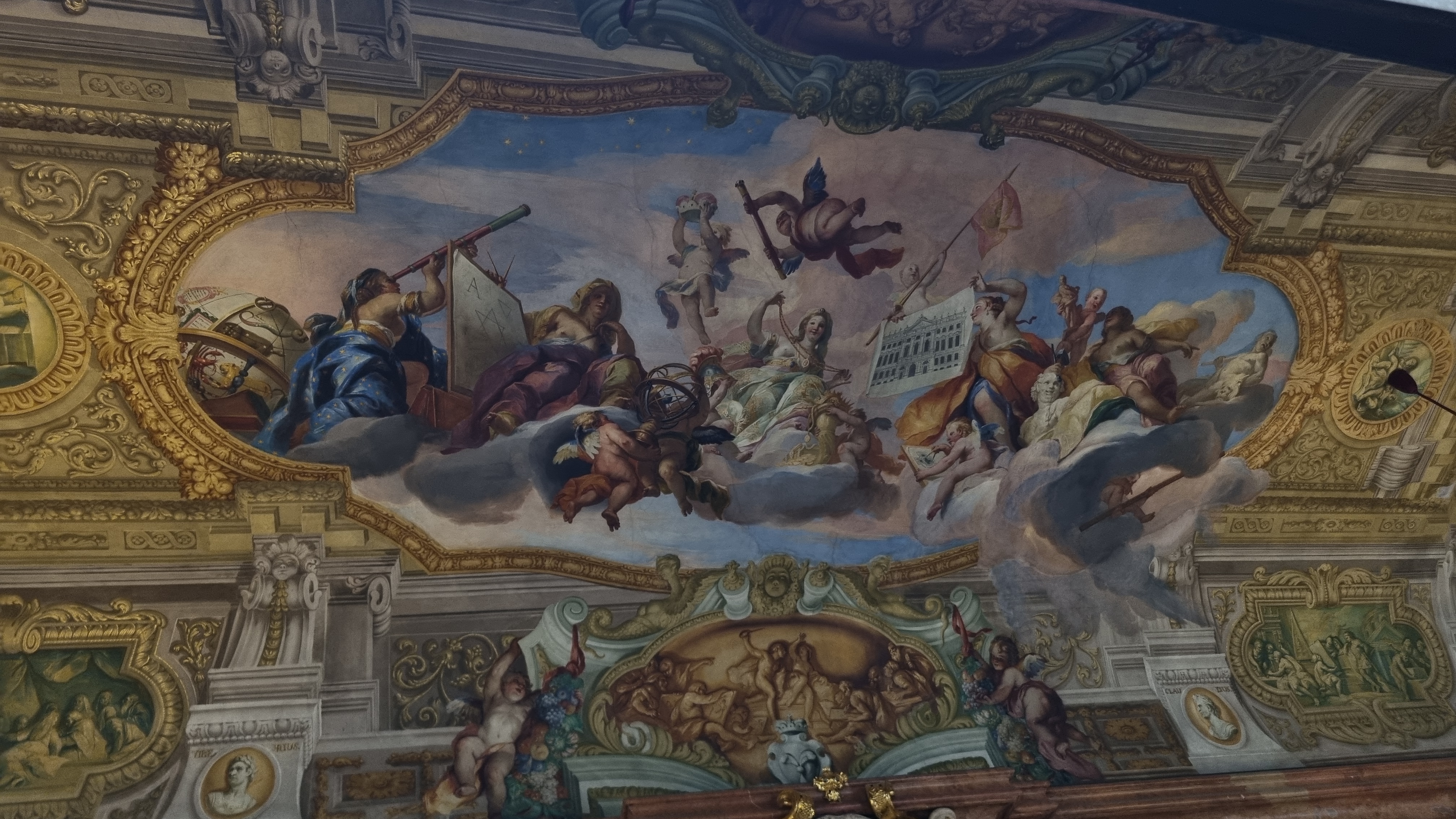
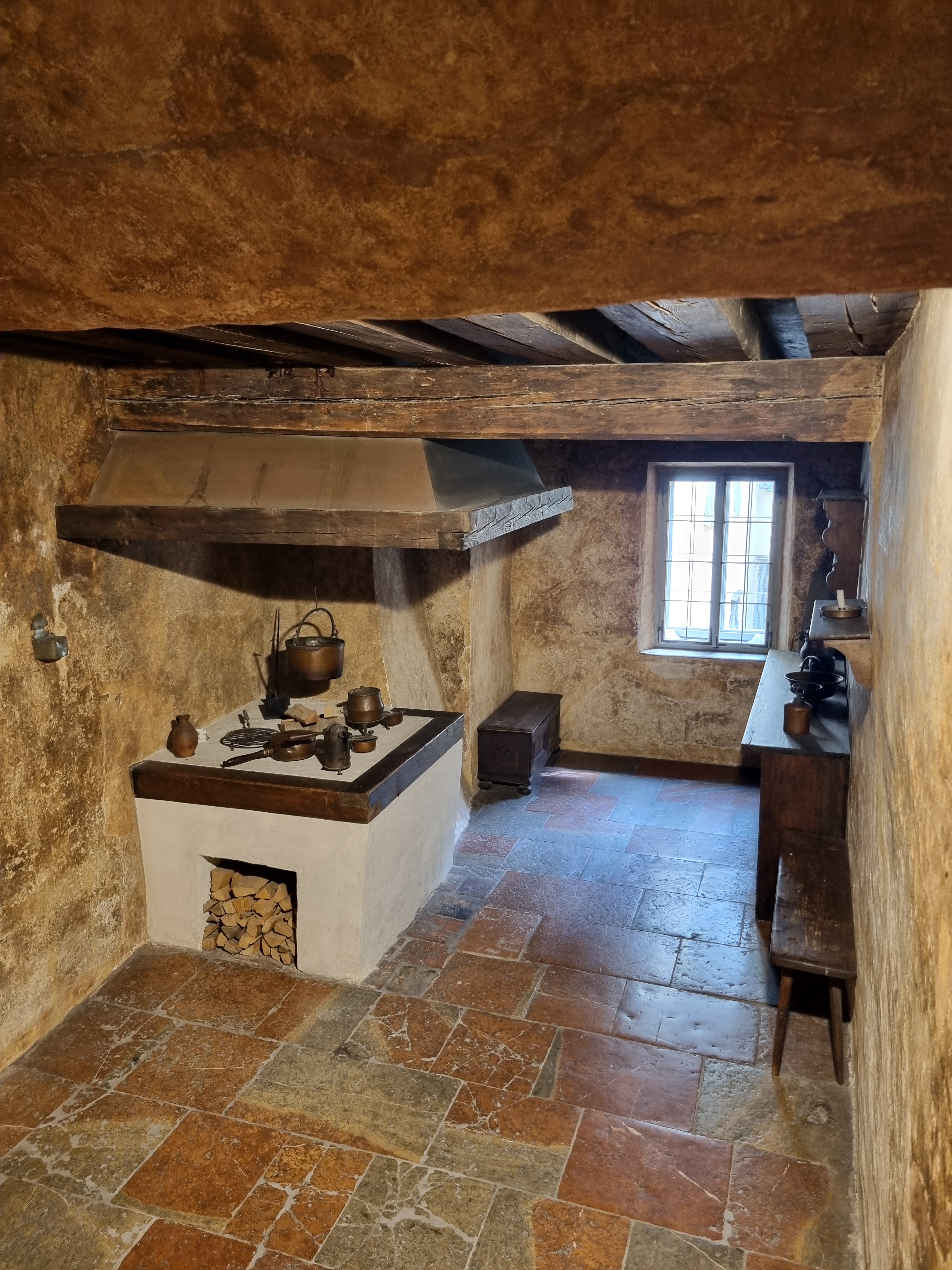
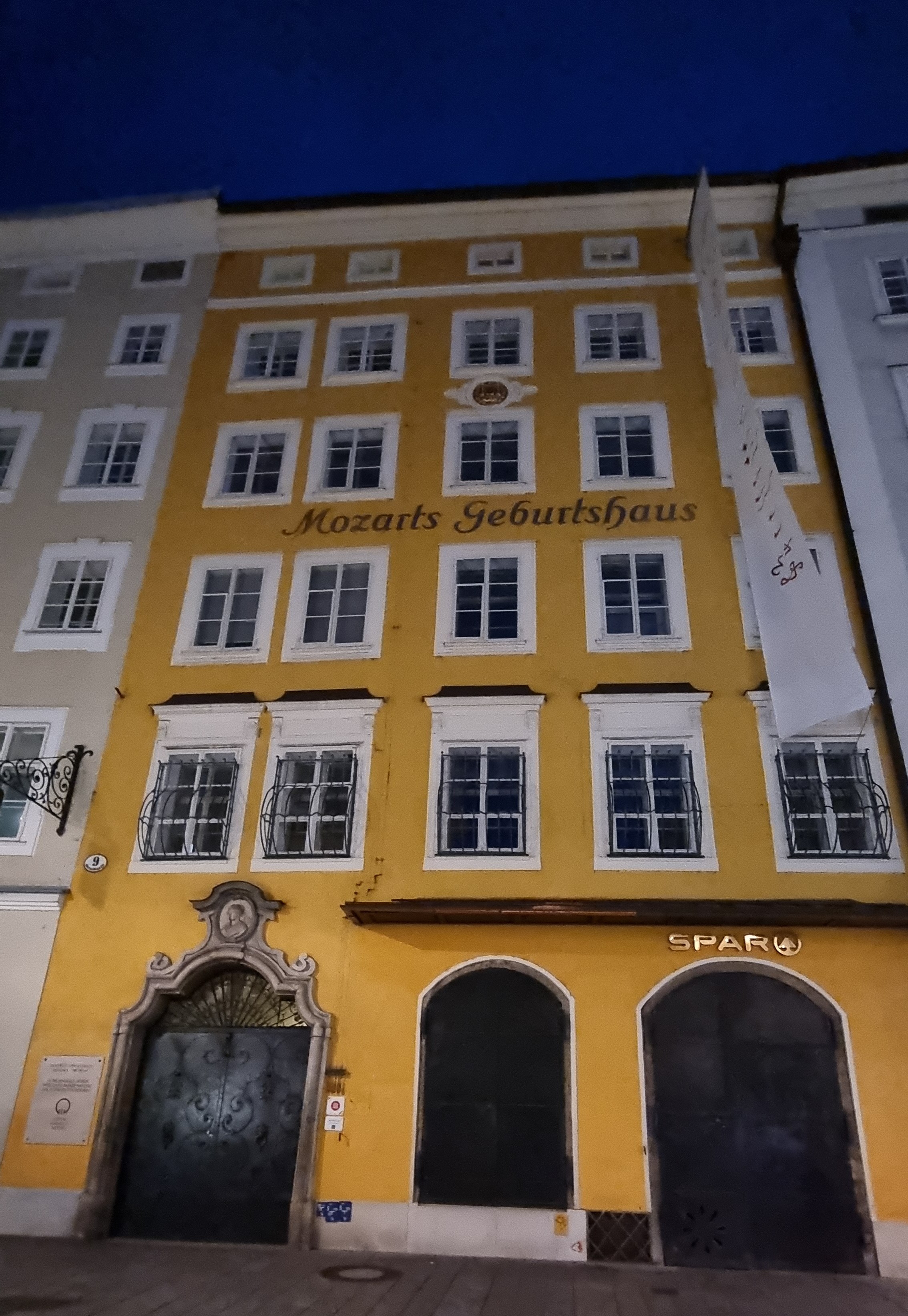
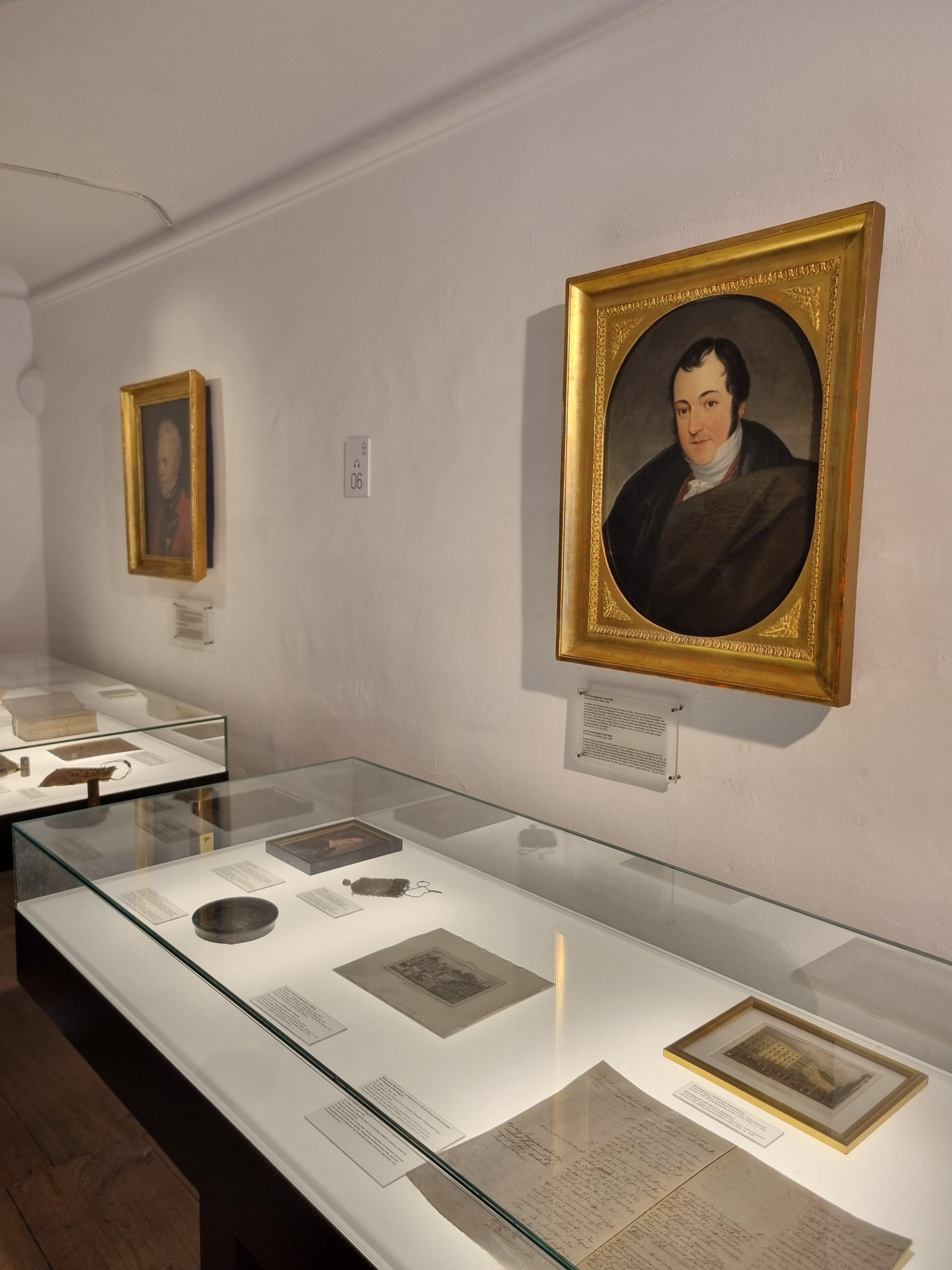
After enjoying a traditional Austrian lunch in the Old Town area, we headed to the famous birthplace of Wolfgang Amadeus Mozart, which is now a tiny museum. It’s one of Salzburg’s most important and frequently visited historical sites, often quite crowded during the day. Entry is included with the Salzburg Card. The museum provides a comprehensive look at Mozart’s early life and career. It features original manuscripts, personal items, and period instruments. You can learn more about his family life, early musical education, and the environment that influenced his development as a composer.
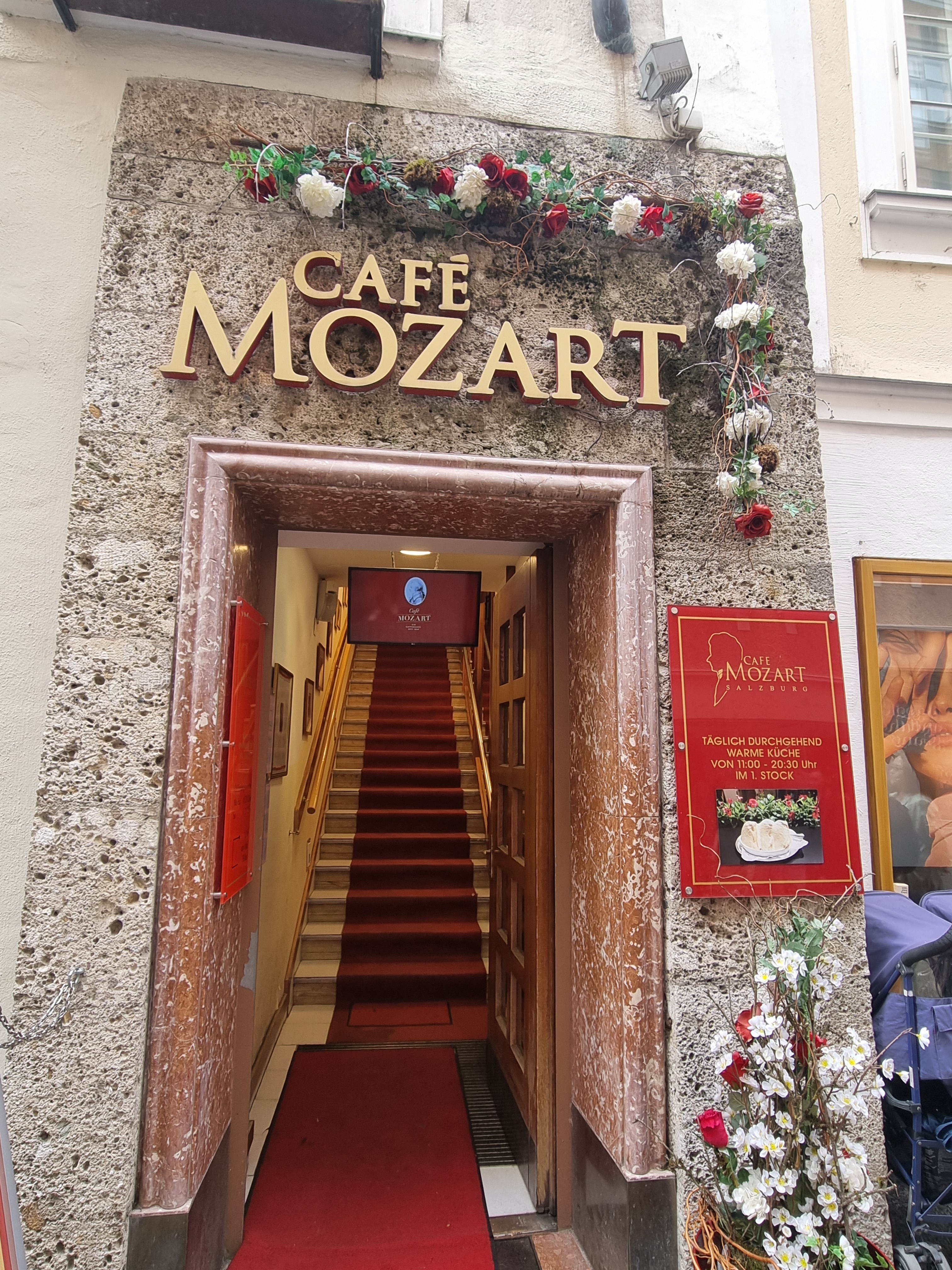
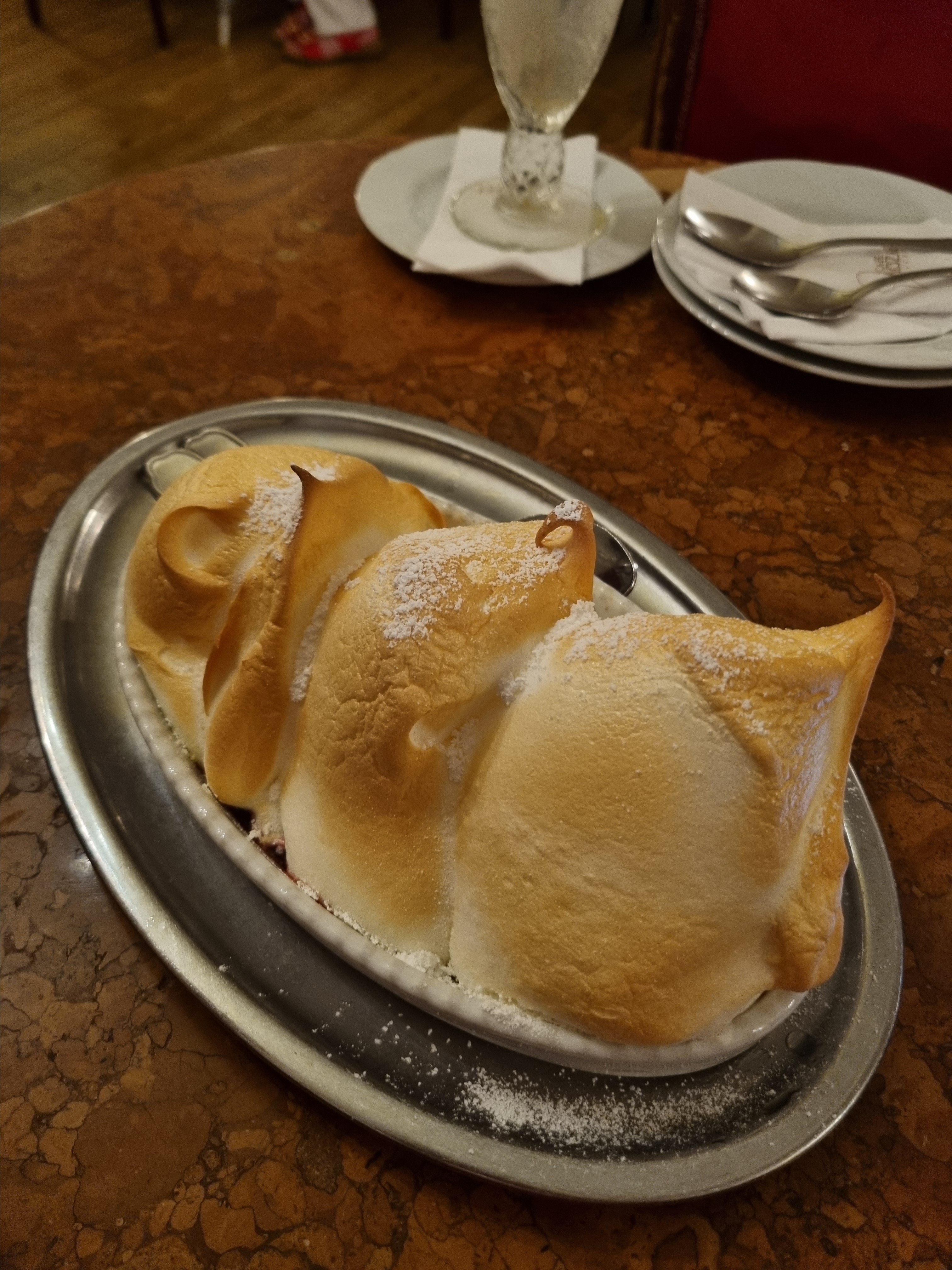
Afterward, we went to Café Mozart (unpaid ad) to try Salzburger Nockerl, a famous traditional dessert from Salzburg. Known for its light, fluffy texture, it’s a soufflé-like dish that embodies the charm of Austrian cuisine. If you’ve never tried it before, I recommend sharing it with someone—it’s quite large and very filling. While many people love it, it didn’t quite suit my taste. I’m glad I gave it a try, but it’s not something I would eat again.
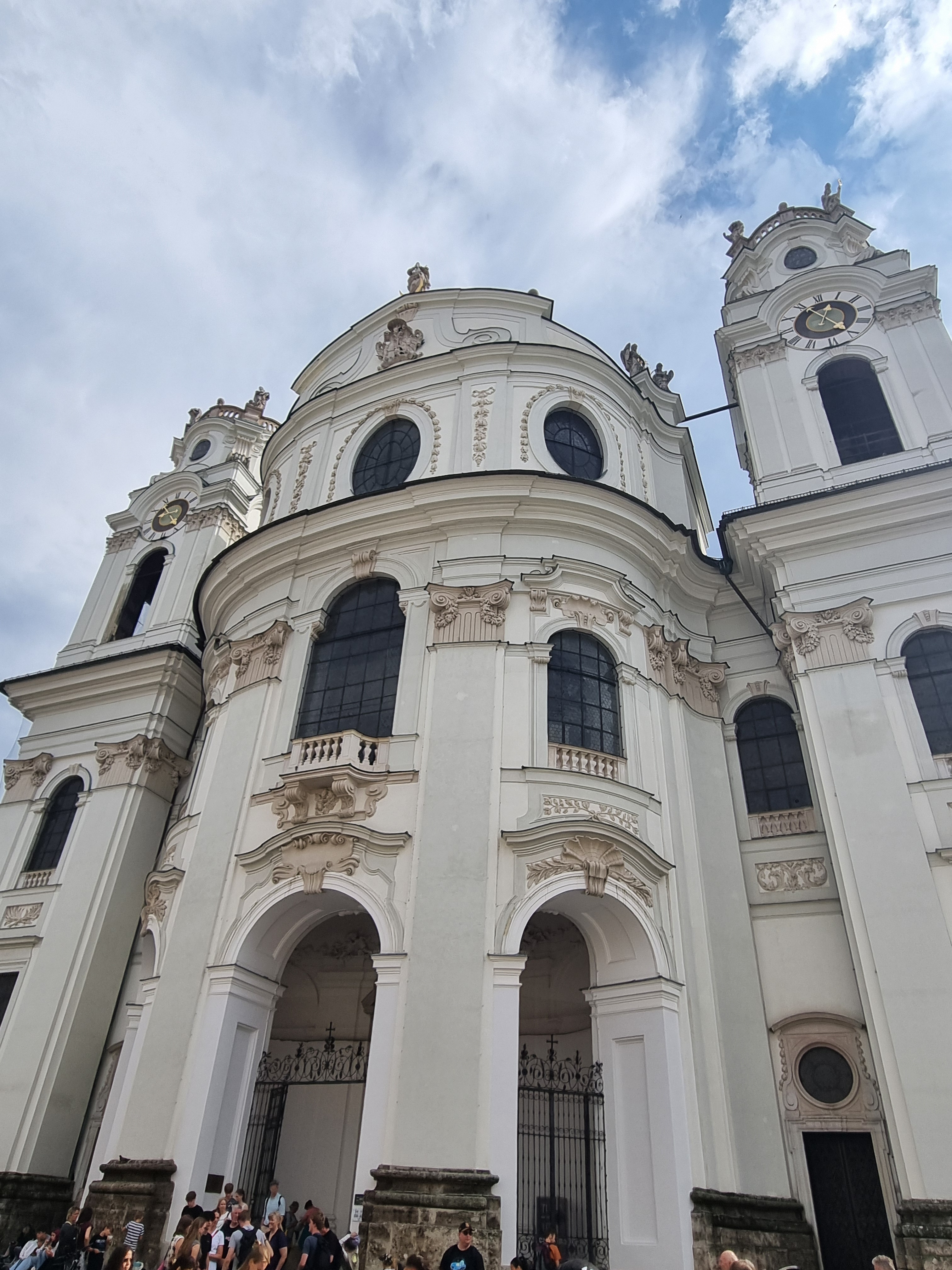
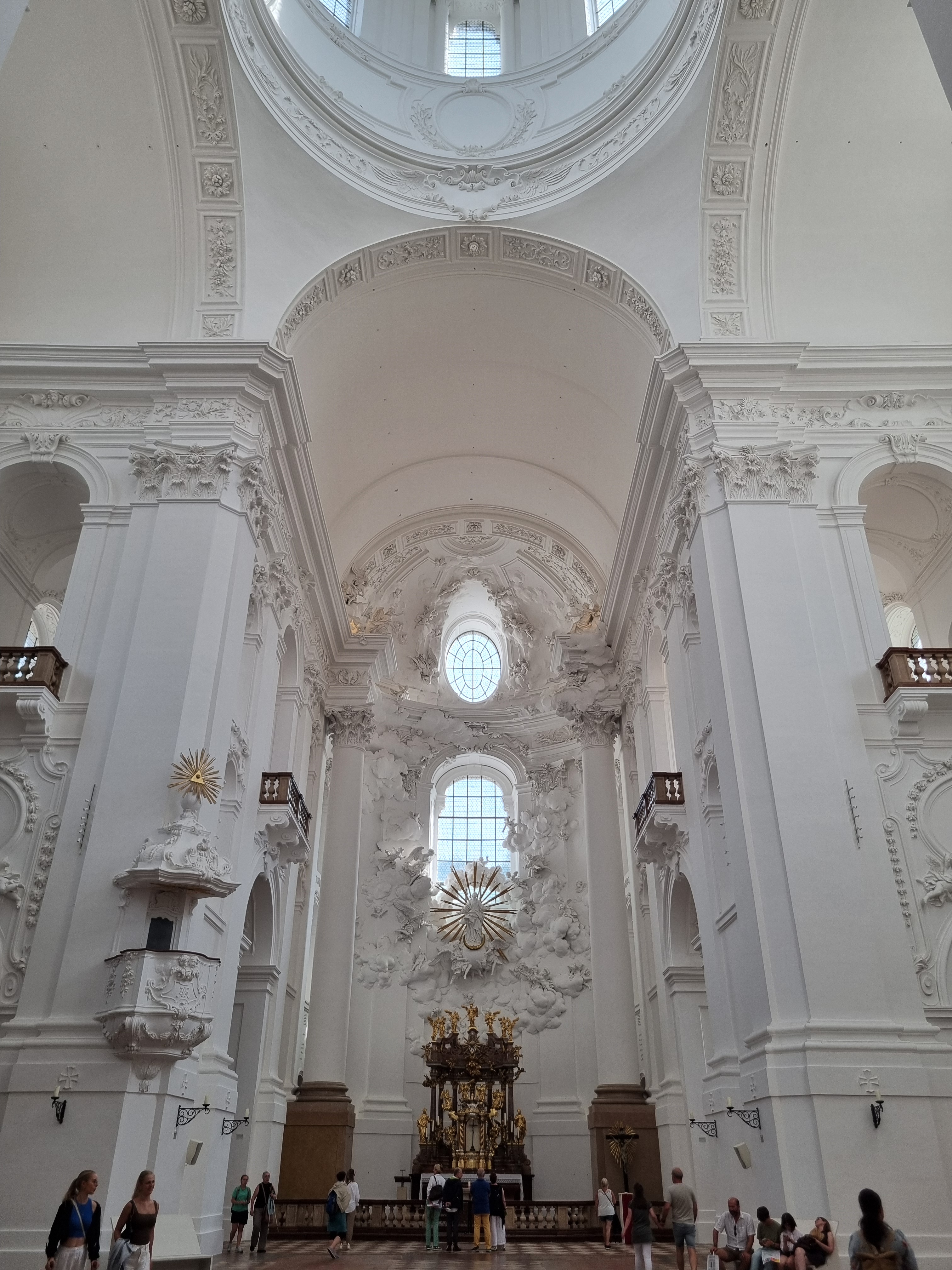
We continued our day by visiting the Kollegienkirche and the market in front of it. The Kollegienkirche is one of the city’s most impressive Baroque landmarks, located in the heart of the Old Town. It stands out due to its grand architecture and historical significance. The entry is free.
The market in front of the Kollegienkirche is a lively and popular spot in Salzburg, particularly during specific times of the year. Known for its festive atmosphere, this market is a spot of local culture, food, and craft.

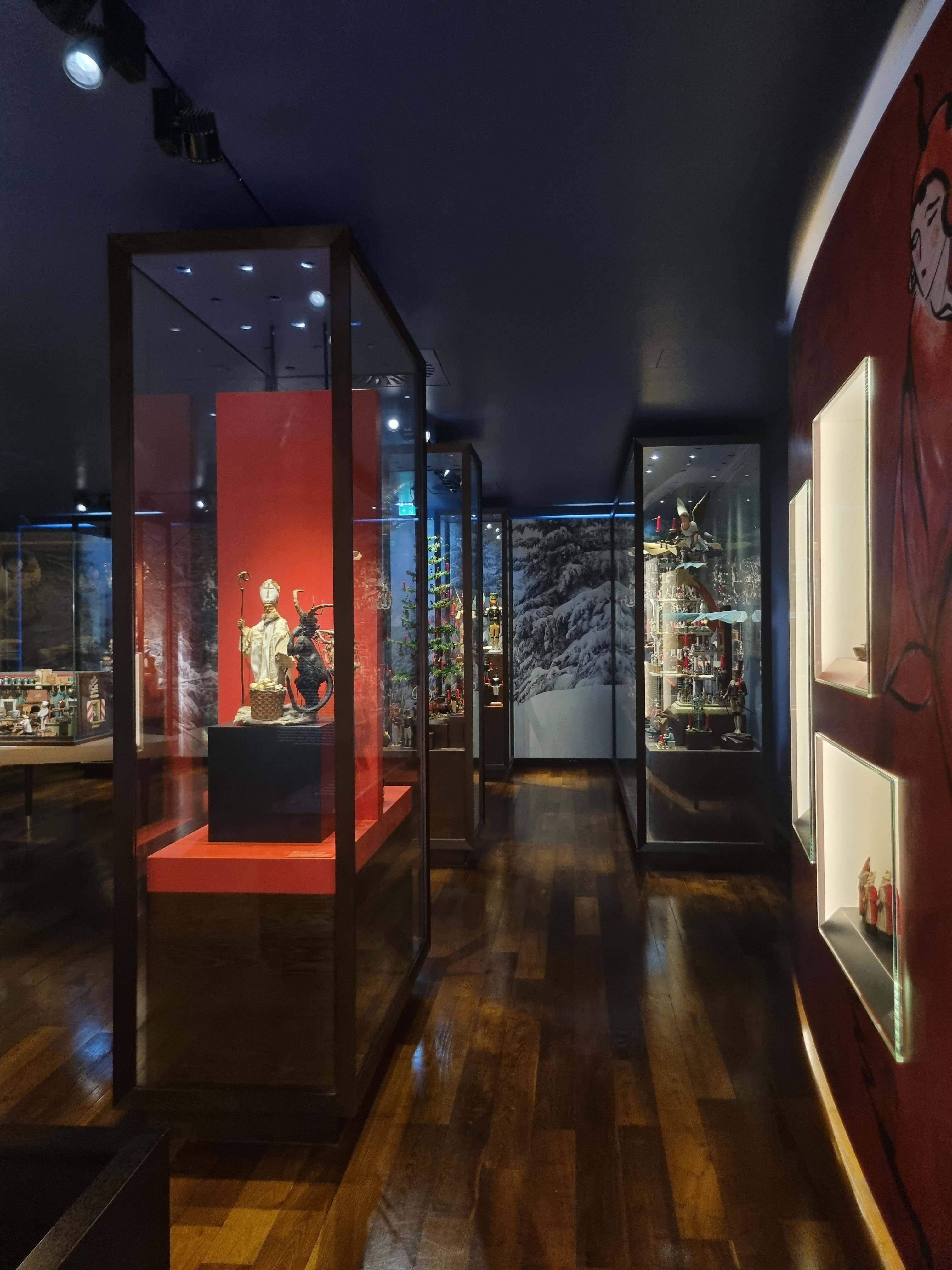
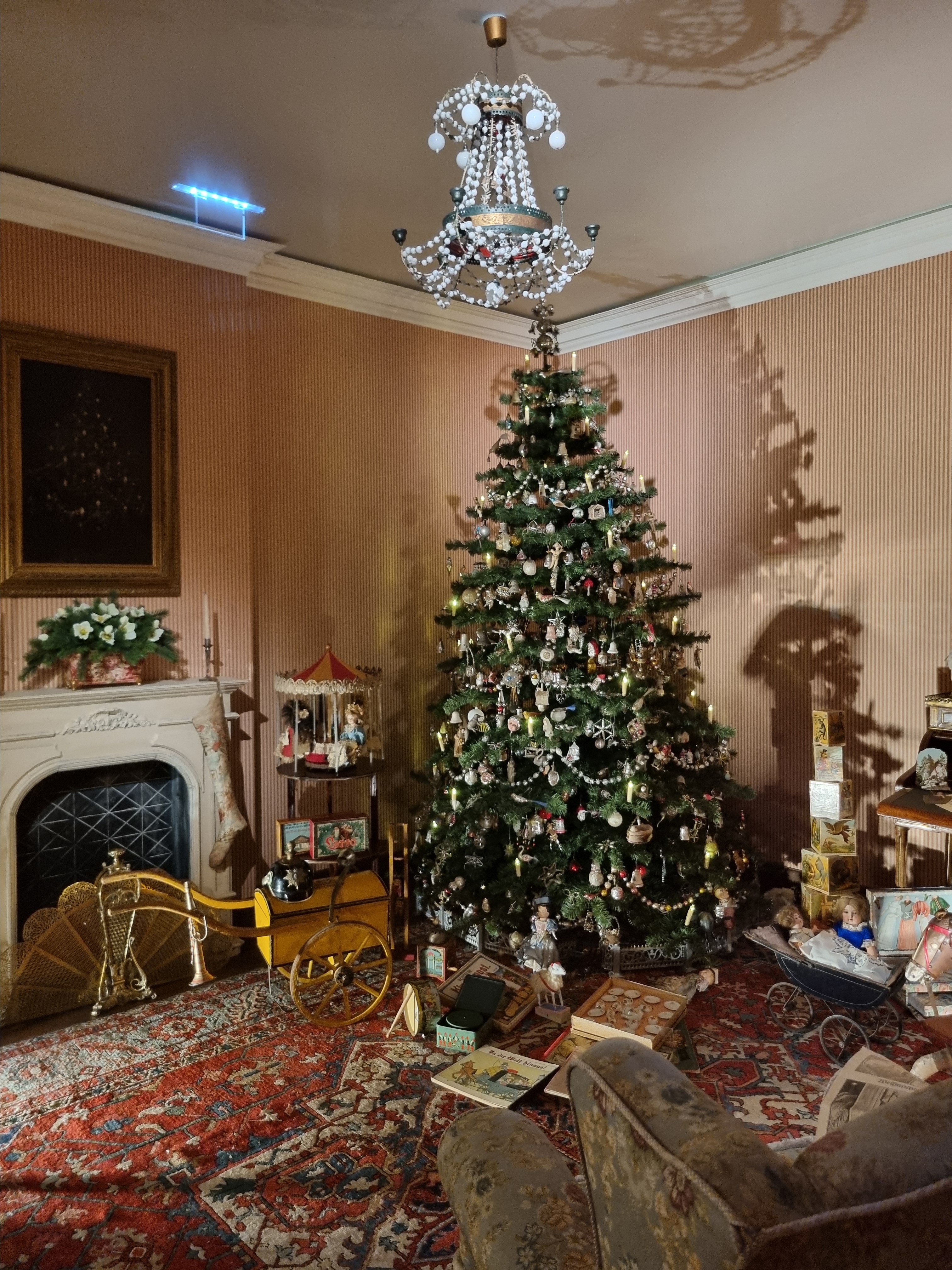
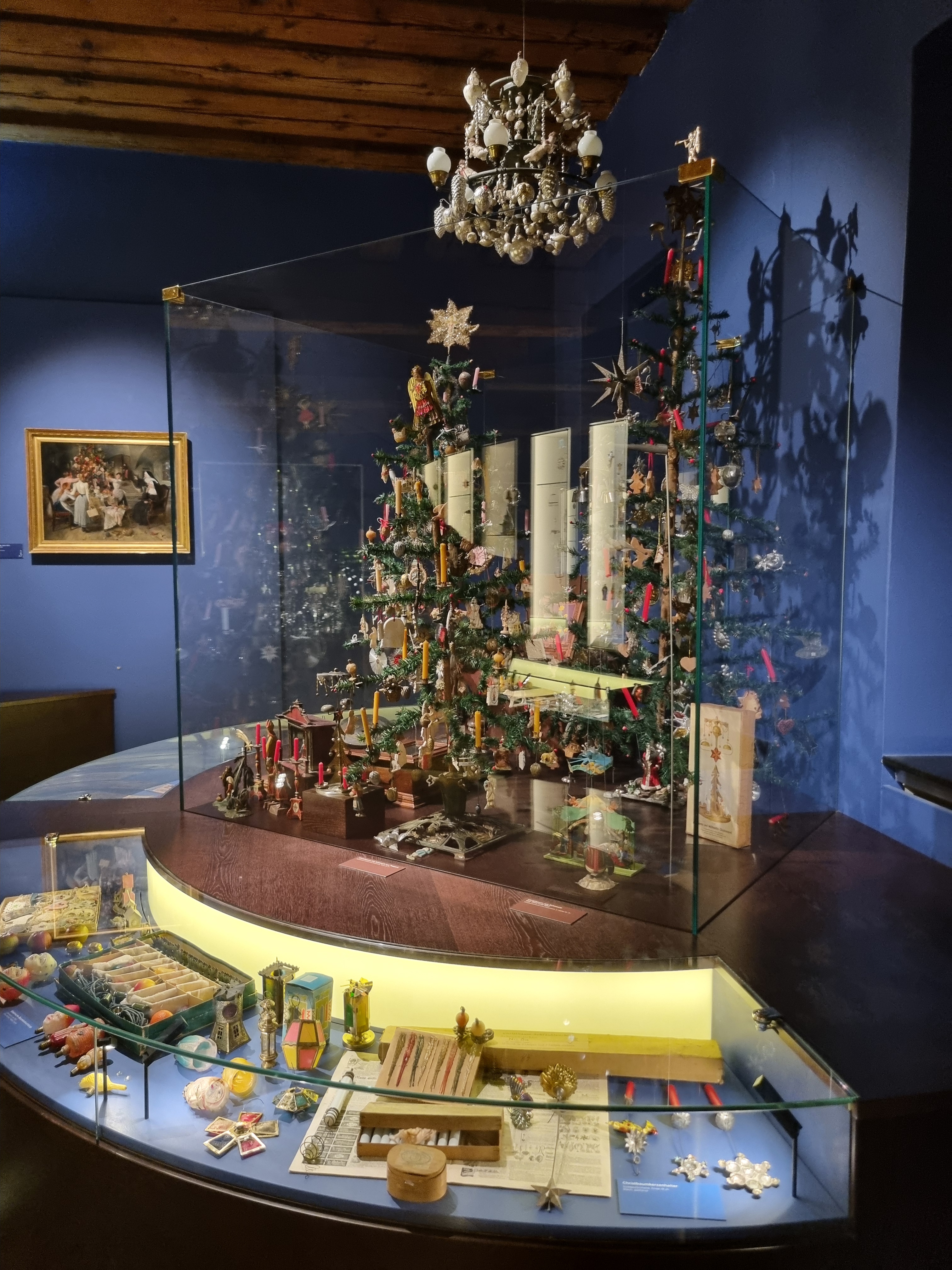
Then, we headed to the Weihnachtsmuseum, a charming and unique attraction located in the heart of Salzburg, on Mozartplatz. The museum is dedicated to showcasing the history and traditions of Christmas in Austria and Central Europe, featuring an special collection of festive decorations, ornaments, and toys. Admission is included with the Salzburg Card, and in my opinion, it’s definitely worth a visit, whether you’re a Christmas enthusiast like me or not. Visitors can explore how Christmas traditions have evolved over time. It’s the perfect stop for anyone looking to experience the nostalgic and cultural spirit of the holiday season, even when visiting Salzburg outside of winter. It’s open all year round.
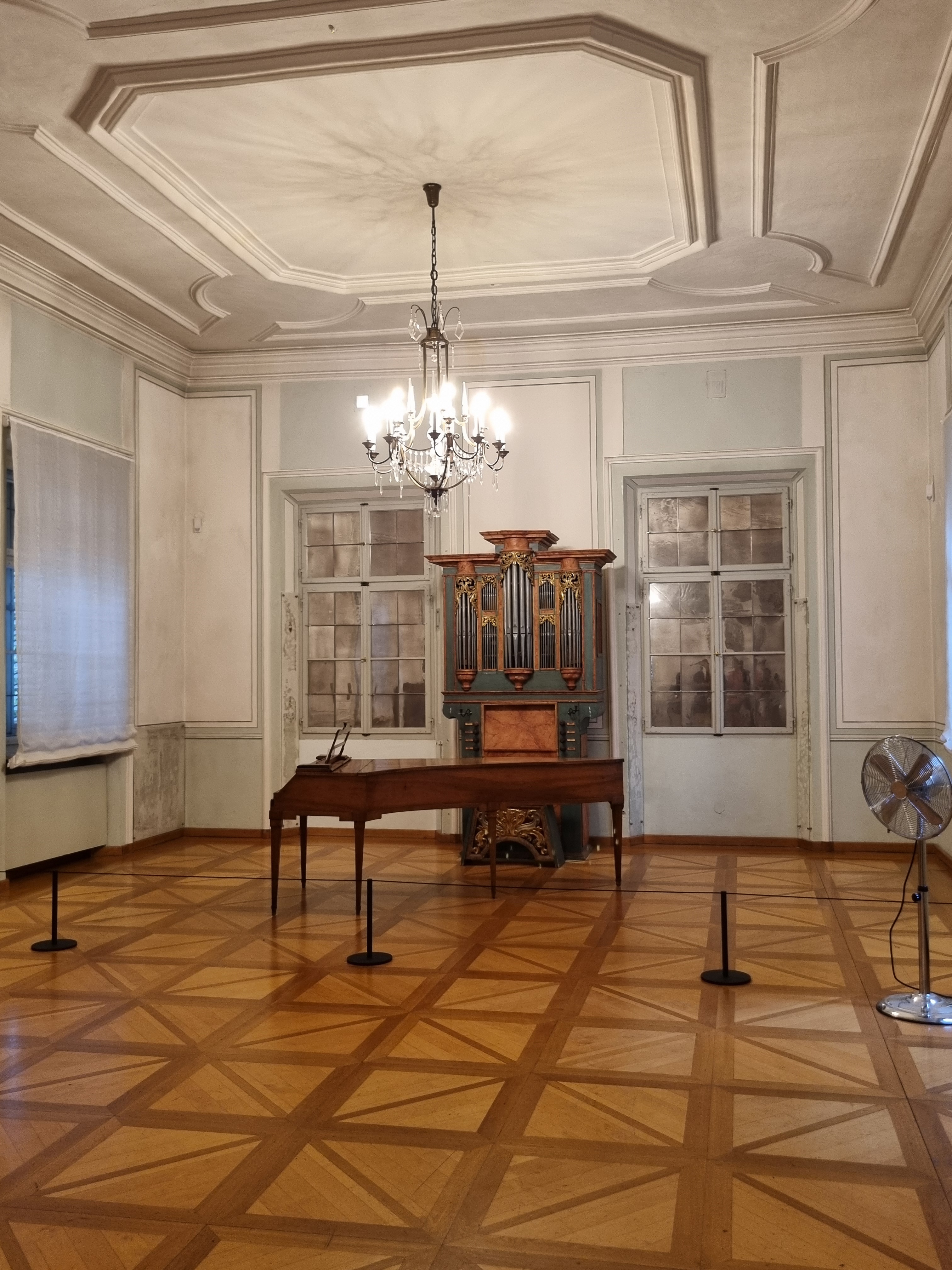
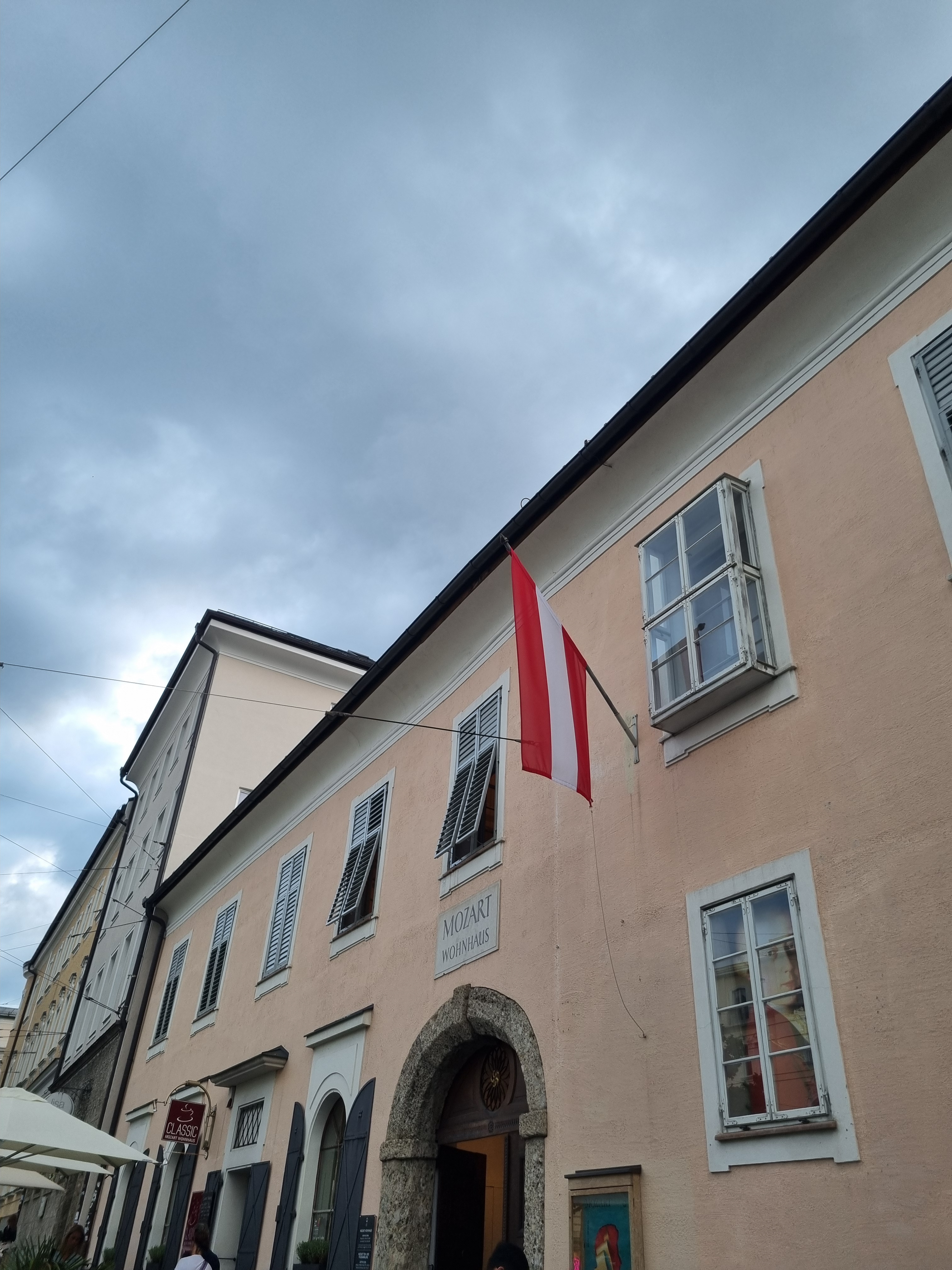
For our last activity we went to the Wohnhaus of Mozart, also known as the Mozart Residence. This is where Wolfgang Amadeus Mozart lived from 1773 to 1780 after his family moved from their smaller apartment in the Getreidegasse. The house is significant because Mozart composed many of his early works there, including several symphonies and operas. The house has been restored and turned into a museum that provides insights into Mozart’s life, his family, and his musical story. Visitors can explore various exhibits displaying original documents, portraits, and musical instruments used by Mozart. Entry is included in the Salzburg Card and is a must-visit for anyone keen on delving deeper into the composer’s life.

Day 4 – Salzburg
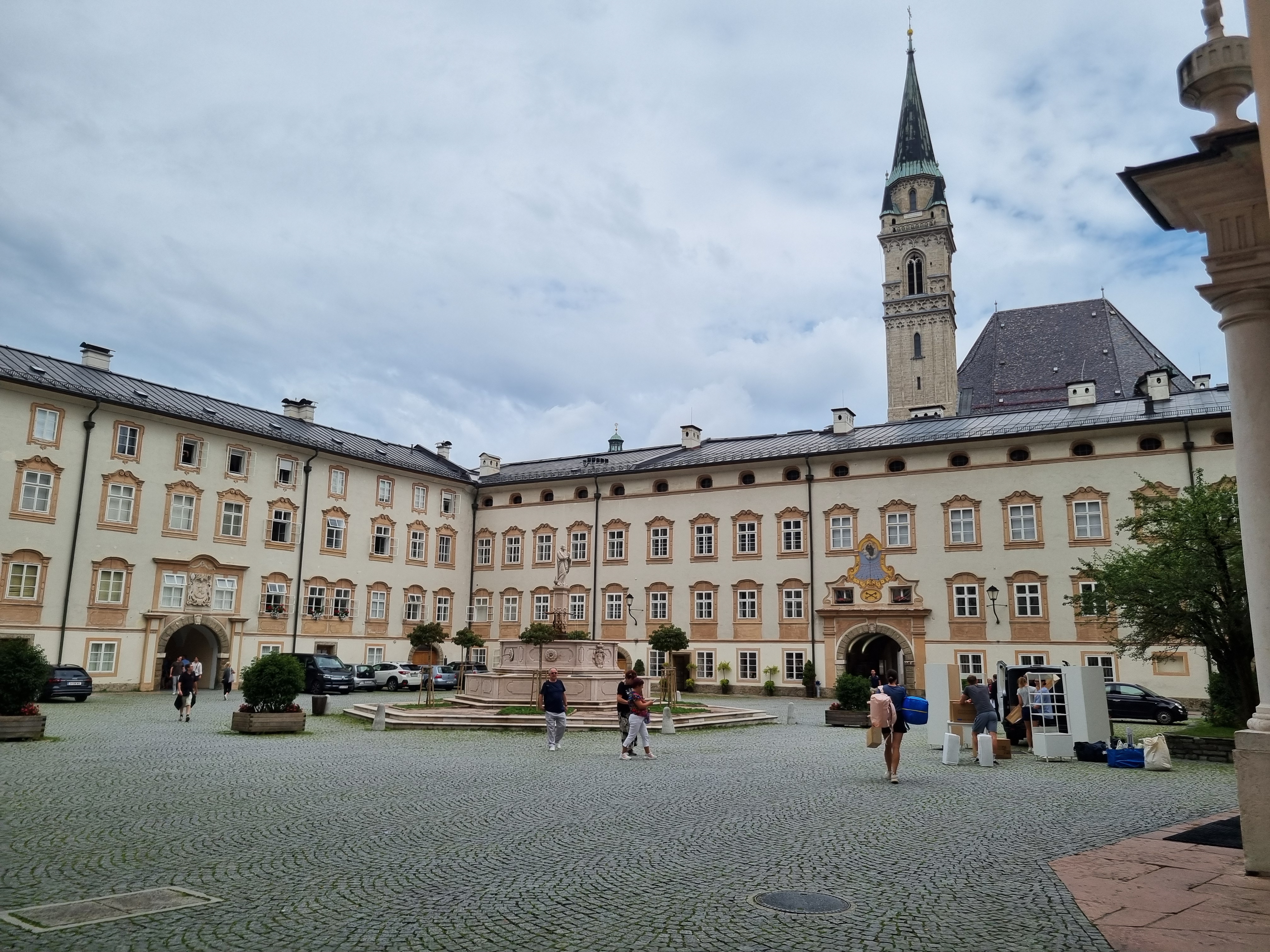
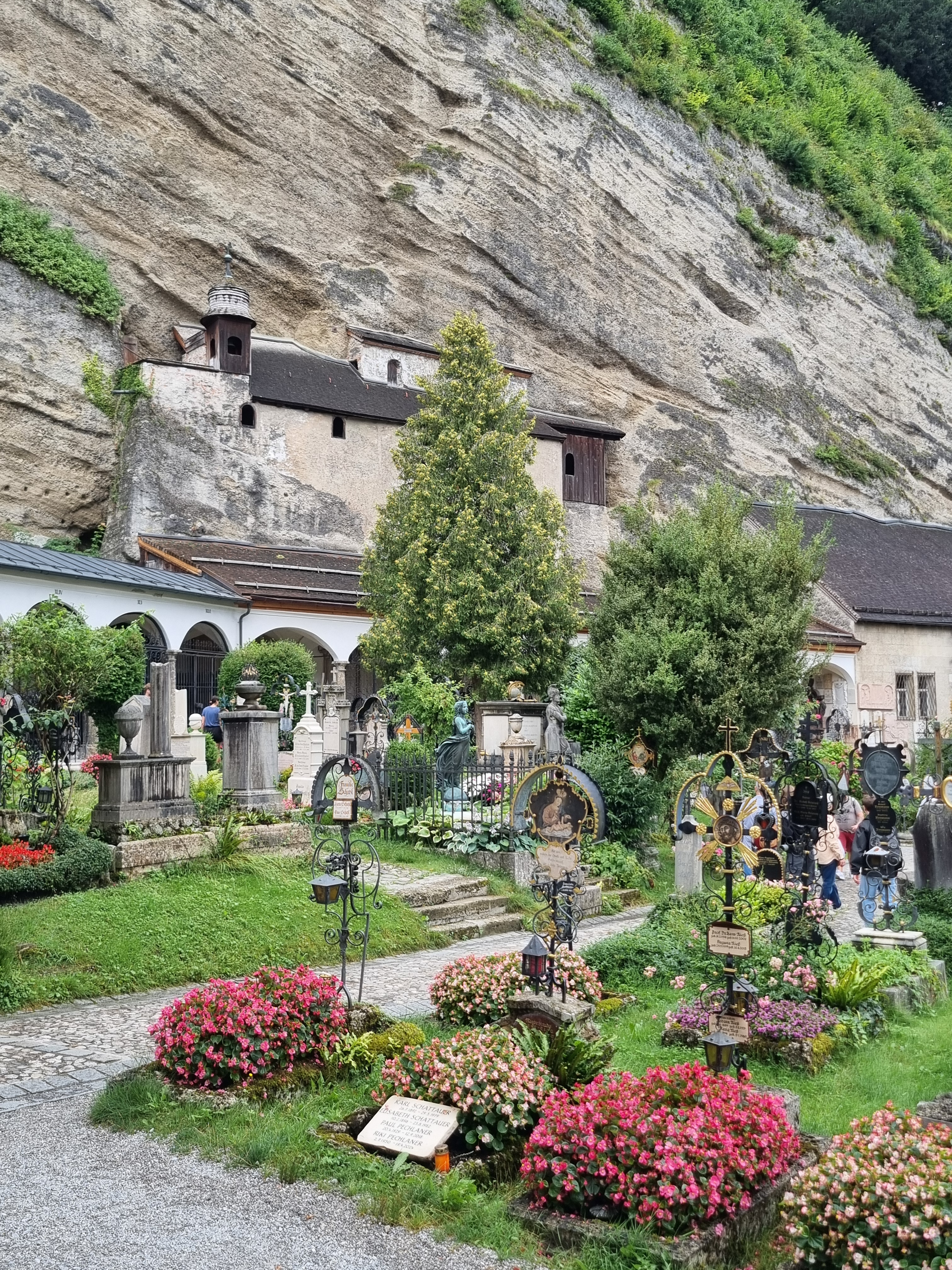
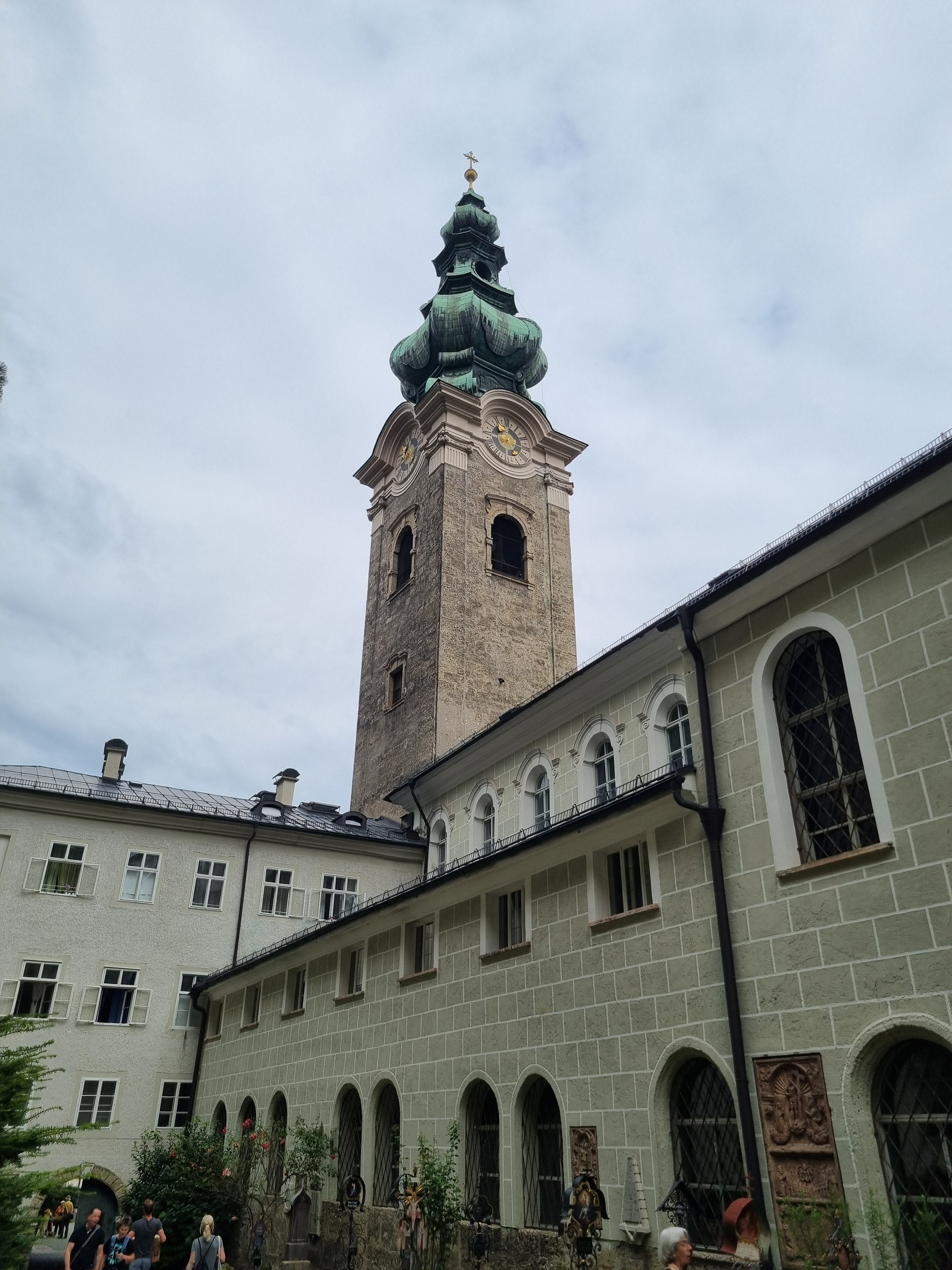
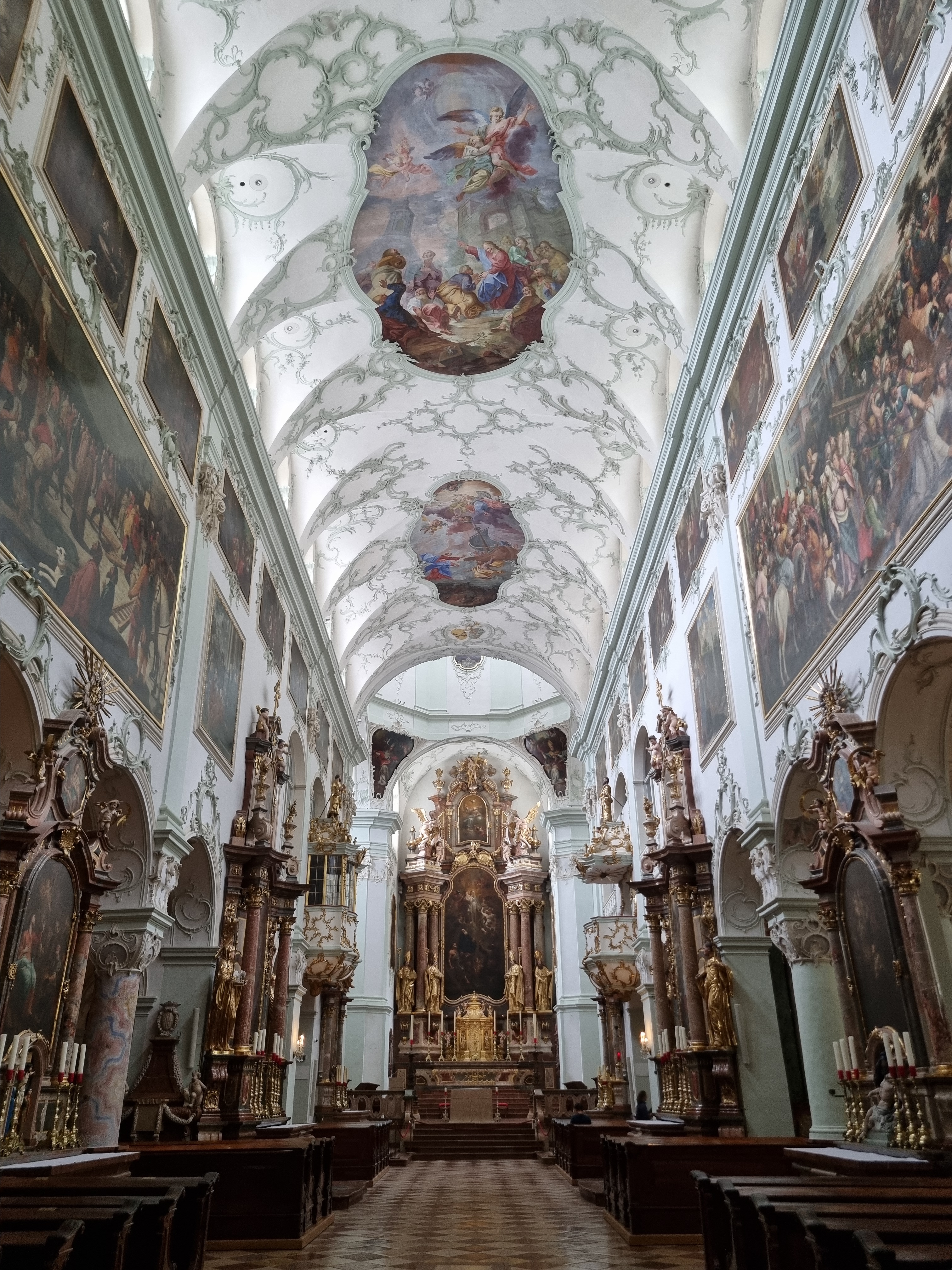
Before heading home, we had a few hours left to discover the charm of Salzburg. We began the day by visiting the Erzabtei, also known as Stift St. Peter Salzburg. It’s one of the oldest monasteries in the German-speaking world, dating back to the 7th century. The monastery is known for its stunning architecture, including the St. Peter’s Abbey Church with its Baroque style. Additionally, the Stift St. Peter houses a beautiful cemetery. It’s a captivating place to explore for those interested in history and culture in Salzburg.
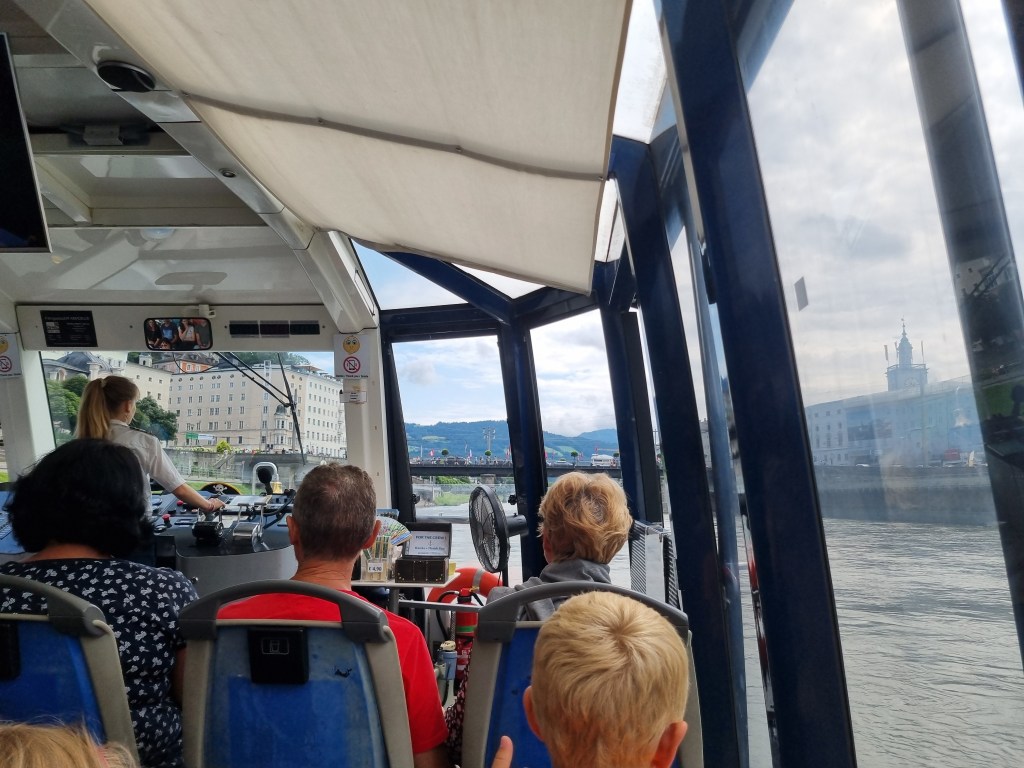
Afterwards, we took a boat tour on the Salzach River, which we had booked the day before. The boat tours provide a fantastic way to see the city from a different perspective. You can relax and admire the picturesque views of Salzburg’s famous landmarks as you cruise along the river. Despite the cloudy weather, we definitely enjoyed the journey!
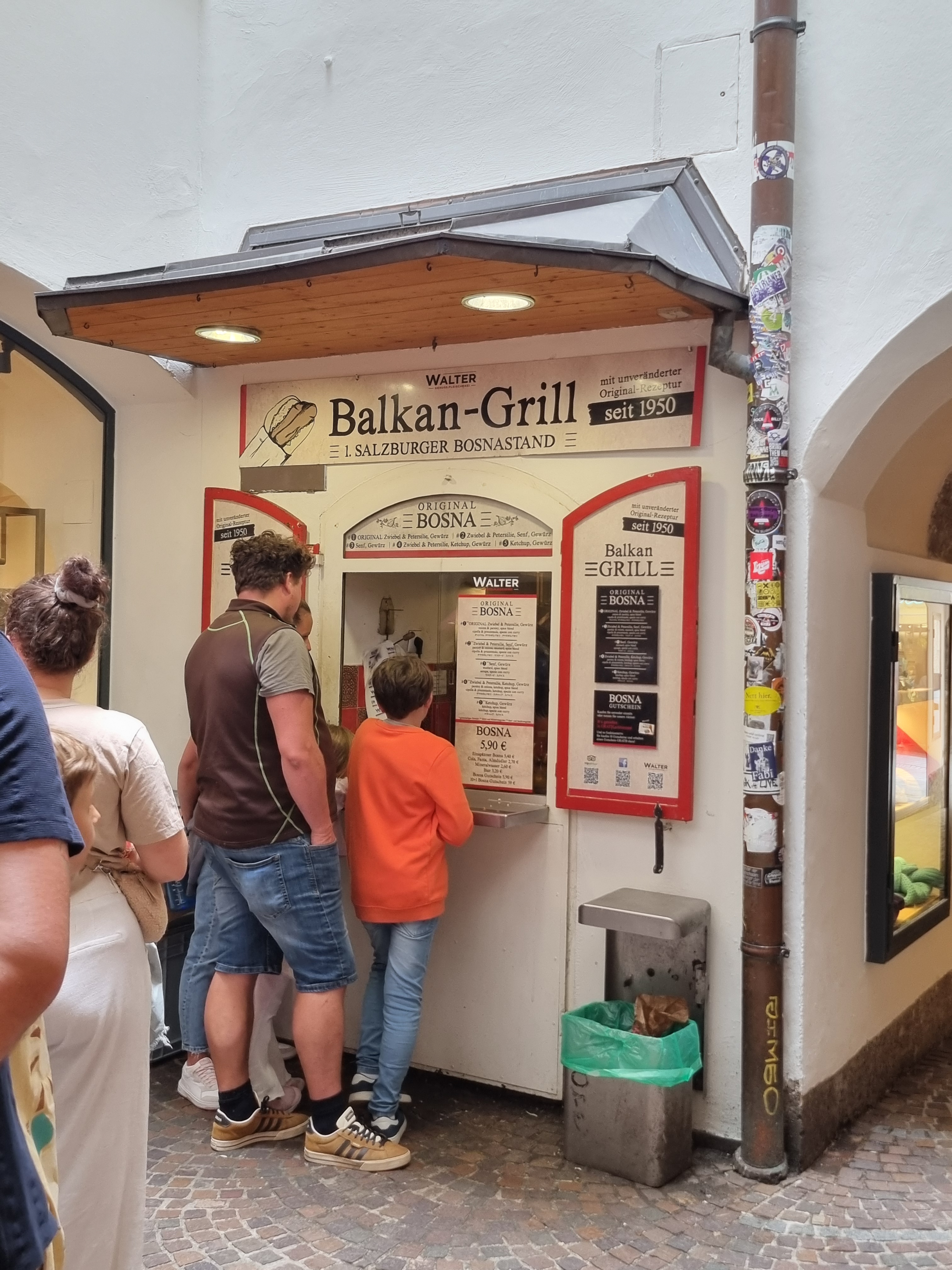
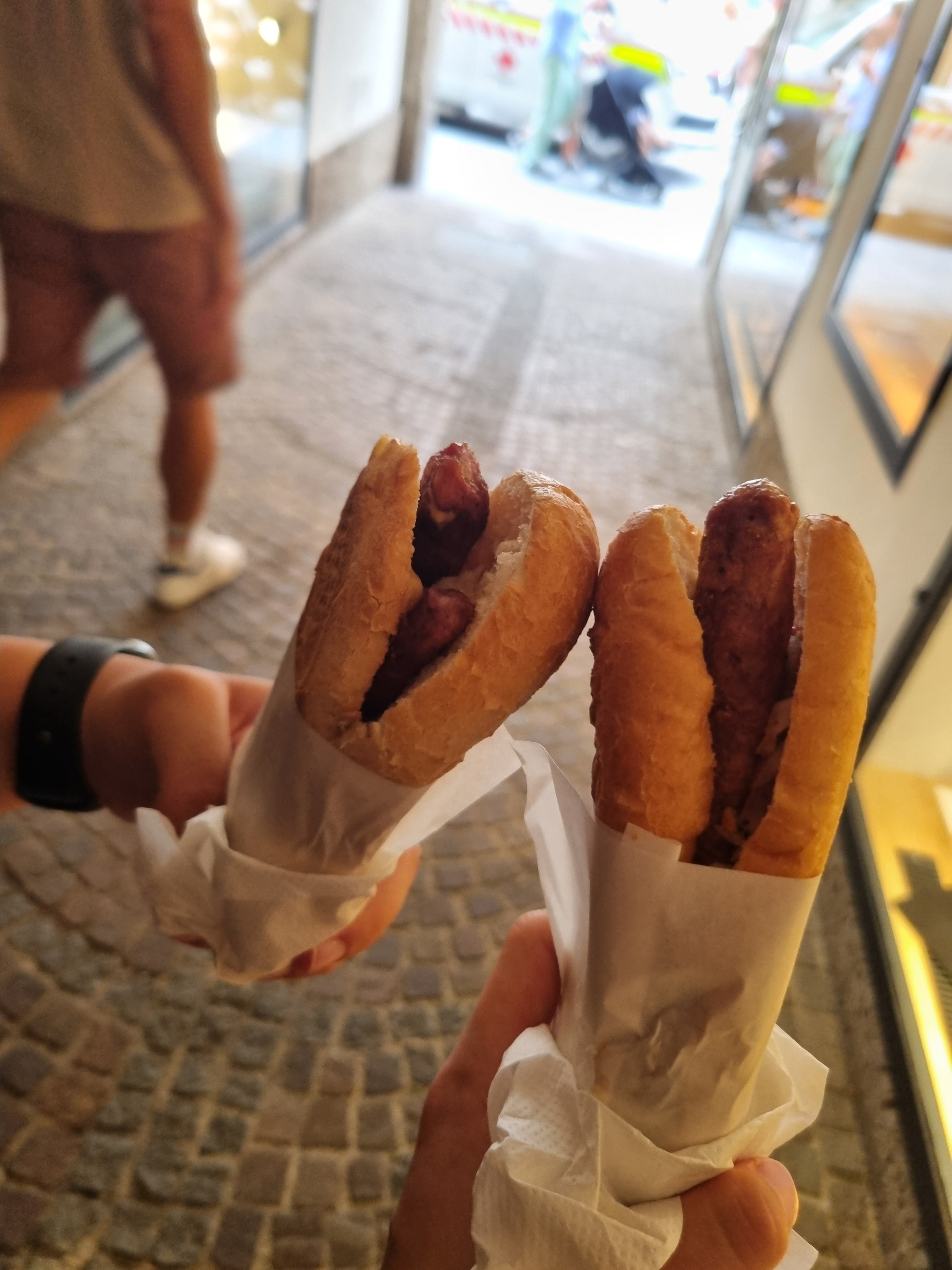
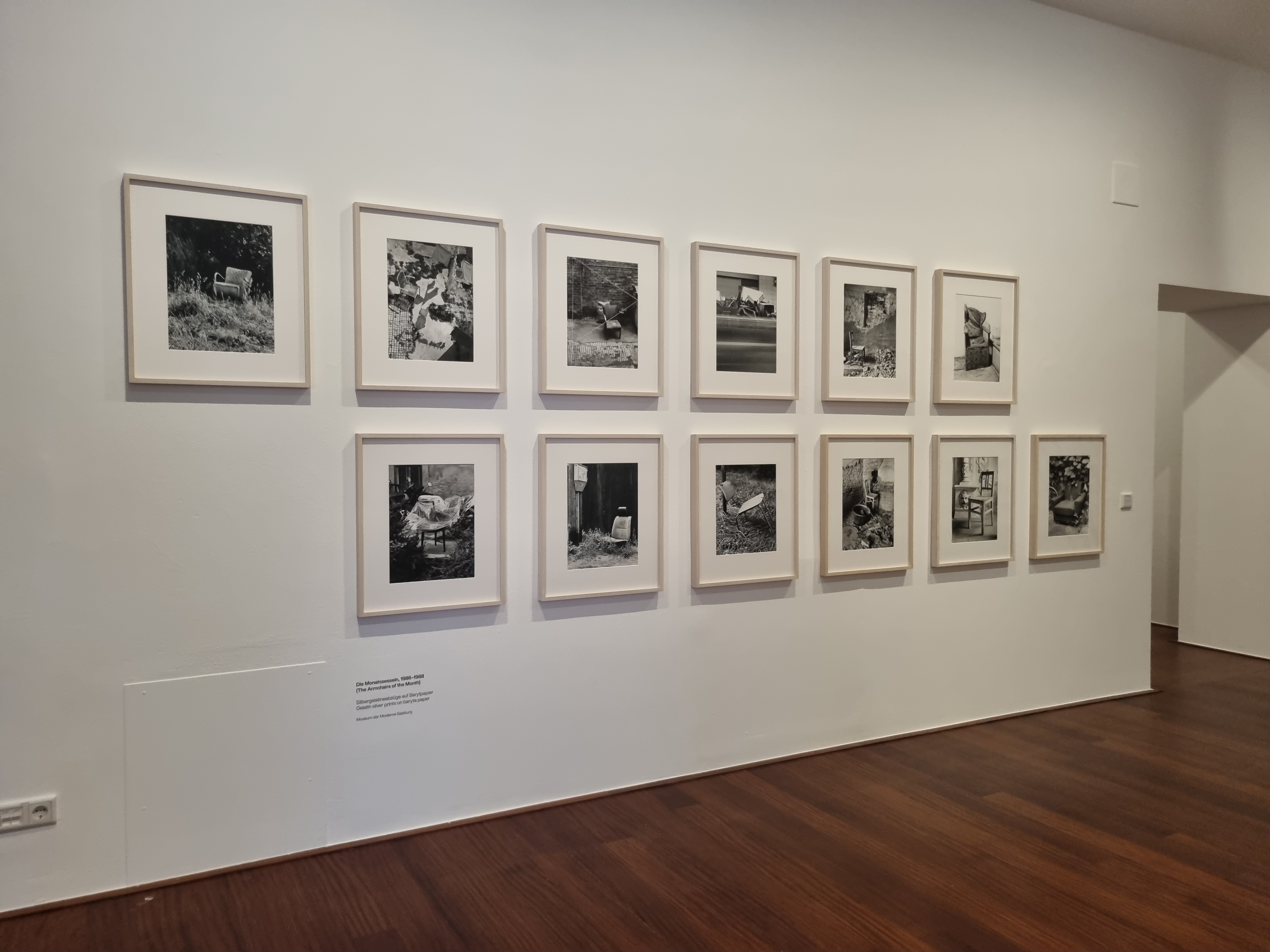
After being on the boat for over an hour, we felt quite hungry, so we decided to visit the best bosna imbiss in town at Balkan Grill Walter before heading to the Museum der Moderne as our last stop. The Museum der Moderne offers a diverse collection of contemporary artworks. The entry is included in the Salzburg Card, which drew us here. Even though it’s not our usual museum preference, if modern art piques your interest, this museum is probably worth a visit!
Summary of activities
- Castle Mirabell
- Hohensalzburg Fortress
- Getreidegasse (most famous street in Salzburg)
- Stift Nonnberg
- DomQuartier
- Salzburg Dome
- Boat Ride on Salzach
- Mozart Geburtshaus (Birth House of Mozart)
- Mozart Wohnaus (Residence of Mozart)
- Residenzplatz
- Erzabtei/Stift St. Peter Salzbur (monastery) and Friedhof St.Peter (cemetry)
- Day Trip to Hallstatt
- “Sound of Music” Tour
- Weihnachtsmuseum (Christmas museum)
- Haus der Natur
- Museum der Moderne Salzburg (Modern Museum)
- Zoo Salzburg
Where to eat
- Zum Mohren – traditional austrian cuisine with indian and italian options (unpaid ad)
- Café Mozart – cuisine and cafe/cake (unpaid ad)
- Balkan Grill Walter – apparently the best Bosna in Salzburg (unpaid ad)
Booking Checklist
Travel Insurance
I highly recommend getting travel medical insurance while you’re traveling. Hopefully, you’ll never need it, but it’s always better to be safe than sorry. SafetyWing offers two flexible plans tailored to your travel needs. Whether you’re a short-term adventurer or a long-term expat, you’ll have reliable coverage anywhere in the world.
SafetyWing is especially great for remote workers and digital nomads, offering continuous global coverage even if you’re hopping between countries. Of course, it’s also a solid option for frequent travelers or those constantly on the go. But if you’re only traveling occasionally or just for a short holiday now and then, there might be better-suited alternatives.
Accommodations
I usually rely on Booking.com for hotels and Airbnb for vacation rentals. They both have the largest selection and tend to offer the most reliable prices.
Data for your Trip
I use Saily for international cell data. They offer a variety of eSIM options depending on the country and their eSIMs are easy to install, activate instantly upon arrival, and let you skip buying local SIM cards or paying expensive roaming fees.
Tours and Experiences
I always use GetYourGuide to find the best tours and experiences in a city or country. It’s my go-to platform for planning activities, and I’ve always been very satisfied with the experiences I booked through them.
Rental Car
I’ve rented at least six cars and always booked them through check24 (ad), which I can highly recommend. The website offers good deals, the insurance is quite cheap and provides good coverage, and the customer service is very efficient and accommodating. However, Check24 currently only offers its website in German. So it’s mandatory to speak the language.
Other Austria Blogs
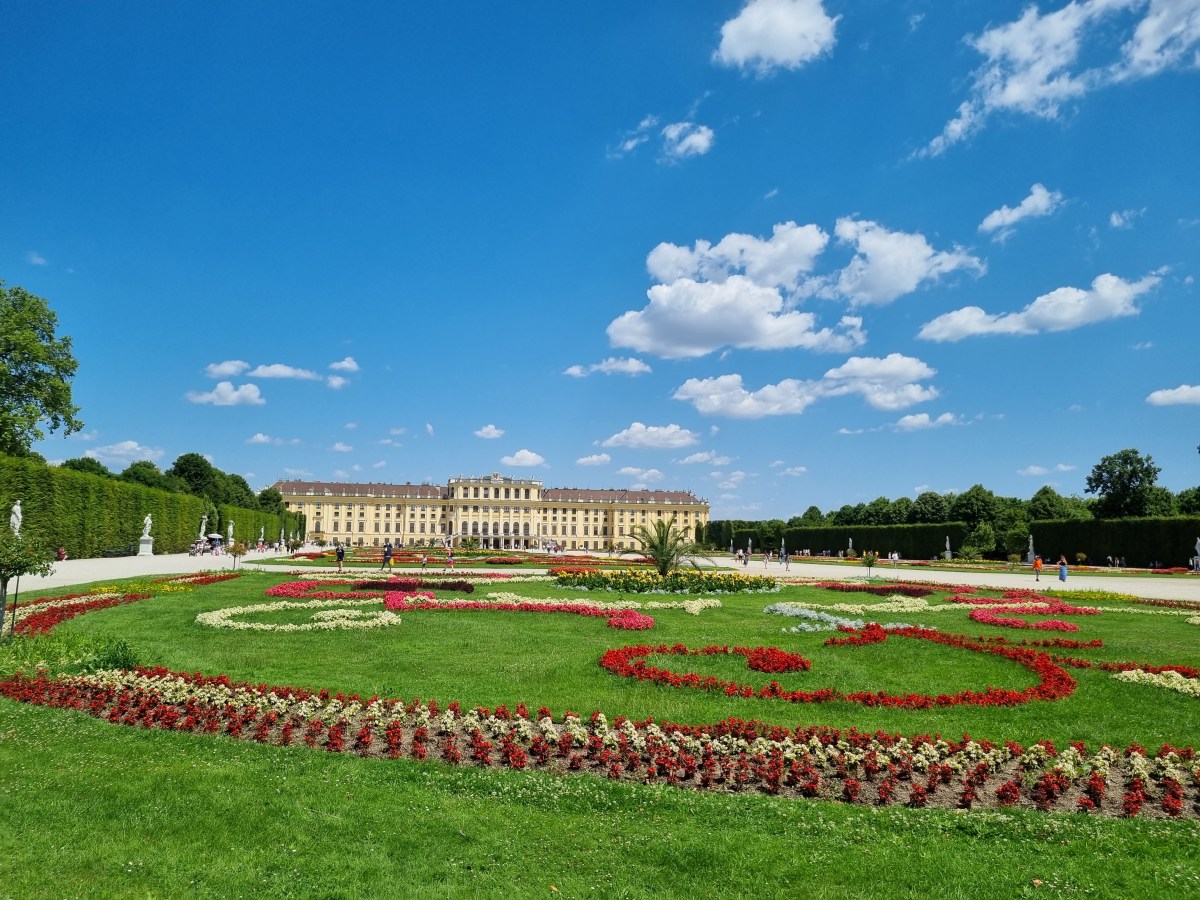
Vienna Travel Guide: A Local’s 5-Day Itinerary
Are you ready to immerse yourself in a symphony of architectural wonders, where Mozart’s melodies still echo, the scent of Schnitzel lingers in the air, and the famous Fiaker trot through the cobblestone streets? Some of you might have guessed right; I’m talking about Vienna, the capital of Austria. I realized that I can’t have…

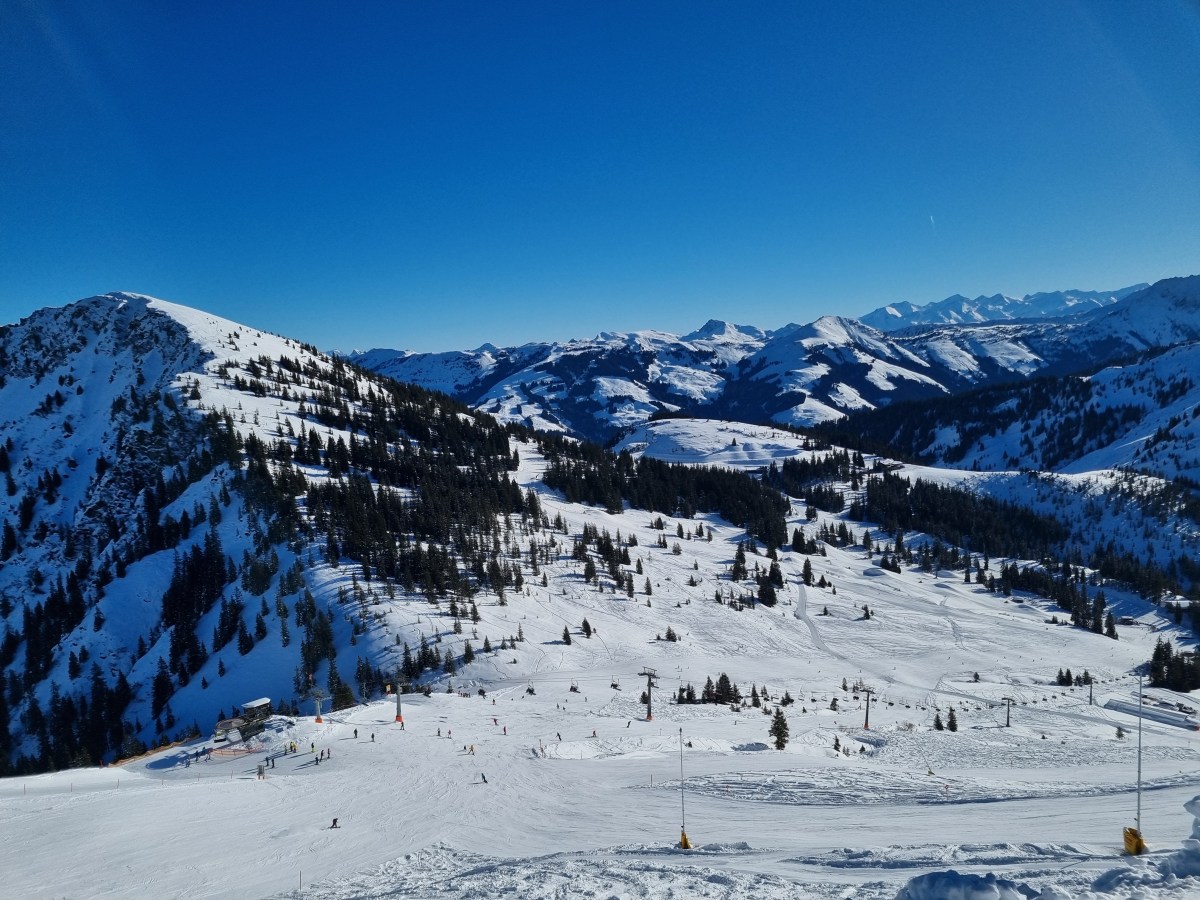
Winter Magic in Westendorf: More Than Just Skiing!
Dreaming of the perfect ski getaway? Westendorf, nestled in the heart of Tirol and just a short drive from the legendary Kitzbühel, offers breathtaking slopes, fresh powder, and unforgettable alpine charm. But this winter wonderland has so much more to offer! From cozy mountain huts and scenic winter hikes to snowshoe adventures and tandem flights…





 Michelle Cacija
Leave a reply to Anonymous Cancel reply