
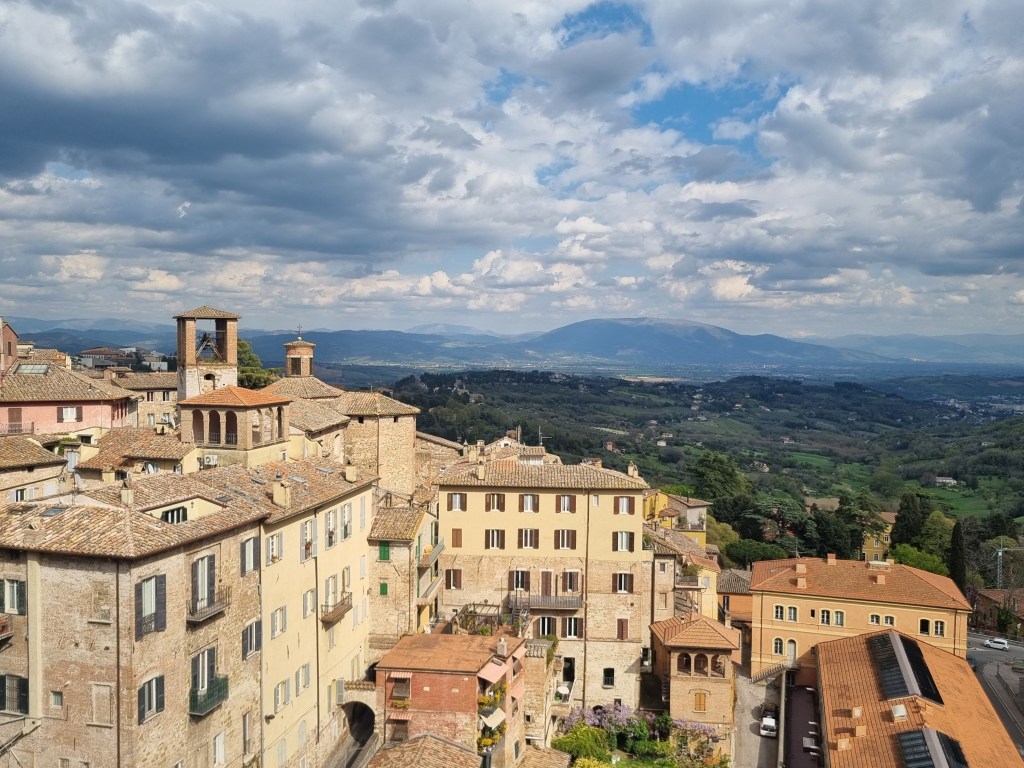
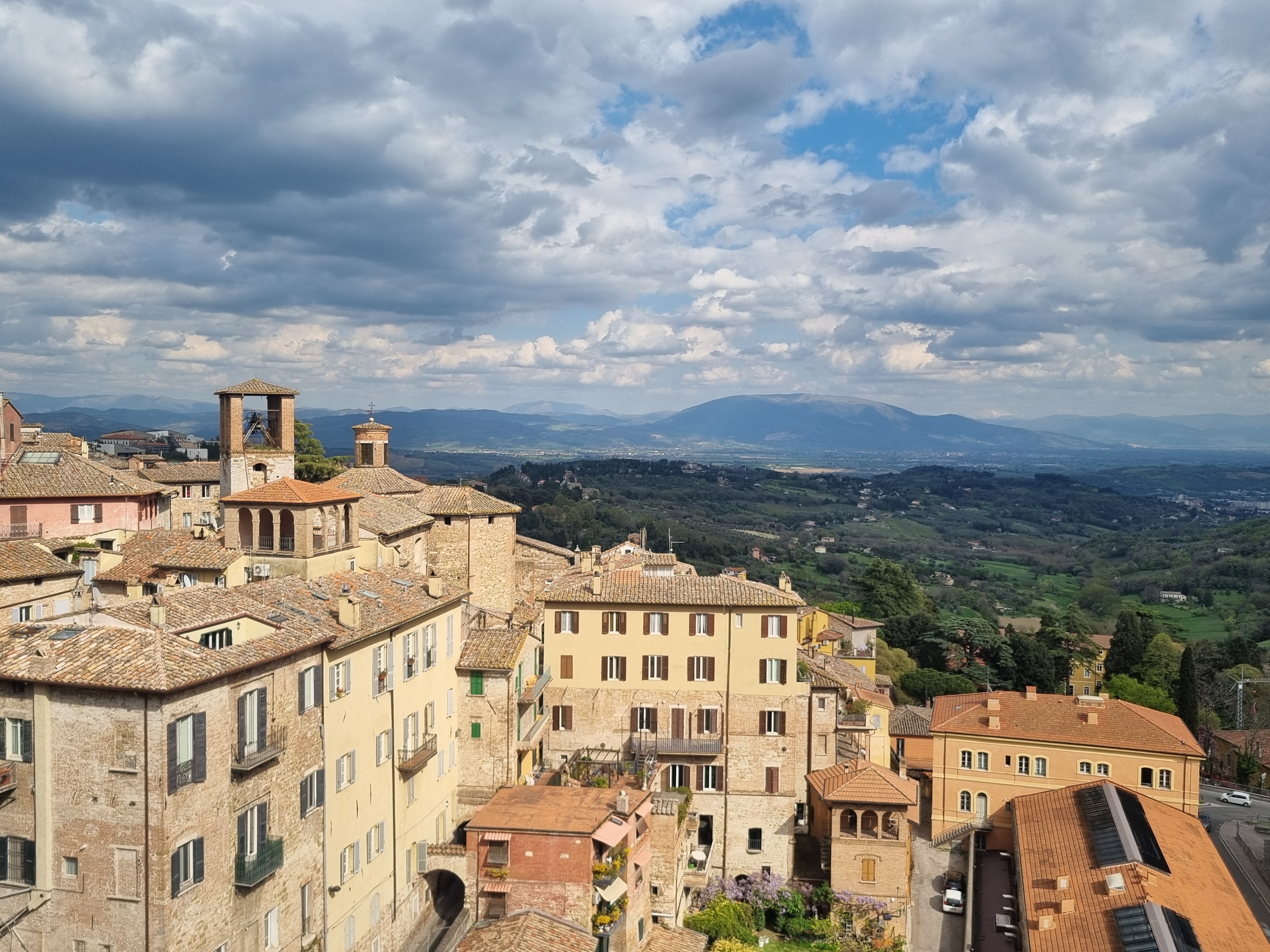
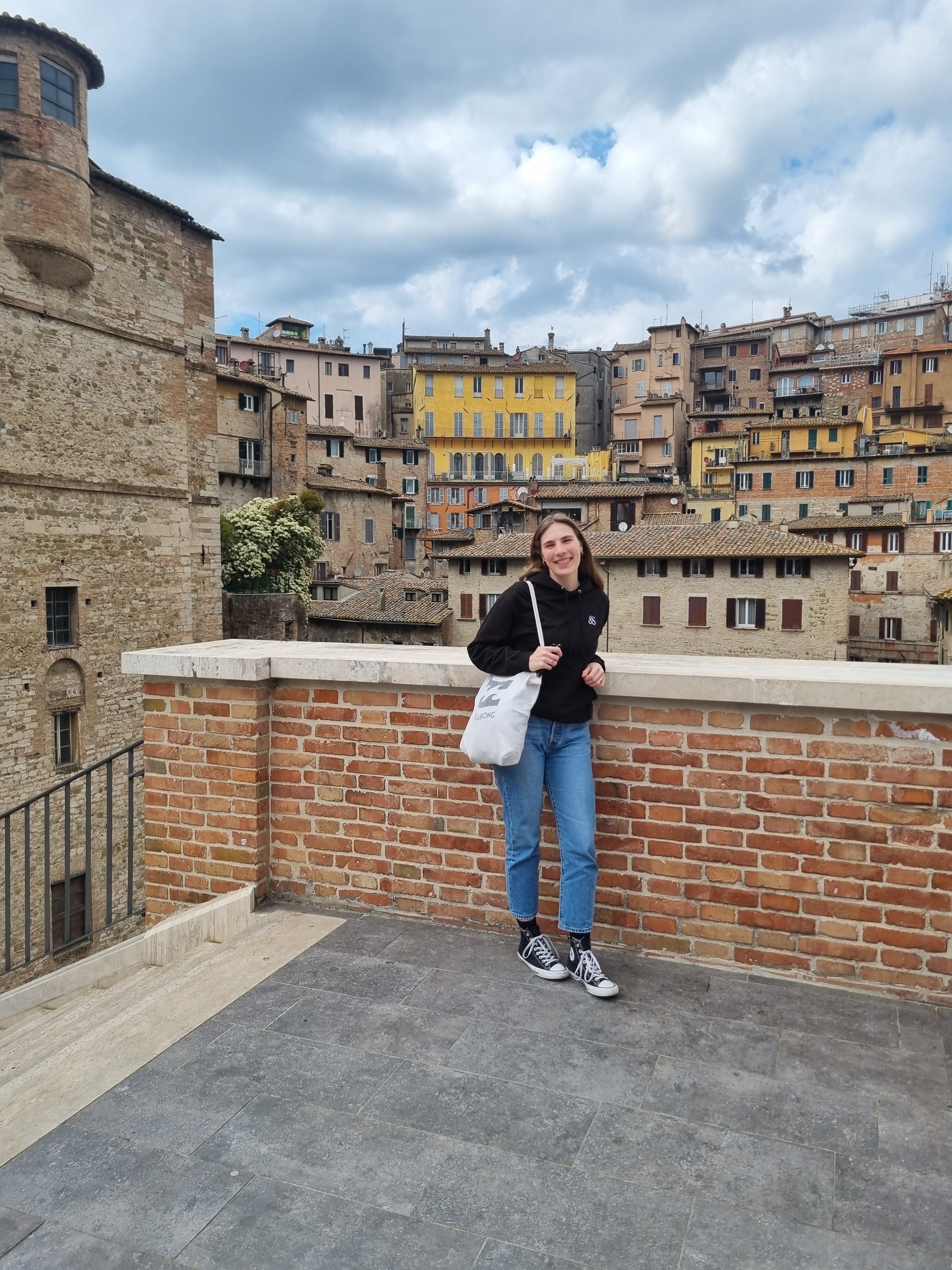
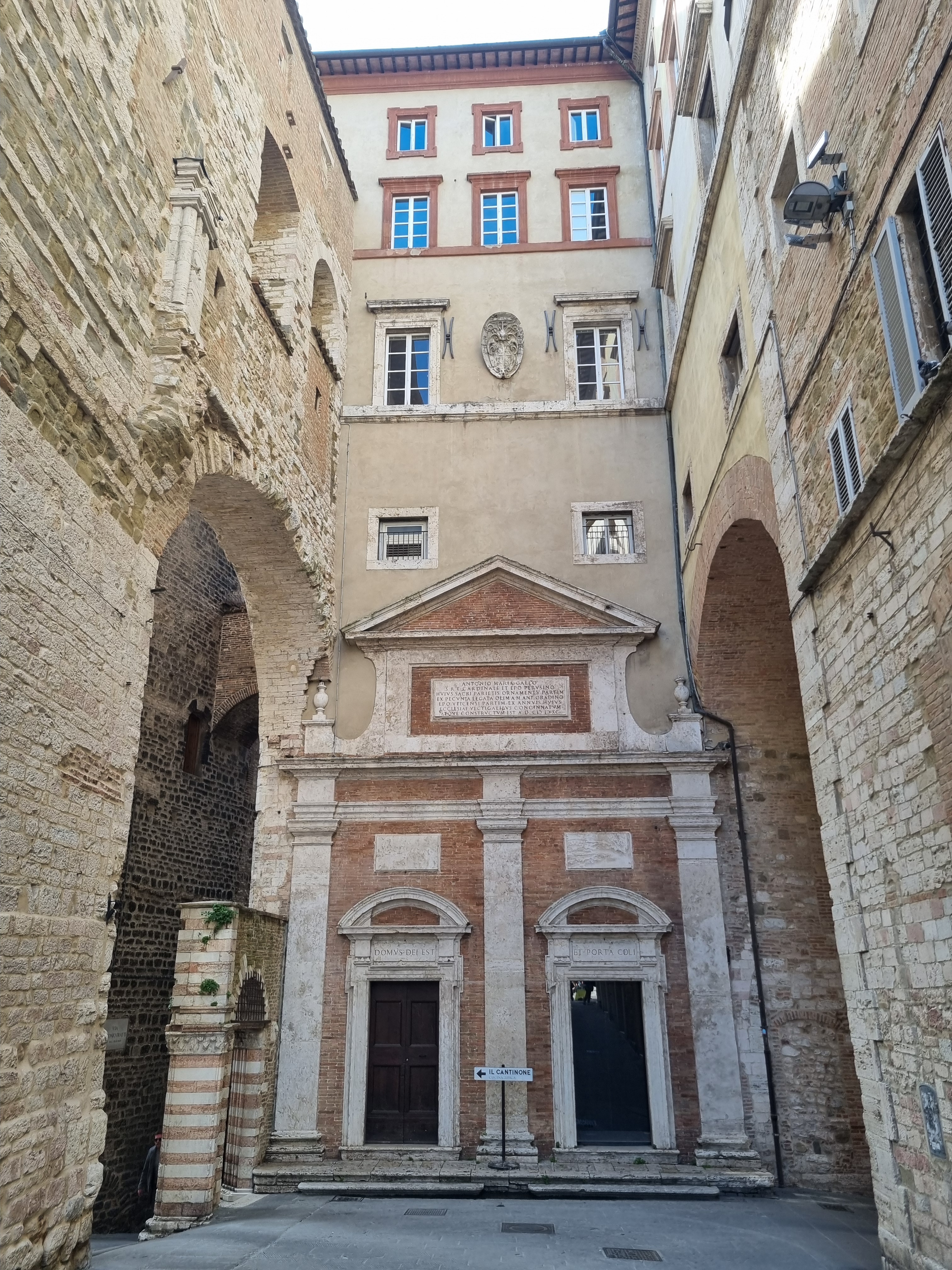
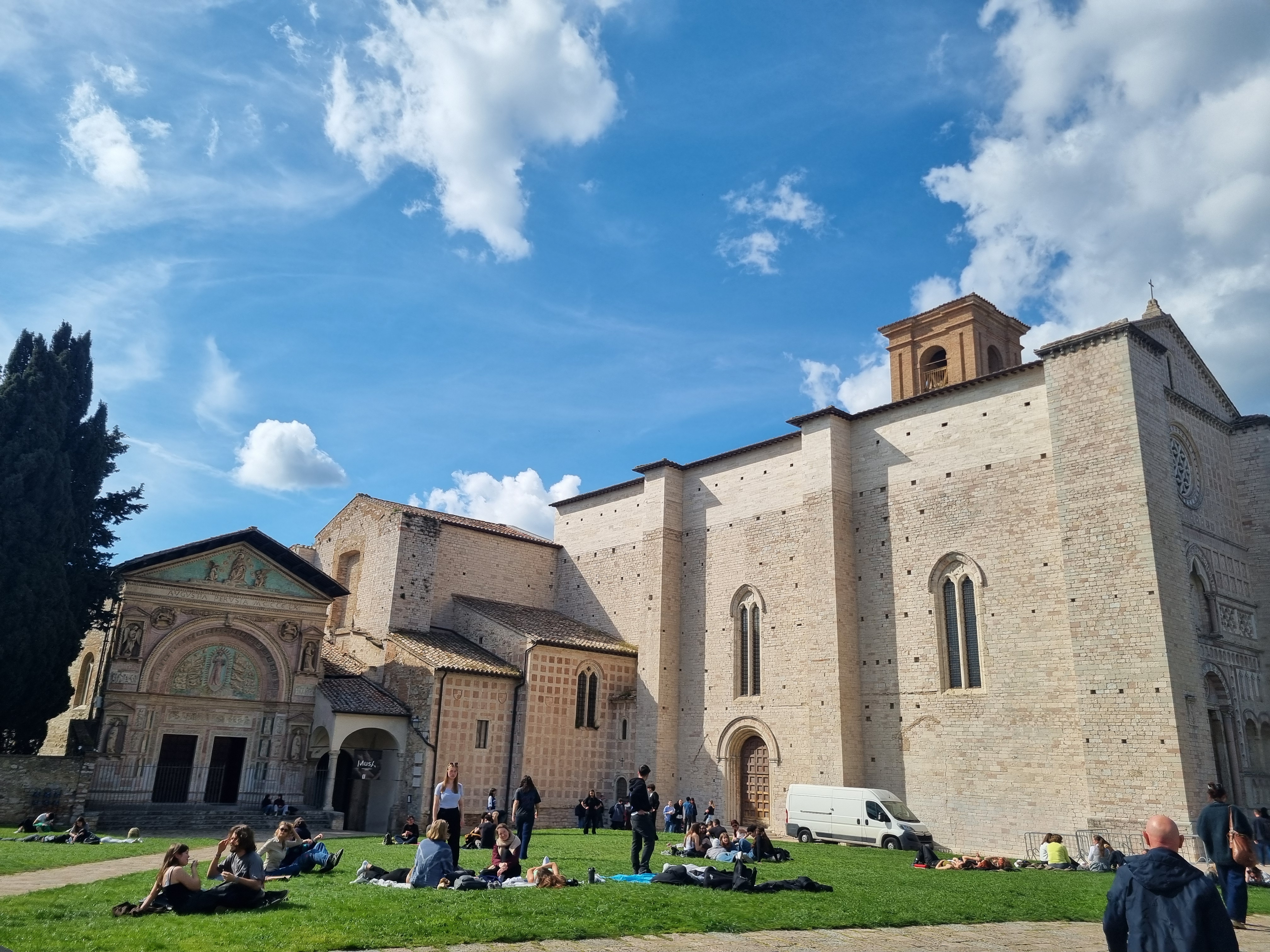
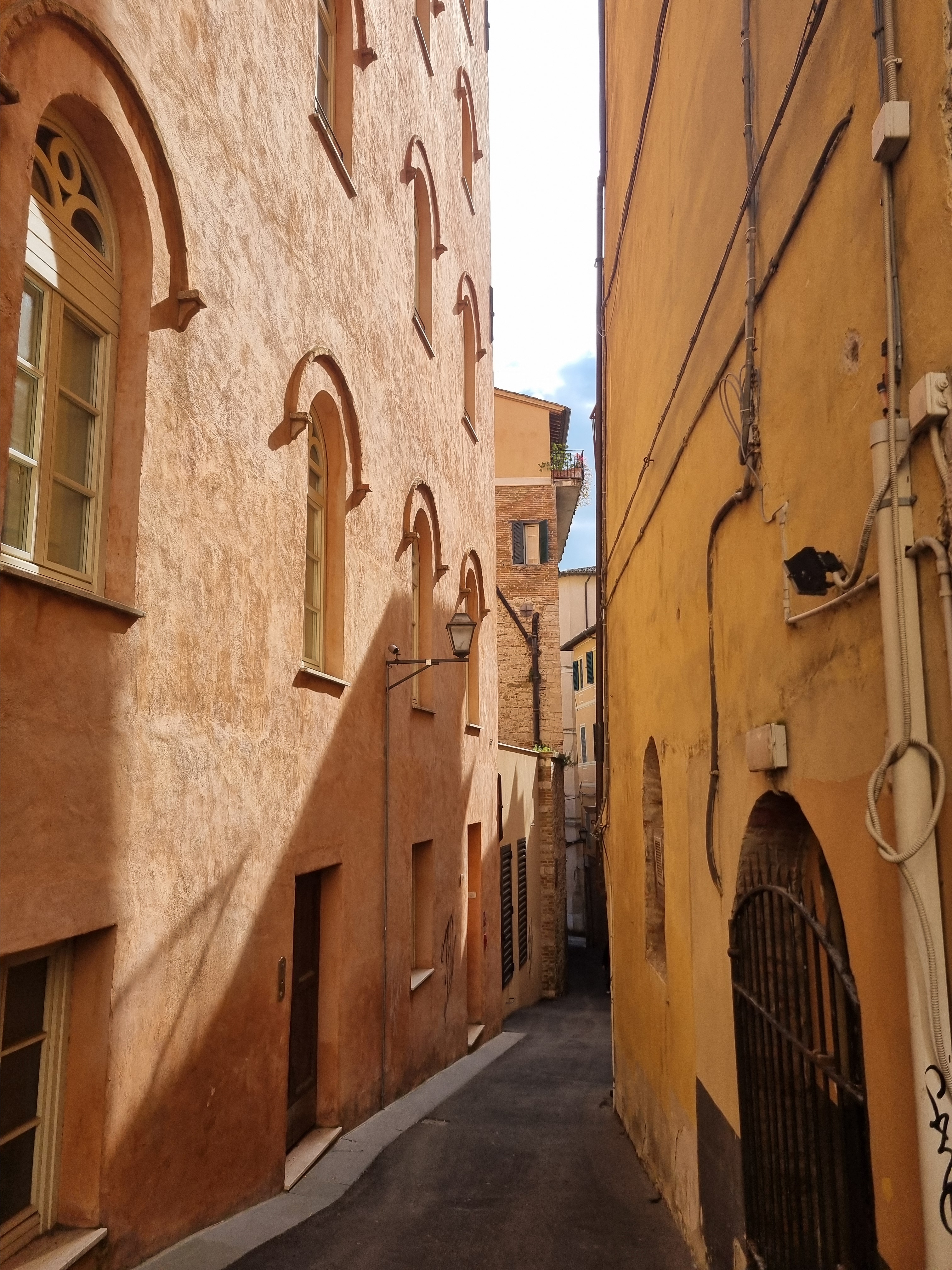
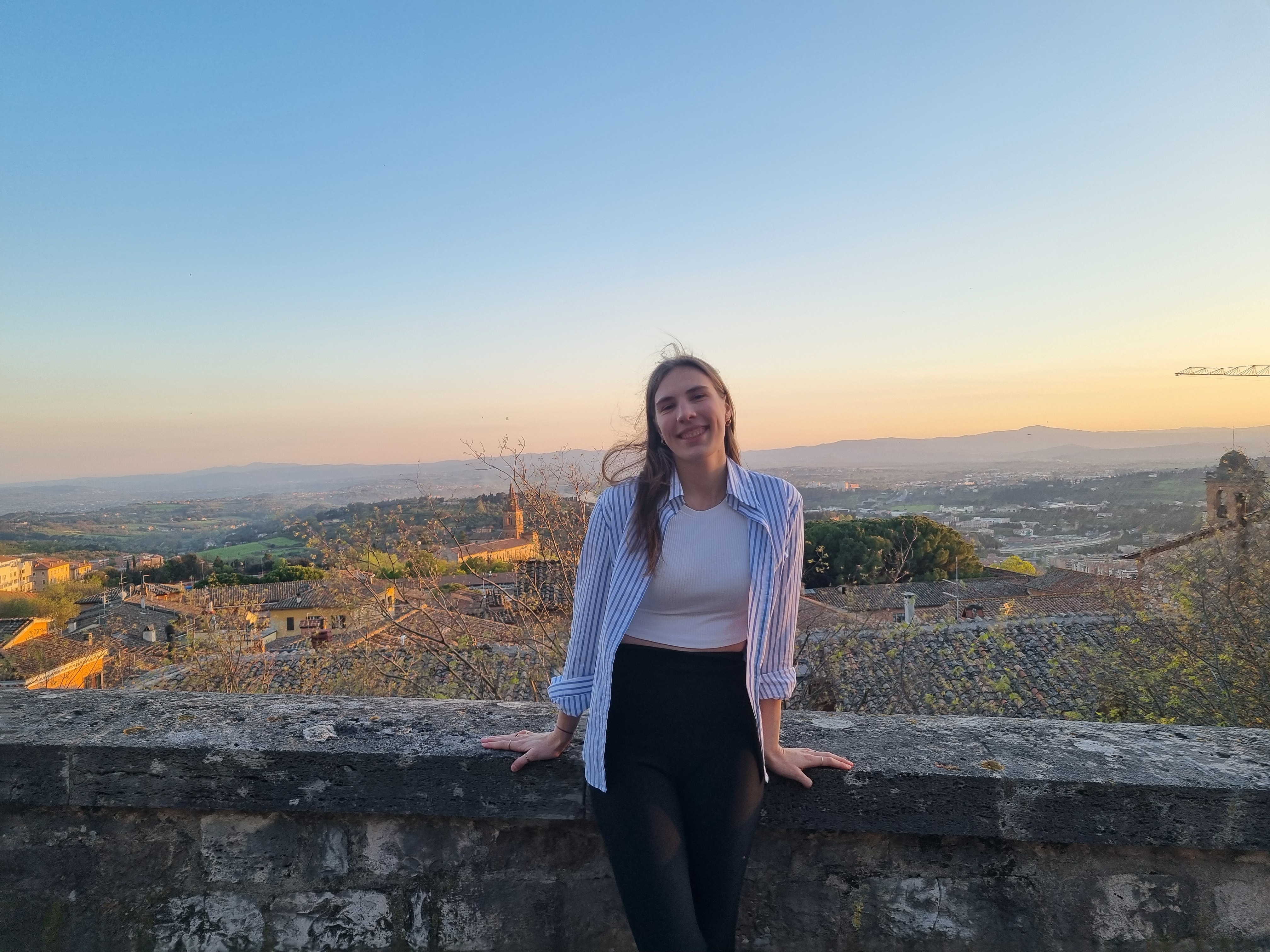
Get lost in Perugia’s labyrinth of medieval alleyways, where ancient theaters seem to murmur forgotten tales and golden sunlight spills across timeworn cobblestones. In the air lingers the irresistible scent of freshly baked pizza and pasta sauce, calling you to pause and savor. Perugia isn’t just a city, i’s basically a living stage. From the buzzing International Journalism Festival to the mouthwatering Eurochocolate celebration, there’s always something stirring in its timeless heart. And then, just when you think it can’t get any better, the views rolling Umbrian hills stretching endlessly under a golden sky will steal your breath away.
As always, I want to remind you, that this blog isn’t perfect because everyone travels differently, and all trips involve changes of plans. I want to let you know that everything on this website has been experienced, photographed, and written by me. Since I finance all of my travel expenses on my own, the stories and opinions given are truly my own. If you’re interested in seeing more travel pictures or videos, feel free to check out my Instagram @michellecacija or my Tik Tok @michellecacija.
Index
- The Basics about Perugia
- Things you need to be aware of
- Little Guide
- Photo gallery
- Where to eat
- Booking Checklist
- My articles
- Other Italy Blogs
The Basics about Perugia
When to visit
Perugia is charming year-round, but spring (April to June) and early autumn (September to October) are ideal. The weather is pleasantly warm, typically ranging from 18–25°C (64–77°F), and the city comes alive with festivals and open-air events. Just keep in mind that sudden rain showers are not uncommon, Perugia is known for them, so it’s always wise to carry an umbrella or rain jacket. Summers can be hotter, often exceeding 30°C (86°F), while winters are mild but tend to be more rainy and windy.
Time Period
How long you want to spend in Perugia really depends on the reason for your visit. If you’re just there to explore the city itself, one to two days are definitely enough to see the main sights. But if you’re coming for a festival or a special event like the International Journalism Festival or the Eurochocolate Celebration you’ll probably want to plan for a few extra days to fully enjoy everything.
Getting there
While Perugia does have a small airport, most travelers arrive via Rome or Florence. From either city, you can take a direct bus, train or shuttle. The journey from Rome takes about 1.5 hours, and from Florence around 2 hours, both are scenic rides through the green Umbrian countryside.
Where to stay
If you stay outside Perugia’s city center, it’s definitely more budget-friendly than staying right in the heart of town. However, keep in mind that you’ll either have to walk uphill to reach the city center or take the bus. Walking can take around 30 minutes, depending on where your accommodation is, while the bus ride usually takes about 10–15 minutes again, depending on your exact location.
Getting around
In the historic center, walking is pretty much the only way to explore. To reach surrounding areas or travel within the city, the local bus system is reliable and easy to use. Tickets cost €1.50 if bought in advance (at tobacco shops or kiosks) and €2.00 if purchased directly on the bus.
What to pack
Perugia is known for sudden rain showers, so come prepared. When I visited, I was lucky with dry weather but the city has a reputation for rainy spells. A umbrella, rain jacket, and waterproof shoes are smart additions to your packing list, better safe than soggy! Keep in mind that the weather can also vary depending on the season: spring and autumn are generally mild, but evenings can be chilly and windy, especially in the hilltop city center. Comfortable walking shoes are a must, Perugia’s cobblestone streets and steep paths are beautiful, but they’ll definitely give your legs a workout.
Additionaly, consider bringing your own little medication bag, including Band-Aids, pain relief tablets, sleeping tablets or spray, bug spray, aftersun, etc. You never know what you might need it for, and you might feel more comfortable using medication from home rather than in a country where you don’t know the ingredients and languages. If you’re coming from outside Europe, don’t forget to bring a Type C power adapter.
Cost of traveling
Compared to many other Italian cities, Perugia is definitely affordable. Accommodation, food, and public transport are all reasonably priced, making it a great choice for travelers who want charm and culture without breaking the bank. Of course, staying right in the historic city center will cost a bit more than accommodations just outside of it but even then, options are often budget-friendly. Eating out can also be very affordable, depending on the restaurant, whether you’re grabbing a slice of pizza on the go or sitting down for a cozy pasta dinner.
Things you need to be aware of
On Sundays, shops and supermarkets are usually closed, while restaurants, cafes, and attractions like museums or churches remain open. There are a few exceptions, though, and you might find a few supermarkets that are open.
Regarding water in Italy, you can safely drink tap water as it’s clean and meets the World Health Organization standards.
Toilet situation. In Perugia specifically, I didn’t really come across any public toilets, so planning ahead is even more important there. Always use the restroom before leaving your accommondation, a restaurant, or a café.
Tipping. In Italy, tipping isn’t as common or expected as it is in some other countries. However, it’s appreciated if you receive exeptional service. It’s common to round up the bill or to leave a tip of around 5-10% in restaurants and cafes.
The currency in Italy is the Euro. While a few years ago, Italy was still very cash-oriented, they now accept cards mostly everywhere. It’s still advisable, though, to bring some cash with you.
Little Guide
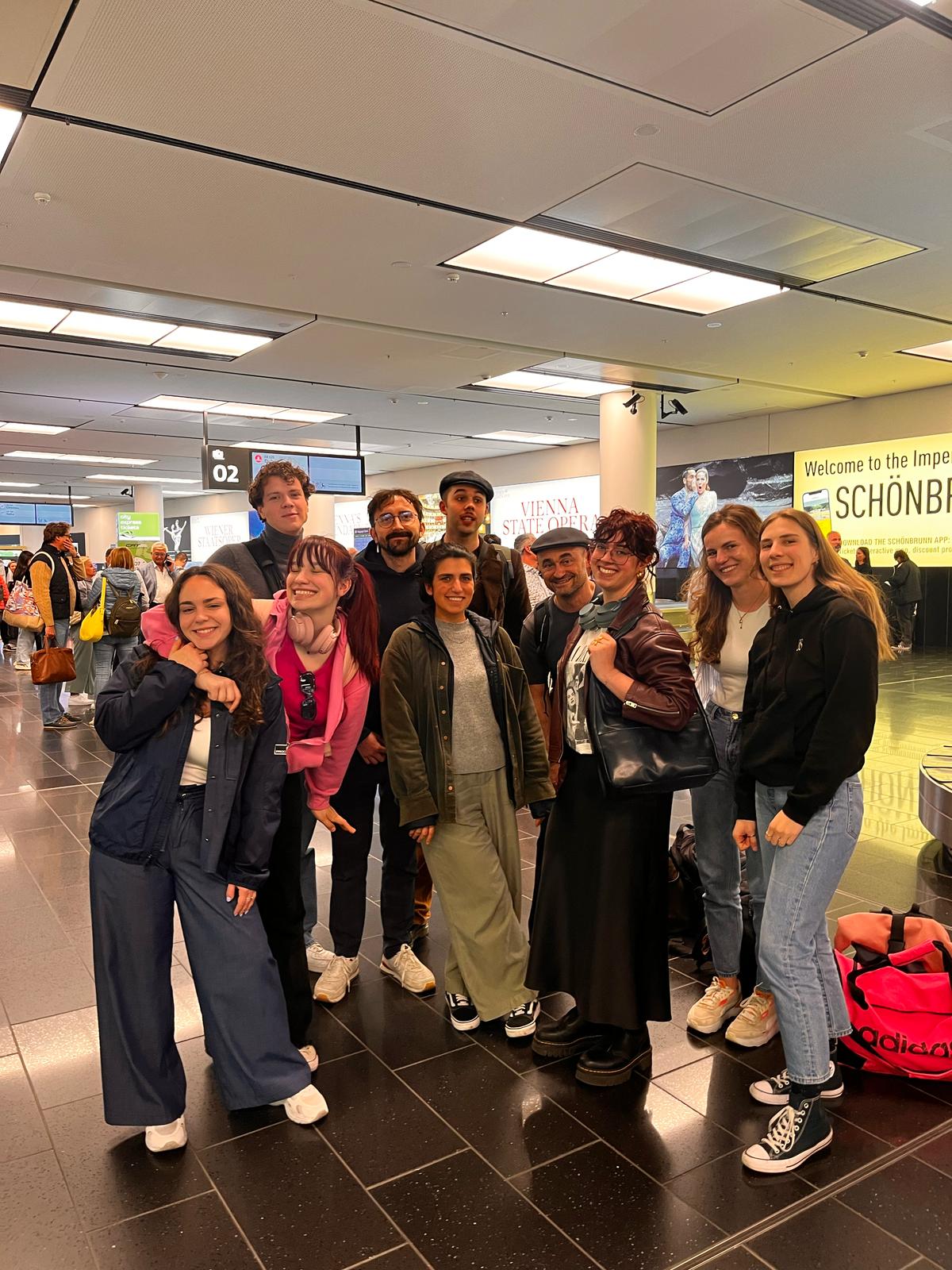
In mid-April, eight of my journalism student colleagues and I had the amazing opportunity for a three-day adventure in beautiful Perugia to join the International Journalism Festival. Over the three days, we dived into interesting panels, insightful discussions, and explored the future of journalism. We also had the chance to write articles sharing our experiences and diving into topics we’re passionate about, which I’ll link at the end of this blog. But amidst all the lectures and interviews, there was also some time to wander through Perugia’s enchanting old town and indulge in the irresistible allure of Italian cuisine.
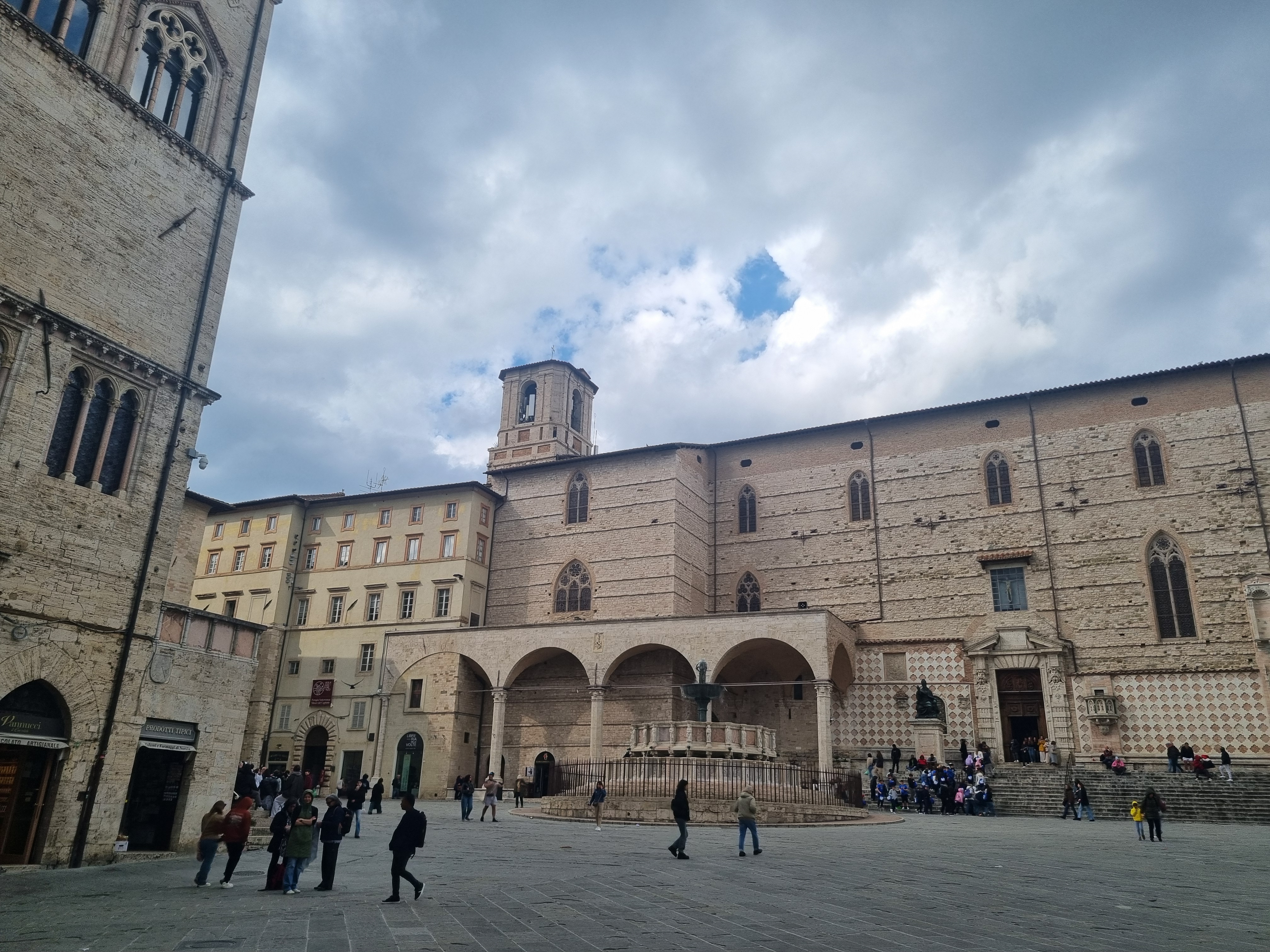
One of the most striking spots in the city is undoubtedly Piazza IV Novembre, the theatrical main square of Perugia. It’s a place where ancient Roman and Etruscan civilizations once intersected, and today, it remains a bustling meeting point for locals and visitors alike. At the heart of the piazza stands the magnificent Fontana Maggiore, a Romanesque masterpiece crafted from pink-and-white marble. The fountain is adorned with intricate carvings, everything from zodiac signs to a fierce griffin, the city’s proud symbol. Just across from the fountain, grand steps lead up to the Gothic Cathedral of San Lorenzo.
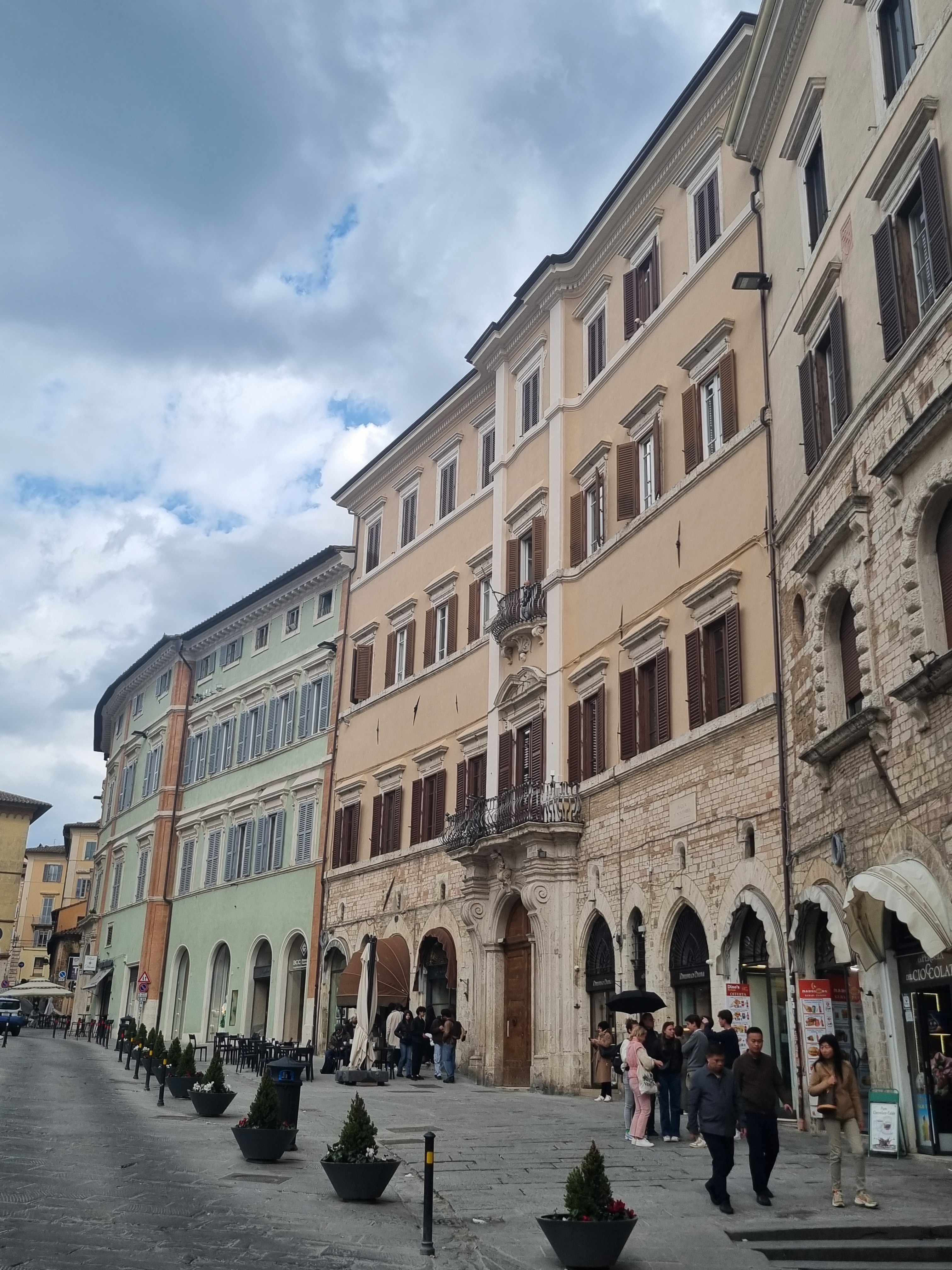
From the piazza, the vibrant Corso Vannucci stretches downhill, filled with life and energy. It’s Perugia’s main street, lined with cafés, restaurants, and shops. On the right, the Palazzo dei Priori towers over the street with its pointed Gothic spires. Once the seat of the city’s government, it now houses the National Gallery of Umbria.
Another thing you shouldn’t miss in Perugia are its mysterious underground tunnels. A labyrinth of cobbled alleys and vaulted staircases, these tunnels are all that remains of the once mighty Rocca Paolina fortress. Today, these arched foundations form part of a fascinating route that takes you from Piazza Partigiani deep into the heart of the city.
Riding the numerous escalators (scale mobili) that cut through the stone walls adds a surreal, almost otherworldly twist to the experience. Whether you visit during the day or at night, there’s something strangely eerie about the place. The quiet, shadowy corridors feel like they’re suspended in time, and you can’t help but imagine the secrets these ancient tunnels might hold.
Photo gallery
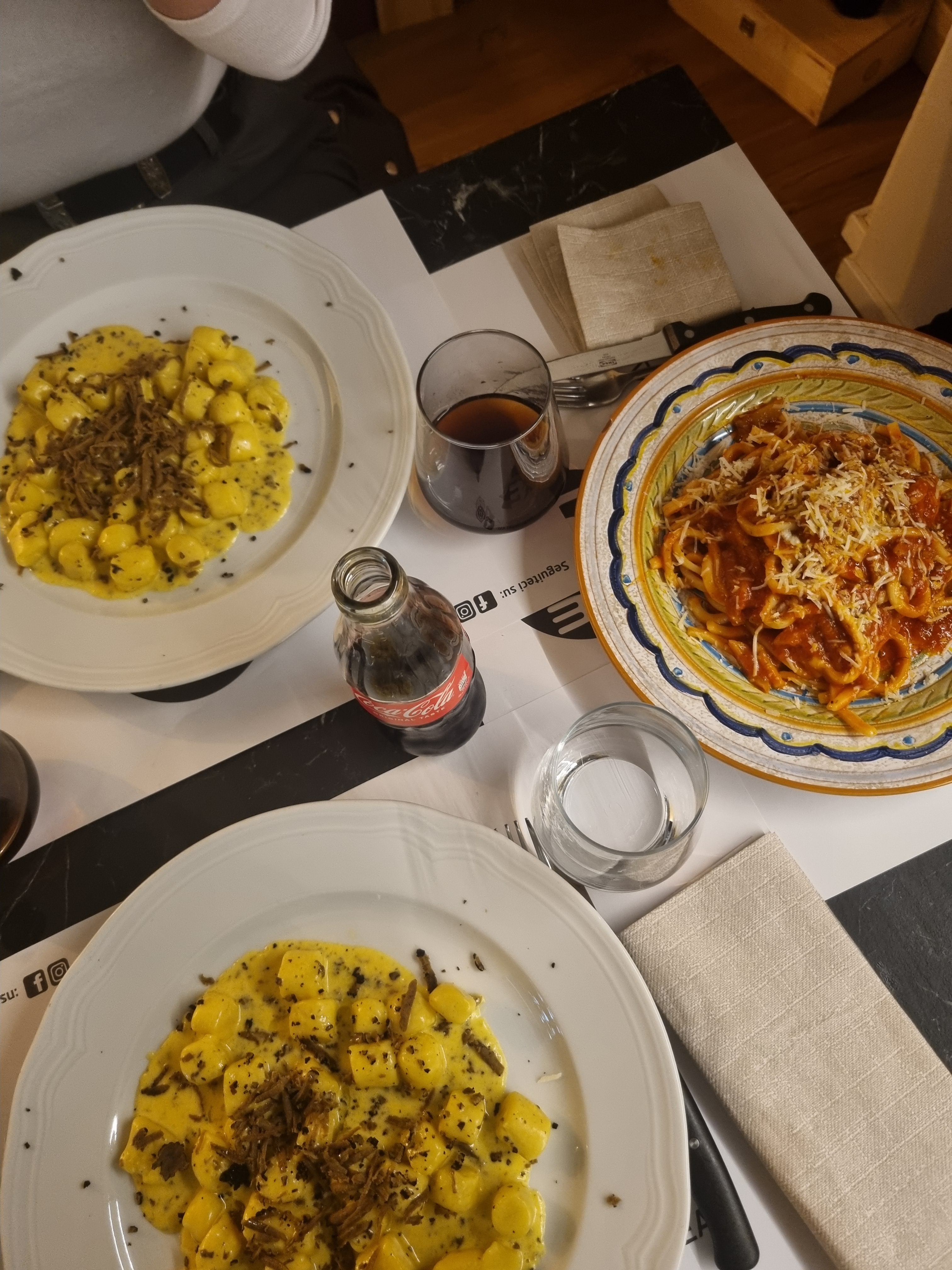
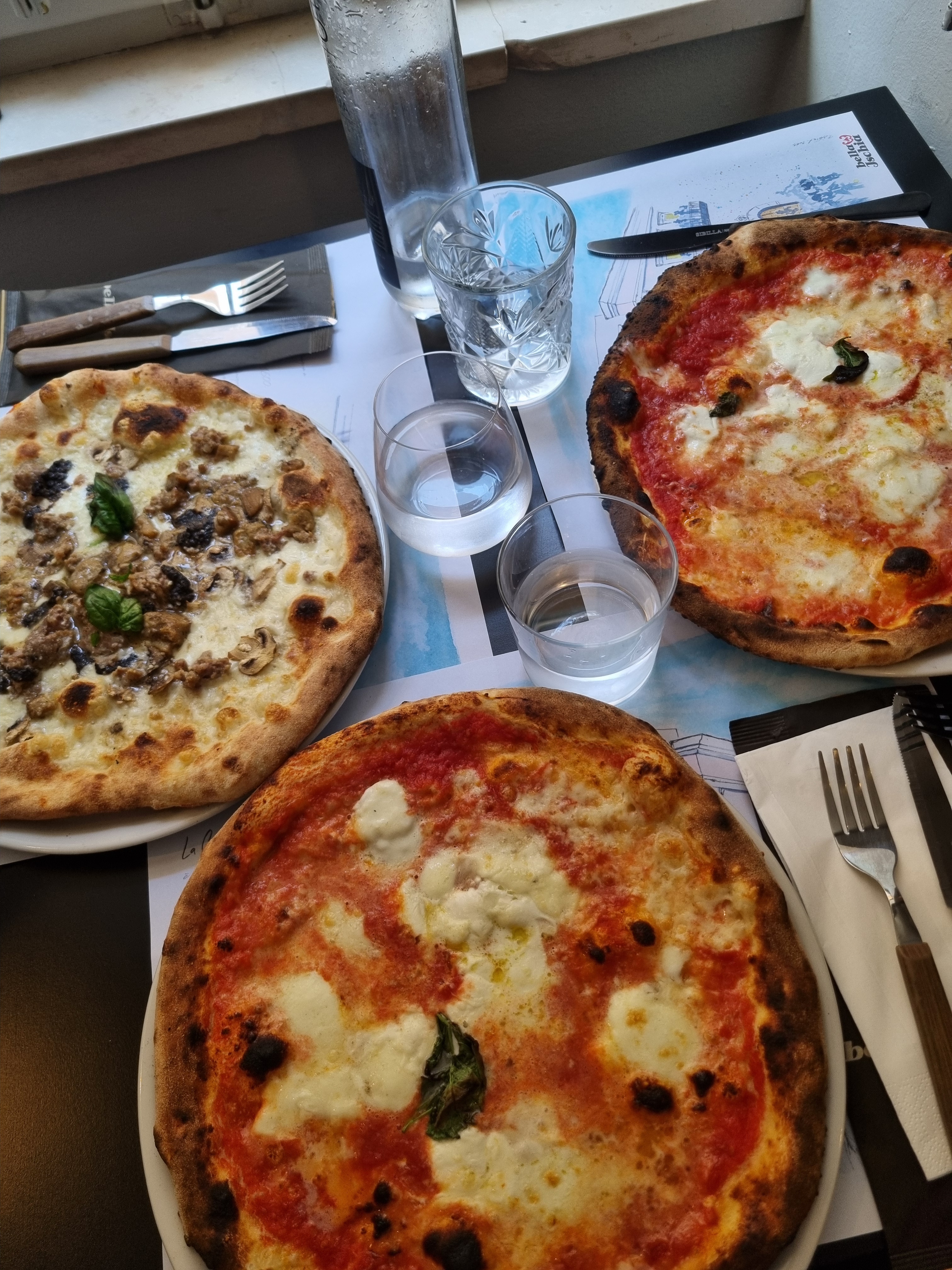
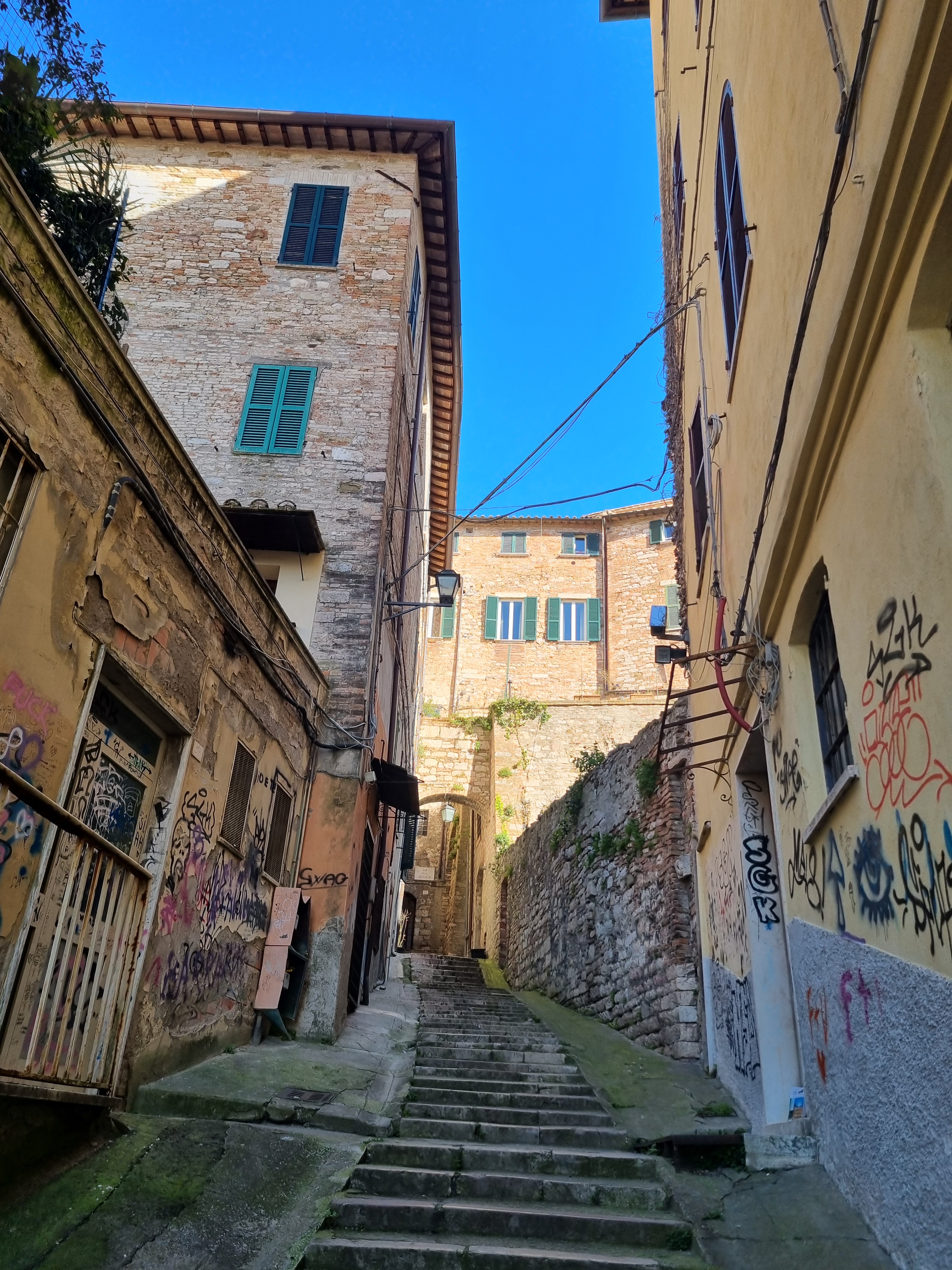
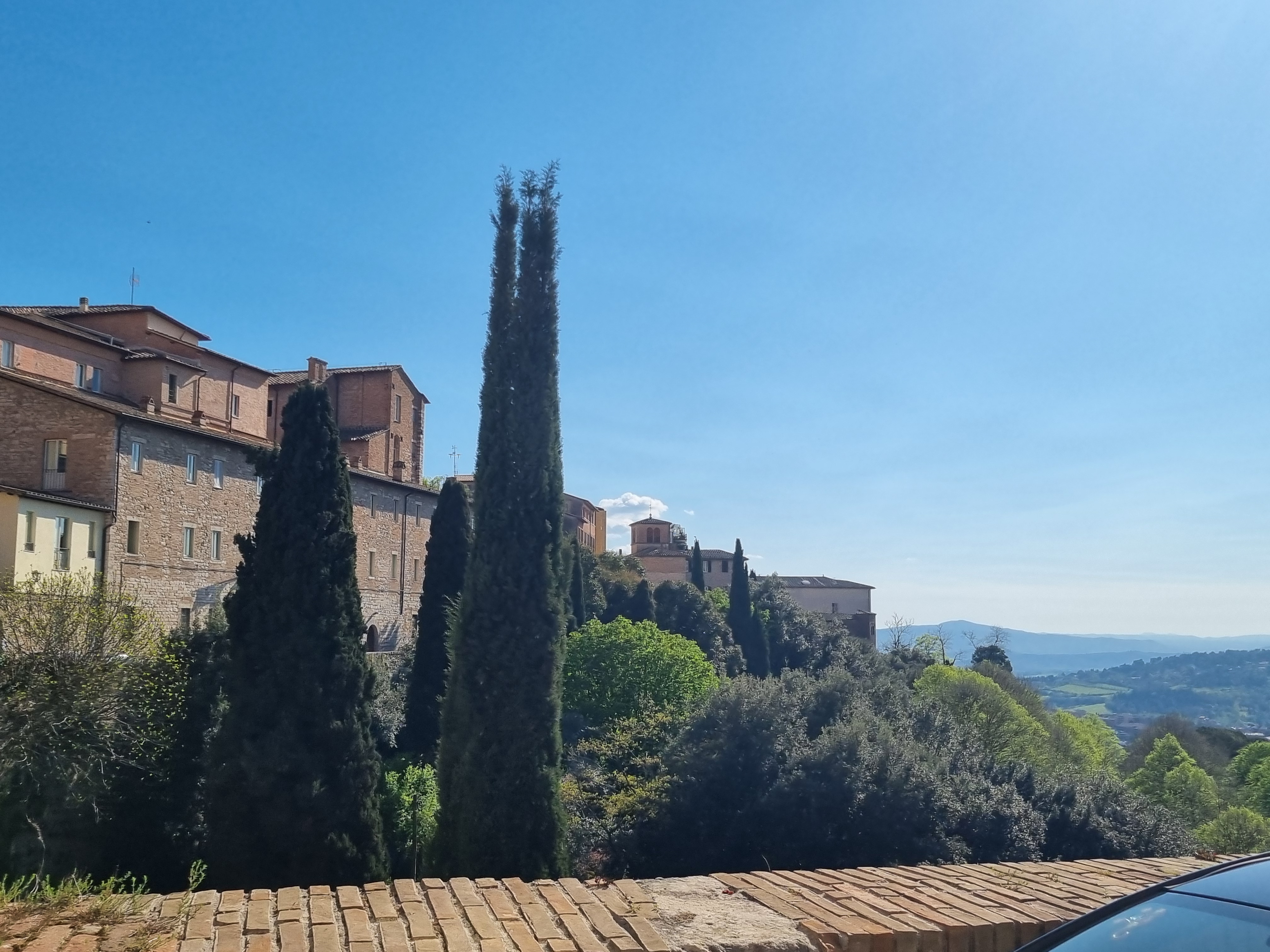

Where to eat
- Caffé Blu (unpaid ad)
- Gelateria Veneta (unpaid ad)
- Altromondo da Claudio (unpaid ad)
- Bella Ischia Piazza Matteotti (unpaid ad)
- Trattoria Oberdan Perugia (unpaid ad)
- Osteria a Priori (unpaid ad)
- Gatto Nero (unpaid ad)
- Pizzeria Marchigiana Artigiani del gusto dal 1958 (unpaid ad)
Booking Checklist
Travel Insurance
I highly recommend getting travel medical insurance while you’re traveling. Hopefully, you’ll never need it, but it’s always better to be safe than sorry. SafetyWing offers two flexible plans tailored to your travel needs. Whether you’re a short-term adventurer or a long-term expat, you’ll have reliable coverage anywhere in the world.
SafetyWing is especially great for remote workers and digital nomads, offering continuous global coverage even if you’re hopping between countries. Of course, it’s also a solid option for frequent travelers or those constantly on the go. But if you’re only traveling occasionally or just for a short holiday now and then, there might be better-suited alternatives.
Accommodations
I usually rely on Booking.com for hotels and Airbnb for vacation rentals. They both have the largest selection and tend to offer the most reliable prices.
Data for your Trip
I use Saily for international cell data. They offer a variety of eSIM options depending on the country and their eSIMs are easy to install, activate instantly upon arrival, and let you skip buying local SIM cards or paying expensive roaming fees.
Tours and Experiences
I always use GetYourGuide to find the best tours and experiences in a city or country. It’s my go-to platform for planning activities, and I’ve always been very satisfied with the experiences I booked through them.
Rental Car
I’ve rented at least six cars and always booked them through check24 (ad), which I can highly recommend. The website offers good deals, the insurance is quite cheap and provides good coverage, and the customer service is very efficient and accommodating. However, Check24 currently only offers its website in German. So it’s mandatory to speak the language.
My articles
Wenn Journalistinnen zur Zielscheibe werden
Wenn nach der Neonazi Recherche die Kriminalpolizei vor der Tür steht
Other Italy Blogs
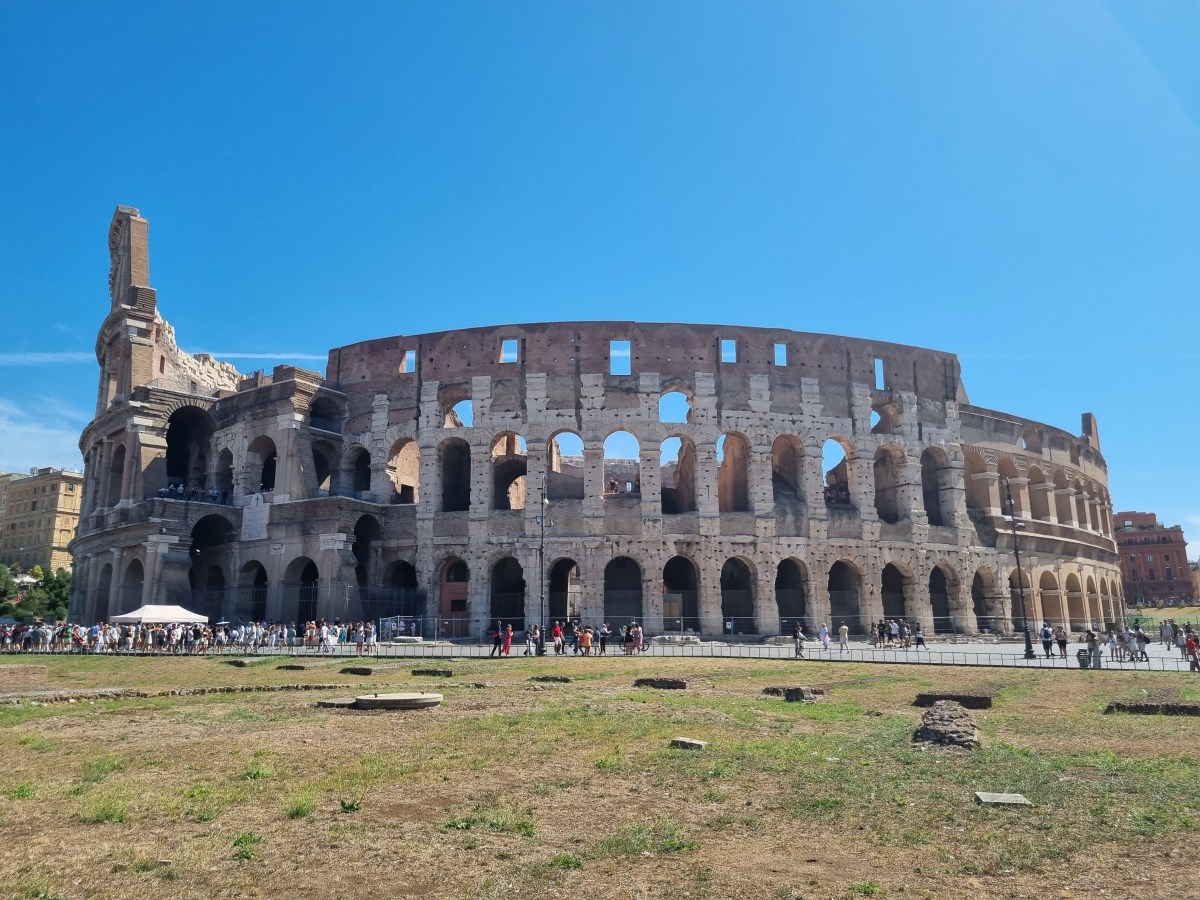
Ultimate Rome Itinerary: 4 Days of Sightseeing
Imagine strolling through the cobblestone streets of Rome, where history is hidden among ancient ruins, and the aroma of freshly baked pizza and cooked pasta fills the air. Rome is one of the most iconic and most-traveled cities in Europe, with a rich history to be explored. Grab a gelato and join my partner and…


Your Ultimate Guide to 24 Hours in Milan
Step into the heart of Milan, where ancient beauty meets modern charm. As the golden sun dances across the marble spires of the Duomo di Milano, you’ll feel like the time pauses. Just a few steps away, the Galleria Vittorio Emanuele II opens its grand glass roof above you. It’s more than just a shopping…
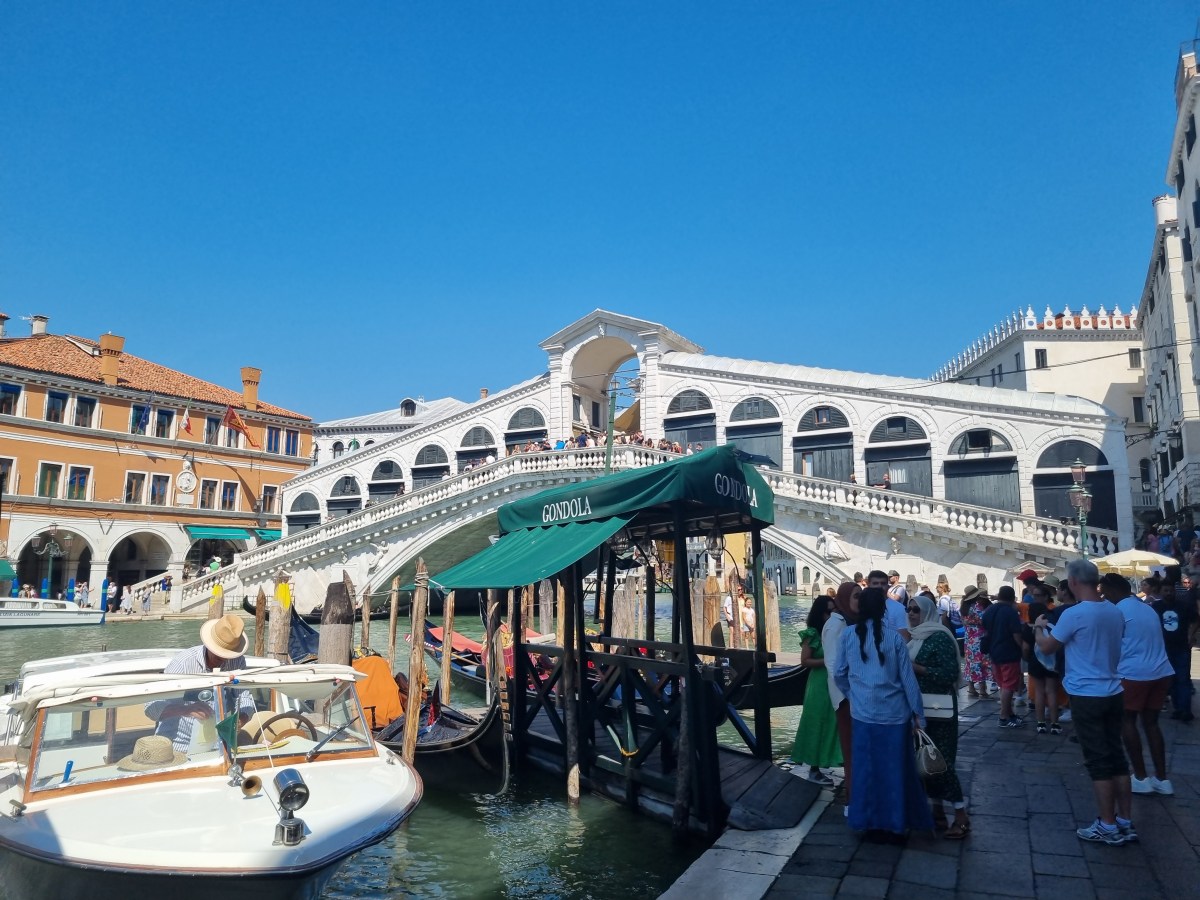
Ultimate Travel Guide to Venice: Experience Magic
There’s a place in the north of Italy where time seems to stand still, where streets are made of water and dreams drift along on gondolas. Venice, the legendary city of a thousand bridges enchants from the very first glance. As you wander through its labyrinth of narrow alleyways and beautiful squares, the air carries…




 Michelle Cacija
Leave a reply to Michelle Cacija Cancel reply