
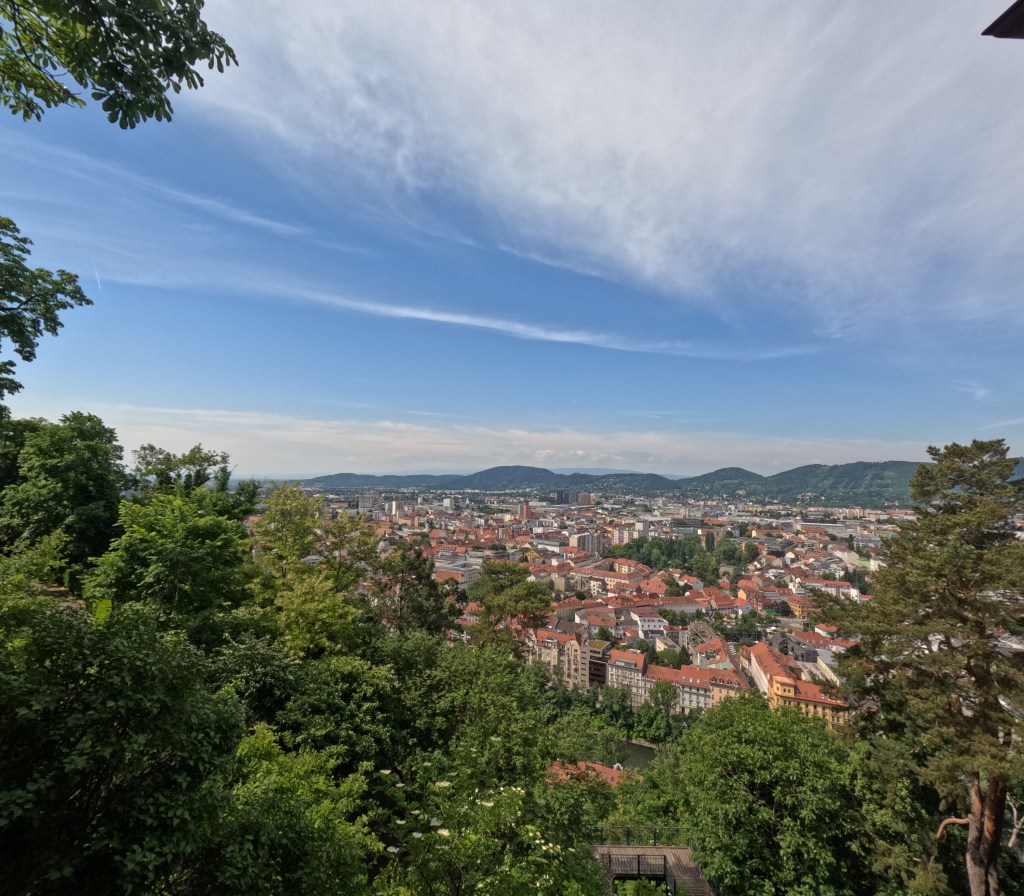
Looking for a charming escape from the hustle and bustle of city life in Vienna? Just a 2.5-hour train ride away, Graz awaits with its vibrant old town, stunning architecture, and relaxed vibe. Whether you’re strolling through the UNESCO-listed center or enjoying a coffee on Schlossberg hill, Graz offers the perfect mix of culture and comfort – all in one day. Servus and welcome to my Graz blog.
As always, I want to remind you, that this blog isn’t perfect because everyone travels differently, and all trips involve changes of plans. I want to let you know that everything on this website has been experienced, photographed, and written by me. Since I finance all of my travel expenses on my own, the stories and opinions given are truly my own. If you’re interested in seeing more travel pictures or videos, feel free to check out my Instagram @michellecacija or my Tik Tok @michellecacija.
Index
- The Basics about Graz
- Things you need to be aware of
- Graz Card
- Things to do
- Where to eat
- Booking Checklist
- Other Austria Blogs
The Basics about Graz
When to visit
Graz is a year-round destination I would say, but spring (April to June) and autumn (September to October) are especially ideal. During these months, the weather is mild, the city is in full bloom or dressed in golden leaves, and it’s less crowded than in summer.
Time period
If you’re coming from Vienna, one day is totally enough to see all the main sights and get a great first impression of Graz. The city is compact and walkable, making it easy to explore in a single day. However, staying one night gives you more time to soak in the atmosphere and it saves you from a 5-hour round trip by train or car in a day (if you mind that).
Getting There
Reaching Graz is quite easy no matter where you’re coming from. From Vienna, direct trains run frequently and take about 2.5 hours. Driving is also possible and takes a similar amount of time, while long-distance buses offer a budget-friendly alternative.
Graz also has its own airport (Graz Airport – GRZ), located just 20 minutes from the city center by public transport or taxi. It offers direct flights to and from other European cities, including Frankfurt, Amsterdam, and Zurich.
If you’re traveling from other Austrian cities like Salzburg, Linz, or Klagenfurt, trains and highways connect you easily to Graz. Whether you’re planning a day trip or a longer stay, getting here is convenient.
Where to stay
For an overnight stay, consider booking a hotel or guesthouse in the old town (Altstadt) for charm and convenience. Budget travelers will find good options near the train station.
Getting around
When it comes to getting around, Graz is a very walkable city. You can easily walk to all the major sights. If you’re staying further from the city center, you can use the buses or trams, which are very convenient.
What to pack
Additionaly, consider bringing your own little medication bag, including Band-Aids, pain relief tablets, sleeping tablets or spray, bug spray, aftersun, etc. You never know what you might need it for, and you might feel more comfortable using medication from home rather than in a country where you don’t know the ingredients and languages. If you’re coming from outside Europe, don’t forget to bring a Type C power adapter.
Cost of Traveling
Graz is generally more affordable than Vienna or Salzburg, making it a great destination for budget-conscious travelers. Train tickets from Vienna start at around €20 if booked in advance, and bus options can be even cheaper. Accommodation ranges from budget hostels and guesthouses to stylish hotels, with something for every price range.
Dining out won’t break the bank either. You can enjoy a good meal at a local restaurant or café for a reasonable price. Most of the city’s main attractions, like Schlossberg or the old town, are free to explore. With a little planning, a trip to Graz can be both memorable and easy on your wallet.
Things you need to be aware of
Sundays. On Sundays, shops and supermarkets are closed, while restaurants and cafes usually remain open. If you think there’s nothing to do on a Sunday you are wrong; maybe it’s time to explore the castles, museums, and nature in and around Graz!
Water in Austria. You can safely drink tap water in Austria as it’s clean and meets the World Health Organization standards.
Toilet situation. Unfortunately, public restrooms typically cost around 50 cents to a euro in Austria (and many other European countries). So, make sure to carry a few coins with you and always use the restroom before leaving your accommodation, a restaurant, or a café.
Tipping. In Austria, tipping is very common. It’s customary to leave a tip of around 5-10% in restaurants, cafes, and for taxi services.
Graz Card
During my day trip to Graz, I had the great opportunity to try out the Graz Card, and it made exploring the city easy and convenient. There are two versions to choose from: the standard Graz Card and the Graz Card Light.
The regular Graz Card gives you unlimited access to public transport and attracttions for 24, 48, or 72 hours. On top of that, you get free entry to many of the city’s top attractions and discounts at several museums and sights. From the Schlossberg funicular or lift to Schloss Eggenberg and various museums, the card really covers all the highlights. It’s perfect if you want to move around the city with ease and make the most of your visit.
If you already have a valid public transport ticket, the Graz Card Light is a great alternative. It offers the same benefits from free to reduced entry to museums and landmarks, just without the included public transport.
Whether you’re in Graz for a day or a long weekend, the Graz Card adds great value and makes sightseeing smooth and budget-friendly. I definitely recommend checking it out! Click here (ad), to learn more about the Graz Card.
Things to do
Old Town
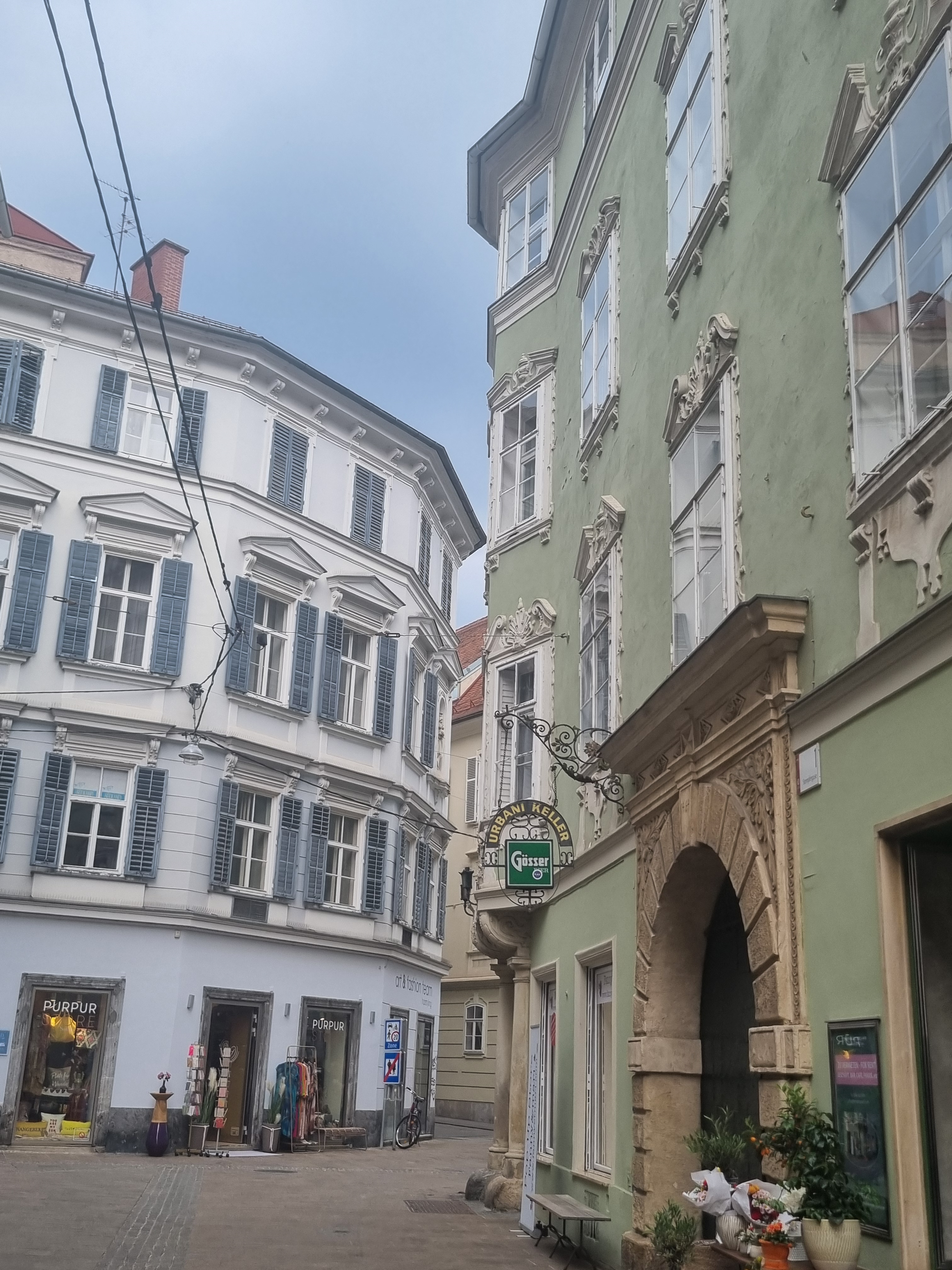
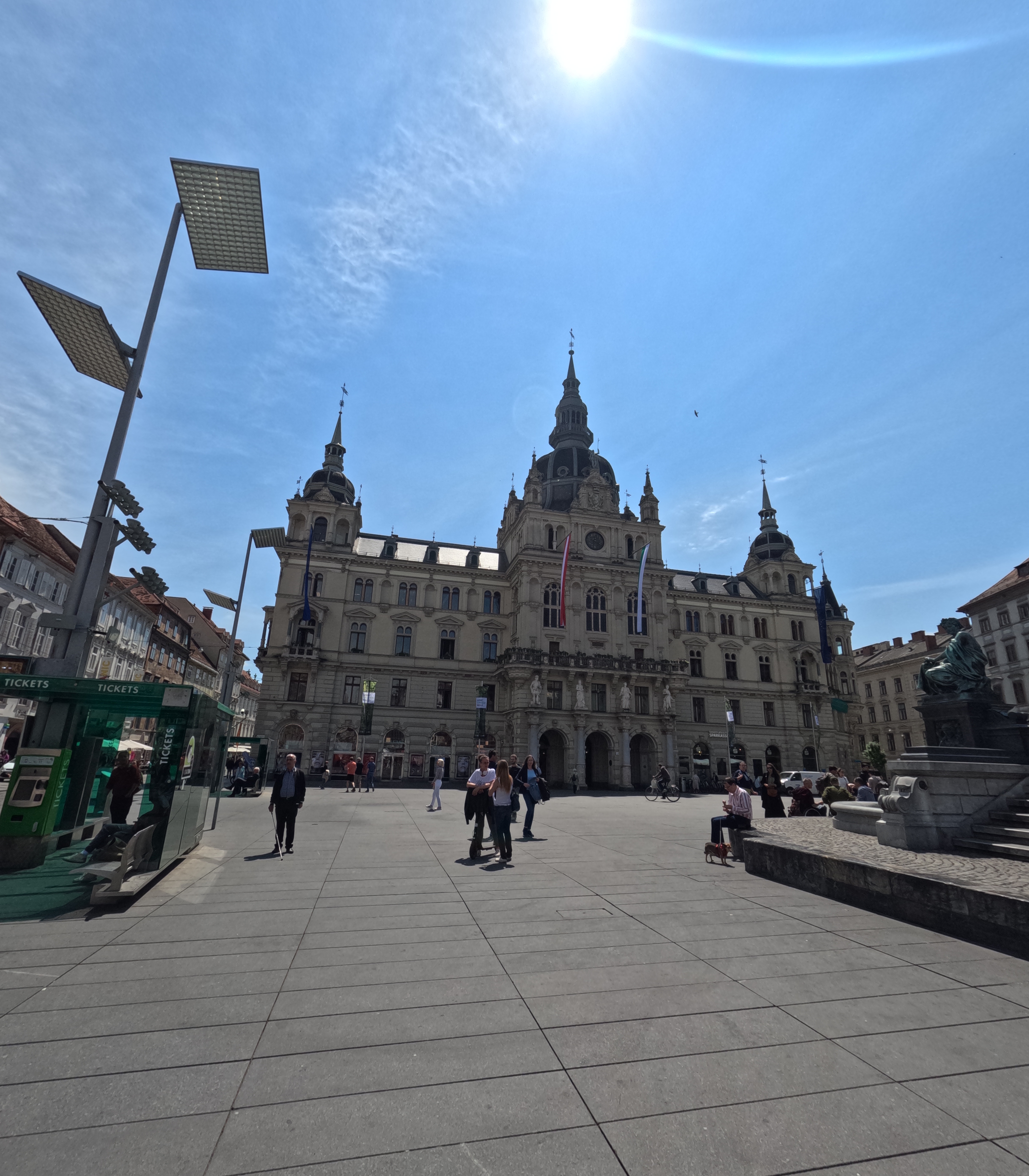
The perfect place to begin your Graz adventure is right in the city’s heart: Hauptplatz, the main square in the historic Old Town. Surrounded by elegant Baroque and Biedermeier façades, this square is home to the beautiful Town Hall (Rathaus).
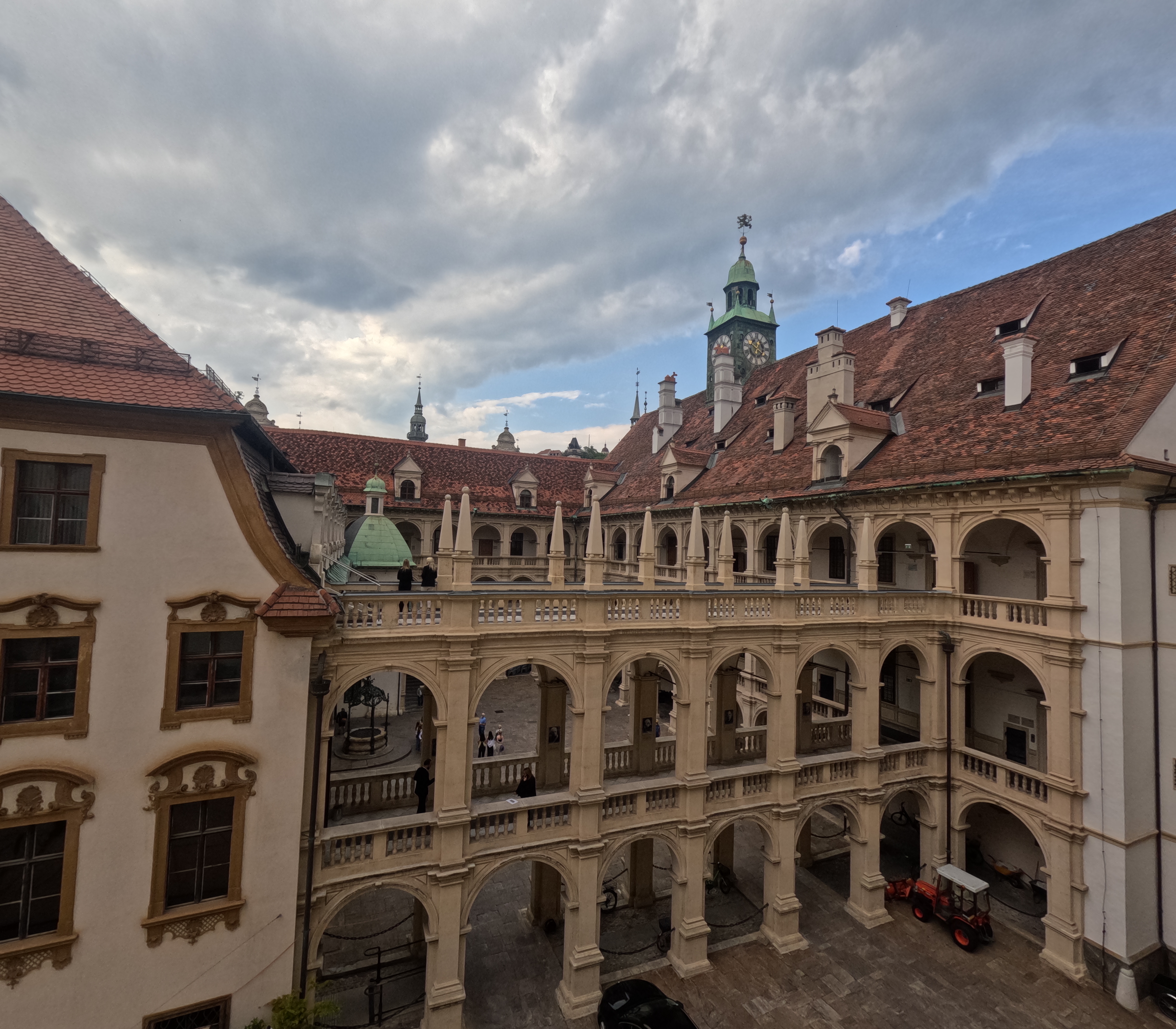
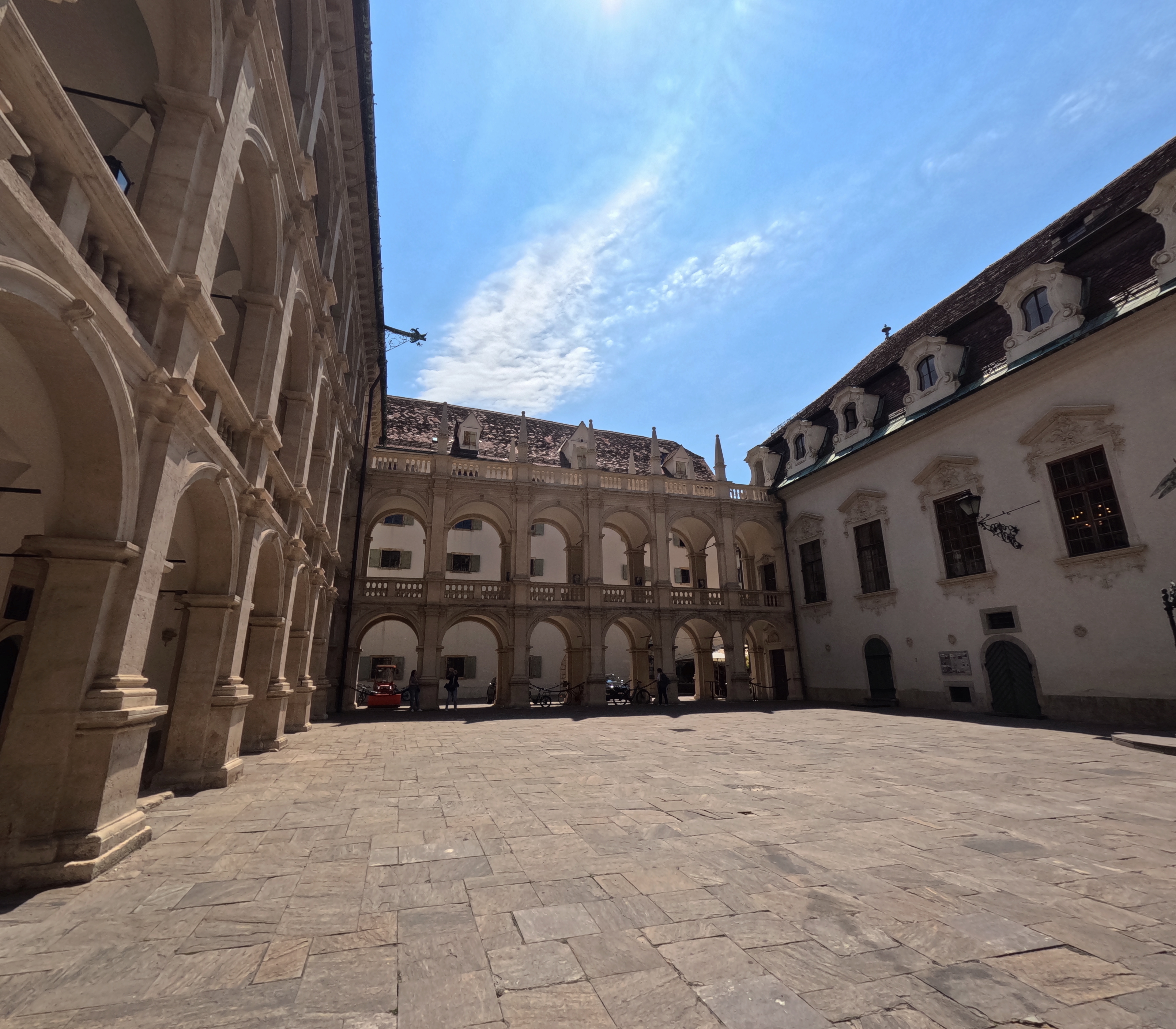
From here, take a leisurely stroll down Herrengasse, the city’s most prominent shopping street. Along this lively passage, you’ll pass some of the Old Town’s most beloved buildings, including the eye-catching “Painted House” (Gemaltes Haus), also known as the Herzogshof, whose entire façade is covered in elaborate frescoes. Not far from there awaits another masterpiece: the Graz Landhaus, a stunning Renaissance palace with an arcaded courtyard that feels like a secret oasis tucked within the city (I’ll tell you more about that beauty a little further down in the blog!)
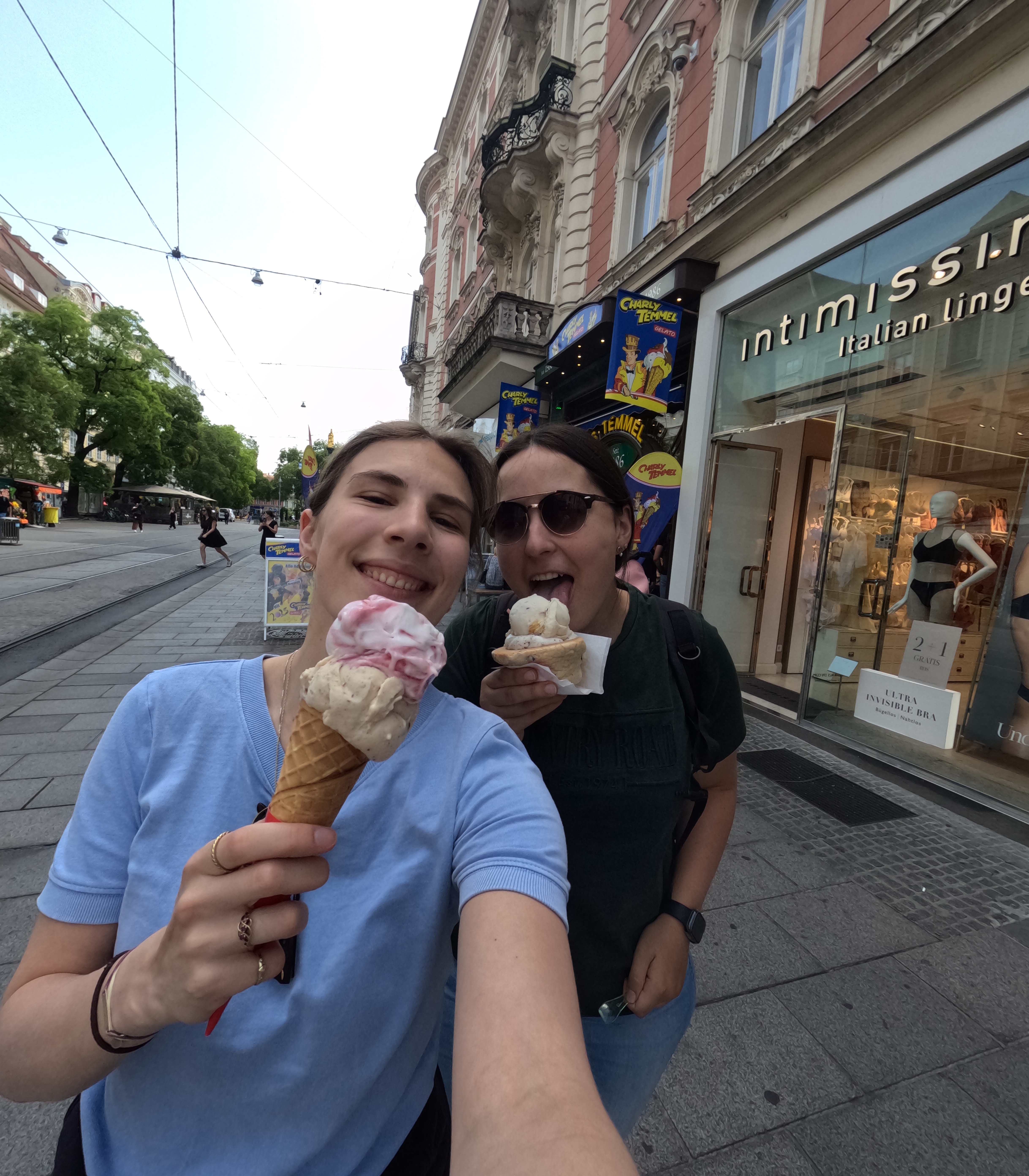
The area around Herrengasse is also a haven for food lovers. Whether you’re craving coffee, cake, or a full Styrian feast, the Old Town is packed with cozy cafés and inviting restaurants where you can pause, relax, and let your culinary heart rejoice.
Eggenberg Castle
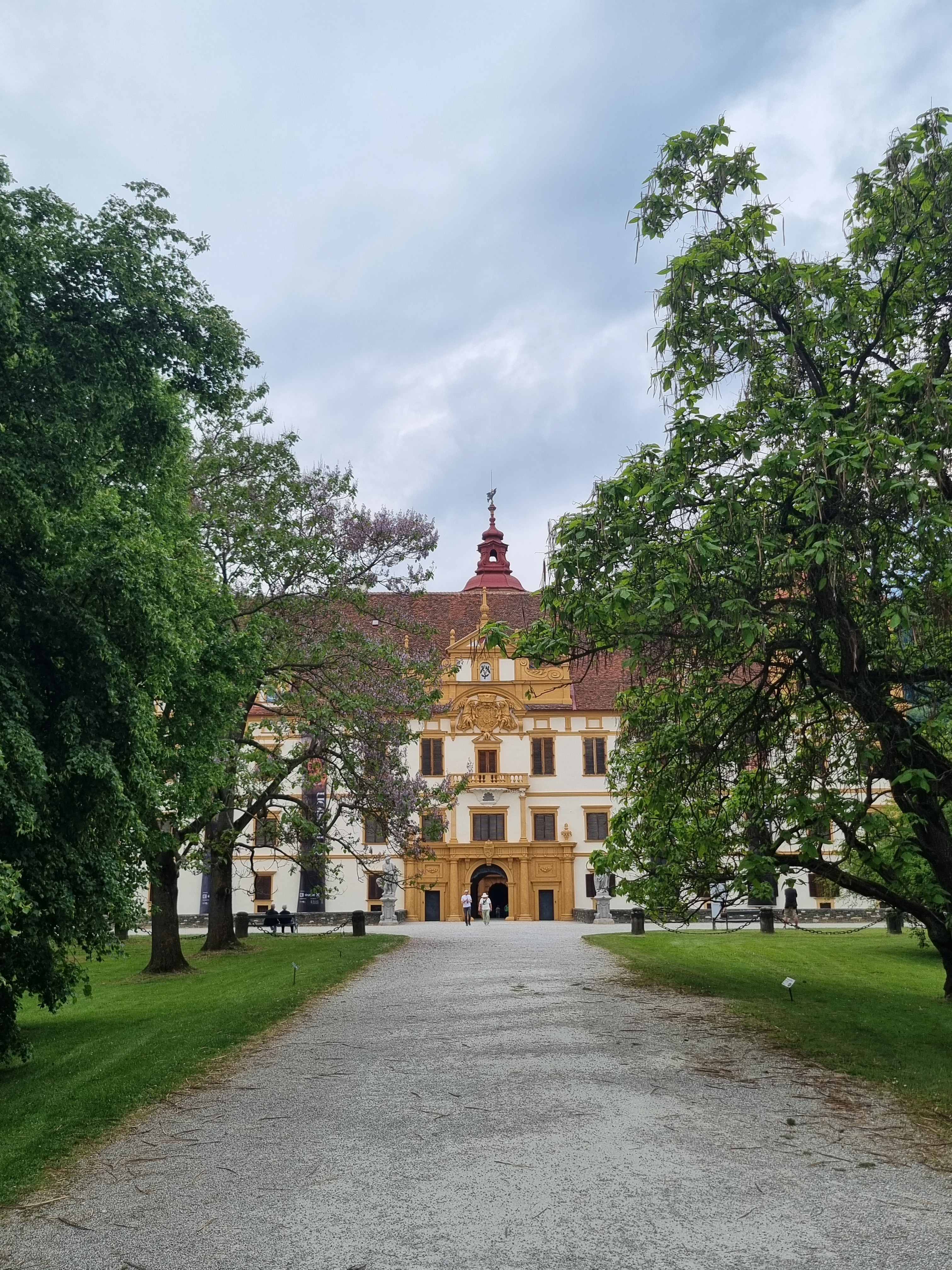
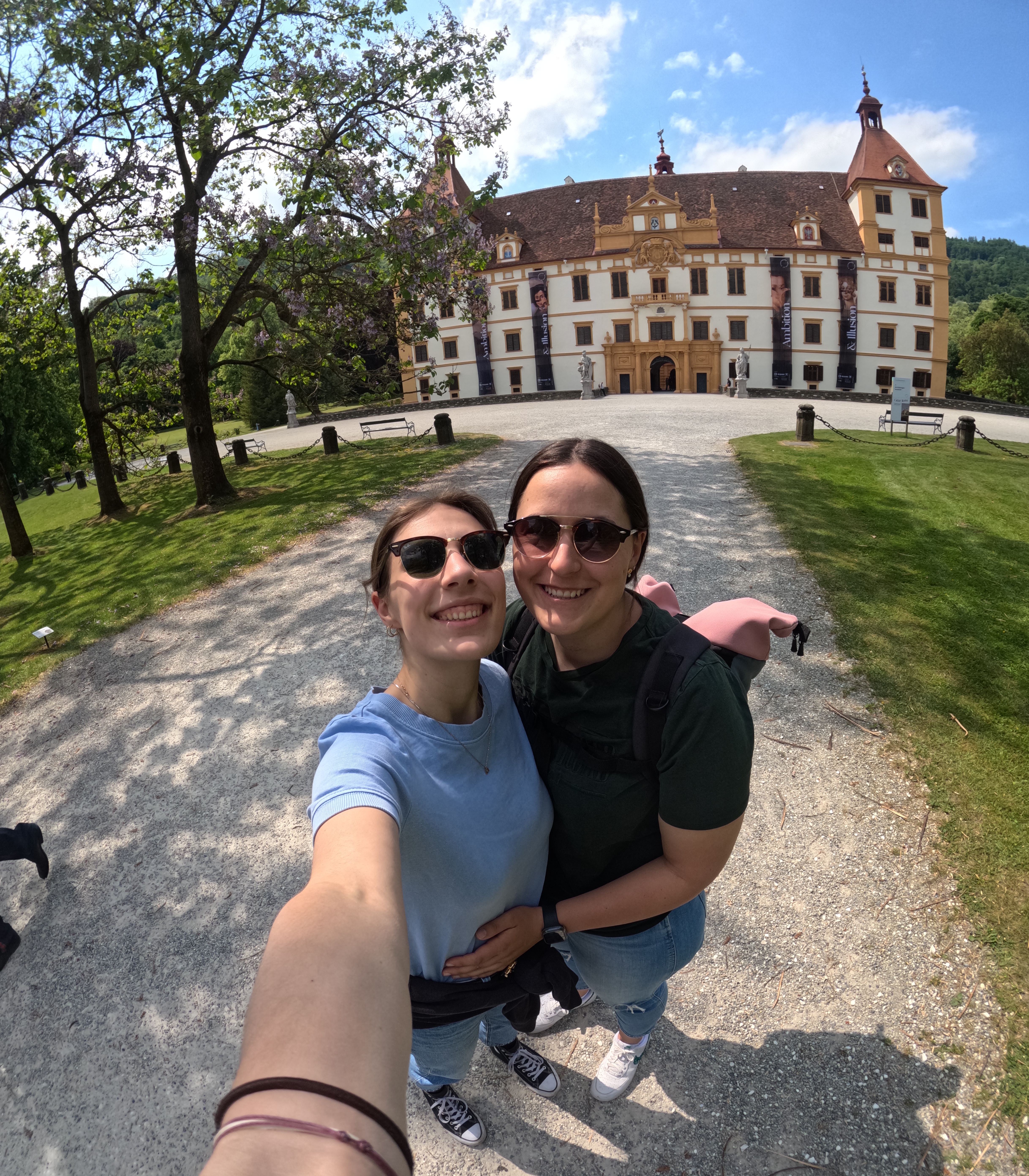
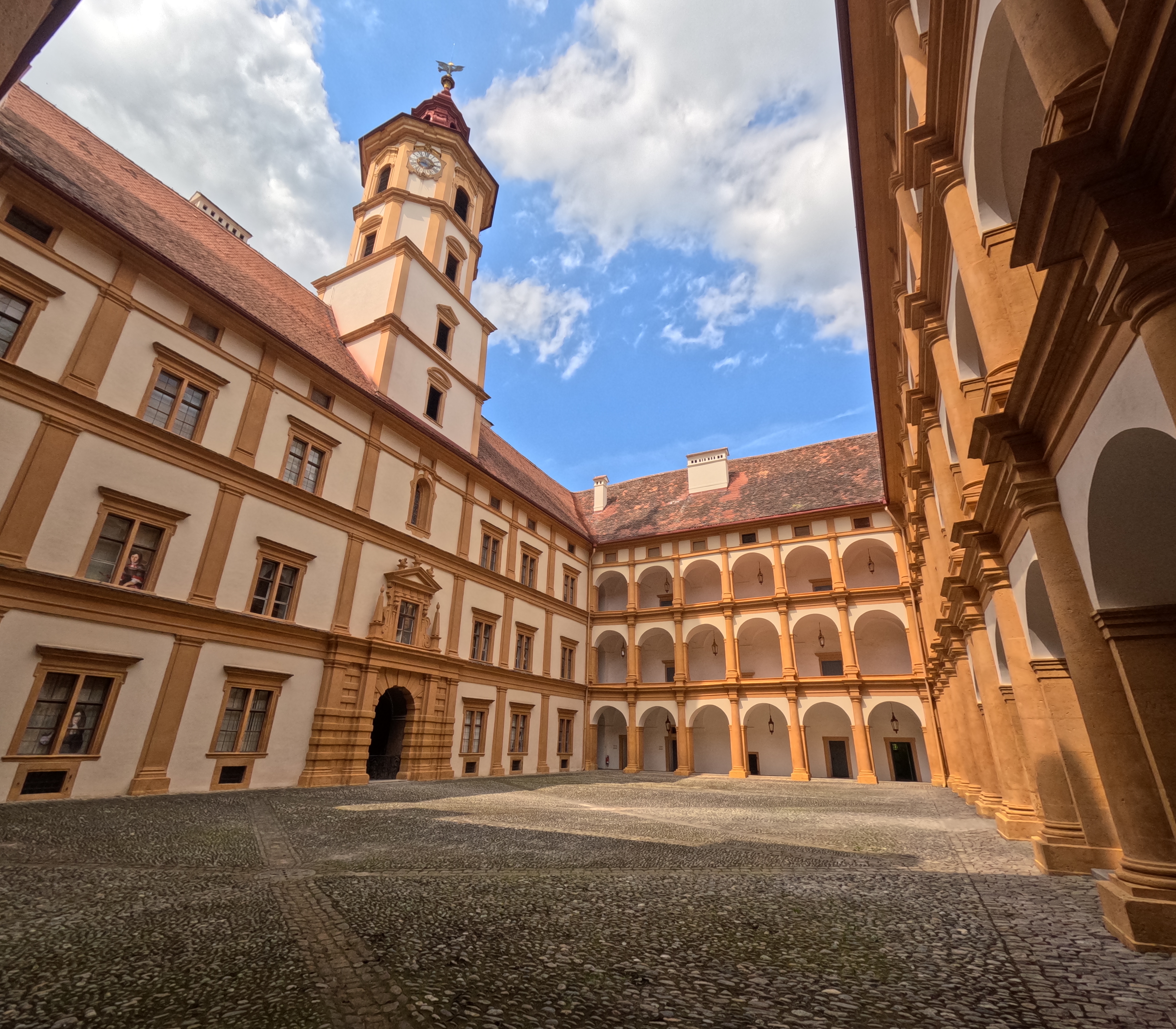
Just 15 minutes by car or around 35 minutes by public transport west of Graz’s historic center lies Eggenberg Palace, the most important Baroque palace in the region of Styria and one of Austria’s most symbolically rich architectural wonders.
Designed to reflect the structure of the universe, Schloss Eggenberg was built with astonishing mathematical and symbolic precision. The palace features 365 windows for the days of the year, 52 doors for the weeks, and 24 state rooms to represent the hours of a day. The symbolism continues with 12 rooms per floor for the months, 7 gates for the days of the week, and intricate ceiling paintings that allude to the passing of 60 minutes and 60 seconds, a cosmic clock carved in stone and paint. It’s a place where architecture, astronomy, and philosophy blend into breathtaking harmony.
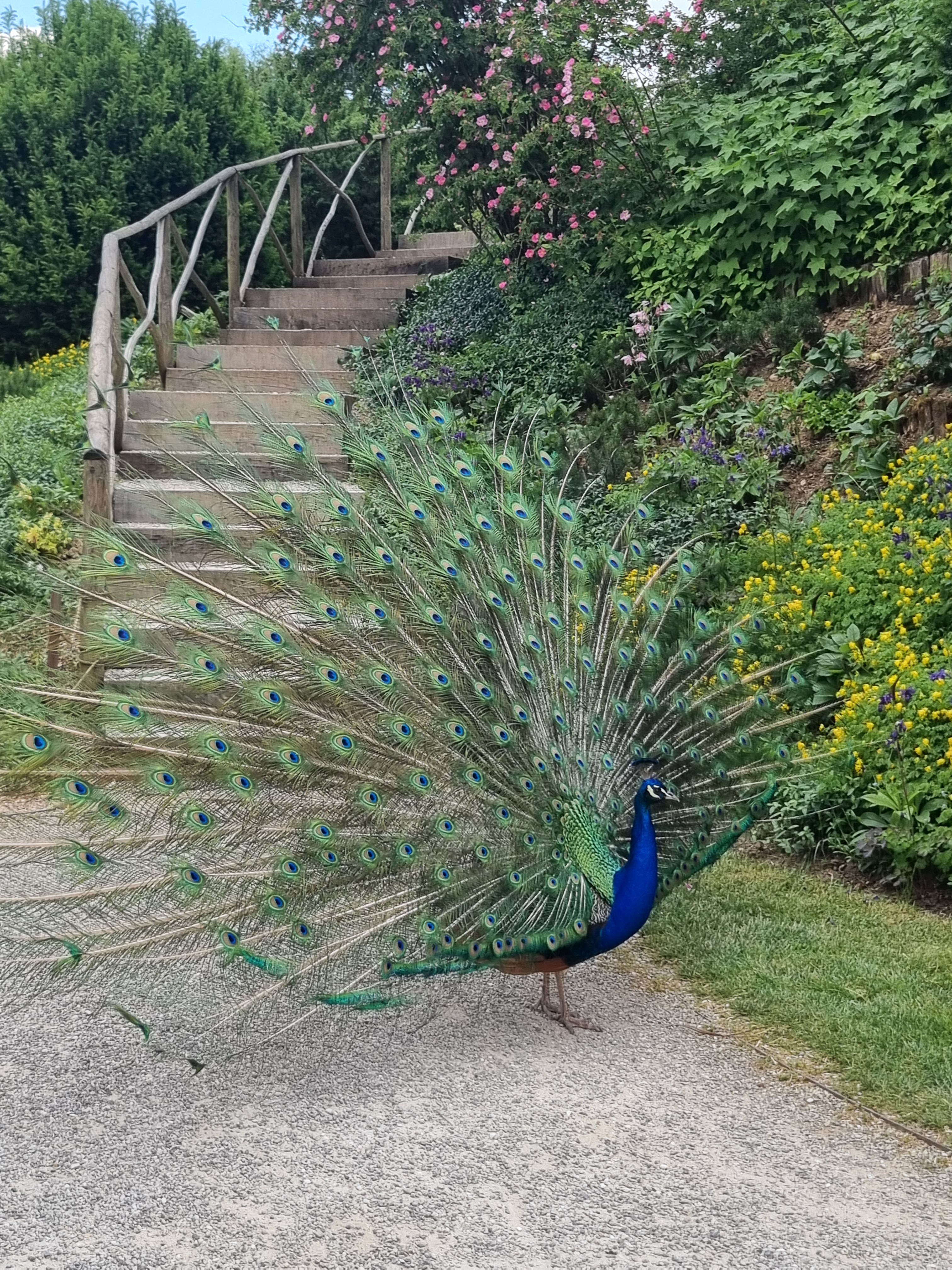
You can stroll through the palace park, a peaceful green haven open year-round. Peacocks roam freely across the lawns and among the shaded pathways, moving with elegance, calm confidence, and a surprisingly friendly charm.
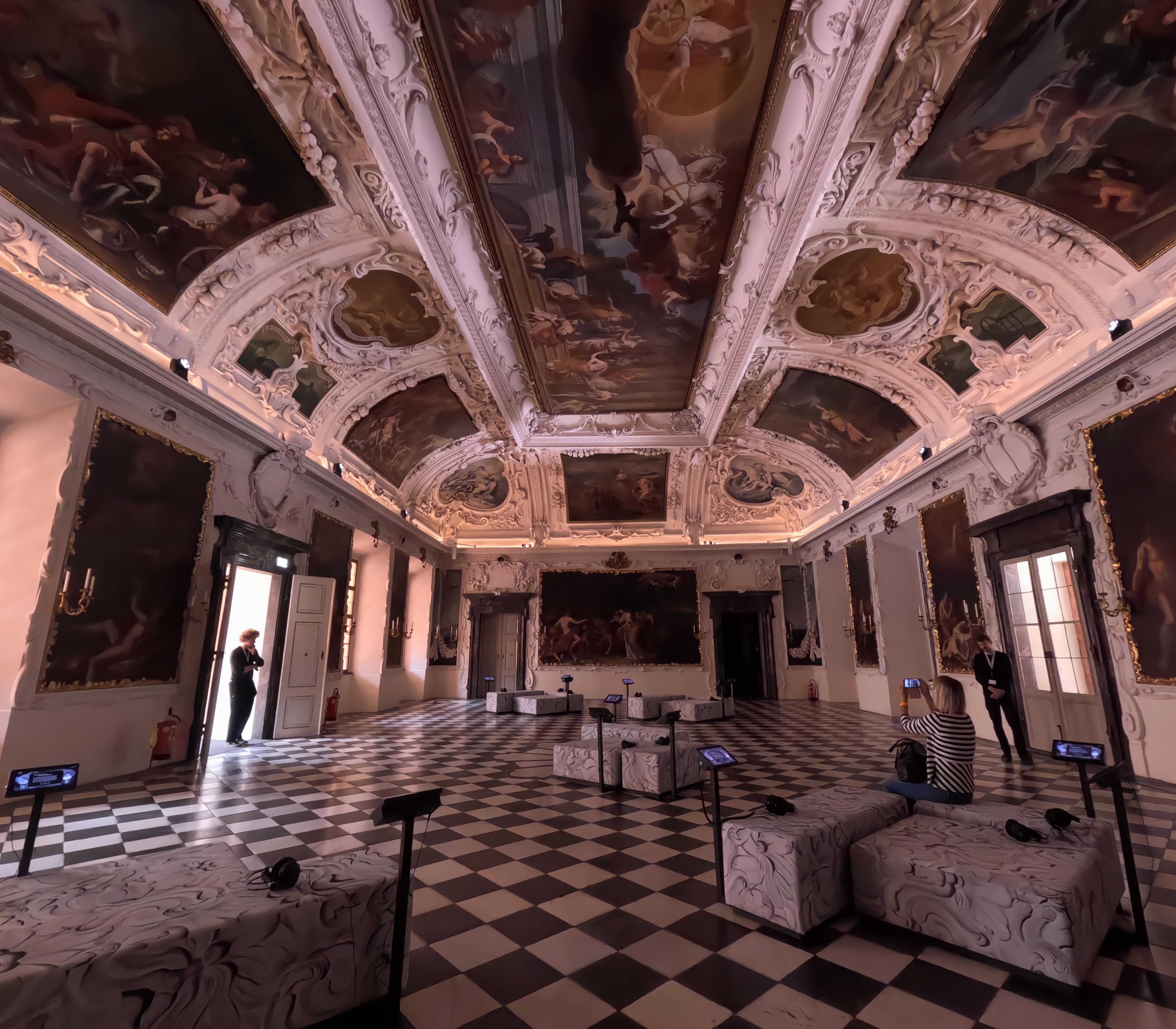
Inside the palace, the state rooms (“Prunkräume”) are a must-see. Though gently darkened to preserve their historic splendor, these rooms are nothing short of magnificent: elaborately painted ceilings, original Baroque furnishings, and a lingering aura of nobility. Beyond the state rooms, Eggenberg also houses several permanent collections, including a numismatic cabinet, archaeological exhibits, and a arts gallery.
Visitor information: The entry to the garden is €2. Admission to the state rooms is €15 for adults and €7 for students, apprentices, and civil/military service members under 26. Children and teens under 19 enter free. Entry is included with the Graz Card, but if you don’t have one, you’ll need to book a time slot in advance, either online or at the ticket counter. Click here, to learn more or book your tickets.

Schlossberg
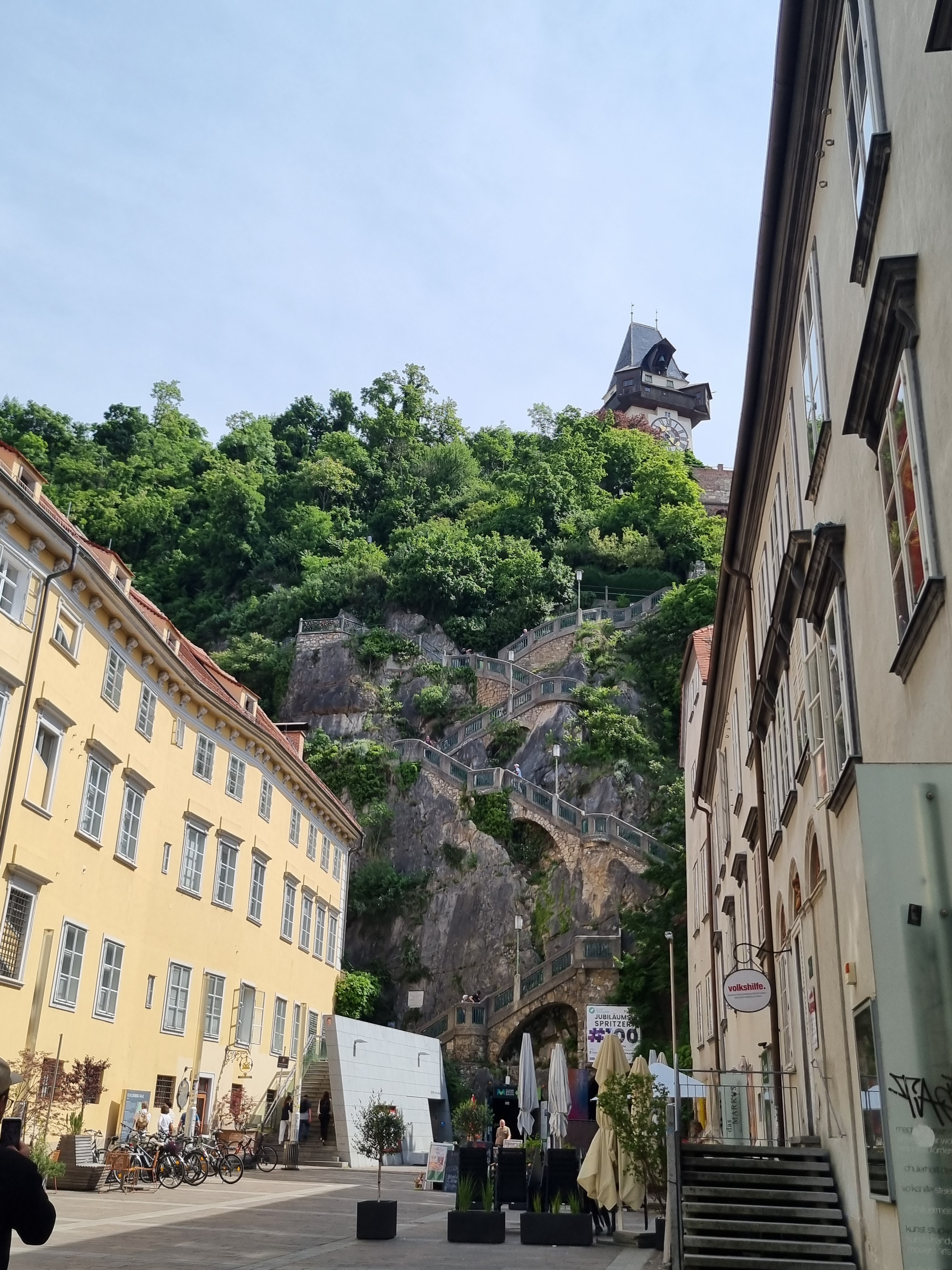
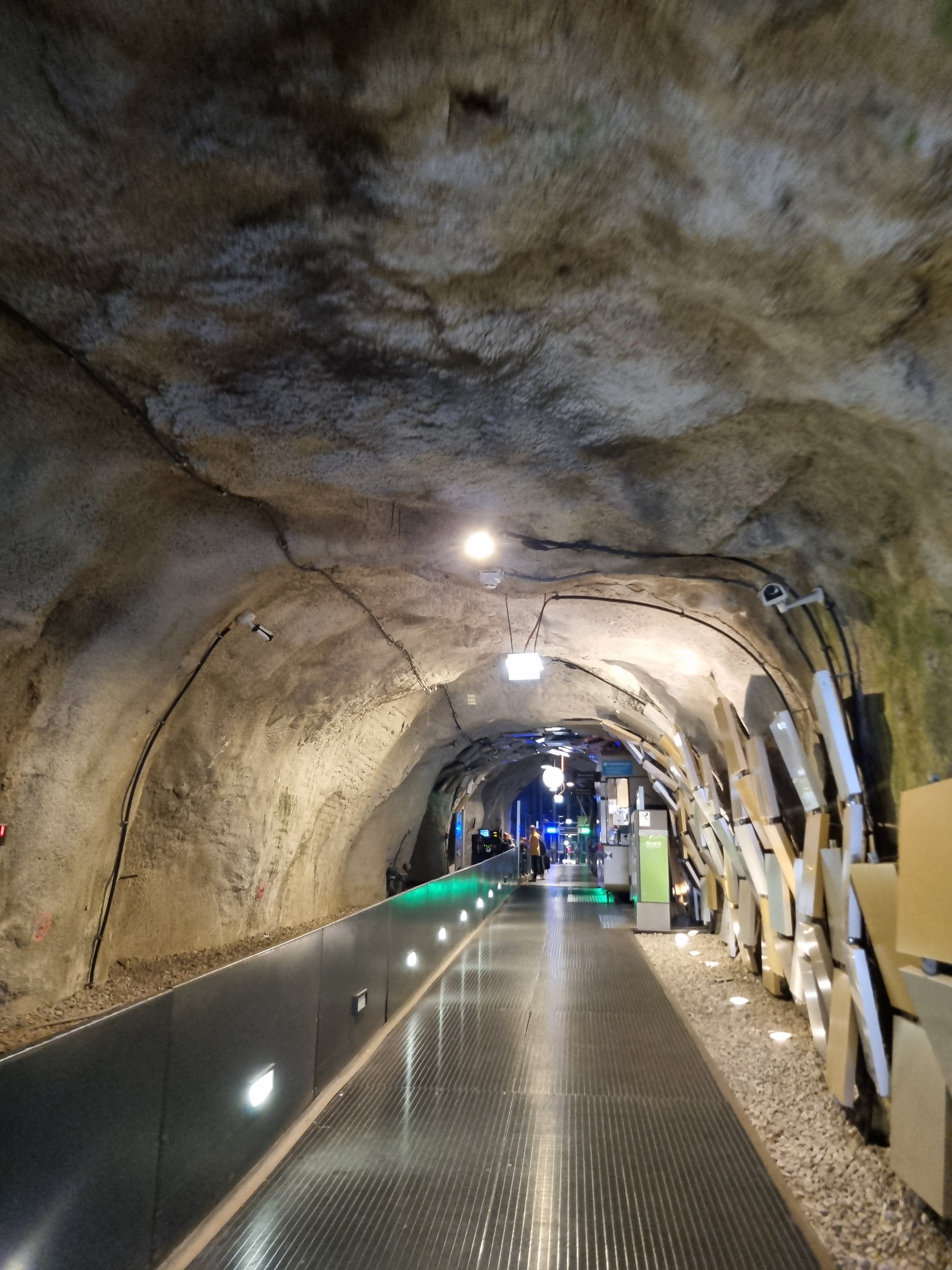
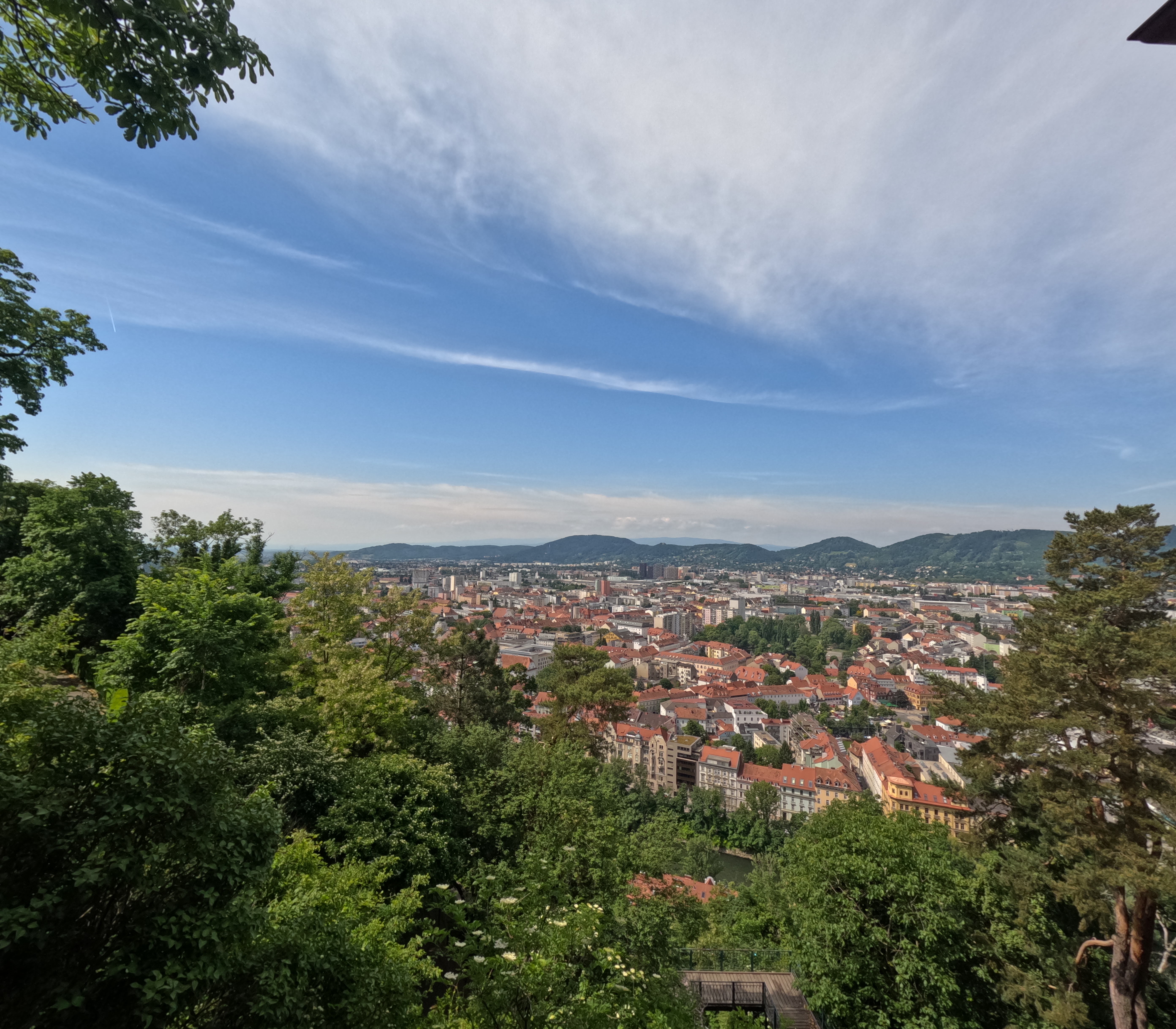
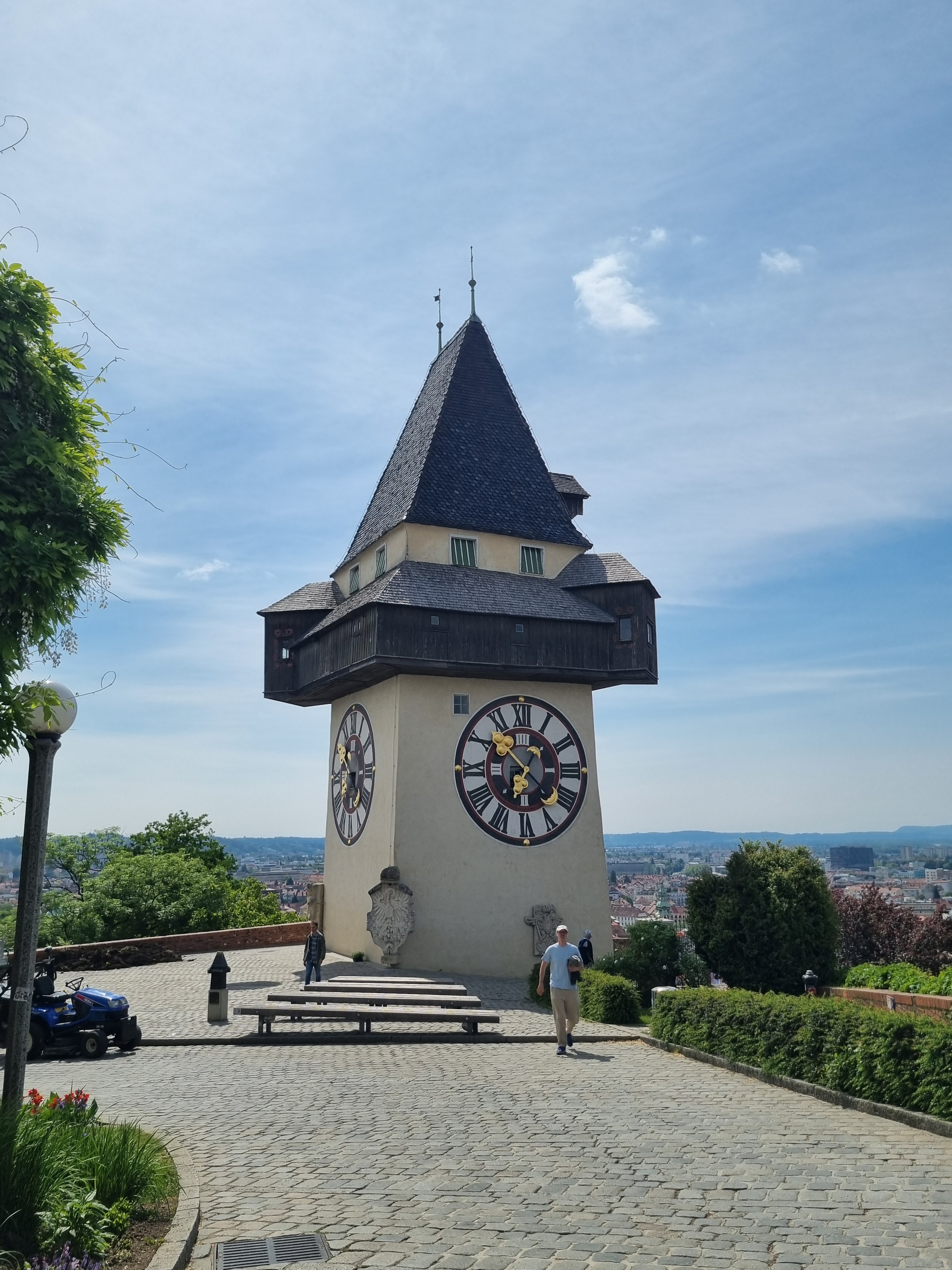
Just a 15-minute walk from the heart of Graz’s Old Town lies one of the city’s most iconic landmarks: the Schlossberg. There are three ways to ascend the Schlossberg, each offering its own unique experience. For those who love a touch of adventure and don’t shy away from a bit of a workout, the Felsensteig staircase awaits. Beginning at Schlossbergplatz, this historic stone path challenges you with 260 steps but definitely rewards you with an unforgettable panoramic view over the red rooftops and winding alleys of Graz. Prefer a more relaxed route? Glide up the hill with the Schlossbergbahn, a funicular railway. Or, for a futuristic twist, step into the glass Schlossberg elevator, a sleek lift that whisks you silently through the heart of the mountain itself.
Once at the top, you’ll discover a place steeped in history. Although the original castle was destroyed by Napoleon’s forces in 1809, remnants of its past still whisper through the ruins. You’ll find the Schlossberg Museum and the famous Glockenturm (Bell Tower), which continues to mark the hours with proud resonance.
And if you’re looking for a modern thrill to top off your visit, don’t miss the world’s tallest indoor slide, added in February 2019. This ride spirals down through the mountain and can only be accessed via the Schlossberg elevator.
Visitor information: If you choose the Schlossbergbahn funicular, tickets are €3.10 for adults and €1.60 for pupils. Even better, if you have the Graz Card, your ride is included. The Schlossberg elevator costs €2.40 for adults and €1.70 for pupils. If you have the Graz Card the ride is also free. If you want to take the slide, you can book a combined ticket for the slide + lift from the valley station for €8.90 (adults) and €8.20 (children). Alternatively, if you’re already at the top, the slide + lift from the mountain station costs €8.10 (adults) and €7.80 (children). To book the slide, click here.
Landeszeughaus
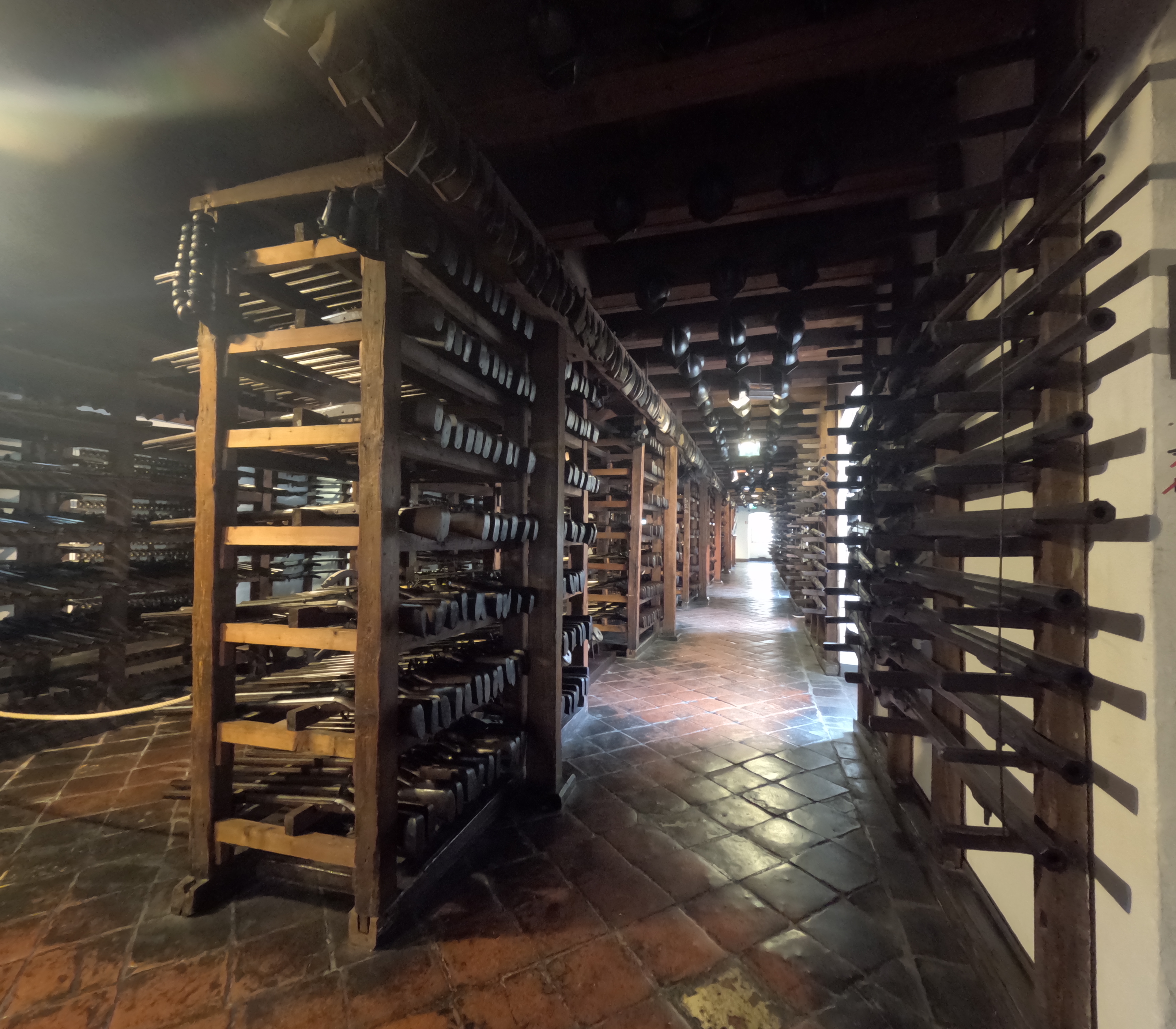
Step into the world’s largest preserved historic armory and feel the weight of centuries of Styrian history. The Landeszeughaus, right in the heart of Graz’s Old Town, is home to an astonishing collection of over 32,000 weapons, suits of armor, and tools of war dating from the 15th to 18th century.
Walking through the four-story arsenal feels like stepping straight into a time capsule. Row upon row of gleaming breastplates, swords, pistols, and halberds line the wooden shelves. It’s an undeniably impressive sight, both in scale and atmosphere. However, most of the pieces look similar and they are all lined up close next to each other. So while the experience is visually striking, it may not offer constant variety unless you’re truly fascinated by historical weaponry.
For those who are, though, this is the perfect place to dive deep into Europe’s military past. And if you want to get more context and stories behind the steel, guided tours are available.
Visitor information: Admission is €12 for adults, €5.50 for students under 26, apprentices, and civil/military service members. Children and teens under 19 enter free, and the visit is included with the Graz Card. During peak times, it’s best to check whether a time slot reservation is needed. To learn more about the Landeszeughaus, click here.
Kunsthaus
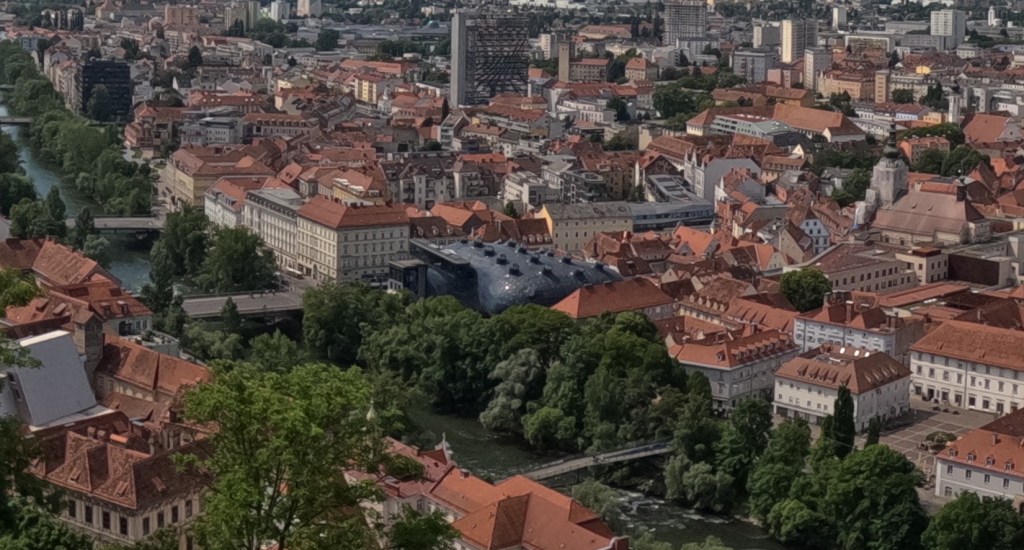
The most futuristic building in Graz? Without a doubt, the Kunsthaus Graz. Often called the “Friendly Alien,” this bold, organic structure stands in striking contrast to the city’s old town. For me it kind of resembles the shape of a human heart.
Built for Graz’s stint as European Capital of Culture in 2003, the Kunsthaus hosts changing international exhibitions of contemporary art. There’s no permanent collection, so whether it’s worth a visit depends on the current exhibition and your taste in art. During my visit I didn’t had the opportunity to explore it.
Murinsel
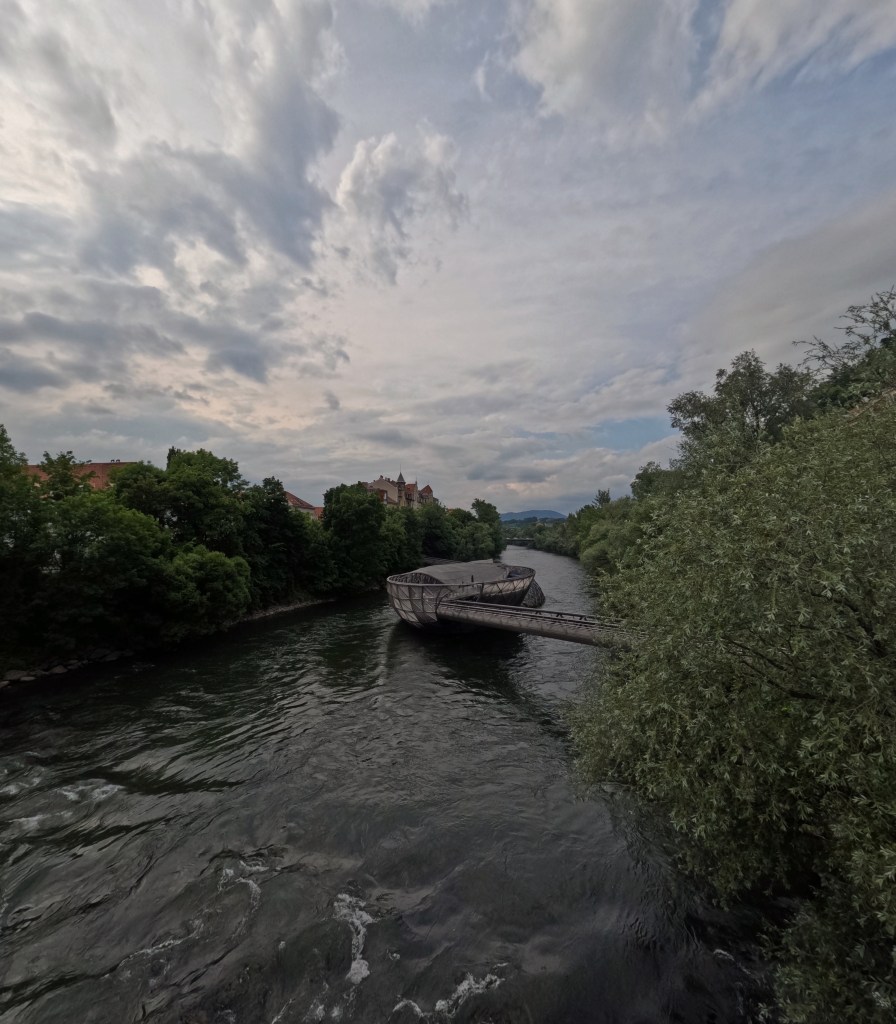
In the heart of Graz, floating gently on the waters of the Mur, lies a small but architectural gem: the Murinsel (Mur Island).
Its sleek, metallic curves rise like a glimmering shell from the riverbed, blending bold modern design with natural surroundings. Inside, you’ll find a little café, where you can sip a coffee or enjoy a drink while the sound of the river gently murmurs below.
The island is connected to both riverbanks by gently sloping walkways, so it’s fully walkable and also serves as a pedestrian bridge.
Graz Museum
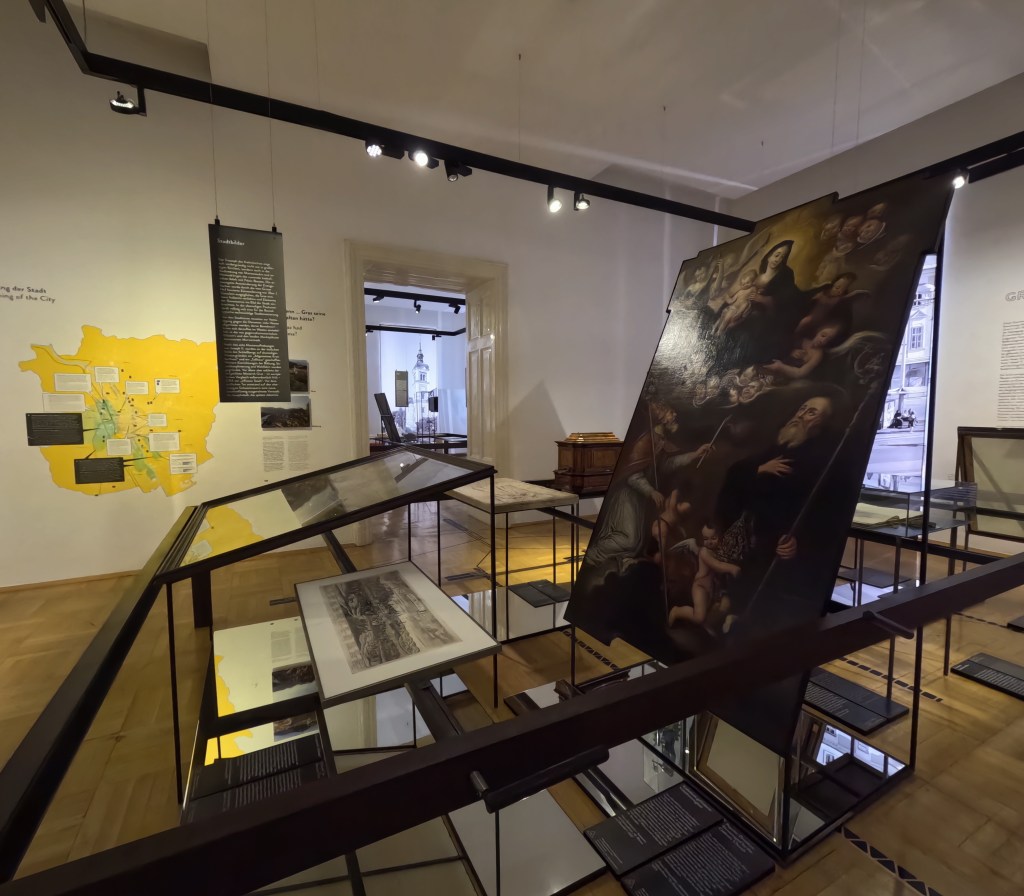
Located in the heart of the Old Town, right next to the Schlossberg, the Graz Museum offers interesting insights into the city’s past, present, and future. Its permanent exhibitions focus on the rich history of Graz itself, as well as on the evolution of democracy in the region and the country. With a thoughtful mix of historical artifacts and modern interactive elements, the museum invites visitors to explore how Graz has shaped and been shaped by centuries of political and cultural change.
Visitor information: Admission is €8 for adults and €6 for concession holders. Children and teens under 19 can enter free of charge, and visitors aged 19 to 26 are invited to pay what they wish. If you have the Graz Card, the entry is free. For more information, click here.
Where to eat
- Welscher Stub’n – Austrian cuisine (unpaid ad)
Booking Checklist
Travel Insurance
I highly recommend getting travel medical insurance while you’re traveling. Hopefully, you’ll never need it, but it’s always better to be safe than sorry. SafetyWing offers two flexible plans tailored to your travel needs. Whether you’re a short-term adventurer or a long-term expat, you’ll have reliable coverage anywhere in the world.
SafetyWing is especially great for remote workers and digital nomads, offering continuous global coverage even if you’re hopping between countries. Of course, it’s also a solid option for frequent travelers or those constantly on the go. But if you’re only traveling occasionally or just for a short holiday now and then, there might be better-suited alternatives.
Accommodations
I usually rely on Booking.com for hotels and Airbnb for vacation rentals. They both have the largest selection and tend to offer the most reliable prices.
Data for your Trip
I use Saily for international cell data. They offer a variety of eSIM options depending on the country and their eSIMs are easy to install, activate instantly upon arrival, and let you skip buying local SIM cards or paying expensive roaming fees.
Tours and Experiences
I always use GetYourGuide to find the best tours and experiences in a city or country. It’s my go-to platform for planning activities, and I’ve always been very satisfied with the experiences I booked through them.
Rental Car
I’ve rented at least six cars and always booked them through check24 (ad), which I can highly recommend. The website offers good deals, the insurance is quite cheap and provides good coverage, and the customer service is very efficient and accommodating. However, Check24 currently only offers its website in German. So it’s mandatory to speak the language.
Other Austria Blogs
Vienna Travel Guide: A Local’s 5-Day Itinerary
Are you ready to immerse yourself in a symphony of architectural wonders, where Mozart’s melodies still echo, the scent of Schnitzel lingers in the air, and the famous Fiaker trot through the cobblestone streets? Some of you might have guessed right; I’m talking about Vienna, the capital of Austria. I realized that I can’t have…

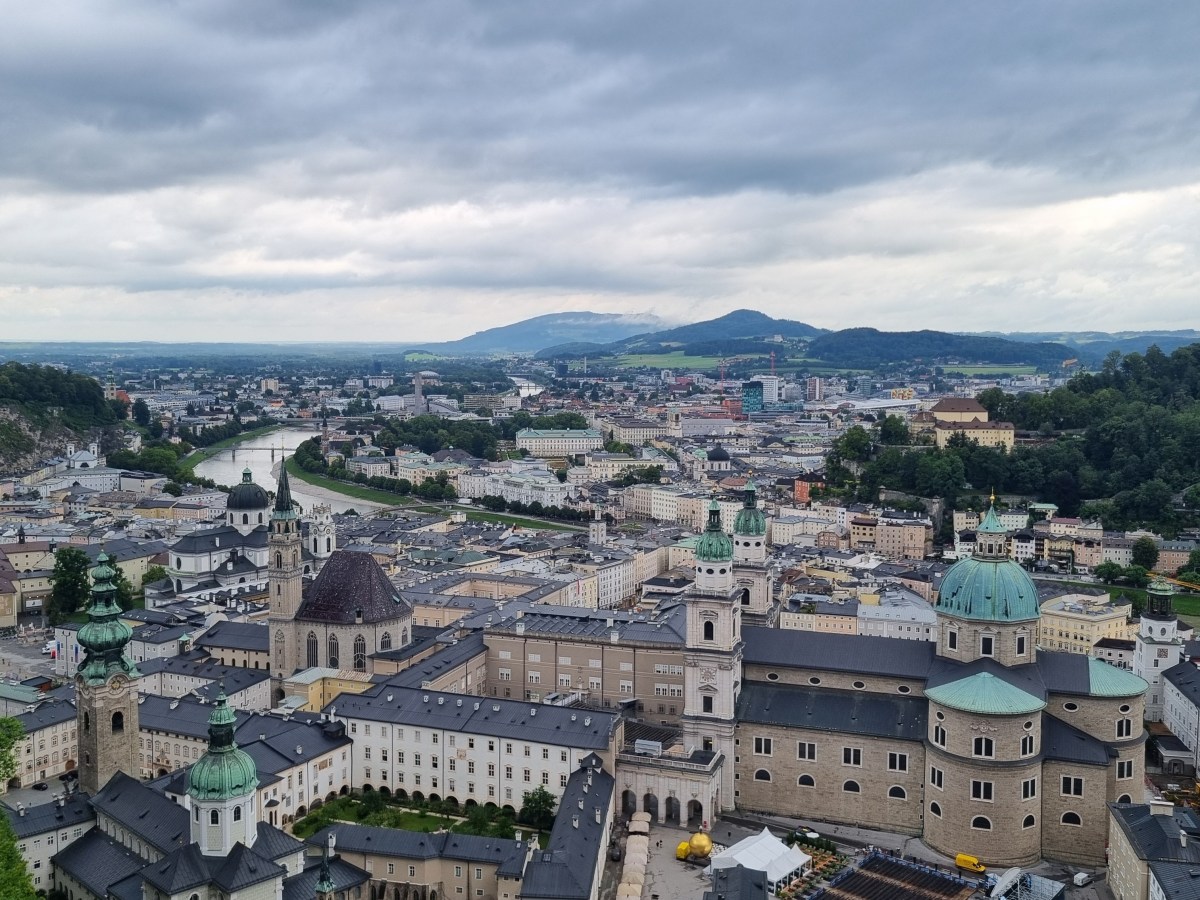
4-Day Salzburg Itinerary: History, Day Trips and Alpine Scenery
Planning a trip to Austria? You can’t miss out on Salzburg. The city, known as the birthplace of Mozart and the backdrop for the iconic film The Sound of Music, offers a perfect blend of history, culture, and stunning Alpine scenery. Over the course of three days, you’ll immerse yourself in the city’s rich musical…
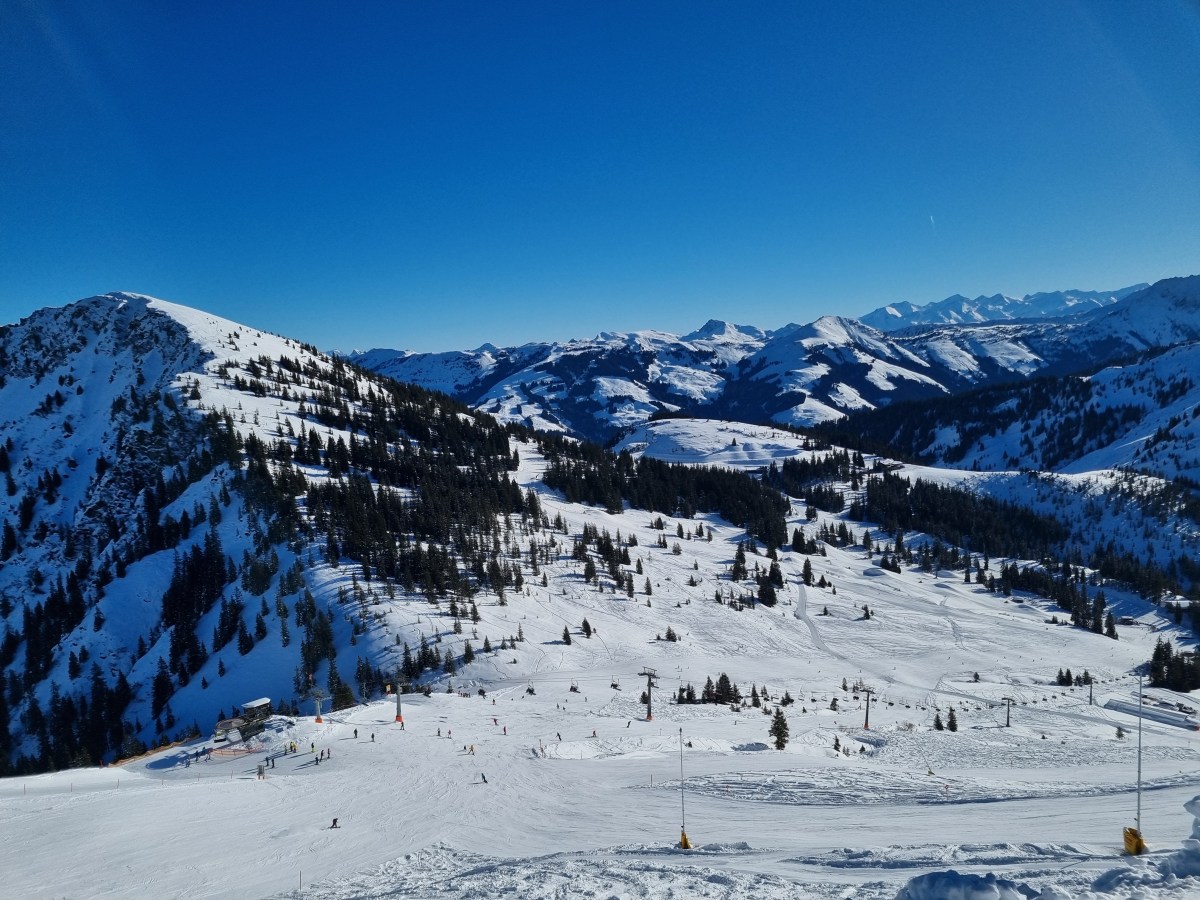
Winter Magic in Westendorf: More Than Just Skiing!
Dreaming of the perfect ski getaway? Westendorf, nestled in the heart of Tirol and just a short drive from the legendary Kitzbühel, offers breathtaking slopes, fresh powder, and unforgettable alpine charm. But this winter wonderland has so much more to offer! From cozy mountain huts and scenic winter hikes to snowshoe adventures and tandem flights…





 Michelle Cacija
Leave a reply to Michelle Cacija Cancel reply